

Compare commercial roof repair paths for Fullerton properties, from active leaks and seam failures to storm damage, with inspection and work sequencing.
Roof leak, storm damage or an inspection coming up?
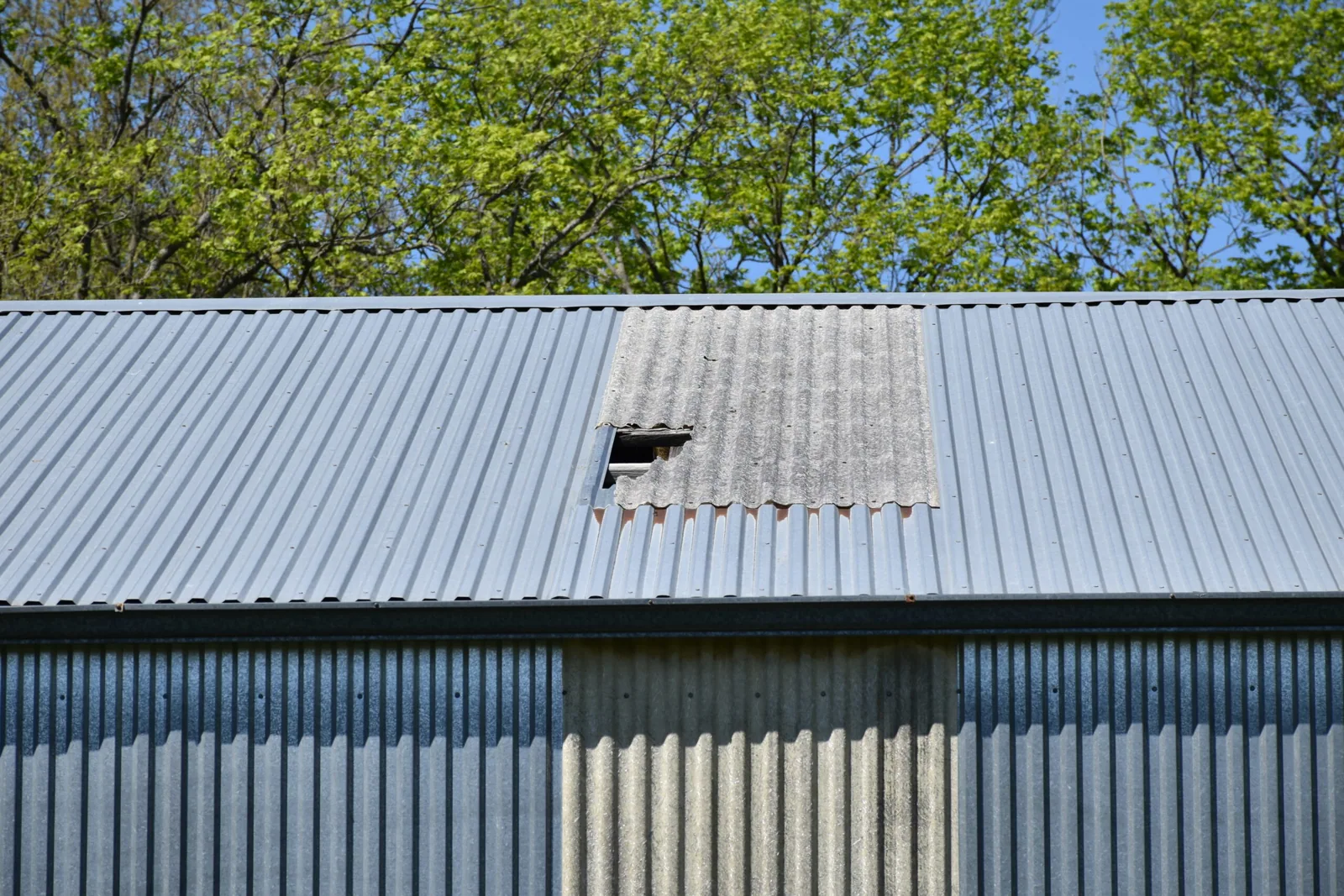
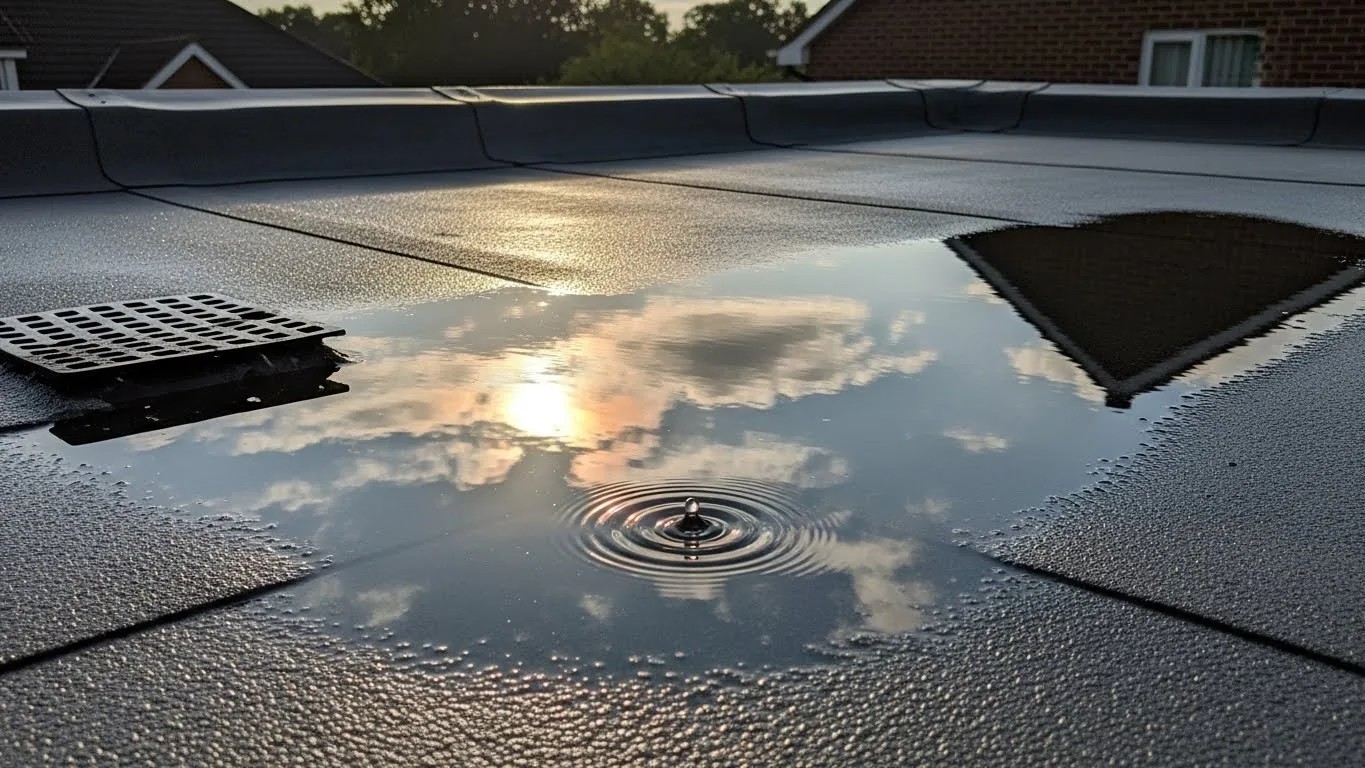
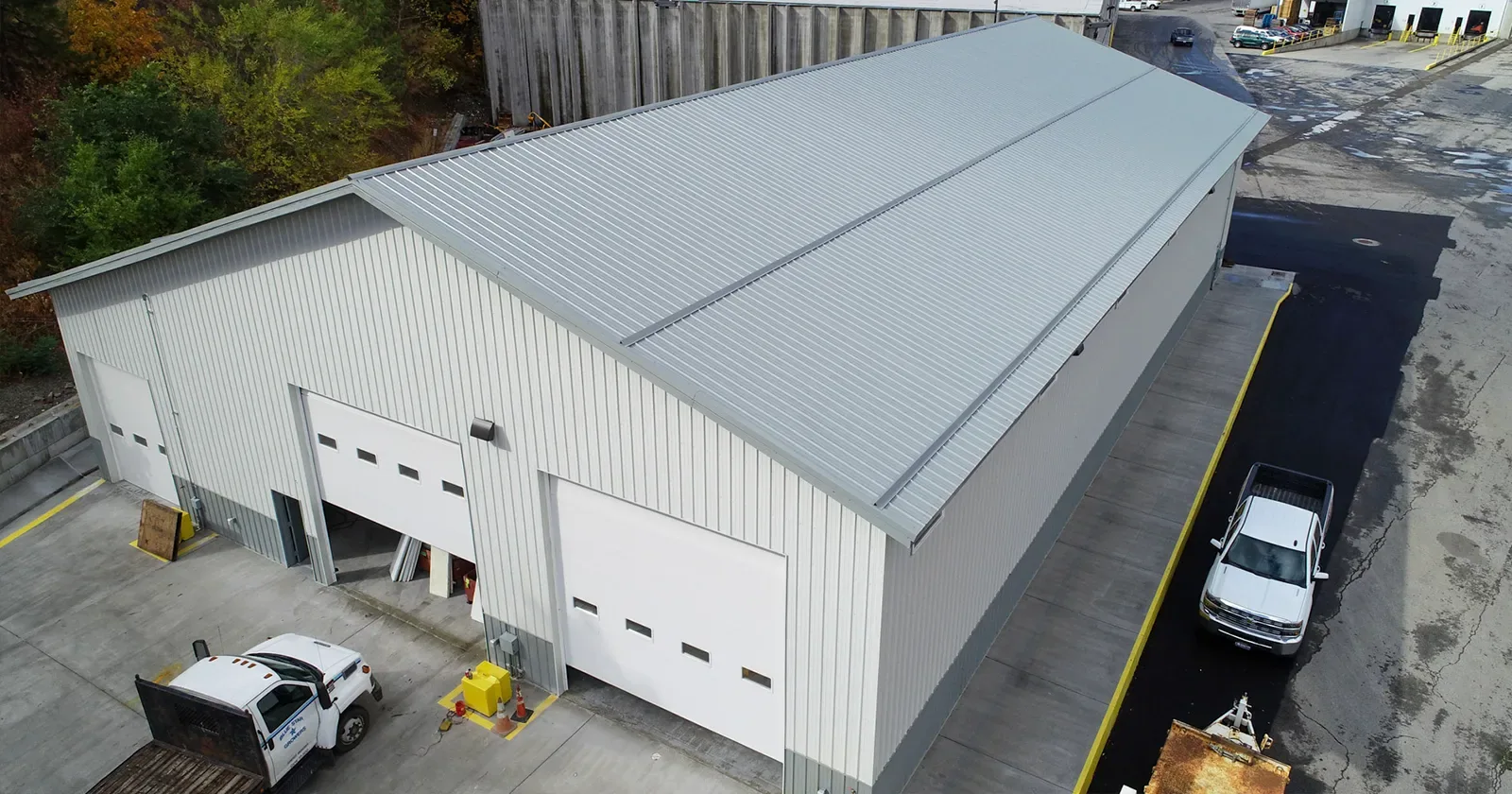
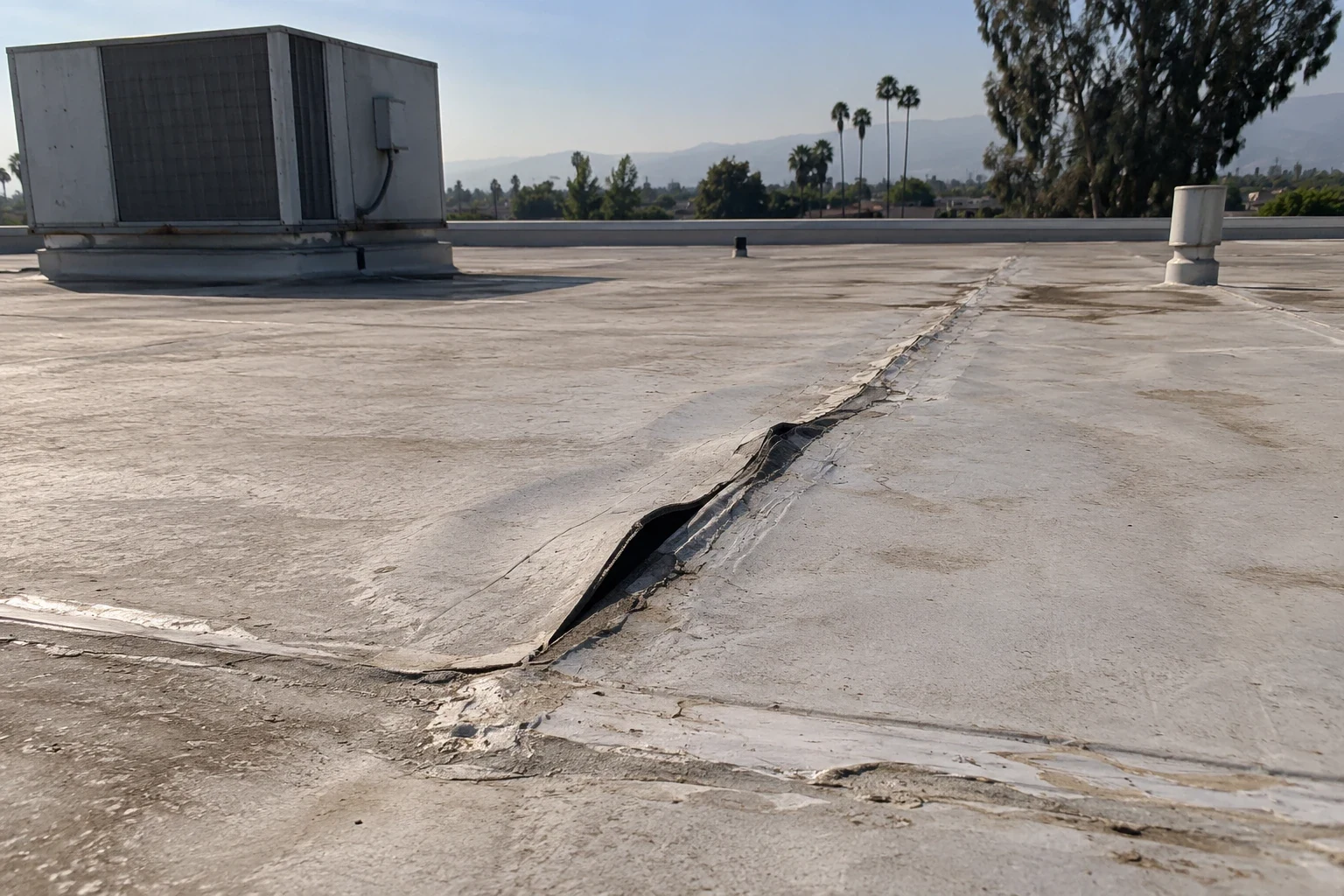
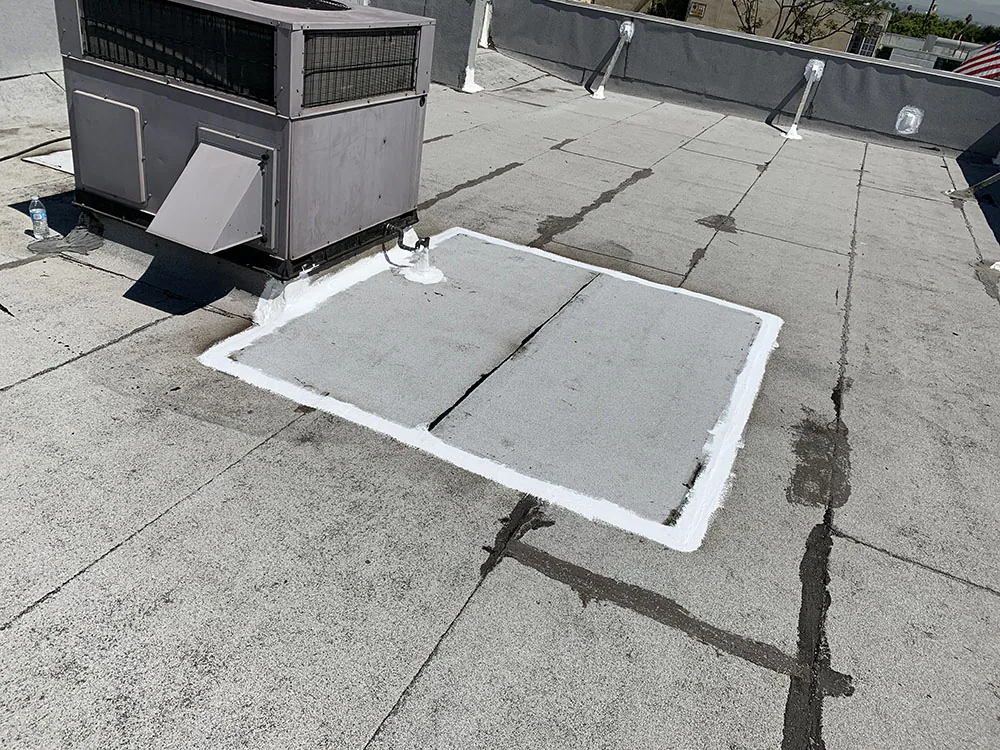
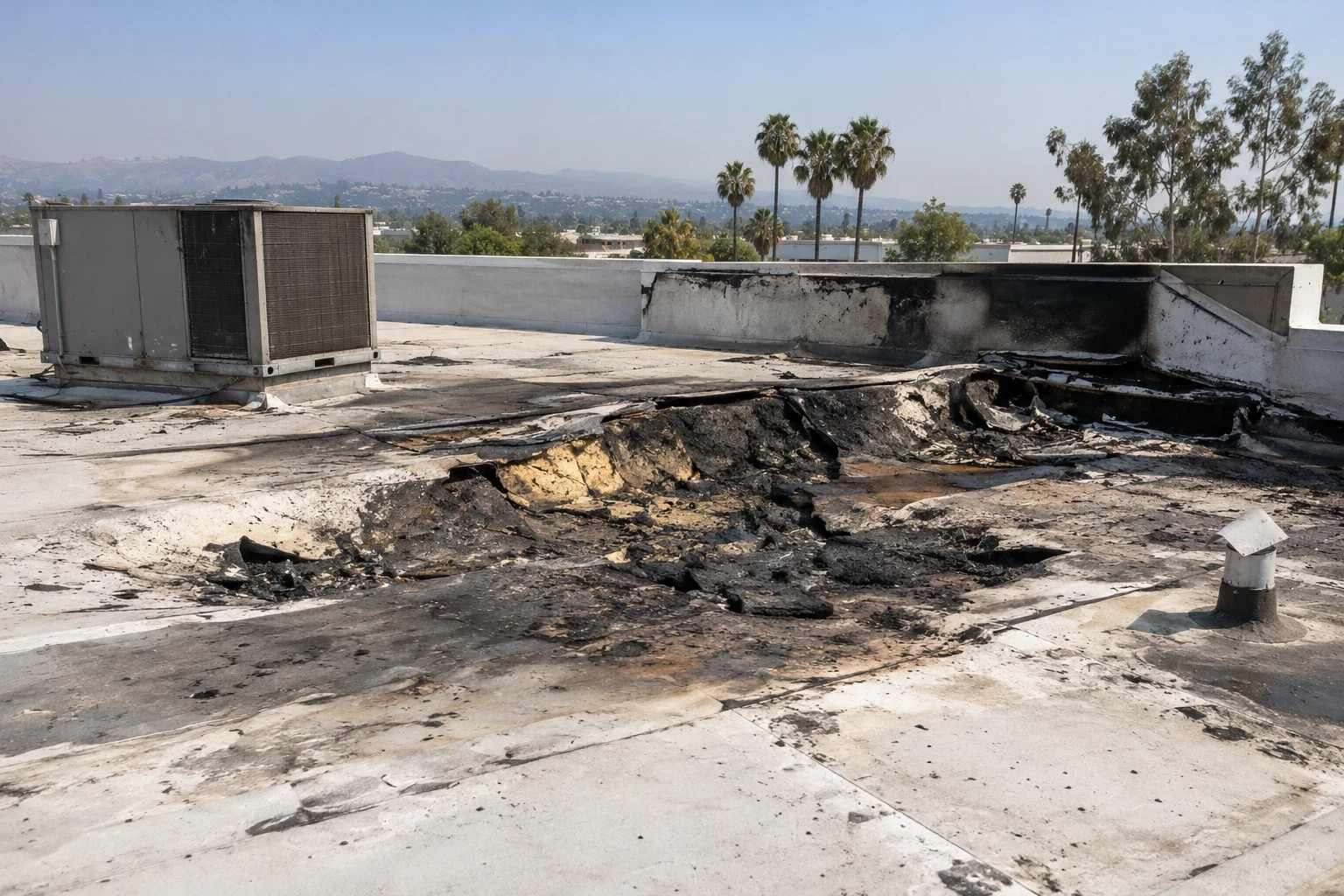
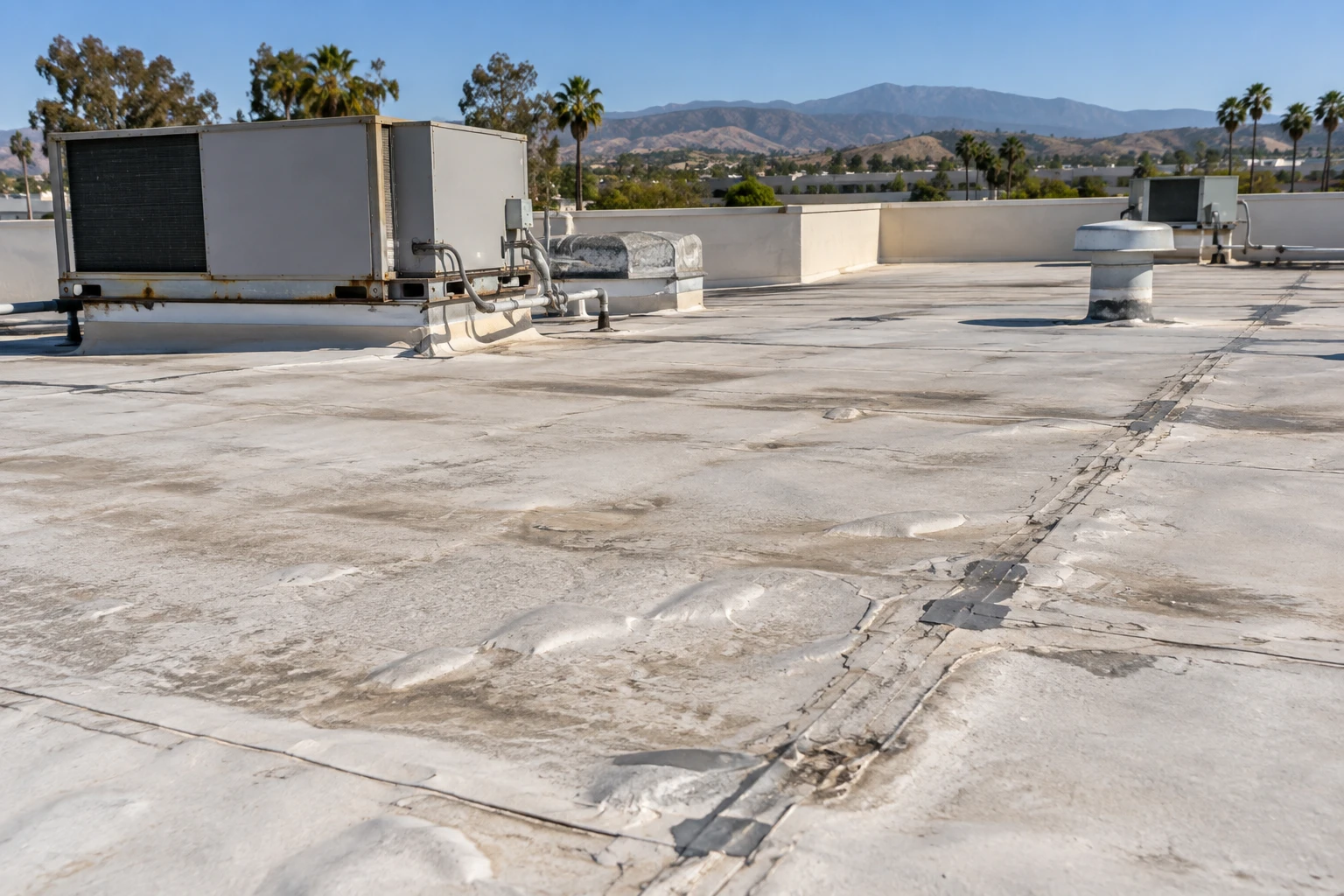
A hot afternoon in Fullerton, CA can compress the safe work window on an exposed roof. NOAA's August normal reaches a mean daily maximum of 86.7°F, while the surface of a particular roof can differ with color, insulation, and exposure. Before opening a damaged area, we coordinate roof access, tenant hours, staging, and the day's close-in point. That sequence matters as much as identifying the visible symptom.
Which roof condition needs attention first
Water inside a building, a lifted edge, a split seam, and a slow drain each call for a different first move. We document the affected roof section, trace nearby transitions, and separate active entry points from older staining. A time-sensitive roof response can secure an exposed area while a commercial roof inspection maps the wider condition. The City describes the Southeast Industrial Focus Area as having large parcels and mainly one- and two-story buildings. That district pattern does not establish the access route or staging space at an individual property.
Match the finding to a repair scope
Standing water around a drain or scupper may point to a blocked outlet, a low area, or a drainage detail that needs correction. Our ponding-water repair review records the location and drainage route before we recommend work. A seam that has opened requires a different test and repair method; the seam-failure scope should identify membrane type, lap condition, and nearby repairs. Split metal, failed curb flashing, and punctures receive their own inspection path rather than a coating applied over an unresolved defect.
For wind-related damage, we inspect perimeter details and nearby membrane attachment, then record any displaced material. The wind-damage assessment can distinguish an isolated repair from a broader securement concern. If the evidence points to a membrane puncture, we isolate the affected area and confirm that the proposed patch suits the existing assembly.
How do repairs fit an occupied property
Harbor Gateway is a City-defined area along Harbor Boulevard with auto-oriented retail and limited connections to Downtown. On an active commercial property there, deliveries, storefront access, and roof staging may compete for the same path. We identify the equipment route, protect entrances, and set the repair boundary before material reaches the roof. Where work can be divided by section, the daily close-in and next-day handoff are written into the schedule so an open repair does not become an untracked exposure.
What belongs in the repair record
A useful record ties each recommendation to a roof location. It should show the observed defect, adjacent seams or penetrations, photographs, repair material, and any test performed after work. Our condition report process keeps confirmed findings separate from questions that need a follow-up visit. If a repair involves an edge, curb, or drain, we note the transition that was addressed and the nearby area that remains under observation. That gives a property manager a clear basis for closeout and later budgeting.
Set the first work window
Send the building address, roof access contact, affected area, operating hours, and any available plans or prior repair notes. We can review the active condition, establish whether a temporary measure is needed, and schedule an inspection around the property's access limits. For nearby business areas, the Southeast Industrial Focus Area and North Harbor Corridor each contain varied uses; the location identifies context, while the roof walk confirms the scope. A final flashing review or puncture repair follows the evidence at the specific building.
Commercial Roofing Questions
Can a repair start before the leak source is confirmed?
We can make a safe temporary response when conditions warrant it, then trace the entry point before pricing permanent work.
How do you decide whether damage is isolated?
We compare the affected area with seams, edges, penetrations, drainage, and prior repairs, then record what the inspection confirms.
Can tenants remain in the building during roof repair?
Often, with a defined work zone, protected access, clear notice, and a sequence that accounts for tenant hours and equipment movement.
What should I send before scheduling?
Provide the address, roof access contact, leak location, operating limits, recent photos, and any roof plans or repair records.