
Assess EPDM membrane condition, seams, attachment, drainage and repair options for commercial roofs in Fullerton, California and nearby districts.
Roof leak, storm damage or an inspection coming up?
An EPDM roof is a flexible rubber membrane system, and its seams are usually joined with adhesive or tape rather than hot-air welding. That changes how a repair is prepared and checked. We begin by identifying the sheet, attachment, edge details, leak history, and any coating or repair product already on the roof. NOAA's 1991 to 2020 normal for Fullerton Municipal Airport lists an August mean daily maximum of 86.7°F. The figure helps with seasonal planning; it does not substitute for conditions measured at the work area. A commercial roof inspection maps the actual roof and access limits before a scope is selected.
What should be identified before EPDM work?
EPDM sheet thickness, reinforcement, attachment, seam product, and prior repairs can affect the work plan. We compare available installation records with visible labels and field conditions, noting any uncertainty rather than inferring the complete assembly from a black surface. The field walk records blisters, wrinkles, punctures, shrinkage, open flashing, and repaired areas. Those observations are not automatically proof of a leak; we compare them with the reported interior symptoms and moisture findings. The roof map should identify which sections were accessible, where a sample was taken, and what remains unknown. Fullerton's Commonwealth Corridor and North Industrial Focus Area are city planning contexts, but no district record identifies the membrane or condition of an individual building.
How do EPDM seams differ from welded seams?
Many EPDM field seams use seam tape, primer, or an adhesive system, while some existing roofs have different products or details from earlier repairs. The crew examines the lap edge, surface preparation, contamination, and bond condition at accessible locations. A probe can reveal a lifted edge at the test point, but it cannot evaluate every foot of concealed bond. We mark sample locations and avoid extending a finding beyond the tested area. If a seam edge is open, the repair method depends on the sheet, preparation, moisture, and product compatibility. A TPO system uses a different seam process; PVC seam work also relies on heat welding and should not be treated as an EPDM repair procedure.
What does attachment tell the repair team?
EPDM may be ballasted, mechanically fastened, or adhered, and a roof can include more than one condition after prior work. Attachment affects how the sheet moves, where a patch can tie in, and what must be protected during a repair. We review available drawings, note visible plates or ballast, and inspect edge metal where access allows. None of those observations alone establishes concealed fastener spacing or wind performance. If the distinction matters to a larger repair or replacement decision, the manager can approve a test opening with a defined sample location and closure detail. The written scope should state which evidence supports the assembly description and which part is still unverified. For a localized defect, a repair assessment can separate a membrane patch from a question about the broader attachment system. The repair note should show the boundary of the patch and the nearest fixed reference, such as a drain or curb. That helps a later inspection check whether movement or service work has altered the same section.
Where do EPDM details need closer review?
Roof edges, parapets, drains, scuppers, skylights, curbs, and pipe penetrations bring the membrane into contact with other materials. We look for loose terminations, fishmouths, open corners, sealant that has separated, and movement from rooftop service. A repair should identify the transition and its substrate, not simply cover a visible opening. If several details have failed, we map them and compare the pattern with drainage or movement rather than writing a list of unrelated patches. A drain and scupper review can document the outlet path, while an edge-metal inspection can address perimeter terminations. The property manager receives separate findings for membrane, flashing, and drainage work.
How is a reported leak traced on an EPDM roof?
Water at a ceiling location does not always align with the roof opening above it. We ask when the leak appears, whether it changes with wind or equipment cycles, and what repairs were made before the call. On the roof, we compare that history with seams, penetrations, low areas, and available moisture evidence. If the source is not visible, the report separates likely paths from confirmed defects and recommends the next test instead of promising a single-point fix. An EPDM leak investigation may include a focused walk, moisture survey, or controlled opening if the owner approves. The findings include a marked location and a safe stopping point for any temporary work.
When is an EPDM recover or coating worth evaluating?
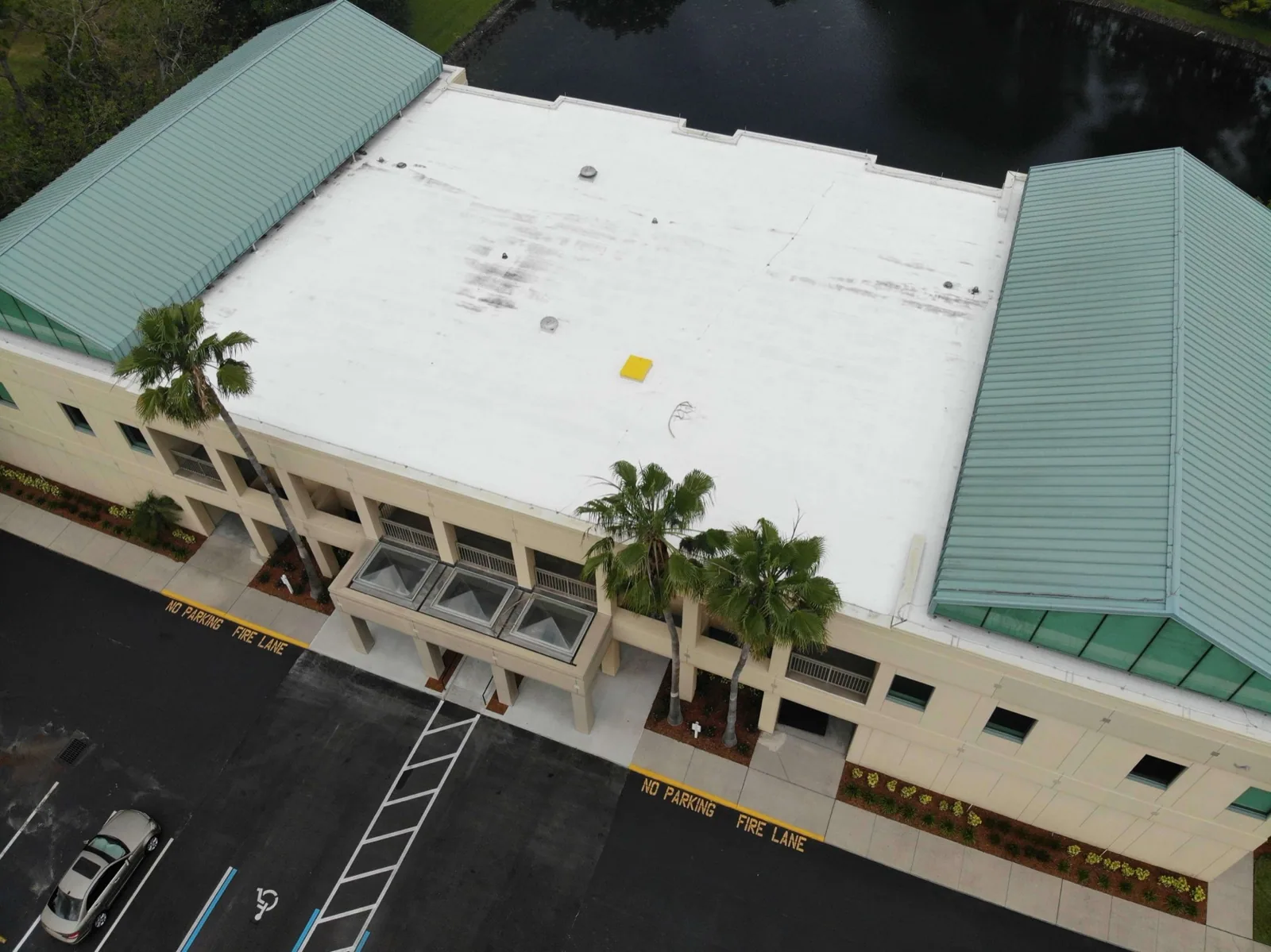
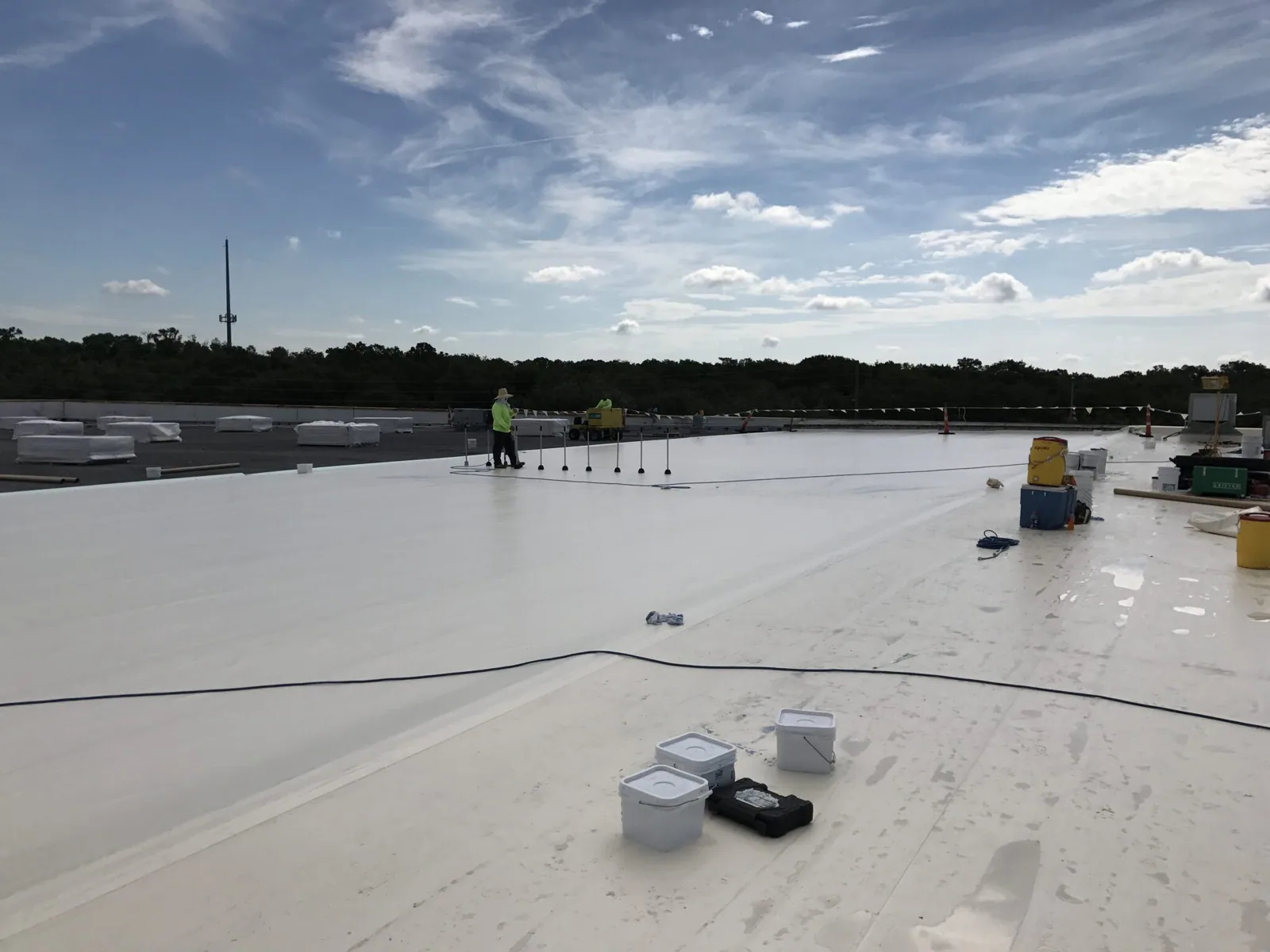
A recover or coating should follow an assembly review, not a color or age assumption. The team checks for wet insulation, loose or brittle sheet, adhesion limits, edge height, drainage, and incompatible prior materials. Representative tests can help establish whether a restoration system bonds and whether the substrate is suitable. If moisture is widespread or attachment is compromised, adding another layer may hide a condition that needs correction. We present the test locations, exclusions, and estimated repair quantities so the owner can compare a limited repair with restoration and replacement. The coating-restoration assessment addresses eligibility and preparation, while a recover review considers load, drainage, and edge conditions before a new layer is discussed.
What belongs in an EPDM maintenance record?
Record seam and flashing observations, drain condition, loose ballast if present, punctures, repair materials, and photographs with locations. A dated plan helps the next inspection distinguish an old patch from a new opening. The manager should also retain access procedures and coordinate any trade that will work near the membrane. If the building sits near Downtown Fullerton or the Commonwealth Corridor, that area context helps route planning, but the roof file must remain specific to the property's actual layout. A maintenance visit can follow the map, inspect previously noted conditions, and record changes without assuming every area has the same exposure. The file should list open questions and who will decide whether additional testing is warranted. A seasonal maintenance note can record loose debris, branches, drain screens, and service traffic as observed conditions, with a photo location for later comparison. It should also state whether a drain was cleared by the owner or another vendor, rather than treating a roof visit as authorization for unrelated work. This practical history can help the next inspection focus on changes since the prior date. Keep the update with the building contact list, so a staff change does not leave the roof map without an owner.
Commercial Roofing Questions
Can EPDM be patched with a different membrane?
A different sheet may need a transition detail rather than a direct patch. The existing EPDM, substrate, and approved repair materials must be identified before a connection is specified.
Does an EPDM seam probe confirm the full lap?
It checks an accessible edge at the tested point. The report maps that location and notes sections that were blocked, concealed, or outside the inspection scope.
Can a coated EPDM roof be repaired?
Possibly, but the coating can affect surface preparation and adhesion. The crew identifies the coating, checks compatibility, and tests a representative area before proposing a detail.
Should shrinkage trigger a full replacement?
Not by itself. We document the movement, terminations, seams, and substrate evidence, then compare localized corrections with the condition of the full assembly.
What should I provide before an EPDM inspection?
Send the Fullerton property address, roof plan, leak dates, repair records, access rules, and a facilities contact. The scope can then focus on relevant areas.