
Schedule commercial roof maintenance in Fullerton with documented drain clearing, flashing checks, repair priorities, and a property-specific follow-up plan.
Roof leak, storm damage or an inspection coming up?
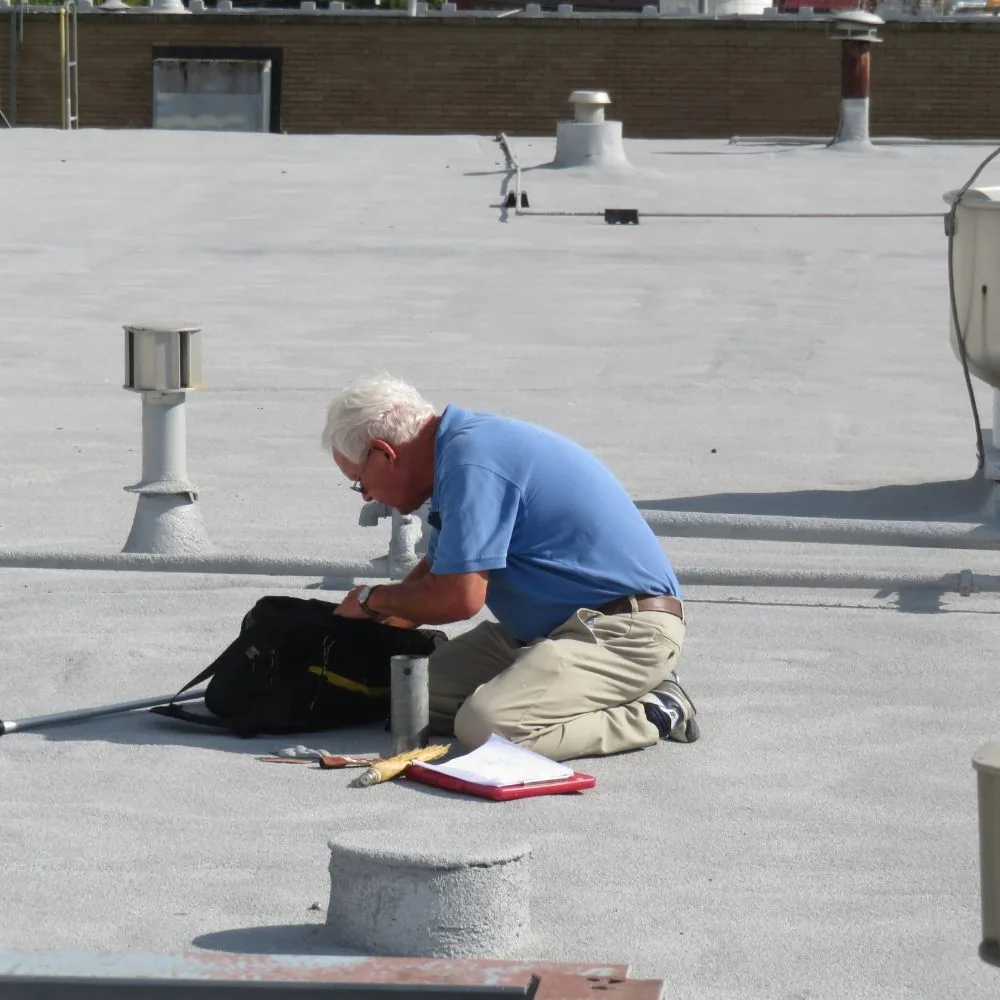
A Fullerton maintenance visit should fit the roof section a crew can inspect before the surface heats and the building changes shifts. The property manager needs a repeatable walk, a record of what was checked, and a repair list that separates urgent entry points from routine monitoring. We review seams, edges, drains, curbs, penetrations, coating wear, and prior patches, then map each observation to the building. The visit also checks roof access and equipment clearances so the next service call does not begin with a locked hatch or blocked route. NOAA normals for Fullerton show a mean daily high of 86.7 degrees in August; that station average is scheduling context, not a reading of this roof. A condition inspection can establish the initial baseline, while a roof asset record can carry the findings into the next budget cycle.
What should a recurring visit cover?
Set a visit frequency from the roof condition, assembly, drainage, exposure, and service history rather than applying one calendar to every building. Each visit should follow the same roof map, then record changes at known repairs and transitions. We check accessible drains, scuppers, seams, terminations, flashing, rooftop equipment zones, and areas where debris or standing water appears. If a field condition cannot be reached safely, the report names the limit and required access. In the Commonwealth Corridor, Fullerton's planning materials identify a city-defined corridor; the maintenance scope still uses the property's roof sections and access procedures. The manager receives a dated checklist, photographs, work completed, and recommended follow-up. If conditions change between planned visits, the site contact can request a separate repair assessment rather than wait for the next calendar date.

Which conditions deserve a closer look?
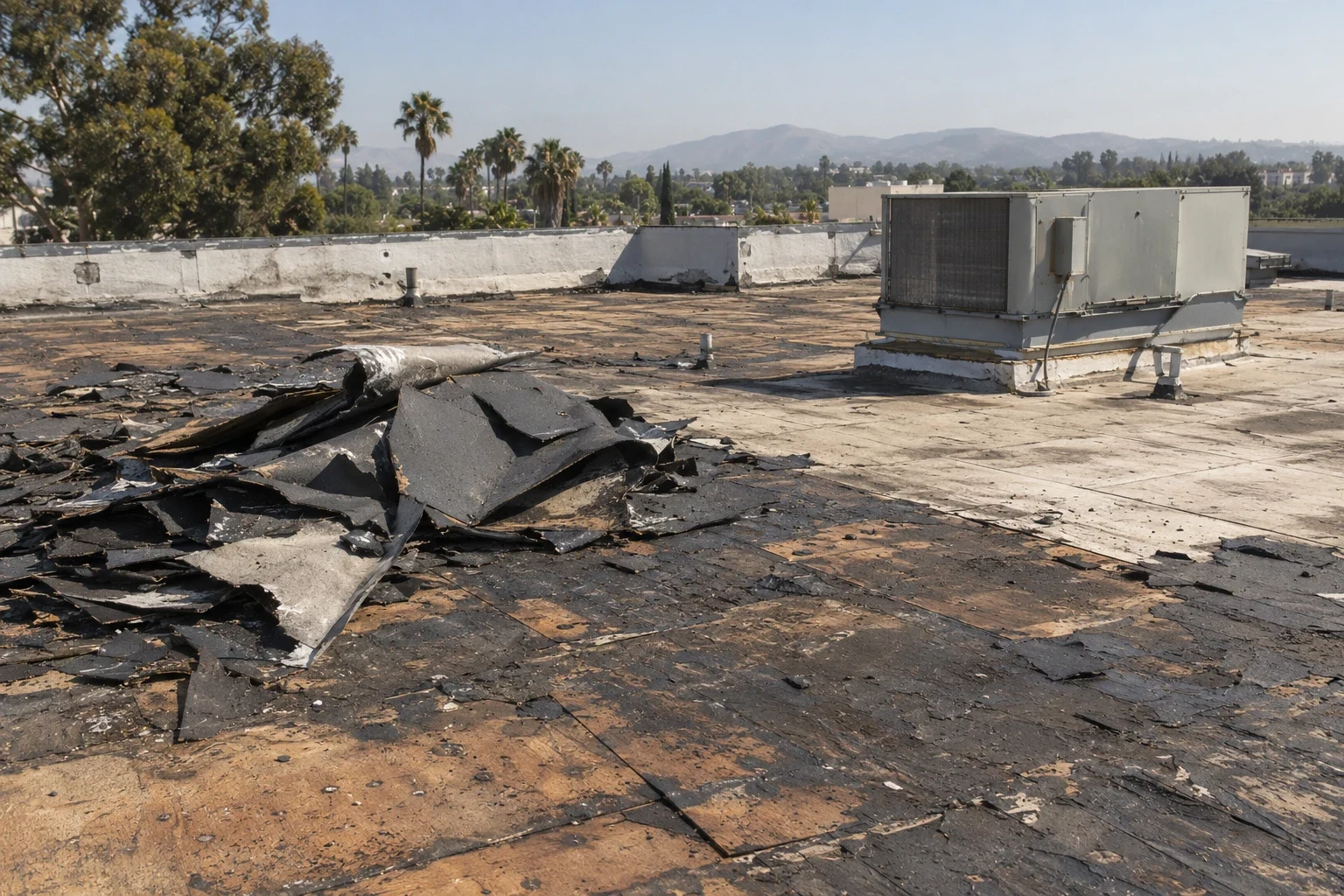
The maintenance walk tracks open seams, punctures, loose edge metal, separated flashing, clogged drains, damaged supports, and patches that show movement. We record the area, size, nearby detail, and whether water entry is known. A blister, stain, or surface mark is not automatically a failed roof; the crew checks its boundaries and compares it with the repair record. If moisture below the membrane is suspected, targeted testing may be useful. The survey scope should name scan conditions and confirmation points before a result changes the repair plan. We also note rooftop work that could affect the assembly, including new conduit or equipment service. A property near Orangethorpe Avenue may have changing industrial activity, but the roof's actual use and access are confirmed with the manager. Each observation leads to a next action or a reason to monitor.
How are drainage problems recorded?
Debris at a drain, a slow scupper, or sediment at a low point deserves a dated note and a clear photo. The maintenance crew removes manageable debris when that work is included and documents conditions that need a plumber, sheet-metal contractor, or roof repair. We check strainers, visible drain bodies, overflow paths, and nearby membrane where access allows. A roof walk does not establish drain capacity or hidden piping condition, so any suspected blockage beyond the visible opening is referred for the right test. The repair record should show whether water cleared after service and which areas still retain water. If ponding repeats, review roof slope, deflection, drain placement, and prior repairs before adding a coating or overlay. The manager can then decide whether to schedule drain and scupper corrections or add a defined repair to the next work window.
How does the plan protect occupied operations?
The manager sets roof access, escort rules, tenant notice, loading restrictions, and the times equipment must remain in service. We agree on the staging point and the section to inspect before moving tools. The City describes the Fullerton Transportation Center plan as covering several land-use types, from workplaces and shopping to public service and housing. That district context does not determine an individual property's hours or safety controls. The building contact identifies rooms, process areas, and equipment that require coordination. If a repair is needed, the work order defines the boundary, protection, daily close-in, and who approves added scope. Emergency calls can be answered around the clock, holidays included; the site contact still provides access details and the current water impact when requesting a response. A written handoff names the next review date and keeps a maintenance visit from turning into an undocumented repair.
How are maintenance findings prioritized?
Priorities should connect condition, consequence, and timing. Active water entry, unsafe access, detached edge metal, or a damaged drain needs a direct response. Surface wear without a known path may fit scheduled monitoring or testing. The report explains why an item is urgent, what work would address it, and which assumptions affect the estimate. The City's zoning framework includes General Commercial and Manufacturing Park designations; those categories help describe land use but do not establish a roof's material or replacement date. We rely on field findings and records for that. A capital plan can compare recurring maintenance costs with a larger scope, while a warehouse roof concerns can incorporate loading and stored-goods concerns when relevant. The owner receives one list for immediate work and another for budget review, each tied to a roof section and responsible contact.


What should the next visit be able to compare?
Keep the same map labels, photo angles, repair notes, inspection dates, and open actions with the building file. A future crew can then see whether a patch moved, a drain stayed clear, or a known stain changed after rain. Record the material used and who completed each repair so the next visit can assess compatibility and service life. If a property has several roof sections, group them by assembly and access route rather than relying on a single building-wide status. Industrial uses and nearby road or rail connections help orient a property record, while maintenance history should stay tied to the exact building and roof section. Leak follow-up remains tied to the original test points. The closeout sets the next inspection date and the person who owns it. Set a seasonal review before the first planned roof project and repeat it after major equipment work that could affect flashing or access. The maintenance record should note whether new rooftop equipment was installed, whether a trade opened the membrane, and who inspected the resulting curb or penetration detail. If the building changes use, loading, or tenant occupancy, update the access plan as well. This keeps the next visit focused on current conditions instead of relying on the prior year's route and assumptions.
Commercial Roofing Questions
How do I choose a maintenance interval?
Use roof age, assembly, drainage, exposure, known defects, and prior repair history to set the review schedule. The first inspection can identify whether different sections need different intervals.
Does a maintenance visit include repairs?
The work order should say what checks, cleaning, and minor repairs are included. Conditions outside that scope are photographed and sent for approval before added work proceeds.
Who should receive the visit report?
Name the property manager and any facilities contact who can authorize repair. Include a backup contact for secured access or equipment coordination when the primary person is unavailable.
What if a leak appears between scheduled visits?
Contact the emergency response line with the building address, affected area, and access rules. Around-the-clock response is available, including holidays, with dispatch details confirmed for the site.
Can maintenance records help with capital budgeting?
Yes. Dated findings and completed repairs show which issues recur, where moisture testing remains open, and which sections may need a larger scope for budget review.