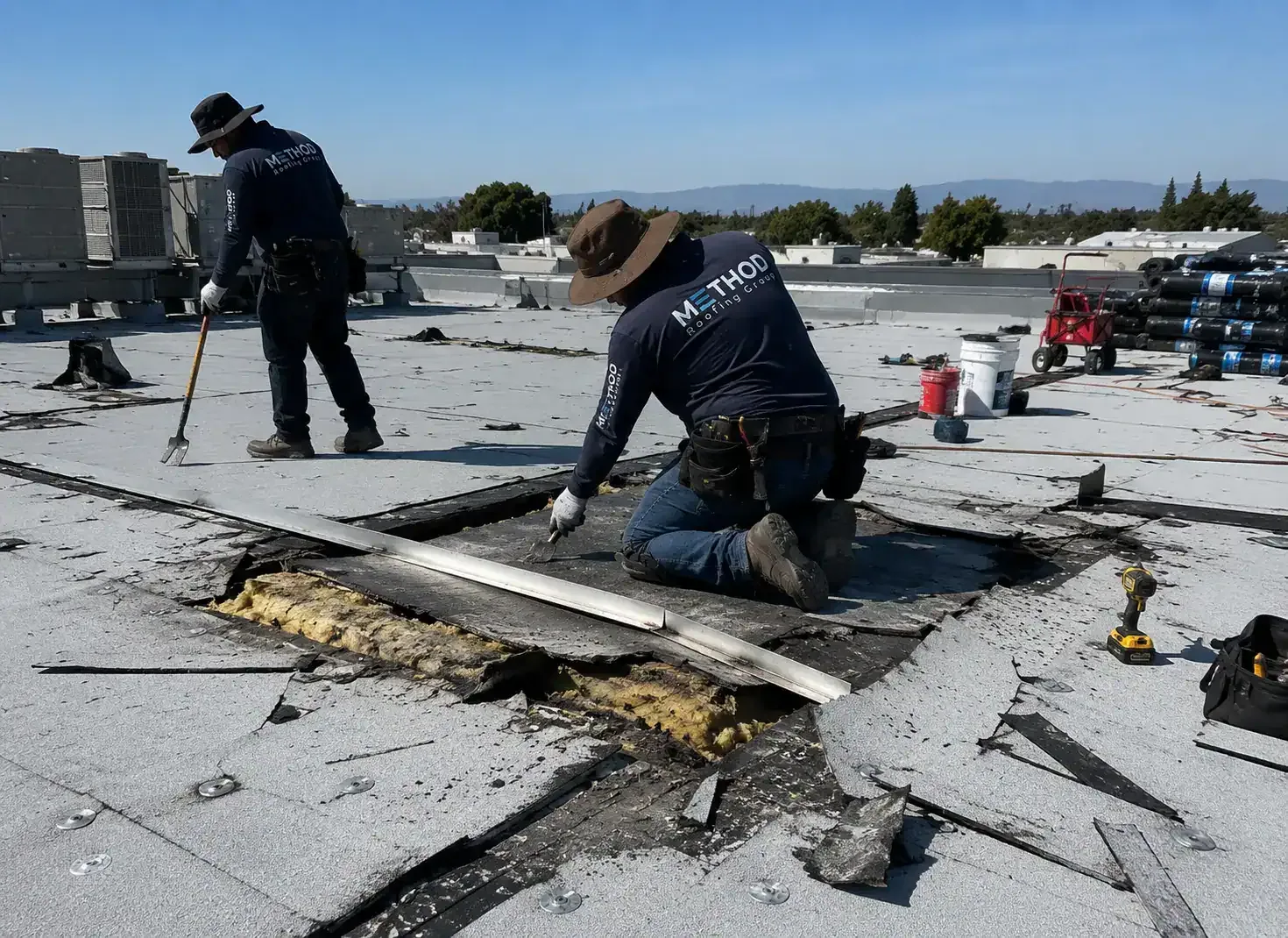

Track commercial roof condition across Fullerton properties with mapped findings, work priorities, access records, and a repeatable review schedule.
Roof leak, storm damage or an inspection coming up?
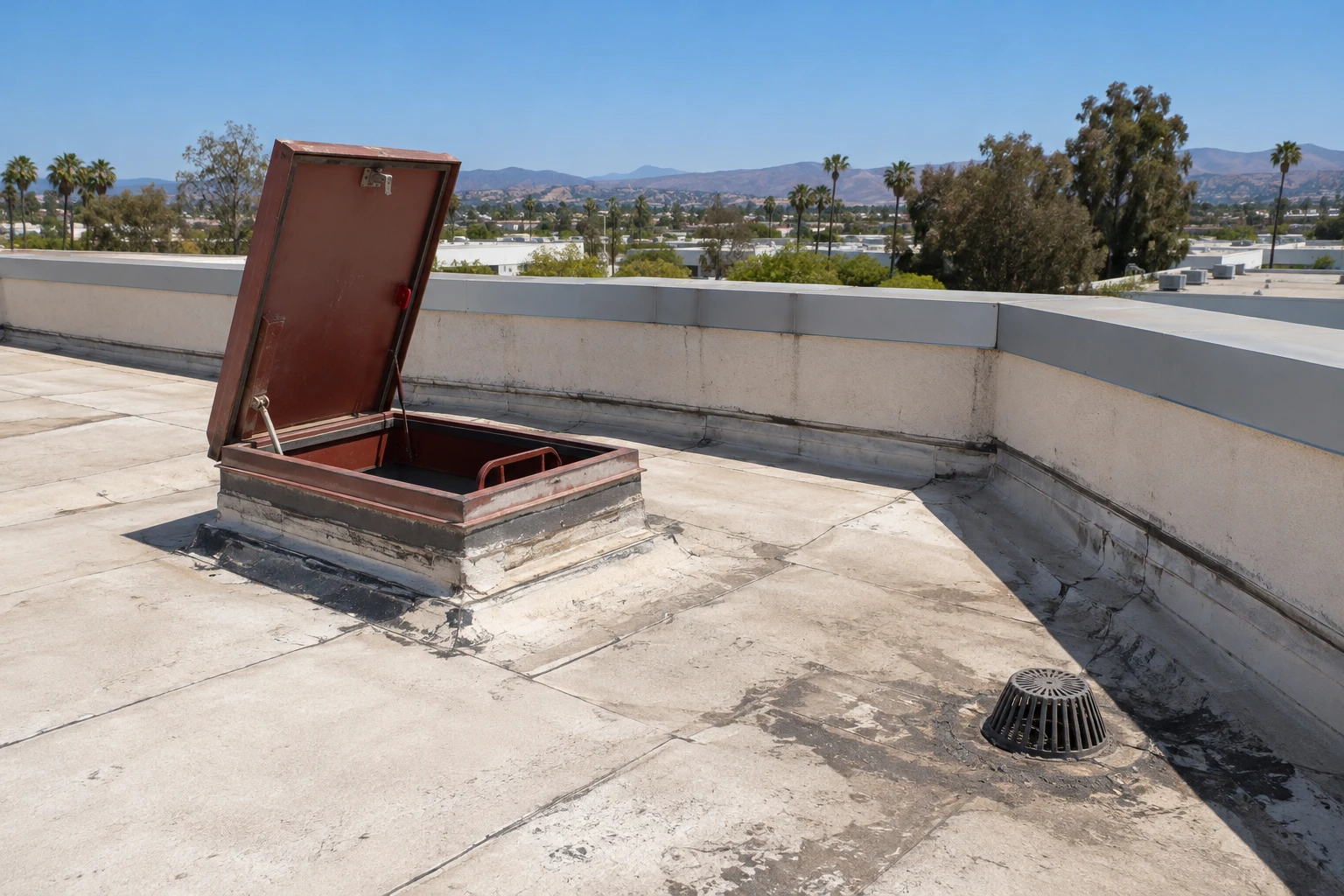
A locked roof hatch can turn a routine portfolio visit into a schedule and handoff problem. The asset manager needs the right contact, a usable roof plan, and a place to record what each inspection could reach. For properties in Fullerton, CA, we build a roof register that connects assembly, condition, repair history, access limits, and next decision by building. The Southeast Industrial Focus Area contains large industrial parcels, while the Fullerton Transportation Center plan area includes residential, retail, office, industrial, public-service, and restaurant uses. A portfolio can span different operating needs even within the same city. We map those differences before setting one review rhythm for the assets.
What belongs in the roof register?
Start with property name and address, roof section, approximate age if documented, assembly, drainage, penetrations, access route, and current condition. We record whether a detail was observed, tested, or inaccessible, then attach photographs to the roof plan. If the material is not confirmed, the register marks it for field identification instead of filling the gap with an assumption. A commercial roof inspection can establish the baseline with visible defects, moisture concerns, and repair priorities. The asset record also names the person who can open the hatch and approve a test. With that contact saved beside the roof data, a later visit can reserve the right access window rather than repeat dispatch questions.
How should condition be compared across buildings?
A rating is useful only when it points to a repair or decision. We use the same categories for observed membrane, seams, flashing, edge metal, drains, and rooftop penetrations, while keeping the actual findings specific to each property. A wet area under one drain should not be treated as the same issue as a loose perimeter detail at another building. The register can separate active leaks, exposed openings, deferred maintenance, and monitored conditions, with the reason for each status. A written roof condition report keeps photographs and recommended next steps with the individual asset. The portfolio view then shows where a manager needs an inspection, a repair approval, or a capital decision.
Which roof work should move first?
Priority follows exposure, occupant or equipment risk, repair urgency, and the time needed to reach the roof. We identify open conditions that need temporary protection, then separate those from planned repairs and long-range replacement candidates. The list includes the person who approves the scope and the date for the next review. If two properties need crews in the same week, access restrictions and operational windows help determine the sequence. A maintenance program can schedule recurring checks of drains, seams, and penetrations, while a separate capital plan can prepare for larger work. The manager sees why one item moved ahead and what condition would change its rank.
How does Fullerton's building mix affect the register?
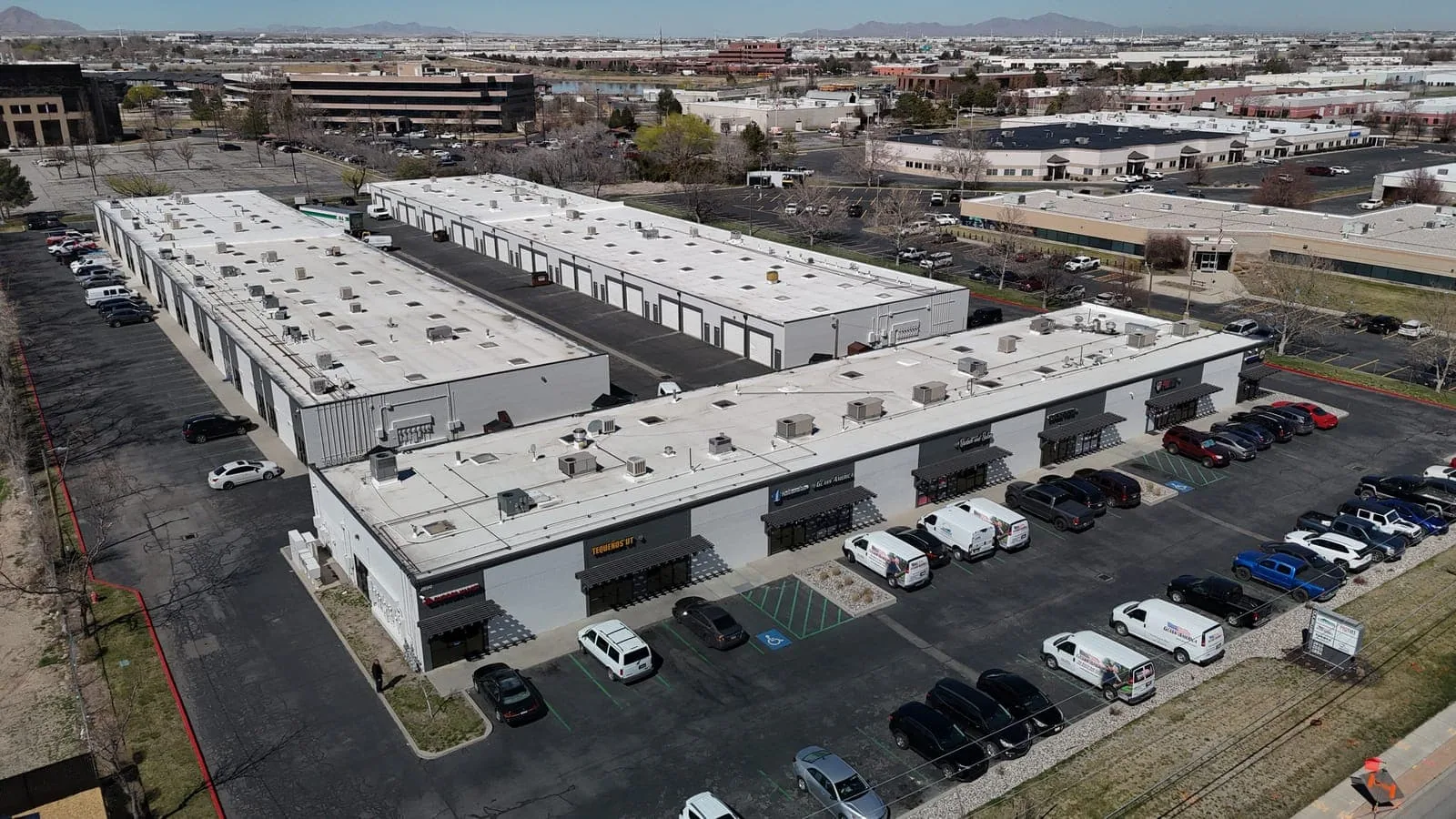
Fullerton zoning includes General Commercial, Central Business District Commercial, Commercial Manufacturing, Manufacturing General, and Manufacturing Park designations. These labels help organize the property's planning context, but they do not identify its roof assembly or service route. The City also describes the Transportation Center specific plan area as a mix of uses in many one- and two-story buildings. A portfolio record should keep those properties distinct from larger industrial sites when planning lift access, tenant notice, equipment shutdowns, or material staging. We note the building's actual operating hours and roof entry beside the inspection result. That gives a regional manager a useful city view without assuming every Fullerton asset follows the same work sequence.
How do teams keep records current?
Each inspection updates the same roof plan, condition categories, photo labels, and open-work list. If maintenance completes a patch, we record its location, material, date, and follow-up check. If the repair was temporary, the status remains open until the permanent scope is approved or the condition is re-inspected. A multi-site roof program can set shared reporting rules for separate properties while allowing each site its own access plan. The manager assigns one record owner and a review interval, then shares the handoff with facilities, accounting, and operations contacts who need it. Changes to a gate, tenant schedule, or production area are added before the next crew is dispatched.
What affects portfolio planning effort?
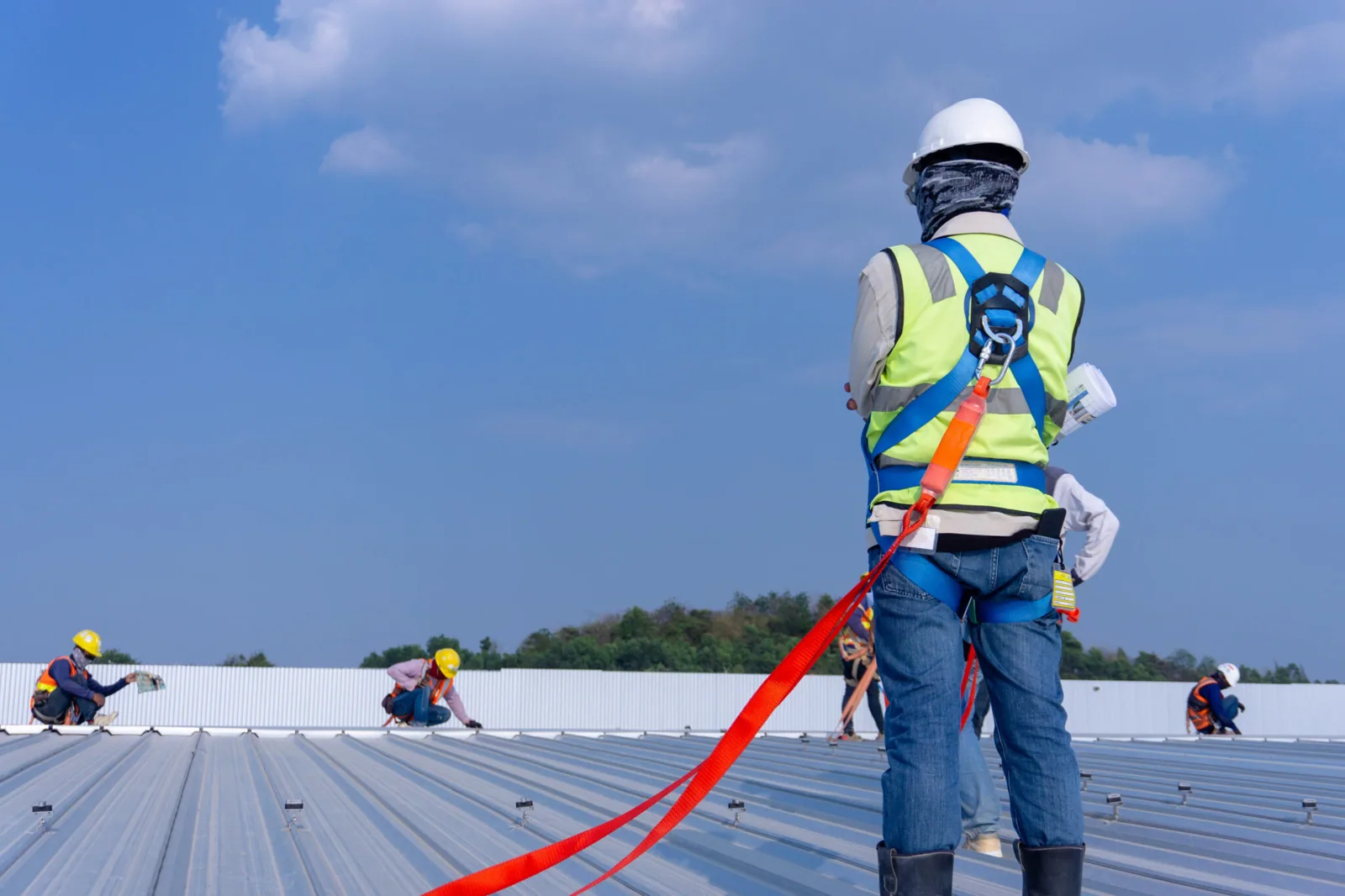
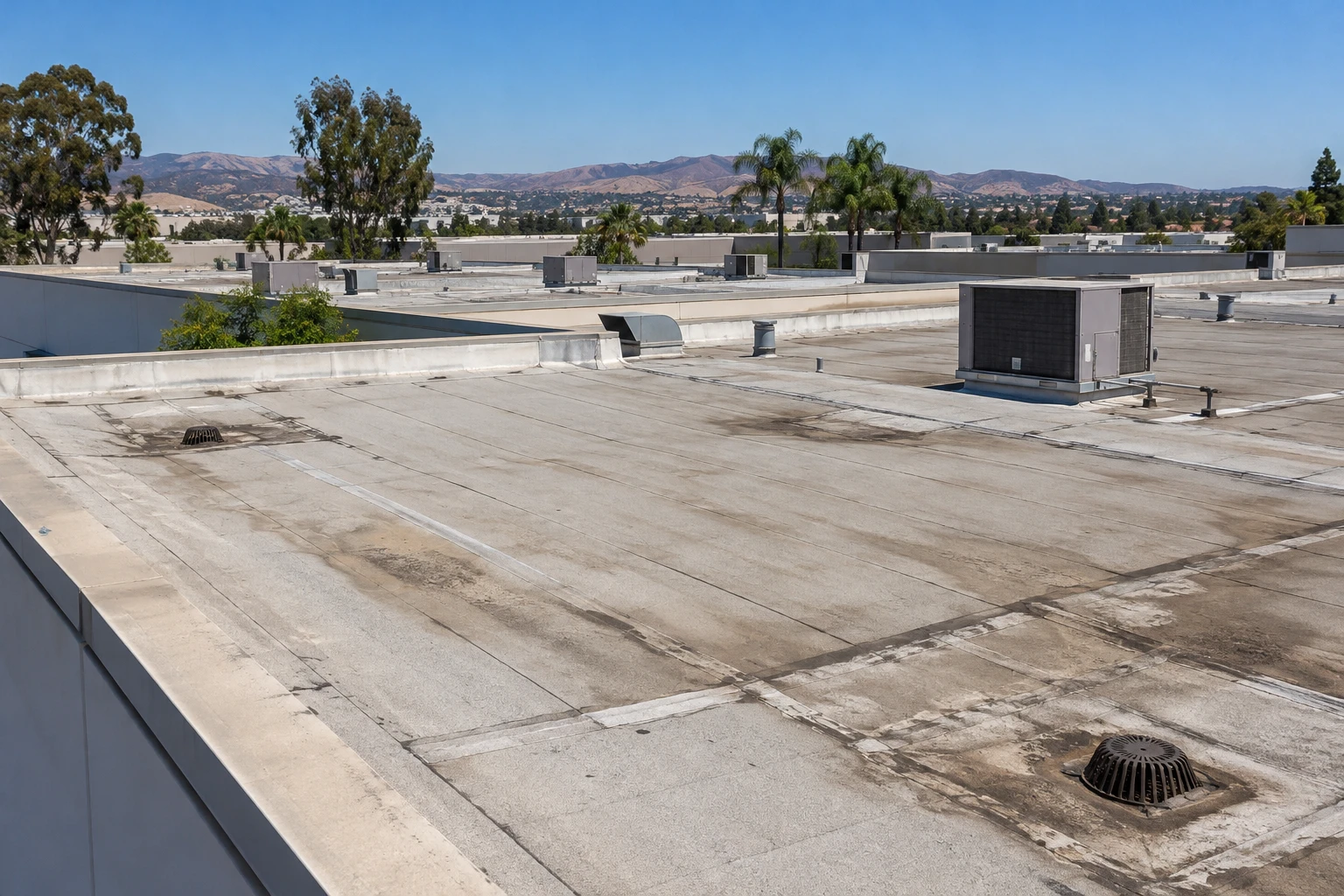
Planning effort depends on how many roof plans are available, whether assemblies are documented, how much maintenance history can be reconciled, and how often each building can be accessed. A facility with an active leak needs a faster response than a roof with a monitored seam, even if the second building has more recorded defects. We identify missing records separately from confirmed work so the manager can choose which surveys to fund first. Where replacement may be approaching, the report distinguishes repairable conditions from areas that need more testing. That lets an owner compare current maintenance with a larger capital allowance without treating a rough condition rating as a final scope.
Operational coordination also takes time. The team may need escorts, lift reservations, interior contacts, tenant notices, or a shutdown approval before inspection. We attach those requirements to the property record and reserve a work window that fits the building, not an assumed citywide schedule. Portfolio planning should separate roof work from projects that touch it. An HVAC change can create new curb openings, while a tenant buildout may restrict the hatch or material route. We record those dependencies with the roof section, then ask the property lead to confirm which project has schedule priority. That prevents one contractor's date from becoming another crew's unplanned hold. Each pending item also gets an owner and a due date. Estimates or equipment schedules still in review remain listed as dependencies rather than approved work.
What should the next portfolio review show?
A useful review opens with the property's current status, recent changes, unresolved approvals, and the next inspection date. It identifies which findings need a crew, which need a test, and which can remain under observation. The properties inside the Downtown Fullerton district have varied uses; the register should name each building and roof section rather than substitute a district label for the asset record. We share the updated map and decision list with the portfolio contact, then confirm who owns each follow-up. If new access or operating conditions change, the register is revised before the next field visit.
Commercial Roofing Questions
Can one roof rating compare every property?
A shared scale can organize the list, but it cannot replace the finding behind each score. We keep the rating beside the assembly, location, photographs, and repair decision so a manager can compare assets without flattening their differences.
Which records should we send before starting?
Roof plans, prior inspection reports, repair invoices, warranties, leak logs, and access contacts help establish the baseline. We mark missing items so the first visit can resolve them instead of treating them as confirmed data.
How are urgent conditions separated from budget items?
The register assigns an immediate response status to openings or active water entry and a separate planning status to deferred work. We list the approval and next check date for each item so operational exposure is not buried in a capital table.
Can property staff update the roof list themselves?
Staff can provide changes to access, equipment, tenant hours, and repair records. We identify which condition fields need a roof inspection so administrative updates do not turn into unsupported technical conclusions.
How often should the portfolio be reviewed?
The review interval follows each roof's condition, maintenance plan, operating needs, and open recommendations. We set the next date by asset and advance it when a leak, repair, or building change needs earlier attention.