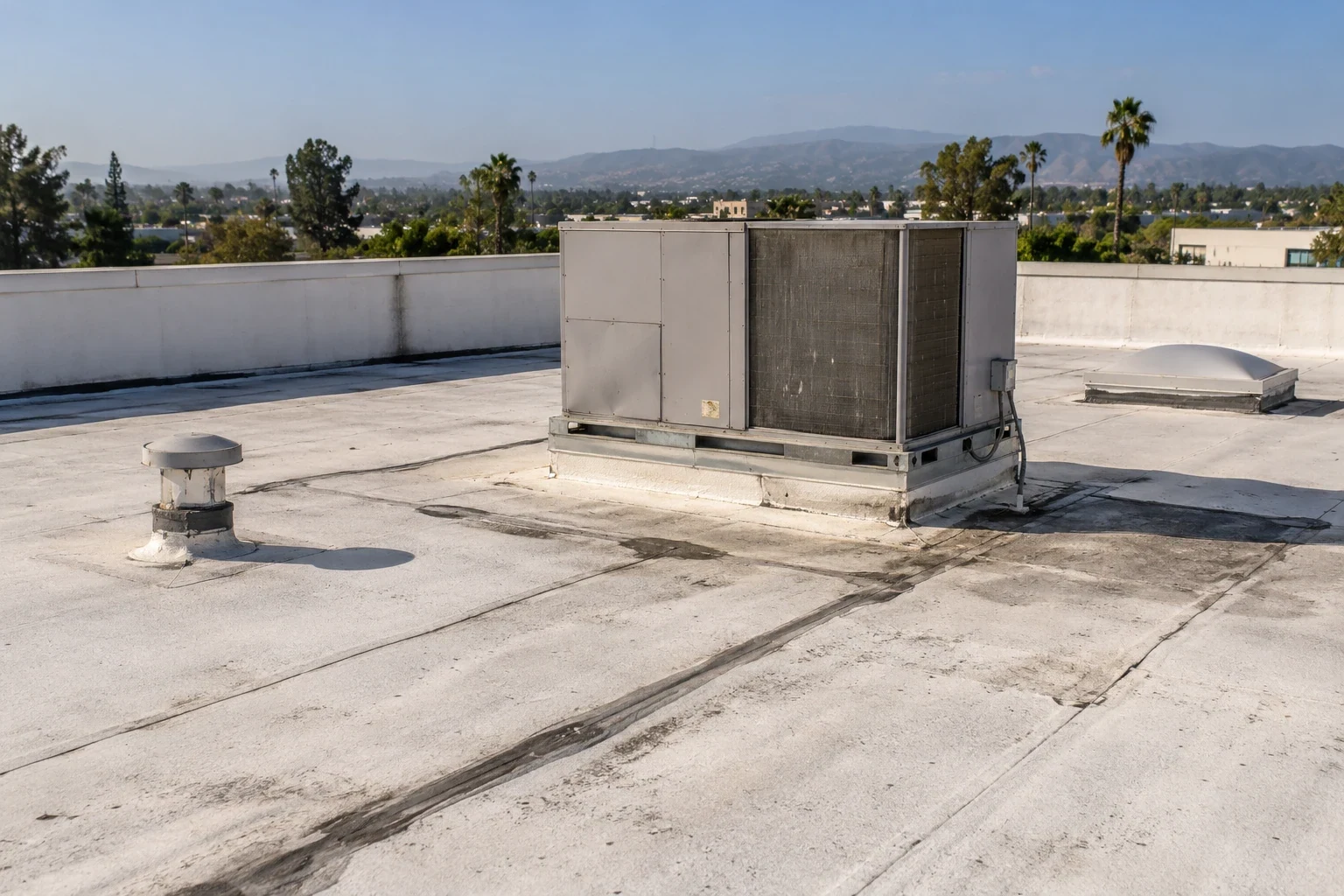

Plan manufacturing roof repairs and replacement in Fullerton around production access, rooftop equipment, heat-sensitive work windows, and daily closeout.
Roof leak, storm damage or an inspection coming up?
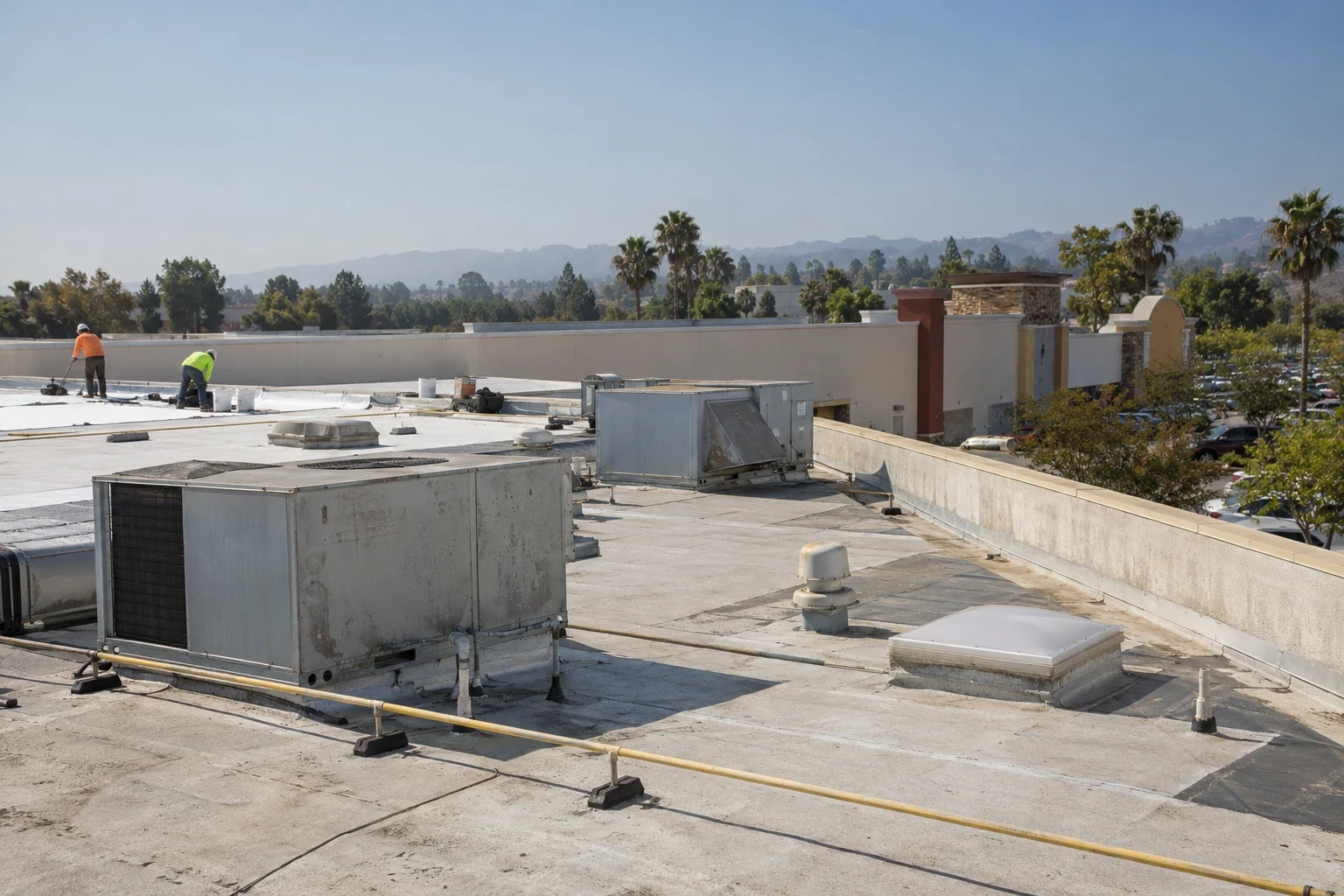
An August roof shift can lose its safe work window while a production line still needs the loading route below. We start with the plant's operating hours, roof access, equipment restrictions, and the reported condition, then mark sections that can be isolated. August normals at the Fullerton station put the mean daily maximum at 86.7°F. Heat can narrow a coating or adhesive work window, so the plant contact and supervisor should set start, break, and close-in times against current conditions. Large parcels and mainly one- and two-story buildings characterize the Southeast Industrial Focus Area; SR-91, SR-57, and rail provide district access. That geography makes access planning relevant, but the facility's current route and roof assembly must be confirmed on site. We map drains, seams, equipment curbs, and edge details before setting a repair boundary or a production-facing work window. The walk also checks parapet transitions, exposed fasteners, prior patch edges, and any roof area screened by machinery. The plant contact can label equipment that may not be interrupted and identify where materials can arrive without crossing an active loading lane. We record both restrictions before choosing a section to open.
How should production access shape the roof sequence?
We ask the plant contact to identify shift changes, receiving periods, safety gates, restricted process areas, and the person who can authorize roof entry. The crew verifies the ladder or hatch route and a staging point that does not interfere with deliveries or emergency access. If a lift is needed, its placement and material path are confirmed before a work date is set. The roof plan marks each section and the boundary between an active work zone and an area that remains in service. A daily close-in point is chosen before membrane or insulation is opened, with a weather hold and a handoff contact listed in the scope. That gives supervisors a defined time to review a change without a crew crossing a live process area. The occupied-production work sequence can keep roof activity tied to the plant's access controls.
Which rooftop equipment details need a trade handoff?
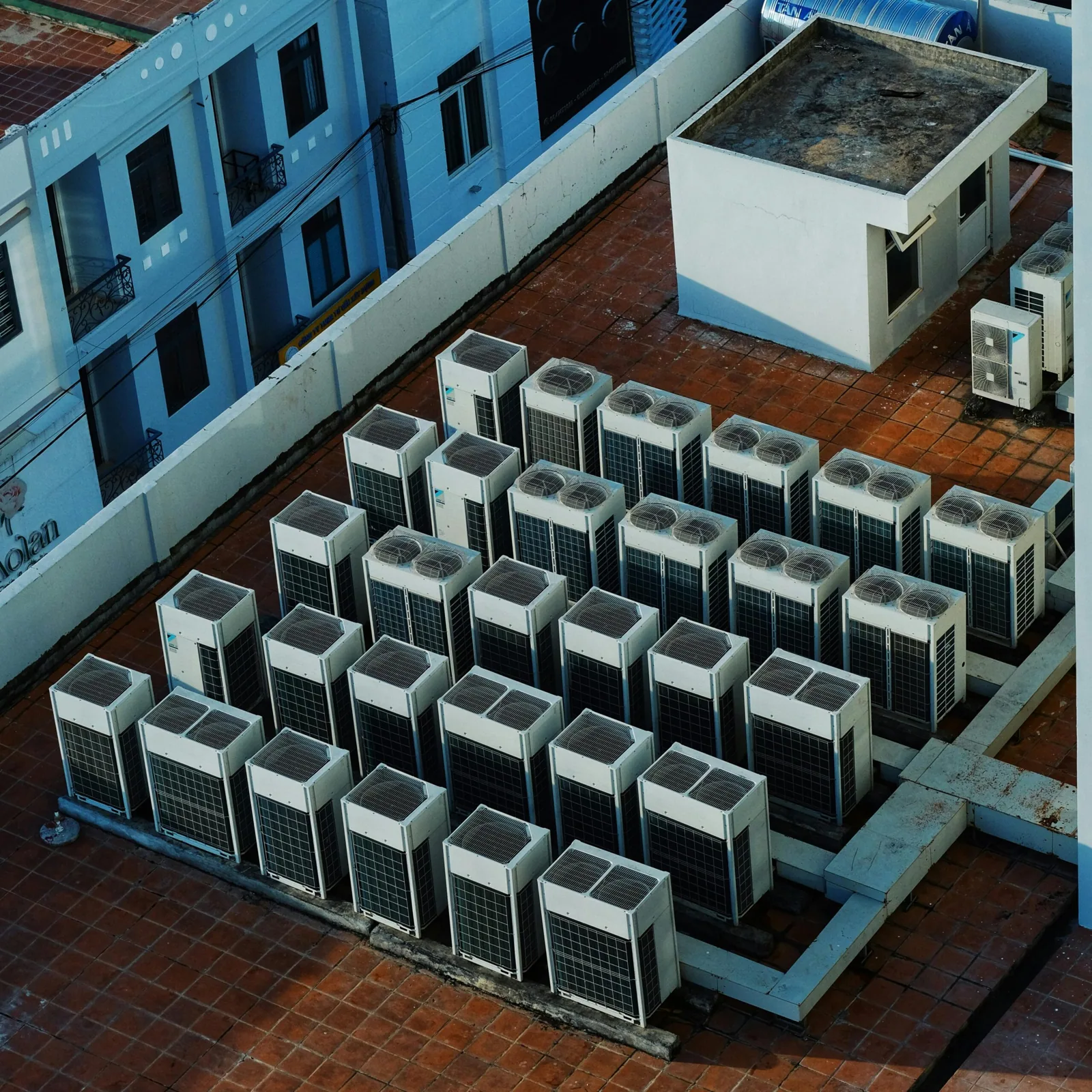
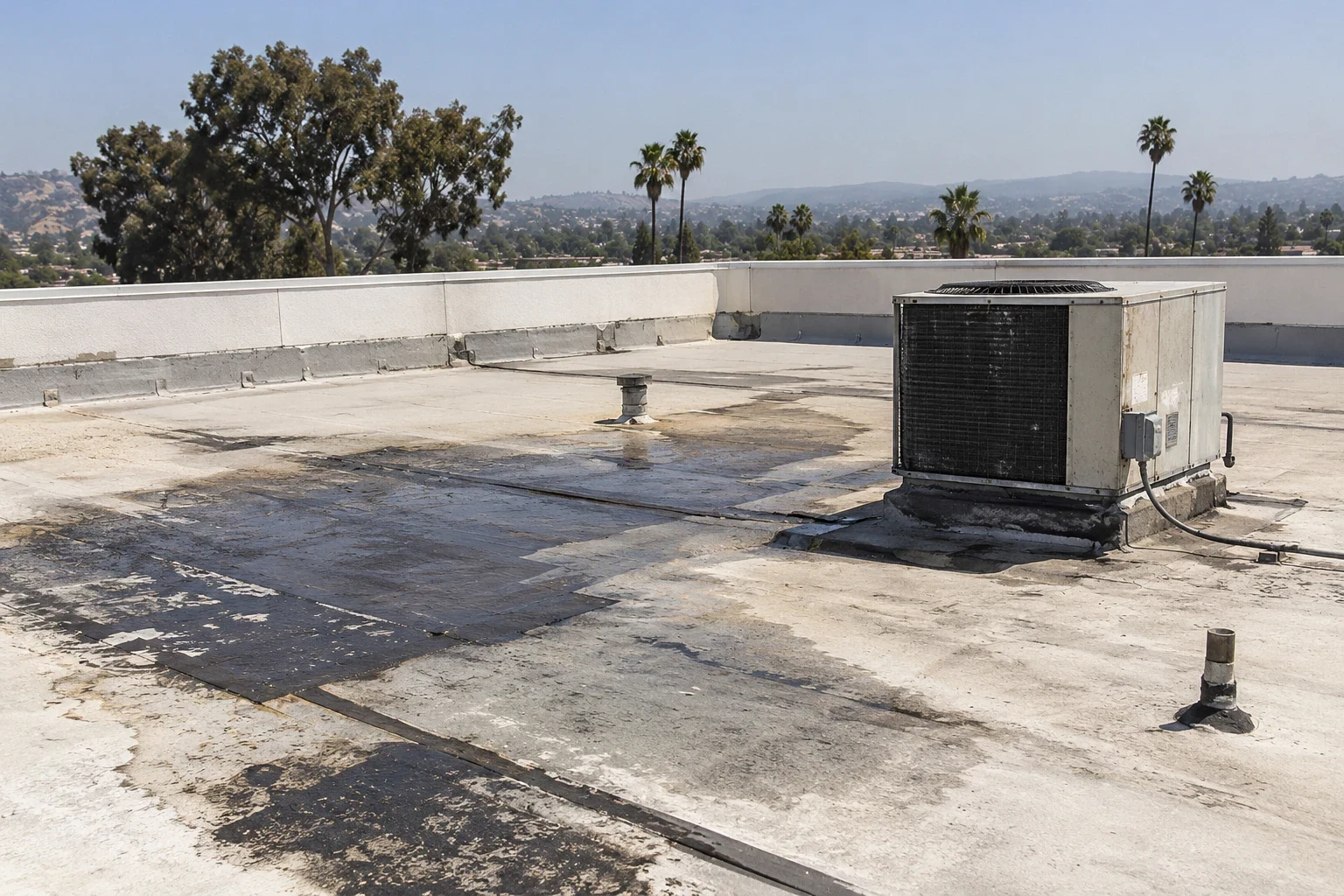
Production roofs can carry exhaust, make-up air, dust collection, piping, electrical conduit, and equipment supports that serve different areas below. We label the curb or penetration, inspect accessible flashing and nearby membrane, and compare its location with the plant's equipment list. A unit shutdown, line disconnection, or support adjustment belongs to the responsible trade. We do not close a roof tie-in around a connection that still needs movement or testing. The handoff note identifies who will release the equipment and what condition allows roofing to resume. A curb and support review can document the roof interface while the facilities team manages the process equipment. On a property near Orangethorpe Avenue or in the North Industrial Focus Area, the corridor name does not reveal which units operate during a work window; the plant contact supplies that schedule.
What should a leak report distinguish on a production roof?
A stain near a production bay is evidence of water inside, not a roof location by itself. We compare the report's room, date, process conditions, and any mechanical history with drains, penetrations, seams, and wall transitions above. Each photo is tied to a roof section so the maintenance team can trace a finding without confusing one bay with another. If equipment or stored materials block a route, we note the area not reached and request the specific access needed for a return visit. A moisture scan or test cut can help answer a defined question, but the method and limits are set before approval. The leak investigation can identify a bounded repair where the detail is confirmed. If several sections show separate conditions, a condition report keeps each item visible for maintenance and capital review.
When does a repair give way to a larger scope?
A repair is easier to sequence when the defect is isolated, surrounding membrane is stable, and the tie-in can reach sound material. Repeated seam openings, wet insulation across a larger area, or failing transitions can justify testing or a broader section comparison. We record the observation, repair boundary, and evidence that would change the recommendation. A recover can affect drain height, curb exposure, edge metal, and equipment clearances. Replacement may expose conditions that could not be seen until the assembly is opened. We present those as different scopes with different access, staging, and interruption assumptions, rather than apply a single rule to every plant. The manager can compare a localized repair with a replacement plan on the same roof map. For a building with broad low-slope areas, a manufacturing plant roof assessment can keep production needs beside assembly findings.
How can heat and dry weather inform a work window?
Fullerton's airport normal lists 0.08 inches of rain in June, followed by 0.02 inches in each of July and August. Those monthly normals can inform seasonal planning, but they do not replace the daily forecast, roof conditions, or product installation instructions. We confirm when an adhesive, coating, or exposed opening needs protection and name the daily close-in before work begins. Heat can affect handling, worker pace, and the usable period for a task, so the superintendent and plant contact agree on start, break, and handoff times. A weather hold should identify the roof section affected and the action required before restart. A maintenance visit can be scheduled separately from repair work when the roof can be inspected without opening an assembly. The plan records that decision with the production calendar, not as a promise that weather will cooperate. The facilities lead can also set a review time for any open seam or temporary protection so a delayed task does not disappear from the shift handoff. We note which materials must remain protected, who can verify the close-in, and whether a second trade must clear equipment before the next work period. These are schedule decisions tied to the roof map and actual process controls.
What should the plant keep after roofing work?
The closeout file should include a marked roof plan, dated photographs, repair dimensions, material notes, areas not reached, and any equipment trade still responsible for a final adjustment. We list the section closed at the end of each shift and identify any protection or monitoring required before the next work period. That record can live beside the plant's maintenance and equipment logs, giving the next facilities lead a route back to the repaired detail. Fullerton's Transportation Center plan area has many one- and two-story buildings; residential, industrial, retail, office, public-service, and restaurant uses are all included. The plant address and drawings still set a manufacturer's work limits. A logistics roof coordination file may help a manufacturer with shared receiving constraints, while a property manager's roof register can support a multi-building owner. Send the plant address, roof plans, leak records, equipment contacts, and work-hour limits to set the first visit.
Commercial Roofing Questions
Can roof work fit between production shifts?
Often, when the plant confirms access, equipment limits, deliveries, and the close-in time. We map a section-sized work window before materials reach the roof.
Who disconnects equipment for a roof repair?
The plant assigns the mechanical or electrical trade. We document the roofing interface and resume after the contact confirms the equipment handoff is complete.
Does water in a production bay prove a roof leak?
No. We compare the interior report with roof details and relevant process or mechanical information before selecting a repair location.
Can a recover be installed over an existing plant roof?
It depends on confirmed assembly layers, moisture, drainage, edge height, equipment clearances, and applicable code. We inspect those conditions before proposing it.
What records help plan a future roof phase?
Keep the section map, photos, repair history, test results, work-hour limits, and equipment handoffs together. Those records give the next review a usable baseline.