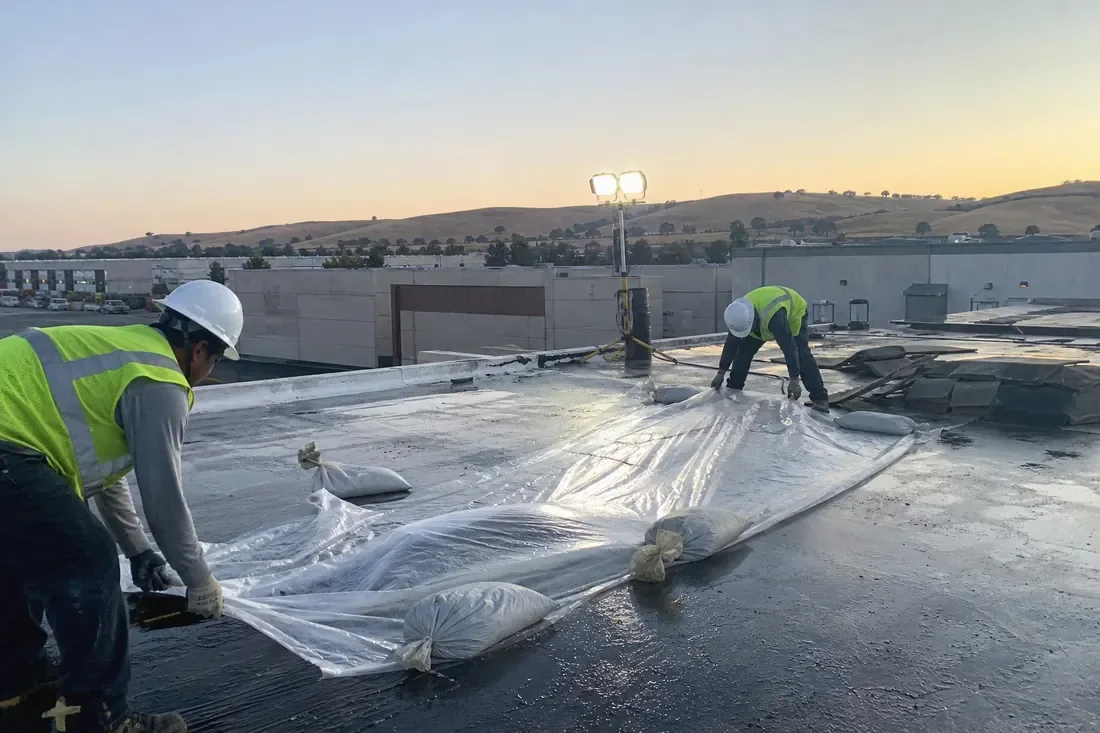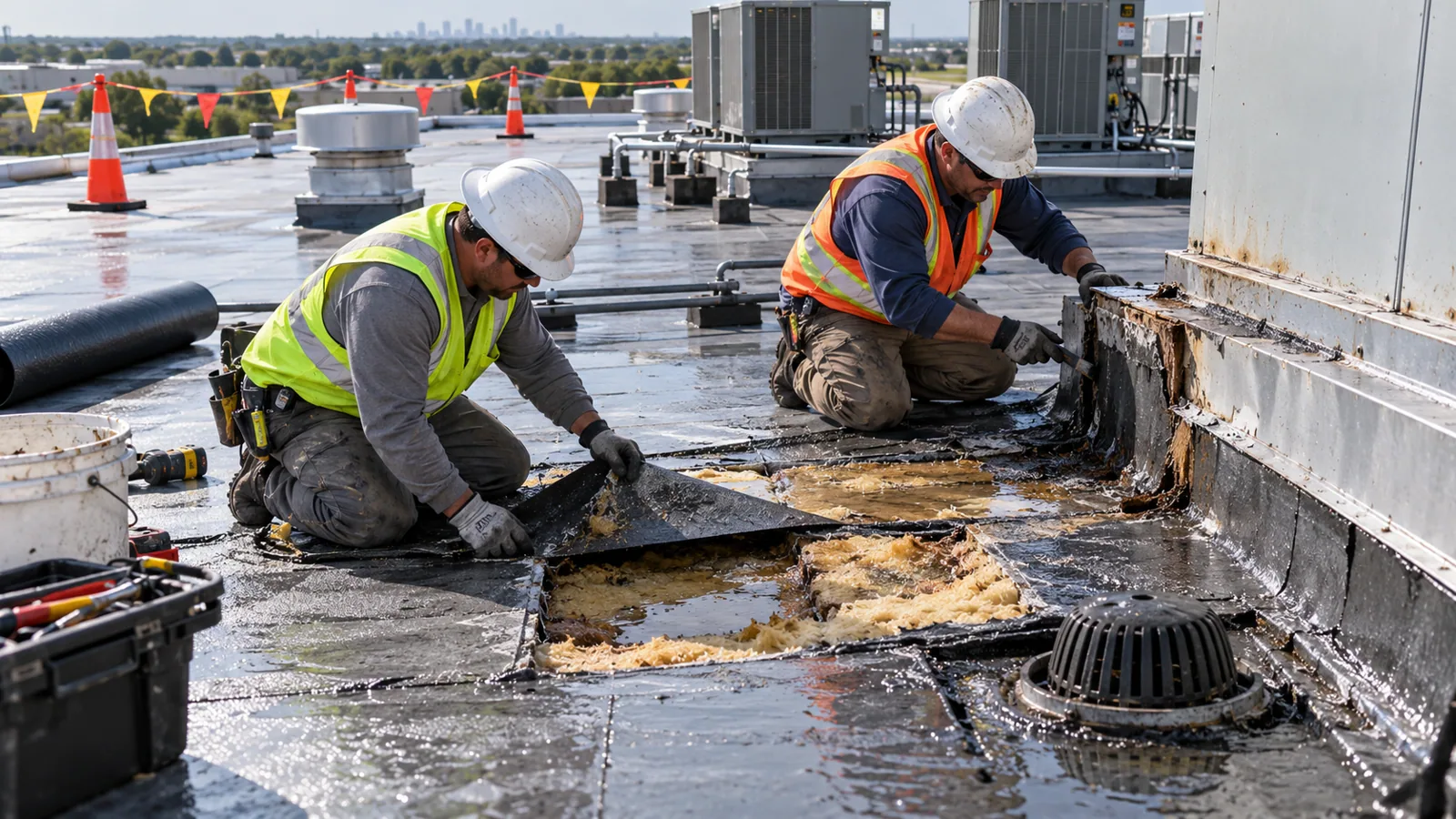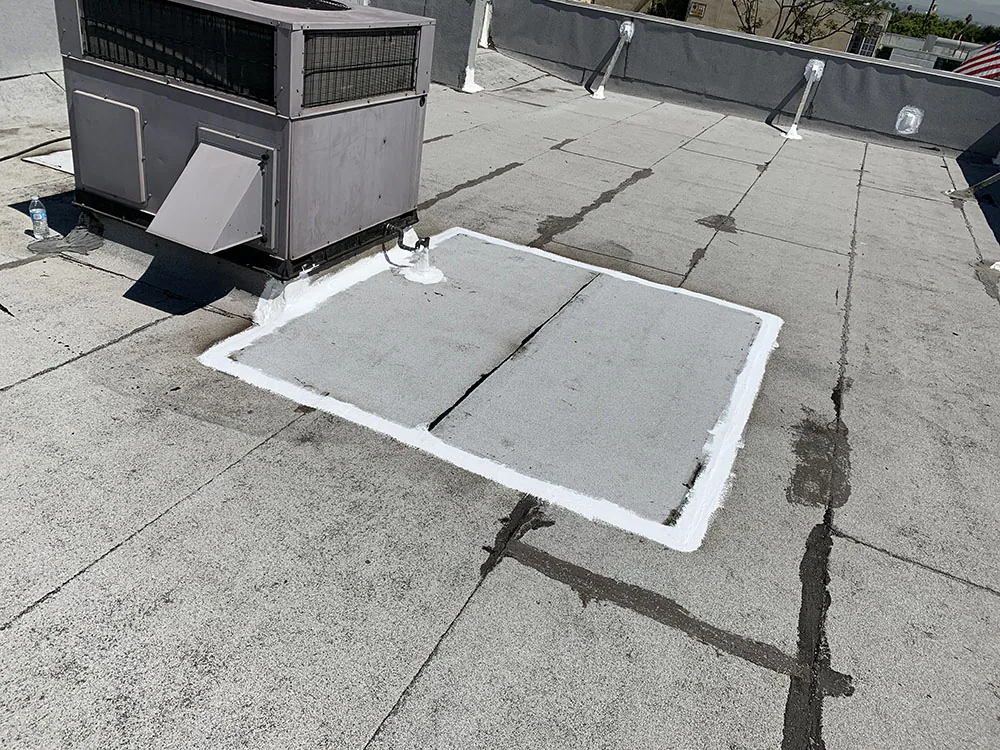

Scope commercial roof repairs in Fullerton by locating the defect, identifying the assembly, setting boundaries, and documenting follow-up.
Roof leak, storm damage or an inspection coming up?
Fullerton's long warm season changes how a repair visit should be organized: the airport normal records 39.4 days a year at or above 90°F, but that statistic is climate context, not a forecast for this roof. A property manager can use the day’s conditions to coordinate roof access, staging, and any tenant or production notice before a crew begins. Start with the symptom and roof plan, then trace nearby drains, seams, curbs, penetrations, walls, and prior patches. Identify the assembly before selecting materials and define the repair boundary before work begins. Fullerton's Commonwealth Corridor is a city planning geography, not a diagnosis of any building. The record should state what was observed, what remained inaccessible, and how the completed repair will be checked.
How should a facility prioritize a reported roof issue?
Record the date, affected interior zone, active water, weather, and any recent roof or mechanical work. Protect occupants and equipment through the owner's building procedure while the source is investigated. Do not send staff onto an unsafe roof. A manager can set a priority based on ongoing water, exposed assembly, access hazards, and potential damage below, then document why. A time-sensitive response may provide interim control; a leak investigation should trace evidence rather than assume the nearest detail is responsible. Keep temporary protection distinct from permanent work in the service record.
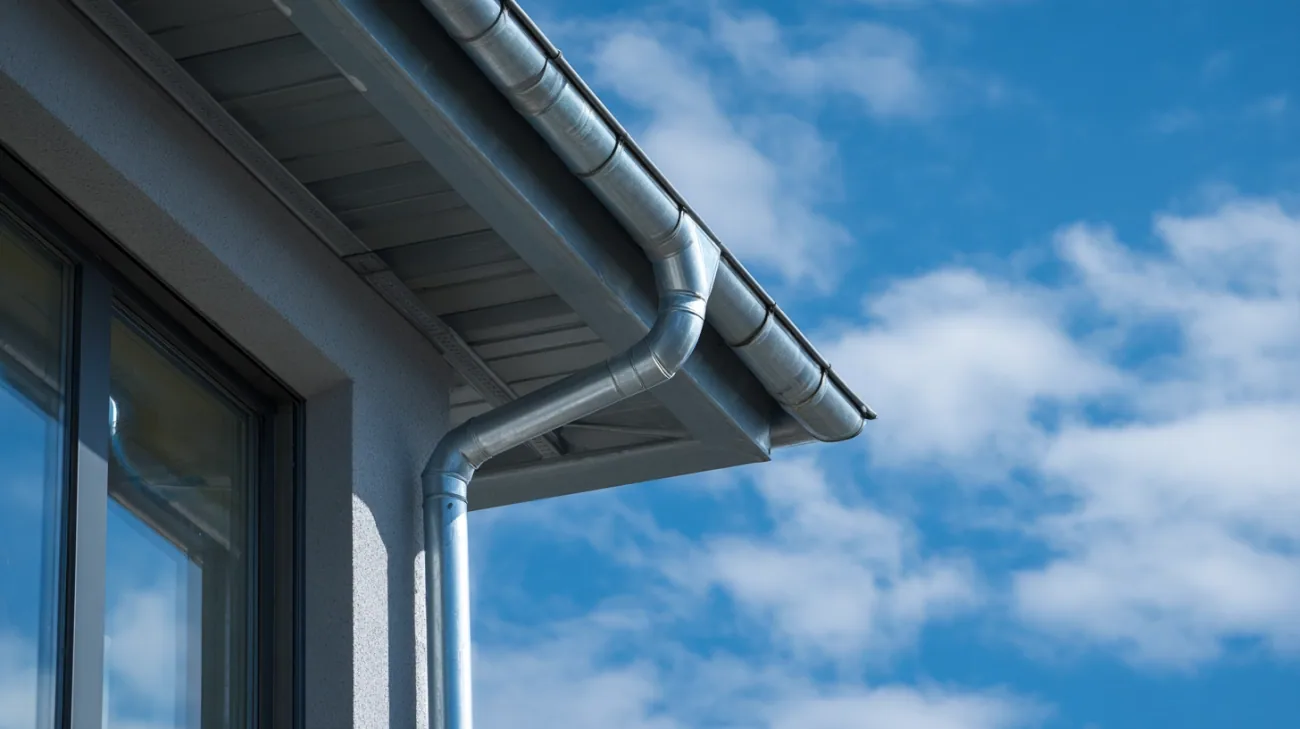
What should an inspection record before repair?
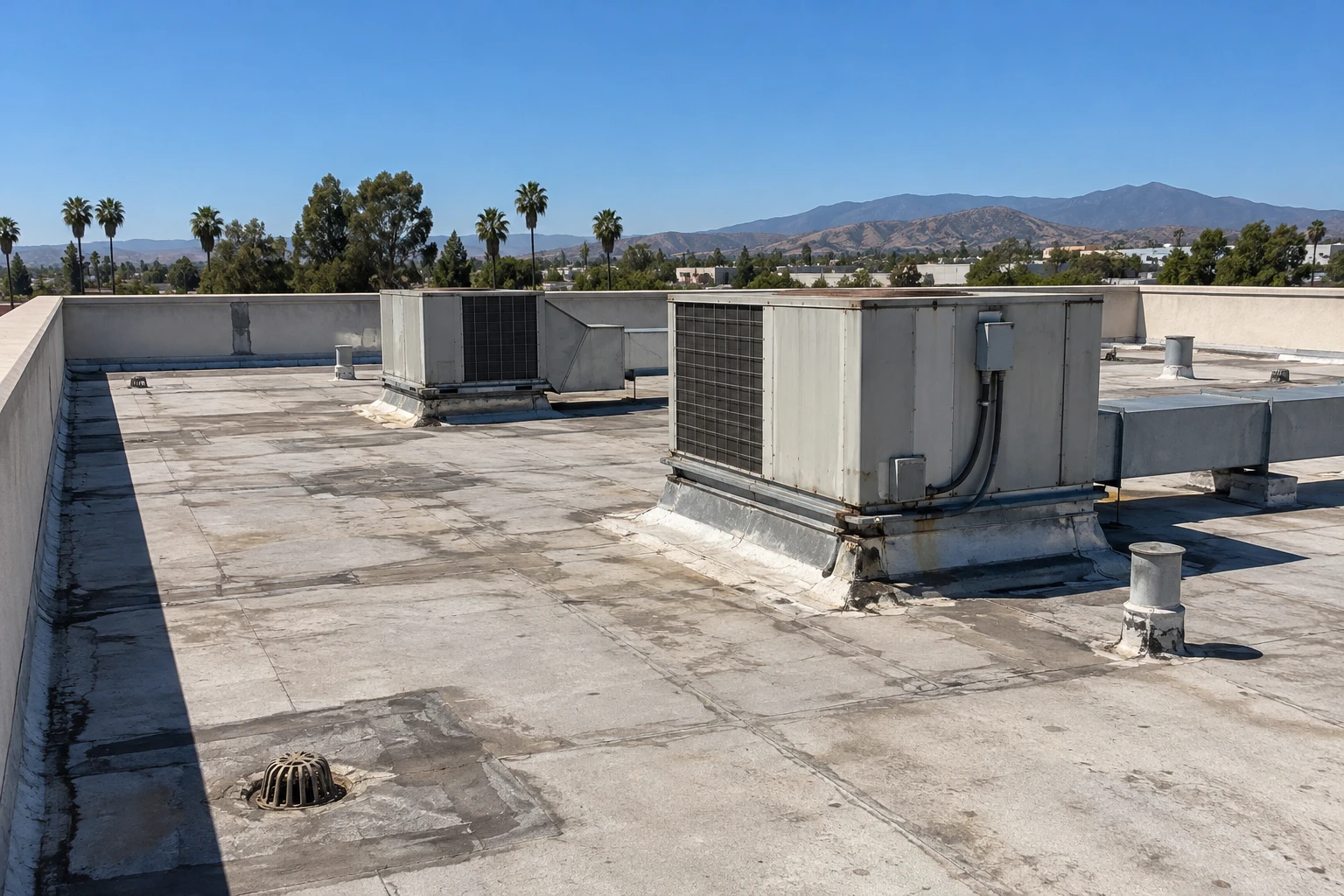
Map the defect, dimensions, roof type, adjacent transitions, drainage, and known prior work. Photograph a context view plus close details, label each image, and note access restrictions. If a seam, flashing, or membrane opening appears, document the condition without pulling material until authorized. Ask about warranty obligations and product history. A puncture evaluation differs from a flashing investigation, even when both occur near the same leak report. The repair scope should name each area and distinguish confirmed conditions from suspected causes.
How is a repair method matched to an existing roof?
Confirm the membrane or panel, reinforcement, coating history, and accessory materials through records and field observation. Follow the current manufacturer instructions for surface preparation, primer, fastening, welding, adhesive, and cure. Avoid mixing products or covering an unknown defect. If the assembly cannot be identified, request guidance before procurement. A PVC roof detail uses a different approach than an exposed metal panel repair. State who approves a mockup or test. The file should retain product data and the location of the completed repair.
What boundaries should be written into a repair proposal?
Specify the work zone, preparation, materials, installation detail, protection, disposal, and testing included. Define how hidden moisture or deck deterioration will be measured and approved. State whether the price includes mechanical, electrical, plumbing, or structural work; name the trade responsible for any excluded item. If the repair touches a warranty assembly, identify notification or inspection requirements. Give the owner a separate option for broad deterioration rather than widening a localized scope by implication. The city code library notes adoption of the 2025 California code with amendments, but project permits require authority review. A replacement alternative should remain separate from the immediate repair price.
How can roof repairs fit around daily operations?
Agree on access approvals, escorts, staging, delivery route, work hours, noise, and any restriction on rooftop equipment. The property contact should identify a person who can stop work if a building condition changes. Confirm whether the crew will need the mechanical contractor to isolate or restart equipment. Make each temporary tie-in and daily closeout visible in the phase plan. Fullerton's Commonwealth Corridor is a broad planning geography, but actual access rules come from the property. For occupied sites, phasing coordination should name affected routes and notification contacts.
How can the owner verify the completed repair?
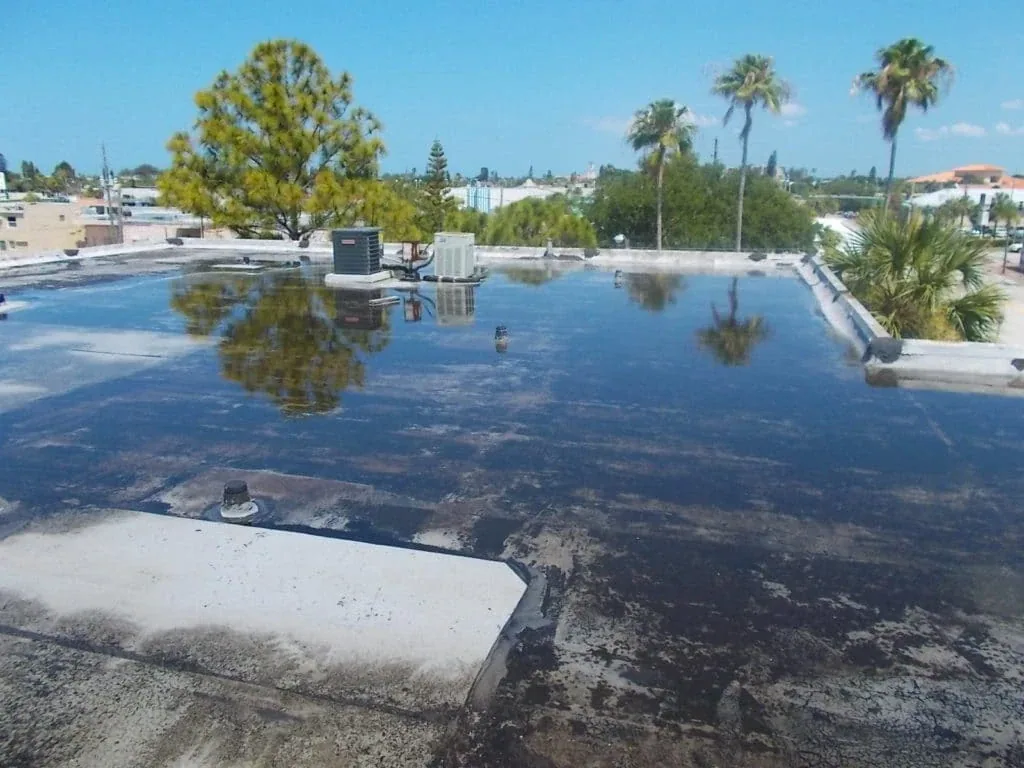
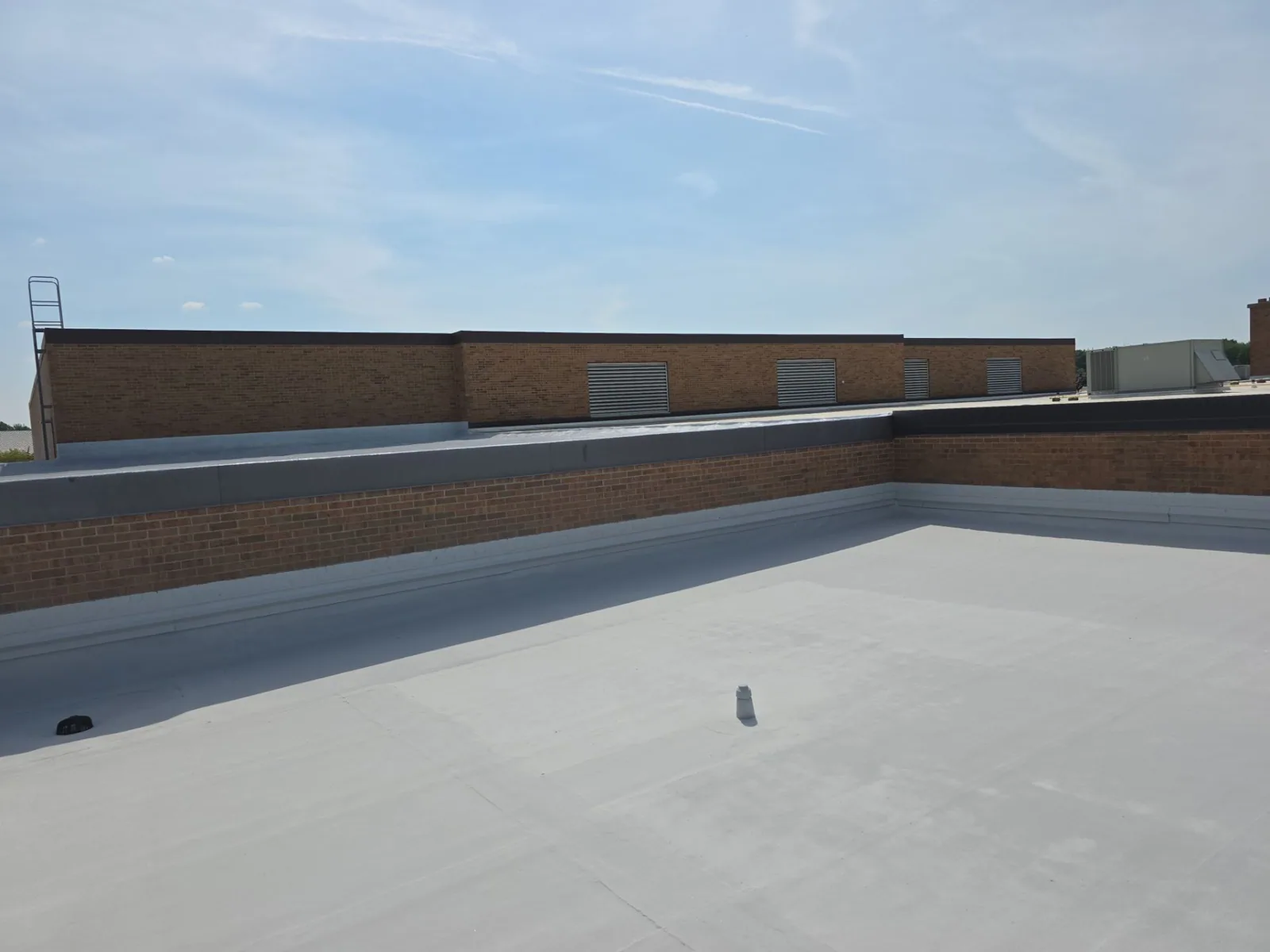
Compare the finished work with the approved scope and inspect the specified seam, termination, or patch edge. Keep before-and-after images, material identifiers, installation conditions, and any test result. Record the boundary of work and whether the repair was temporary or permanent. Do not claim that a repair eliminates future leaks beyond the area addressed. Assign an owner for the next inspection and note what should be watched after rainfall or equipment service. A maintenance visit can revisit the area and adjacent drains on a defined schedule.
What repair records support future capital planning?
Store the service ticket with the roof plan, prior repair history, warranty, photos, and an estimate of the area addressed. Separate recurring issues from one-time events and note any diagnostic uncertainty that remains. The owner can use those records to compare targeted repairs with a larger renewal when a pattern emerges. NOAA station data and local planning labels are background only; neither replaces measured roof conditions. Use consistent asset identifiers so a later survey can return to the same detail. A district reference may help explain geography, but the property's address and assembly determine the actual repair logistics.
A repair log becomes more useful when each entry can be compared with earlier work. Use a consistent roof-area identifier, date, reported symptom, weather context, material, and boundary. Link photographs to the same identifier and show a scale or nearby feature when practical. Record whether the source was confirmed, probable, or unresolved, and note any limitations such as restricted access or an unavailable test. If the same area returns in later calls, the owner can see whether the new condition intersects a previous patch or is simply nearby. That distinction helps a qualified roofer investigate a pattern rather than repeat a treatment by habit.
For recurring defects, ask whether the repair addressed a local failure or a broader detail that appears in several roof zones. Similar symptoms can arise from different causes, so avoid copying one scope to every location without inspection. The review may identify a shared seam, transition, drainage feature, or installation detail that deserves a broader survey. If several conditions are confirmed, group them by assembly and urgency while keeping quantities separate. A decision-ready proposal should show the immediate corrective work, any recommended follow-up investigation, and the conditions that would change the scope. This gives the property team options without implying that an isolated repair promises a building-wide outcome.
After work is accepted, transfer information into the maintenance calendar rather than leaving it solely in an invoice. Add any required cure or observation period, inspection after a relevant weather event, and restrictions on access or other trades. The roof plan should show where new materials meet existing ones and where a future inspector should look first. If an item remains under observation, state who will check it and what evidence will close the question. Clear ownership prevents an unresolved note from disappearing during staff turnover. Over time, the repair history can support a rational choice between continued maintenance and a larger renewal project, based on documented conditions rather than a single alarming incident.
A property team can reduce repeat dispatches by providing a complete intake package. Include the roof plan, recent repair tickets, warranty information, safe access instructions, a contact for occupied areas, and the exact interior zone affected. Clarify whether water is active and what temporary protection has already been placed. A qualified contractor can then prepare for the relevant roof system and tools instead of beginning with incomplete assumptions. The intake record should avoid private tenant details that are not needed for the work. Once the visit is complete, return the updated roof-area identifier and photos to the same asset record so the next service request starts from a reliable history.
Commercial Roofing Questions
Can one patch resolve a leak with an unknown source?
It may provide temporary protection, but investigate the water path before describing the work as permanent.
Should all roof repairs use the same material?
No. Match the repair to the verified assembly and its manufacturer instructions.
What if concealed damage appears after opening?
Document the condition, pause the affected scope, and obtain approval under the stated change process.
Does a completed repair cover the whole roof?
No. Describe the exact work area and any adjacent condition that was not included.
What records help plan future work?
Keep the marked location, repair photos, materials, owner approvals, warranty notes, and follow-up results.