Evaluate roof repair, replacement, and maintenance in Fullerton’s North Industrial Focus Area with production access, material staging, and close-in planning.
Roof leak, storm damage or an inspection coming up?
Production changeover can decide when a roof section is available in the North Industrial Focus Area, Fullerton, CA. Before assigning a crew, we confirm the operating contact, shift timing, equipment routes, and the roof area that can be protected and closed in that day. The Fullerton Plan identifies North Industrial as Focus Area H, a broad area for guided development. The building still needs its own inspection, because a district label does not establish a particular roof's material or condition.
NOAA’s Fullerton Municipal Airport normal shows mean daily highs of 84.4°F in July and 86.7°F in August. We use the seasonal pattern as a planning reference, then match the day's actual conditions to the assembly and product instructions. Heat can change material handling and the time available for application. We verify the staging point, shaded storage if available, and weather hold criteria before opening a roof zone.
What does the first visit establish
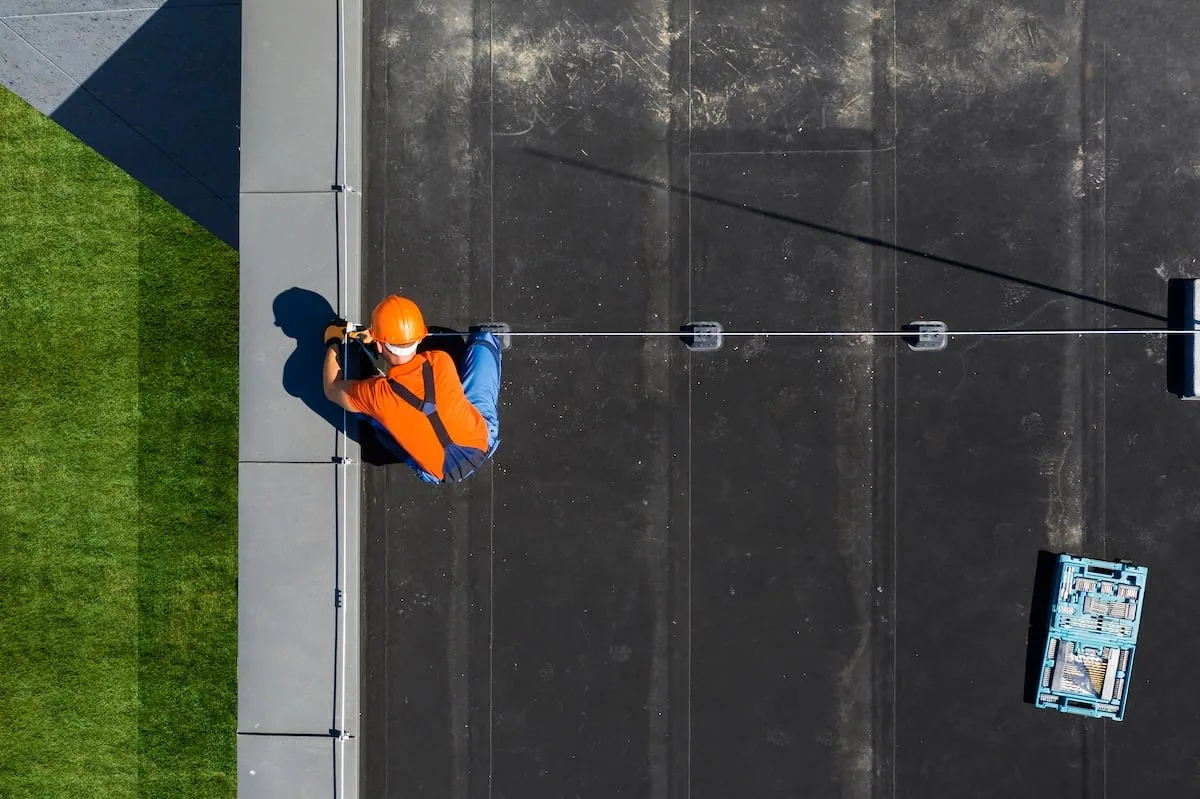
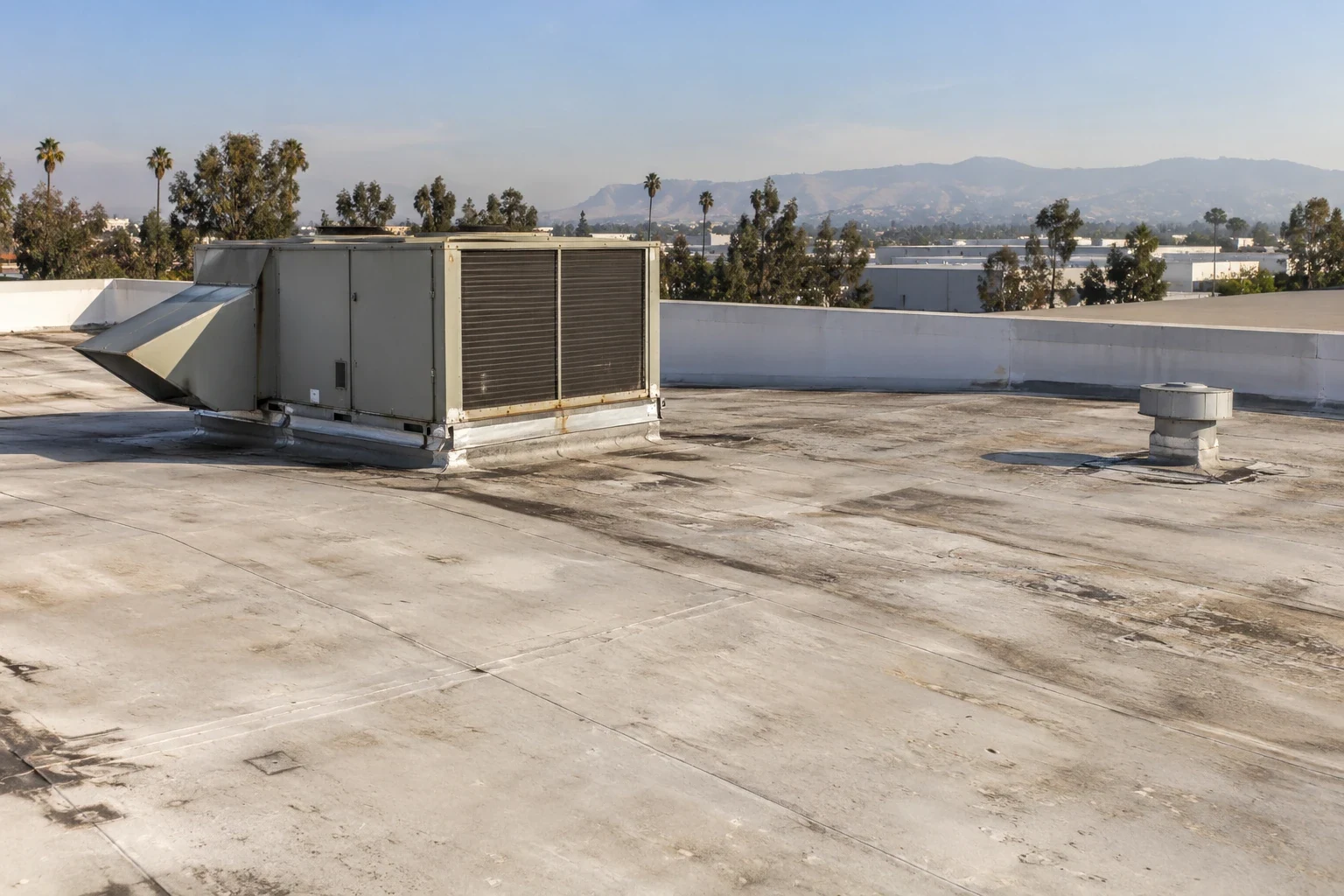
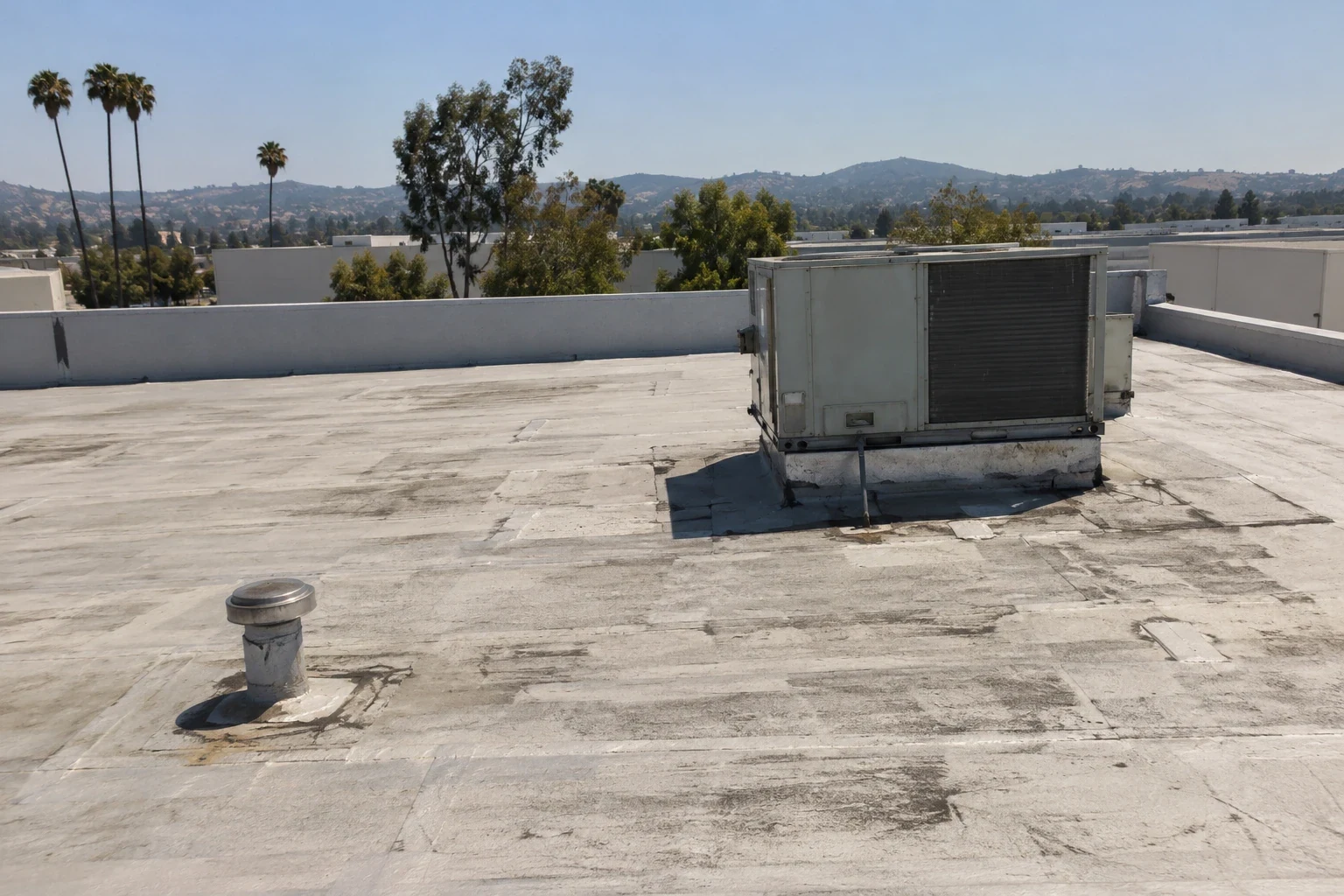
The first visit maps visible membrane or metal, seams, laps, flashings, roof edges, drains, scuppers, curbs, penetrations, and previous patches. We use the roof plan to label each photograph and note where equipment or piping blocks a clear view. An inspection of the roof sections distinguishes an observed split or open detail from an area that needs testing. If a section cannot be reached, the report names the access change required to finish it.
We also confirm what production requires during the visit. A process line, loading route, or electrical service area may need a clear path even while roof work is underway. The site lead identifies who can isolate equipment or approve access; our field lead explains where the crew will stage, work, and close in. A manager receives a practical list of assumptions, including operating hours, escort needs, and any restrictions that affect the next inspection step.
How does the area’s planning record help
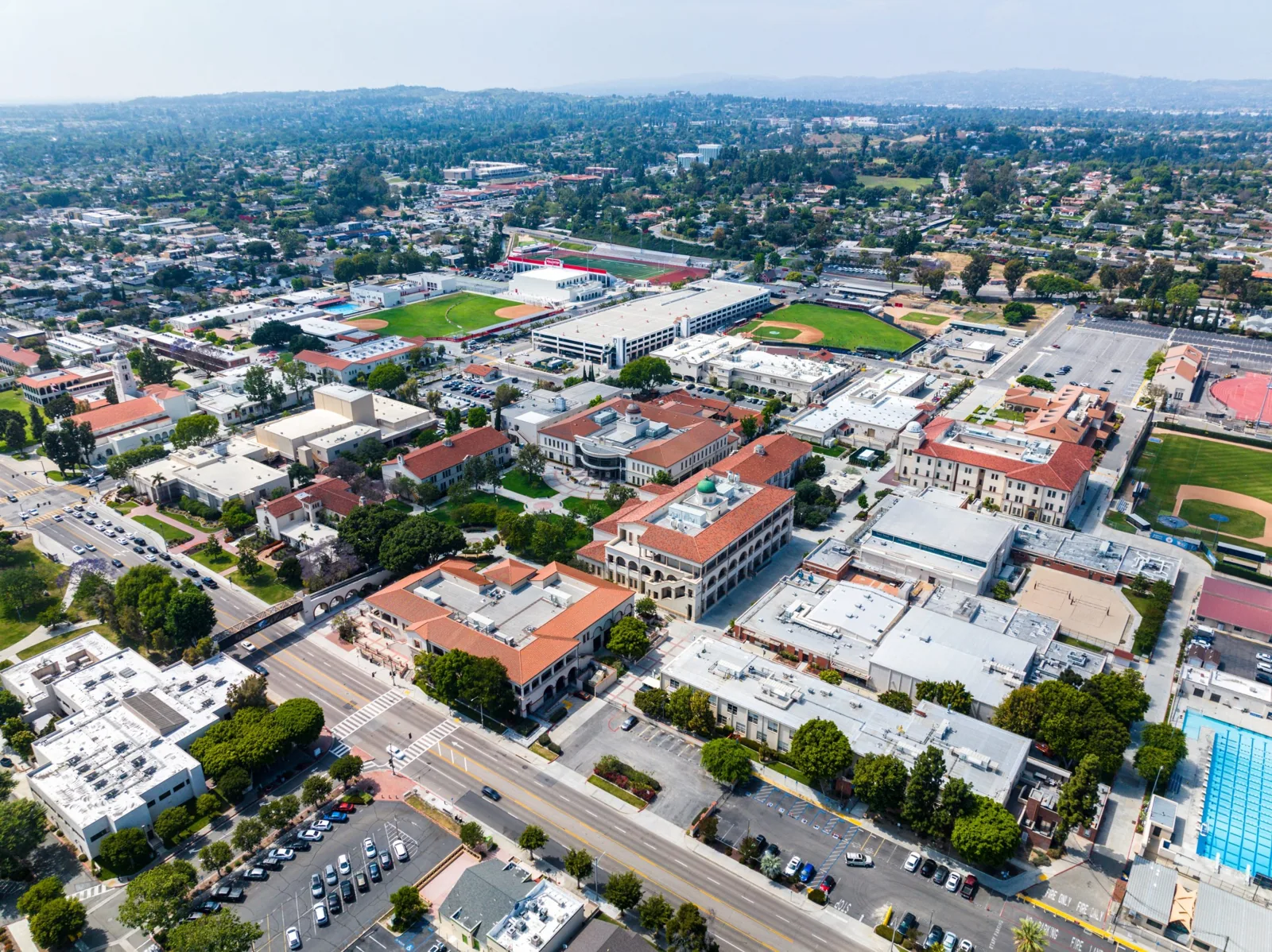
The City’s 2008 focus-area analysis estimated 2,129 jobs in North Industrial and identified manufacturing as the largest sector, with 1,577 jobs or 74.1 percent of that historic total. These figures describe an older planning snapshot, not the current tenant list. They do, however, make operational coordination a useful part of roof planning. We ask for active shift windows and any process or material movement that should stay clear, then place roof zones around the actual schedule.
That same analysis listed retail, wholesale, and transportation and warehousing among the other sectors. We do not infer a building’s current use from those counts. The manufacturing facility assessment can be scoped when the address is in fact a manufacturing property; otherwise, the site walk determines the appropriate roof and access details. The city's plan also maps the Southeast Industrial Focus Area as another broad industrial geography, while each property's roof record remains separate.
How do we isolate a leak path
Water can enter at a seam, edge, drain, equipment curb, pipe support, or transition, then move beneath the surface before it appears indoors. We trace the likely route from the roof details instead of treating the interior stain as the repair location. The surrounding membrane and attachment matter: a small opening next to loose material may need a wider repair boundary. Our repair proposal identifies the tested detail and the connected conditions reviewed.
In a production building, repair staging also has to account for equipment access and work above active areas. The manager can mark restricted zones and confirm whether a temporary interior catch or shutdown is needed. If the entry is active, the emergency crew can protect the affected area and document the roof observations at any hour. When the immediate leak is controlled, we set a follow-up to verify adjoining seams, flashing, and drainage before closing the work order.
When does replacement enter the discussion
A replacement comparison is appropriate when deterioration is not confined to one detail, repairs keep recurring across a connected field, moisture changes the scope, or the owner needs a new assembly. We review the deck, insulation, attachment, roof edge, drains, penetrations, and equipment supports before outlining options. A roof replacement review marks the included areas and spells out preparation, tear-off or recover assumptions, protection, testing, and closeout.
For a metal roof, the investigation focuses on panel seams, fasteners, oxidation, transitions, and how the assembly drains. A metal retrofit assessment is considered only after confirming that the existing roof is suitable for that path. On a low-slope roof, the chosen membrane must fit the deck, slope, details, and project specification. We show which field findings support the choice so the owner can separate a necessary repair from an elective system upgrade.
How can phases protect the work area
A phase plan defines where materials arrive, how the crew reaches the roof, which sections open, and where each day ends. We set a daily close-in before work starts so the open area is not larger than the crew can protect. For a building with several roof elevations, sequencing can follow access and drainage divisions rather than an arbitrary grid. We record how lifts, hoists, or hand-carry routes interact with production and pedestrian movement.
Heat-sensitive work receives its own sequence. We review the product instructions and actual conditions before adhesive, membrane, or coating application, then adjust the work window if a safe close-in is no longer practical. Fullerton normals provide a seasonal cue, not a surface reading. For recurring review, preventive maintenance visits can track drains, seam condition, and prior repairs between capital projects. Each service report identifies the area inspected and any condition that needs a separate scope.
What records help keep decisions straight
Useful records include roof plans, prior inspections, warranty documents, repair invoices, leak reports, equipment changes, and photographs. We compare those materials with the roof in place and mark discrepancies rather than assuming an older plan remains accurate. A roof asset file can hold the section map, defect list, inspection date, and assigned follow-up. The owner can then see whether a repeated issue is in the same location or a different roof detail.
The handoff after work should record the section completed, materials used, photographs, test results, weather or access holds, and deferred items. If a repair is temporary, we label the next check and the person responsible for scheduling it. Facilities teams can compare this record with another planned city area such as Orangethorpe Avenue, but separate buildings should keep separate roof findings. Portfolio consistency comes from a common report format, not copied observations.
What should be confirmed before mobilization
Send the service address, roof plan, shift schedule, access instructions, active leak locations, and equipment restrictions. We need to know who can approve a shutdown, temporary protection, or a change to the work zone. The site contact can also identify loading peaks and where materials may be staged without obstructing emergency paths. We will confirm the inspection route and close-in expectation before the crew begins.
If water is entering, emergency response is available around the clock, including holidays and weekends. The first visit protects the affected area and records the roof detail that should be repaired or tested next. For planned replacement or restoration, we can compare the scope after a complete field review and clarify which assumptions depend on deck access or production coordination. Tell us the decision date and operating window, and we can prepare an assessment sequence that fits the site.
Commercial Roofing Questions
Are the 2008 manufacturing figures current?
No. They are a historical planning estimate. We confirm a property’s present use with its manager before setting the work plan.
Can a roof crew work during a production shift?
We can sequence tasks around a confirmed operating window, protected paths, and equipment access, subject to the roof and product conditions.
Which conditions set a clean repair boundary on an industrial roof?
We inspect surrounding material, attachment, moisture, drainage, and recurring repair locations, then tie each option to the affected roof sections.
What information helps you schedule a first visit?
Provide the address, access contact, roof plan, shift hours, leak locations, and any process or equipment zone that cannot be interrupted.
Do you provide emergency service overnight?
Yes. Emergency response is available all week at any hour, holidays included, with protection and a documented follow-up plan.