
Coordinate roof repair, inspection, and phased restoration in Fullerton’s North Harbor Focus Area with tenant access, heat planning, and clear closeout records.
Roof leak, storm damage or an inspection coming up?
Early tenant arrivals can close a roof access window in the North Harbor Corridor Focus Area, Fullerton, CA. Before setting a ladder, lift, or material drop, we confirm the property contact, building hours, shared access rules, and the rooms or equipment that must remain available. The Fullerton Plan maps North Harbor as Focus Area G, a broad city geography. The City’s dated employment analysis gives context for area activity, while each roof review starts at the property address and follows its current operating schedule.
NOAA’s Fullerton Municipal Airport normal mean daily high reaches 86.7°F in August. That helps us plan warm-season work, while the day's forecast, surface, and product limits set the actual sequence. A tenant schedule and roof plan identify the first section and its close-in point.
What can be confirmed on the roof
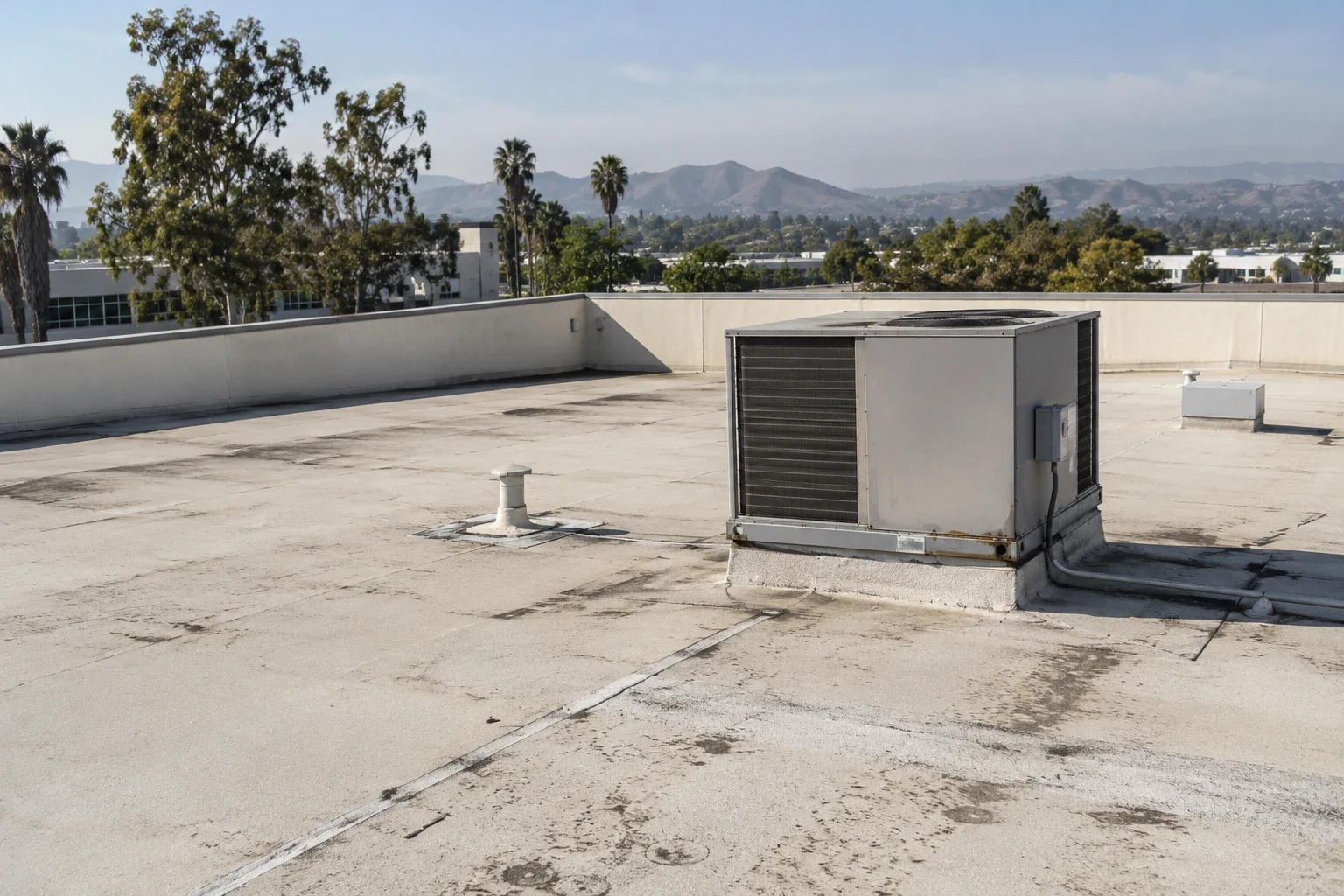
The first inspection records membrane or metal surfaces, transitions, drains, edge details, penetrations, rooftop equipment, and visible repair history. We tie photographs to a roof location and note which sections were reachable. In a multi-tenant property, access permissions may differ between roof zones or interior areas. Our site inspection separates observed damage from a suspected water path and names what should be tested before a repair boundary is set.
We inspect curb flashing, conduit supports, and walk paths affected by service access. Building activity does not identify the roof system. Drawings, warranty papers, and invoices help trace earlier work, while the walk confirms current conditions. The manager receives any open access or testing questions.
How should tenant movement shape staging
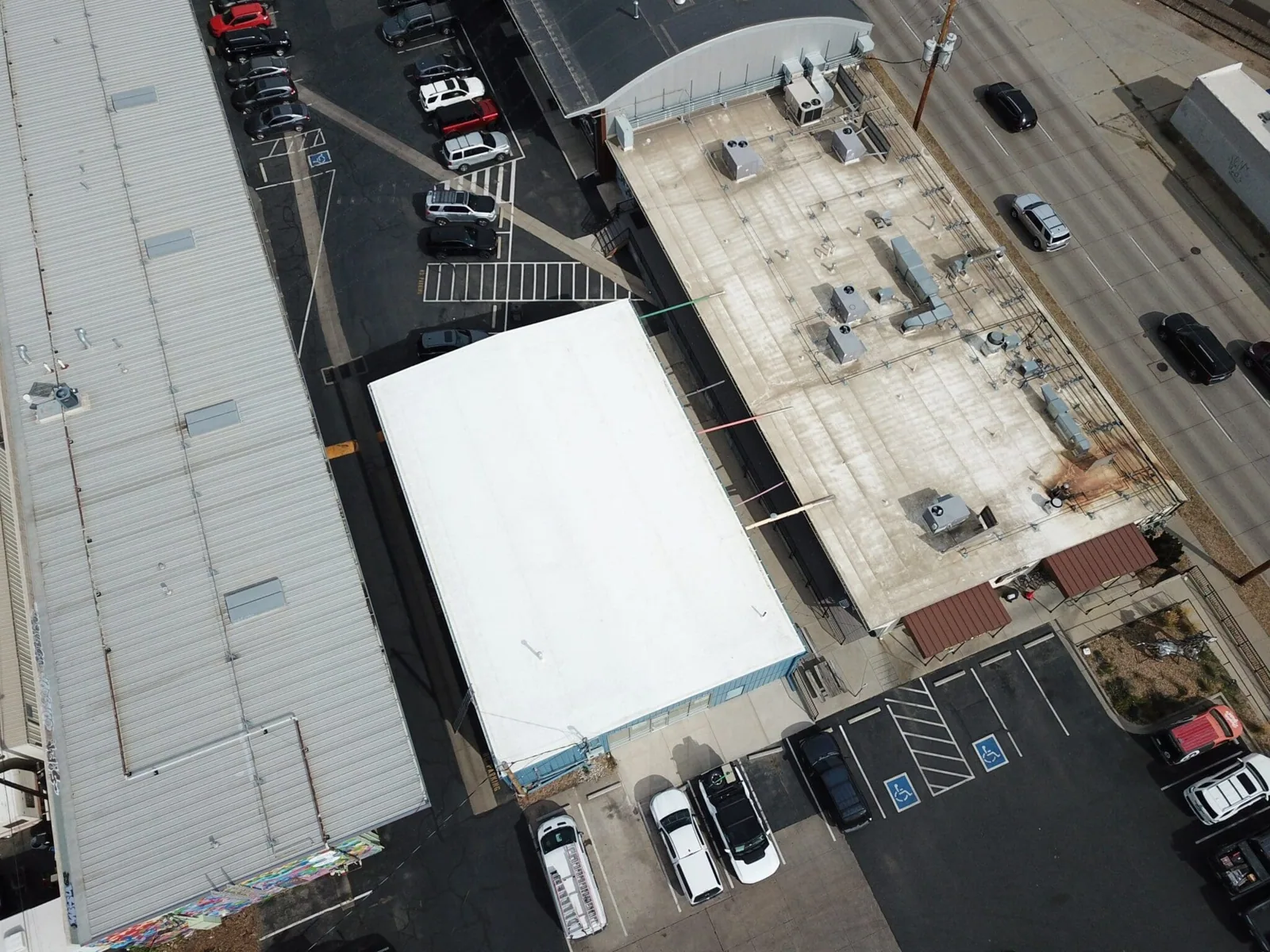
Shared entrances, delivery bays, and customer routes can limit where a lift or debris container sits. Before work begins, we mark the staging point, protected paths, access hours, and the person who can release each roof section. If a section must remain available for equipment service, the crew plans around that constraint instead of blocking the path. A written sequence names the work zone and the time needed to close it before the next tenant activity.
The City’s 2008 analysis estimated 6,175 jobs in North Harbor, with health care and social assistance at 64.2 percent of that historical total. The property contact should identify sensitive rooms, operating hours, and privacy needs before inspection. A medical office roofing assessment fits only when the address has that use; we confirm it with the manager.
Which findings support a repair
A repair can be appropriate when an isolated opening or failed flashing has serviceable material around it and the entry route can be confirmed. We inspect the neighboring seams, drain flange, curb, and perimeter detail before deciding how far the repair should extend. A ceiling mark can trail the entry point, so we compare interior reports with roof observations. Our commercial repair scope shows the affected detail and the boundaries checked during the visit.
If water returns after a patch or appears in several rooms, we check connected transitions, insulation, and drainage. A moisture survey or test cut may be needed when surface evidence is inconclusive. For an urgent leak, the crew protects the interior and documents the follow-up inspection or permanent work required.
When does restoration fit the roof
Restoration needs a roof surface that can accept the specified preparation and coating system. Before recommending it, we assess adhesion, moisture, drainage, existing repairs, flashing, and any areas that need replacement. For occupied offices or service buildings, the work sequence should account for odor, access, equipment, and where materials can be staged. Our restoration review identifies the test area and surface preparation rather than treating a coating as a substitute for repairing a leak source.
Replacement enters the comparison when conditions extend beyond a repairable section, when insulation or deck findings alter the work, or when a new assembly is needed for the project. A replacement evaluation compares tear-off, recover eligibility, transitions, edge details, drainage, and closeout needs. A separate property elsewhere in the city needs its own inspection before an option is chosen. The owner sees the reason for each option and the limits of the evidence.
What does a phased scope include
A phased scope identifies roof zones, preparation, temporary protection, daily close-in, and any condition that stops work. We tie each phase to a section that can be made weather-tight before the next area opens. If tenant access or rooftop service work shifts, the manager and field lead review the sequence together. The plan also describes how removed material moves through the site, what entrance protection is required, and who receives a daily status note.
The 2008 city analysis also reported that North Harbor held the largest share of Fullerton focus-area financial-services jobs in its dataset. That historical sector statistic is not a current tenant list; it simply underscores that buildings can serve different operations. We set the actual work limits from the address, roof assembly, and manager’s schedule. A roof asset record can retain the approved phase map, photographs, and deferred items so the next budget discussion starts with a dated observation.

What should the owner receive
Closeout should identify the roof section, repair or restoration performed, materials installed, conditions observed, photographs, and any follow-up test. We note if a temporary measure remains and who will remove or monitor it. This matters when several people share building responsibility: the facilities contact can pass a concise record to an asset manager without converting a field observation into a broad claim about the whole roof.
A photo-based condition report can help compare changes over time. It should preserve inspection dates and locations, and it should mark inaccessible or untested areas clearly. The Fullerton Transportation Center Specific Plan area within Downtown Fullerton includes industrial, retail, office, public-service, restaurant, and residential uses. That planning mix does not establish the use or roof type at a North Harbor address.
What should be ready for scheduling
Share the address, roof plan, tenant hours, access contact, recent leak locations, and any restricted equipment areas. Note whether the visit is for an active leak, reserve planning, lease turnover, or a comparison of repair and replacement. We will confirm the route from staging to the roof and identify any escort or protection needs before the crew arrives. If drawings are missing, the visit can still inventory visible sections and produce a record of what should be verified next.
Emergency response is available around the clock, weekends and holidays included, when active water entry cannot wait for a routine opening. The initial visit documents the protective step, inspected roof section, and remaining diagnostic need. Managers also coordinating a property in the Harbor Gateway Focus Area can schedule it separately. Send the work window and the decision date, and we can arrange an inspection that fits the actual building operation.
Commercial Roofing Questions
Does the historic employment estimate describe today’s tenants?
No. It is a 2008 planning estimate. We confirm the present building use and roof access with the property contact.
Can inspection include several tenant roof zones?
Yes. We list which sections were inspected, note access limits, and coordinate any follow-up with the people who control those areas.
When is a moisture survey useful?
It can help when surface evidence does not show whether moisture extends beyond a visible leak. The survey area follows the roof observations.
Can restoration be planned while offices remain open?
The work plan can stage materials, protect entrances, and sequence sections around tenant hours; actual access and product conditions guide the schedule.
What happens after an emergency visit?
We document the immediate protection and roof observations, then identify the test or permanent repair needed to address the remaining condition.