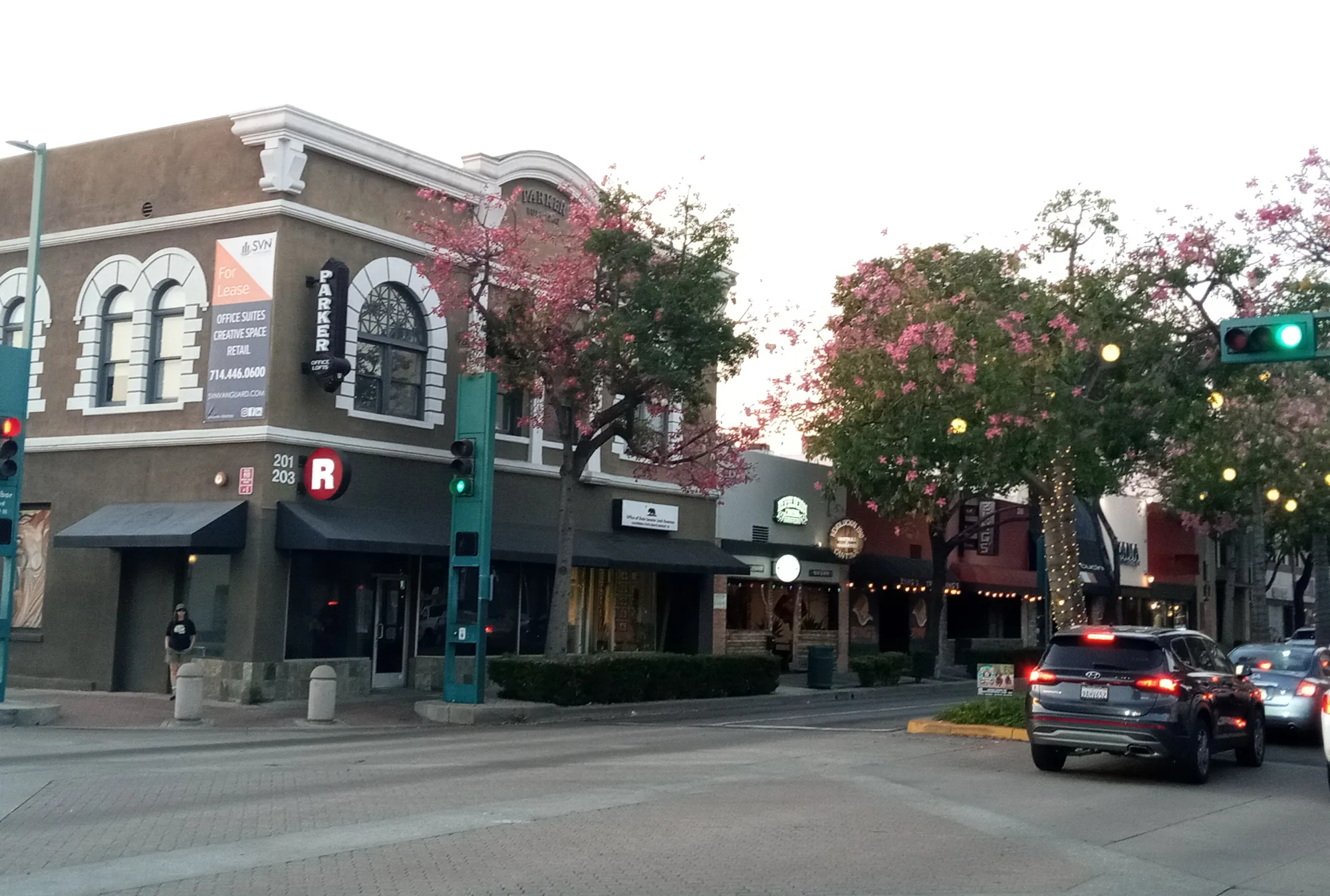

Plan commercial roof inspection, repair, or replacement in Placentia with a property-specific scope, clear access sequence, and useful closeout records.
Roof leak, storm damage or an inspection coming up?
Shared deliveries and tenant entrances can constrain roof staging at a Placentia property, so confirm the address, site contact, and approved work window before scheduling. In Placentia, CA, the manager should confirm actual site conditions, access, tenant hours, and daily close-in before scheduling a roof opening. The manager should identify the roof sections, interior reports, operating hours, equipment paths, and approved access contact before a crew is scheduled. SP-5 covers 19 acres and 11 parcels near Orangethorpe, Placentia, and Crowther avenues and SR-57, with hospitality, business-park, and auto-related context.
The adopted Chapman Corridor plan covers about a mile and 55 acres, with commercial and residential structures and standards for reinvestment. Where a property sits near that corridor, pedestrian access, storefront hours, deliveries, and nearby occupants may change staging. We confirm these details with the property manager instead of assuming a single schedule fits the block. Bring the roof plan, repair history, warranty documents, and recent leak locations to a commercial roof inspection.
Which Placentia setting changes the work sequence
Chapman Corridor is an east-west commercial route with aging centers, underused parcels, and limited pedestrian infrastructure; SP-5 is a separate southwest area with mixed commercial and business-park context. For a property manager, their value is practical: confirm whether the work zone shares a loading court, sidewalk edge, visitor entrance, or tenant service path.
Old Town Placentia is a multi-use area in the city’s south and west, with a revitalization plan intended to support economic growth and mixed uses. The owner’s schedule and the building’s roof condition still need a property-specific review. For a portfolio spanning Anaheim commercial properties and nearby Buena Park buildings, confirm each gate, roof contact, and staging point before assigning the crew route.

What should the first roof walk establish
A useful first walk records the assembly only as far as visible evidence supports it. We note membrane or surfacing type, seams, flashing transitions, penetrations, drains, scuppers, edge metal, patches, and areas that cannot be reached. If records identify a prior overlay, we compare them with visible transitions and request test cuts only when the owner approves that step. The report should separate observed conditions from assumptions about concealed layers.
Before mobilization, the manager can group leak reports by date and room, mark them on a plan, and identify recent mechanical work. We compare those notes with roof zones, drainage paths, and equipment curbs. A moisture survey can help define the boundary of suspected wet insulation, but readings need confirmation through selected openings when the owner authorizes them. If water collects near an outlet, ponding-water repair begins with checking the drain, slope, membrane condition, and overflow route.
How do repair and replacement options compare
A localized split, loose flashing, or isolated puncture may support a repair if surrounding material is sound and the detail can be tied into a compatible assembly. Widespread seam separation, saturated insulation, repeated patching, or failed transitions can change the recommendation. We mark the areas inspected, note any limitation, and distinguish immediate work from items that can be monitored. For a recover option, the existing roof must be suitable for another layer under applicable code, manufacturer requirements, and owner criteria.
A replacement scope should identify removal limits, substrate preparation, insulation and cover-board changes, membrane attachment, perimeter details, penetrations, and drainage corrections. A TPO roof assembly is not selected from a city plan; it is compared against the building’s existing layers, exposure, detailing, and specification. Existing roof records can also reveal warranty or compatibility requirements. We document why each option differs, what it includes, and which unknowns could change cost or duration.
How can occupied work keep a clear boundary
For a commercial property, the work window should be written with the access route and daily close-in. We confirm hatch or ladder access, material staging, roof zones that remain closed, and the point where a weather hold stops work. If an entrance, loading bay, or customer path sits beneath the work, the manager coordinates notices and temporary separation before materials arrive. A phase boundary should state which section opens, how it is protected at the end of the shift, and who receives the closeout note.
At a multi-tenant property, the person approving roof access may not be the person who controls a tenant’s work hours. We identify both roles and keep changes in one written handoff. If deliveries or production depend on an access lane, mark the path and reserve equipment movement before the crew is dispatched. We can coordinate a phased commercial roof repair after the manager provides the relevant hours, contacts, and restrictions.
What belongs in a measurable proposal
A proposal should name each roof area, describe the condition observed, and state the work included at that boundary. For a repair, that may mean identifying a seam length, curb transition, drain detail, or edge section rather than using a vague allowance. For replacement, the documents should state the removal depth, substrate repair assumptions, insulation scope, attachment method, flashing details, and protection for adjacent work.
Cost and timing move with the facts that can be measured: access, tear-off layers, wet materials, disposal, curb or drain changes, sequencing, and the number of mobilizations. Weather exposure affects the length of an open roof section and the daily close-in plan. A proposal can separate base work from alternates so ownership can compare a repair, recover, and replacement path. A clear condition report can support the decision, but it does not replace contract scope or approval of change work.

How should Placentia roof records carry forward
Keep the inspection sketch with the building plan, warranty documents, invoices, equipment changes, and dated photographs. Use the same roof-zone names at each visit. A later manager should be able to see where a patch was installed, what material was used, whether a drain was cleared, and what limitation remained. When a mechanical contractor adds a curb or moves equipment, update the roof drawing and photograph the new flashing.
For maintenance, review drains, overflow paths, laps, edge attachment, penetrations, and prior repair areas after work by other trades or a significant weather event. The condition, access, debris exposure, drainage, and warranty instructions guide the next check. If a reported leak returns, compare its date and room with the previous map, then inspect both the nearby detail and drainage route.
What decision should the manager leave with
Before the crew leaves, the manager should receive marked photos, the completed quantities, materials installed, approved changes, weather holds, and any area that could not be viewed. Confirm that temporary openings were closed, drains and overflow paths are clear, and the access hatch is secured. If a repair did not resolve the reported condition, state what was checked and what additional investigation is proposed. Do not describe a hidden condition as repaired when it was not visible or tested.
In Placentia, coordinate staging and notices with the property contact, then use the marked roof condition and approved scope to set each work phase. Send the address, roof plans, access contact, operating hours, and available repair history before scheduling. If a portfolio includes Brea properties, keep each roof’s findings in its own record; a nearby city does not transfer conditions or approvals.
Commercial Roofing Questions
What does a Placentia roof proposal need to separate?
It should identify the observed repair boundary, included preparation and materials, exclusions, and a hold point for concealed damage. Ask for a marked plan and written price before any change expands the quantity.
Can the Chapman Corridor plan identify a roof problem?
No. SP-5 and Chapman are broad planning areas; neither identifies an individual roof condition. We inspect the property, map visible roof details, and compare the findings with records and interior reports before recommending work.
How should a manager prepare for an inspection?
Provide the roof plan, repair history, warranty file, access rules, operating hours, and dated leak locations. Those records help us sequence the walk and label each section.
When is a recover option worth evaluating?
Only after the existing layers, attachment, moisture, code constraints, and manufacturer requirements have been reviewed. The proposal should show what remains and what changes.
What should closeout include after a phased repair?
Keep marked photos, installed materials, approved changes, protected openings, and open questions with the property record. Confirm the final roof zone and who receives the handoff.