
Evaluate standing water on commercial roofs in Fullerton by checking drains, slopes, deflection, and assembly condition before repair.
Roof leak, storm damage or an inspection coming up?
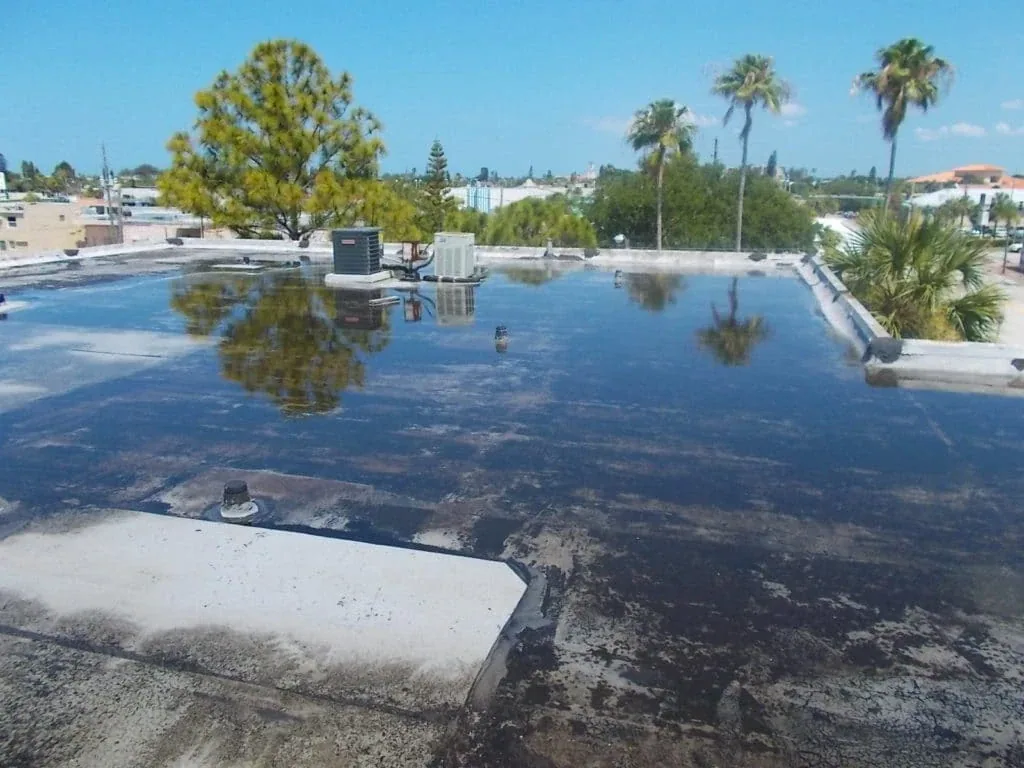
A roof that still holds water after a storm needs measured investigation, not an assumption that a coating will correct the cause. The property team can note the time since rainfall, approximate ponding boundaries, drain status, and any interior report before the inspection. A qualified roofer then checks the drain bowl, overflow, slope transitions, membrane condition, and visible deflection. The observation should distinguish shallow temporary wetting from persistent accumulation and say when it was recorded. Fullerton's July and August precipitation normals are low, but those station averages do not predict a specific storm or prove that a roof will drain. Orangethorpe Avenue corridor and Southeast Industrial Focus Area are broad planning geographies only. The plan should tie each observation to a roof zone and state what structural or plumbing review remains outside the roofing scope.
How can a team tell whether ponding is persistent?
Use repeat observations at a consistent interval after rainfall and map the water boundary, depth reference, and nearby drain or overflow. Note whether debris, a blocked strainer, a displaced pipe, or a temporary obstruction affected the reading. A single photograph taken during rain may not show the drainage pattern after the event passes. The owner can compare the map with prior repairs and structural drawings, but a drawing is not proof of current deck elevation. If the membrane is under a warranty, review the inspection and drainage obligations before changing details. A drain and scupper inspection should identify what was cleared or tested; it should not describe a slope correction unless that work was actually evaluated.
Which drainage components should a repair proposal identify?
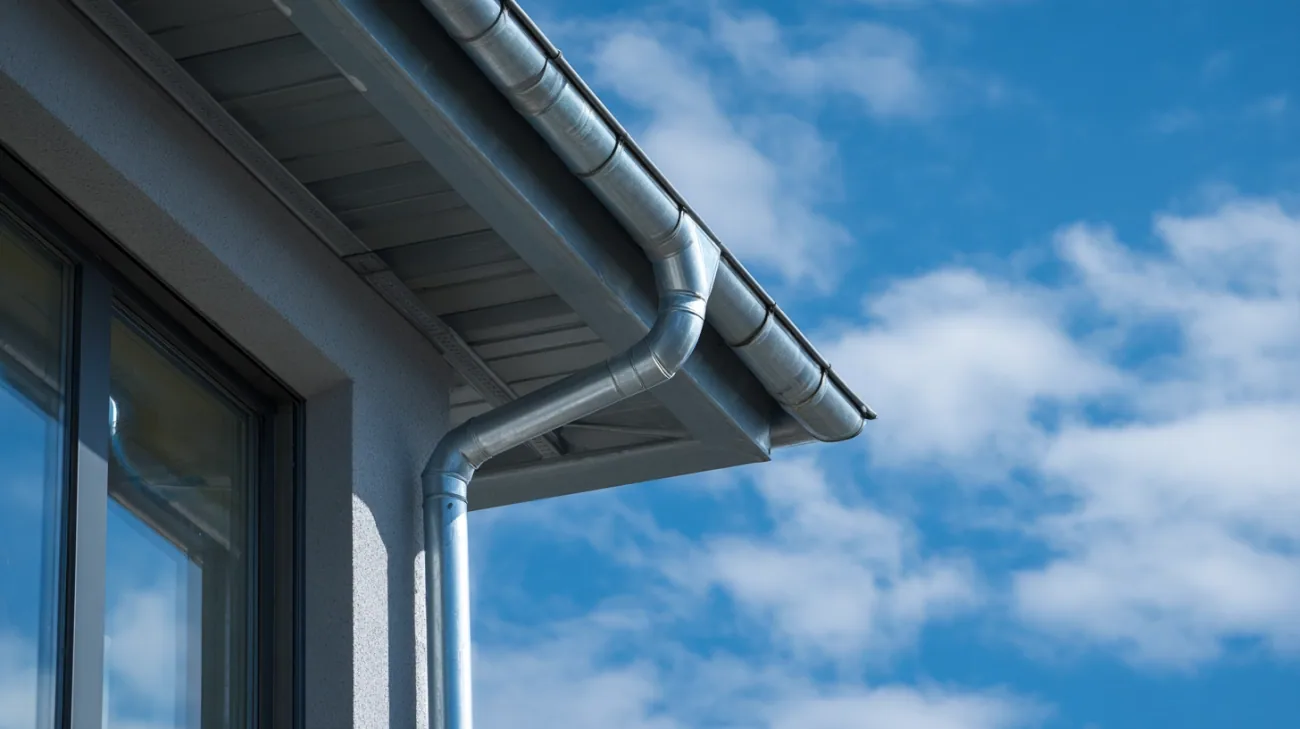
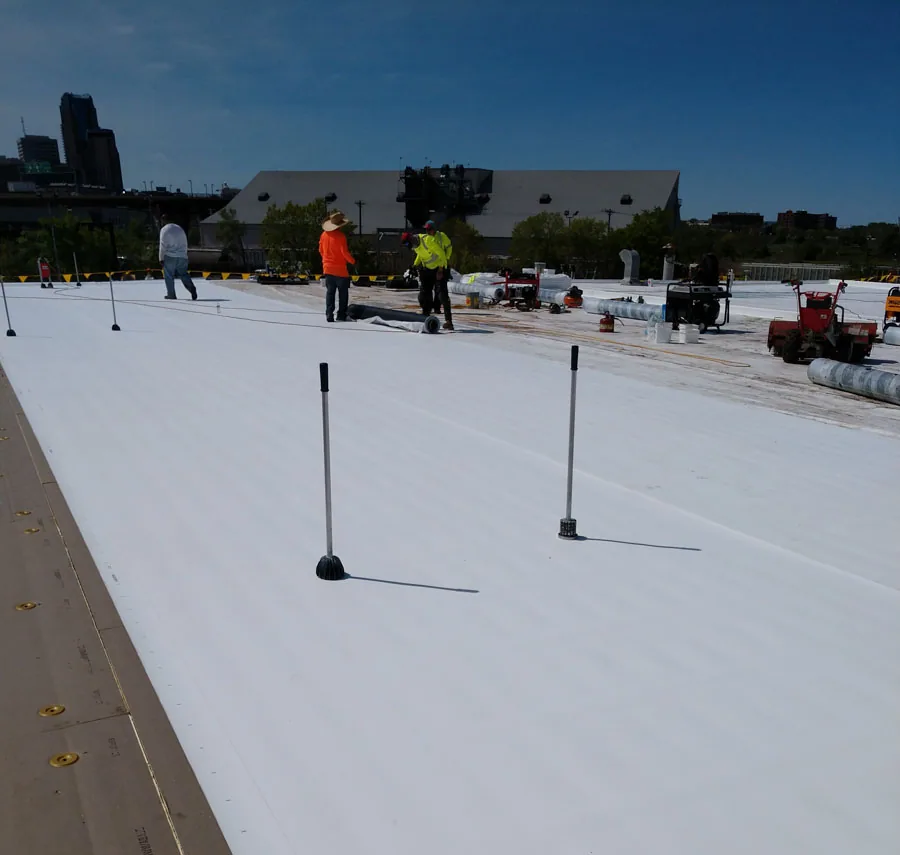
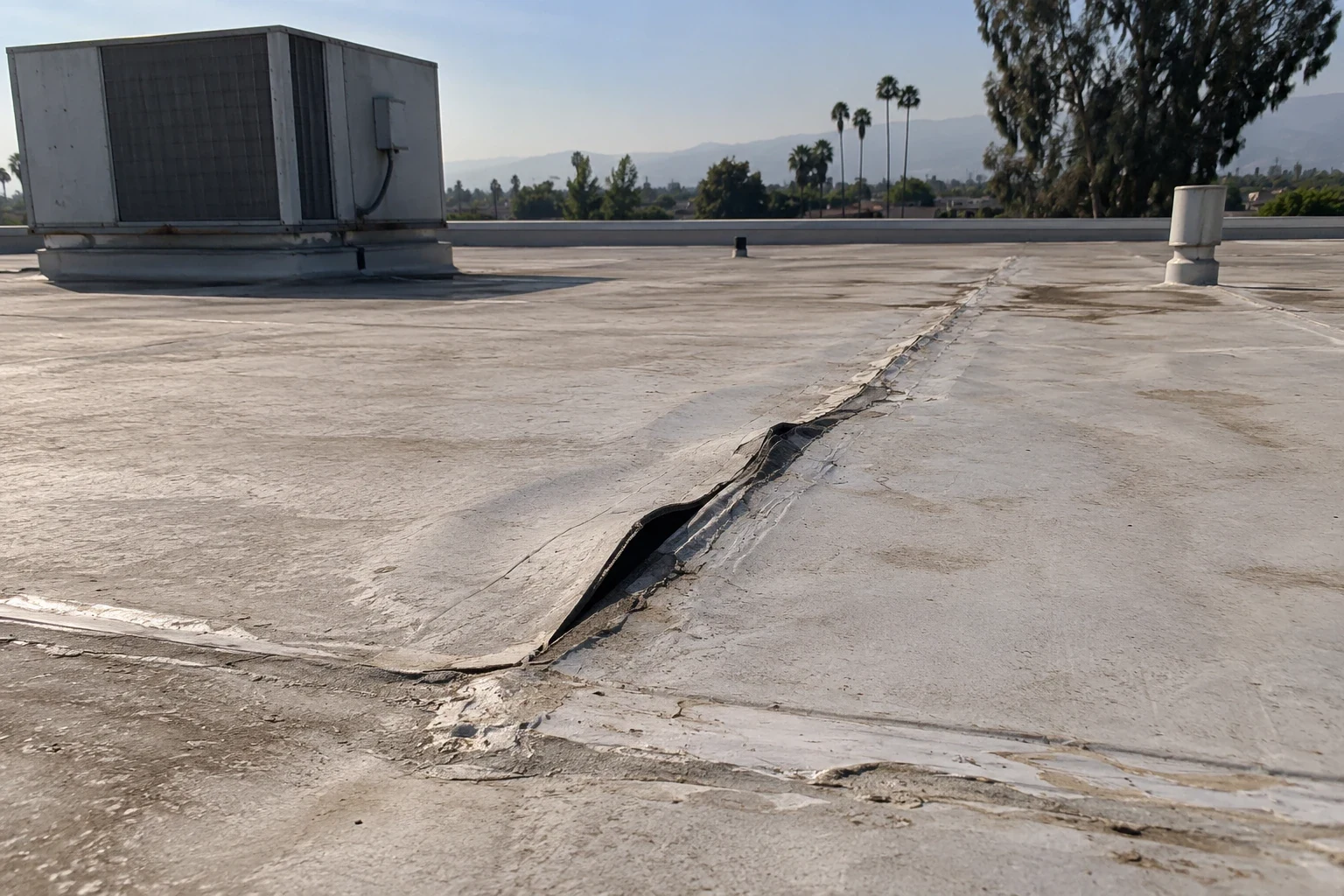
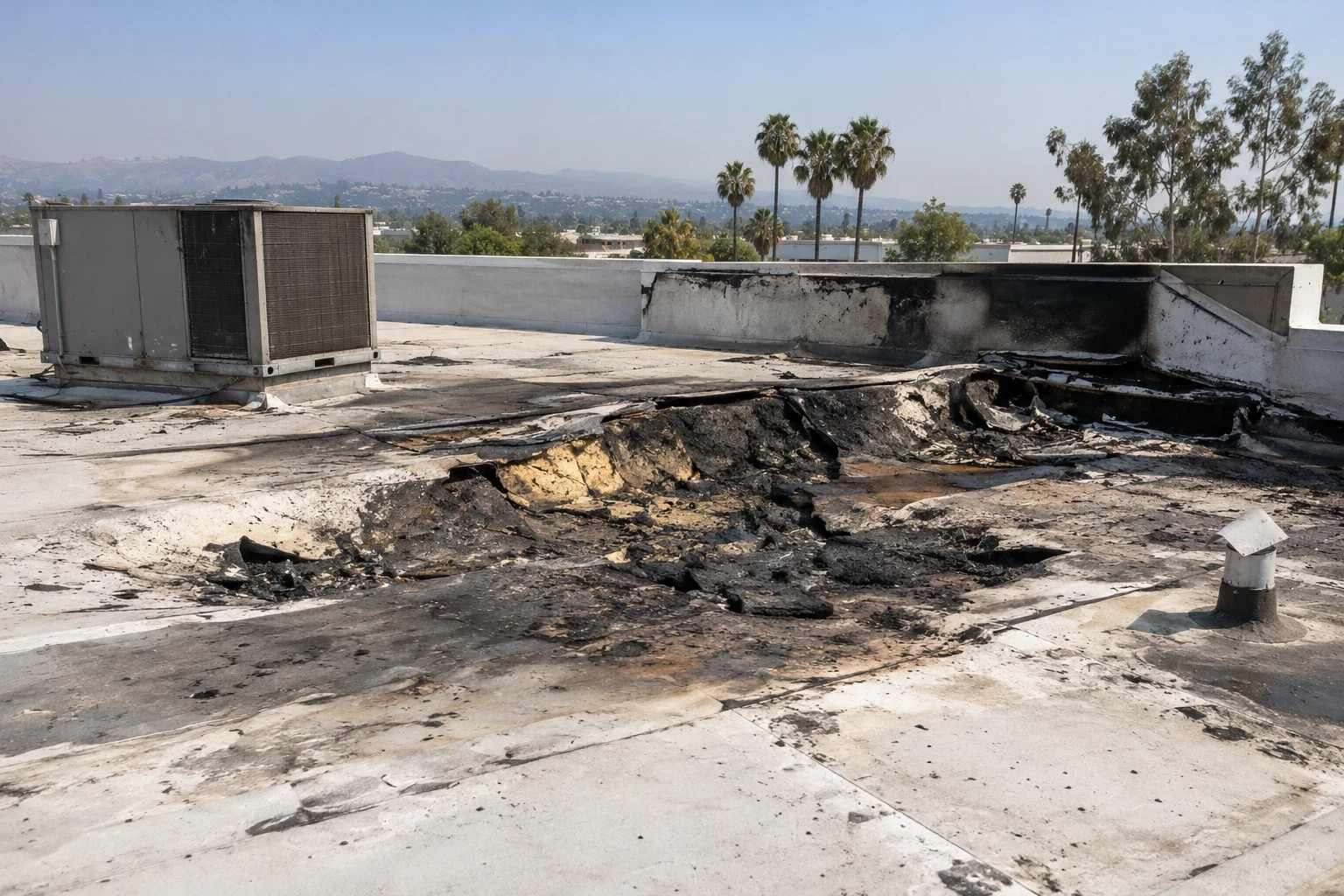
List primary drains, strainers, sumps, scuppers, overflow openings, gutters, and discharge points that were included in the inspection. Confirm that a drain is connected and that downstream piping is the responsibility of the right trade. Check for membrane separation at the bowl, loose clamping rings, deteriorated sealant, and debris that returns after cleaning. If the water line crosses a seam or curb, include that transition in the plan. A gutter and edge review may address perimeter discharge, while a TPO assembly review should use its specified flashing details. The scope should also say how the owner will verify drainage after the next suitable rainfall.
When does ponding require structural or engineering review?
Repeated accumulation, a visible change in deck profile, cracked finishes below, or a new pattern after equipment installation can justify review by a qualified design professional. A roofer may document observed conditions but should not diagnose structural capacity from a surface walk. Record approximate equipment locations, roof plan references, and known loading changes for the engineer. Avoid adding fill or tapered insulation until drainage objectives and existing structure are understood. The Fullerton code library identifies the 2025 California Building Code with local amendments; the authority having jurisdiction determines what review applies to a specific alteration. If roof deflection is suspected, separate structural evaluation from membrane repair in the estimate. A condition report can preserve the evidence used to request that review.
What repairs address a blocked drain versus an incorrect slope?
A blocked strainer may call for cleaning and a maintenance interval, while a damaged drain bowl needs an assembly-compatible repair. A low area caused by deck geometry, settlement, or deflection calls for a different analysis and may not be corrected by patching. The proposal should state the diagnosis, limits, and remedy separately. Where tapered insulation is considered, compare elevations, drain locations, overflow paths, edge heights, and equipment clearances. A roof recover feasibility review should include those conditions before a new layer is considered. If a surface coating is proposed, it must follow substrate and drainage review; coating restoration is not a substitute for correcting an unresolved structural issue.
How should a facility monitor the repaired drainage area?
Keep the original observation map and schedule a follow-up after a meaningful rainfall, using the same roof references where possible. Record whether the drain remained clear, the approximate time for water to recede, and any new edge or seam concern. The maintenance team should check strainers after roof work and material deliveries, not only on a fixed calendar. If the owner sees a new interior symptom, log its timing separately from the prior ponding record. A preventive maintenance visit can combine drain, seam, and penetration checks without asserting that a roof is leak-free. Store the photos and work order with the assembly and warranty records for the next budgeting review.
What should a ponding-water bid include?
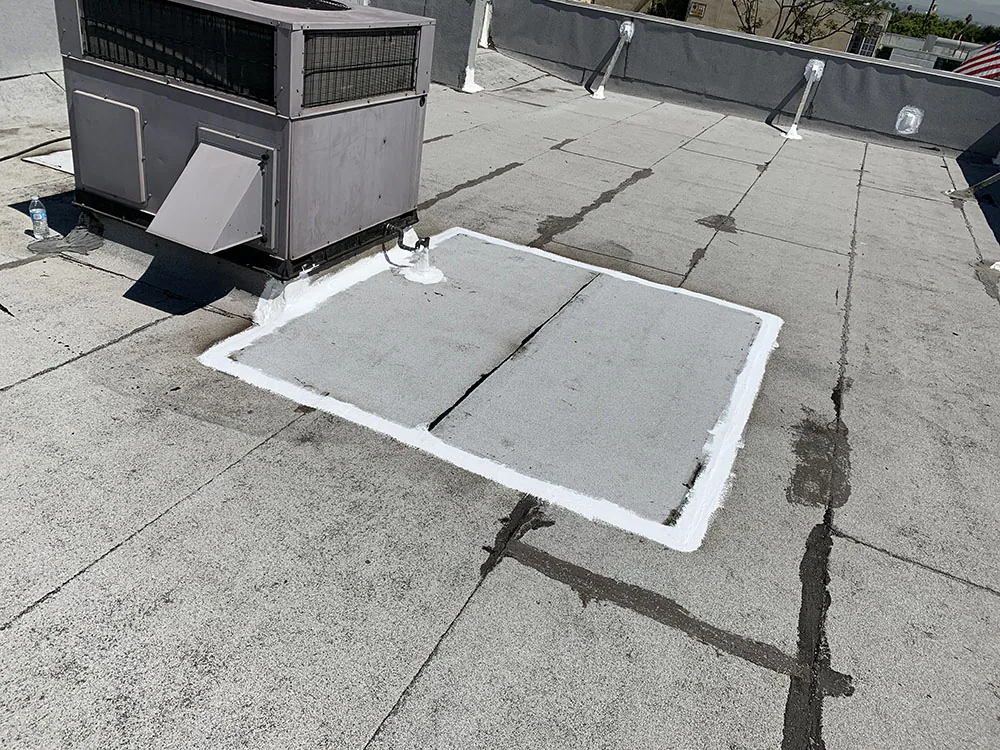
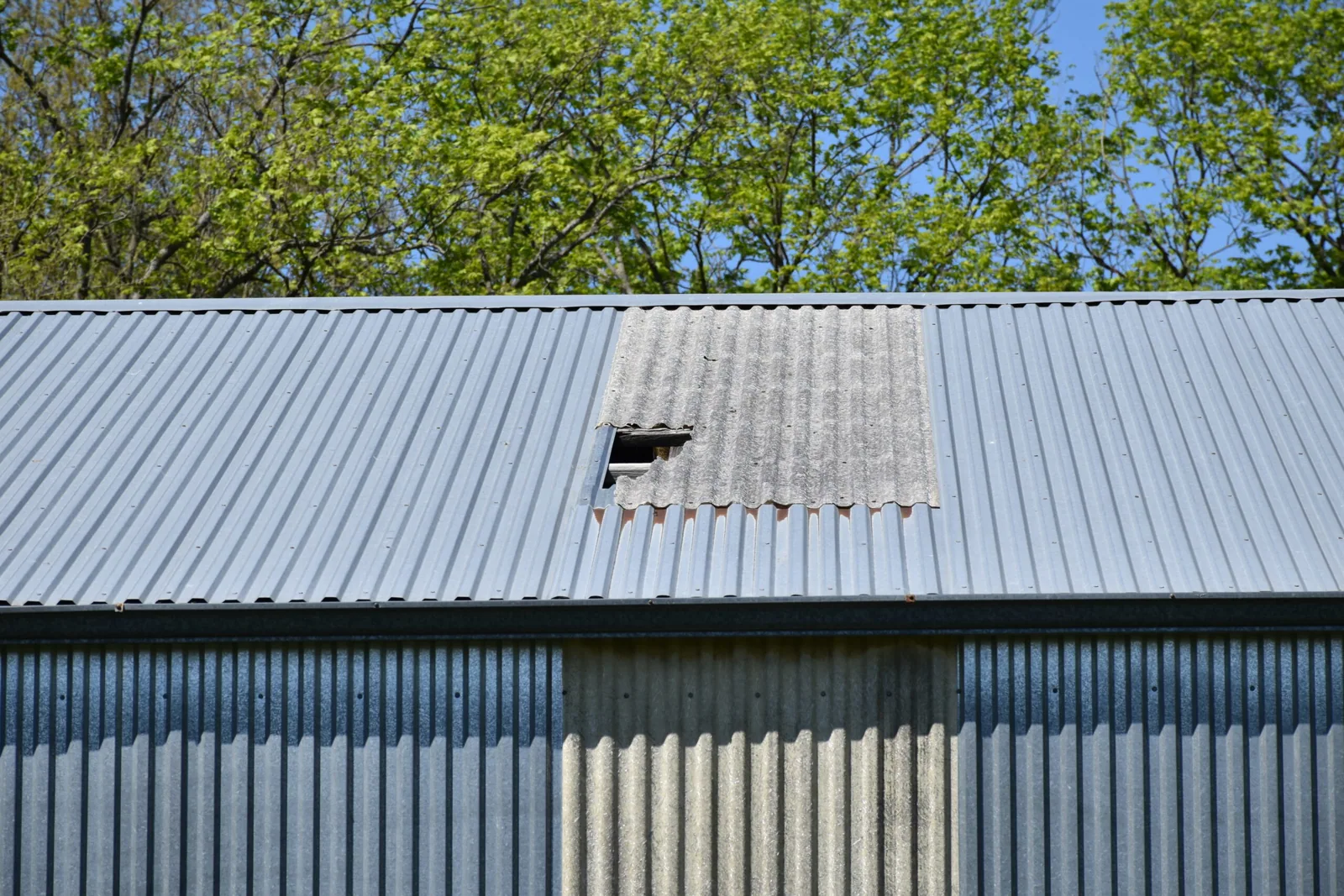
Ask for a marked map, measured work areas, drain and overflow responsibilities, assembly assumptions, and a clear distinction between cleaning, membrane repair, and slope correction. Define how hidden wet insulation or deteriorated deck will be measured and authorized. Request a separate allowance for engineering or plumbing work if those questions are unresolved. Compare the post-work verification method and maintenance requirements alongside the price. Long-term Fullerton Municipal Airport rainfall normals can inform general planning, but the proposal should use the actual storm history supplied by the owner. Fullerton planning maps identify the Orangethorpe Avenue corridor as a broad geography; this route is not an individual building target. The physical roof condition, not a district label, determines scope. A nearby seam or wall transition may need its own scope, such as flashing failure repair or seam failure repair.
A measured drainage review should identify where the reference was taken and how the depth was estimated, since a photograph without scale can mislead a later reviewer. Mark the approximate boundary on a roof plan and note nearby drains, equipment bases, walk pads, seams, and low transitions. If the pond changes shape as water recedes, record the observation time instead of treating the outline as fixed. Check that the outlet is not simply obstructed by a temporary object and coordinate with the plumbing contractor where piping is concealed. Do not direct water across an occupied area or toward an unprotected edge while testing flow. The report should say whether the observation followed rainfall, cleaning, or another condition and identify any area that could not be reached safely.
For bid review, compare the proposed outcome rather than line-item labels alone. One contractor may price drain maintenance, another may include membrane work, and a third may assume tapered insulation; those are different scopes. Ask each bidder to mark the affected roof boundary, list which drains and overflows are included, and state whether structural or plumbing work is excluded. Require a written process for approval if removal exposes wet insulation or deck deterioration. If the proposed correction changes roof height, verify edge metal, equipment clearances, and transitions before award. A closeout plan should define the next observation and retain a dated baseline. A future inspection can compare the same locations and report whether drainage changed, without presenting one dry-day observation as proof of long-term performance.
After work, preserve the original map and add the repair date, drain status, and materials used. A later visit should repeat the same reference points so the property team can compare the water boundary instead of relying on memory. If the area remains wet, record the elapsed time after the weather event and whether nearby outlets are clear. Seasonal normals from the Fullerton station are background only; the actual rain and roof geometry control the observation. The maintenance file can note whether a separate engineer or plumbing contractor reviewed a condition, without folding their conclusion into the roofer's scope. This keeps the next budget discussion specific to drainage performance and open questions.
Commercial Roofing Questions
Is any standing water automatically a roof failure?
No. Timing, depth, drainage design, and repeat observations help distinguish temporary wetting from a persistent condition.
Can a coating eliminate ponding?
A coating does not correct a structural or drainage cause. Confirm elevations and substrate before choosing a system.
Who evaluates suspected deck deflection?
A qualified structural professional should assess capacity and movement; the roofer can document visible evidence.
Should drains be checked after a roof repair?
Yes. Confirm strainers, bowls, overflow paths, and discharge responsibilities, then record the next observation.
What evidence helps compare bids?
Use the same map, measured zones, included components, concealed-condition allowance, and post-work verification method.