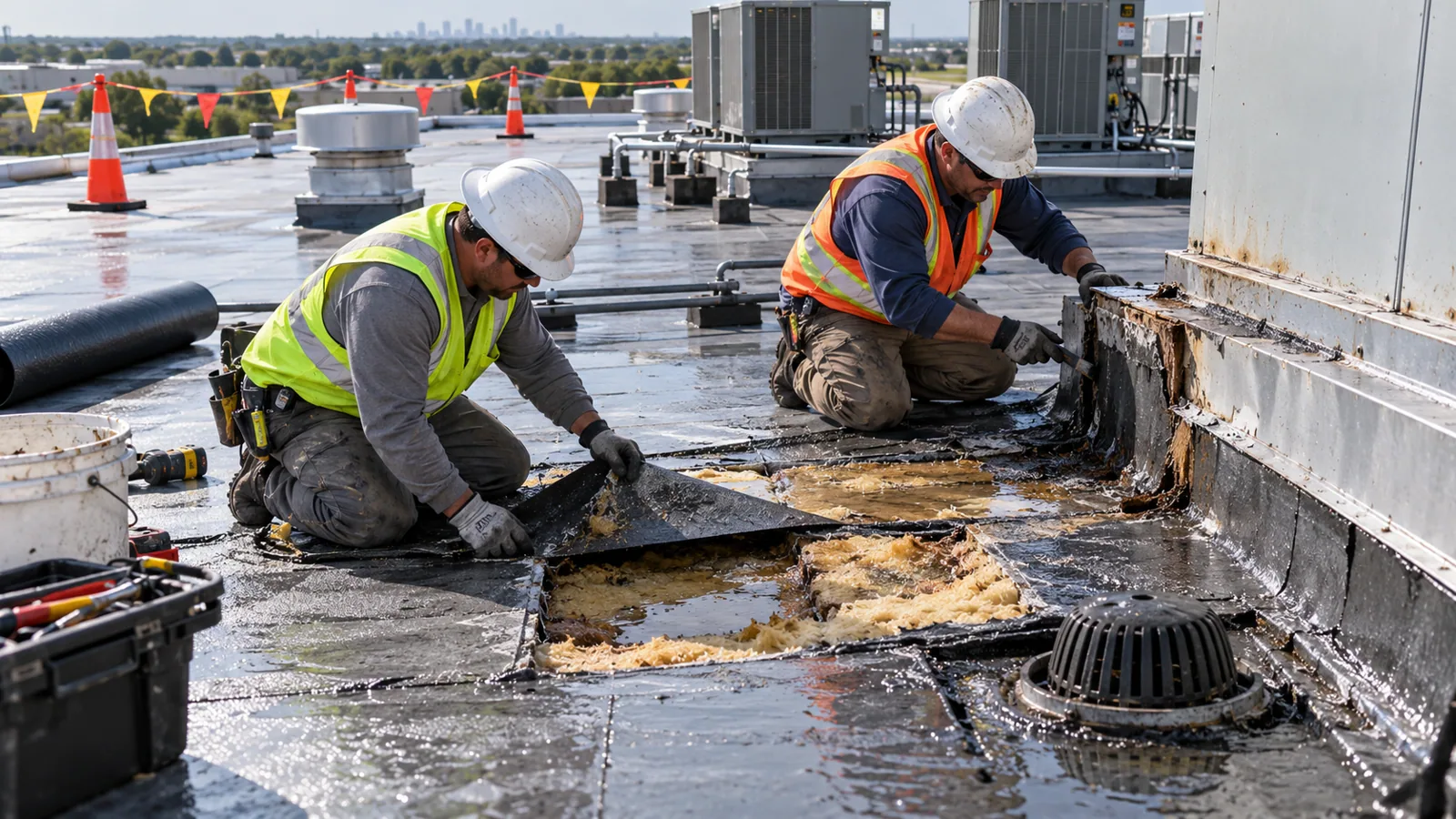

Restore commercial roof drainage in Fullerton by tracing ponding, checking drains and scuppers, and documenting the corrective work by roof section.
Roof leak, storm damage or an inspection coming up?
A slow drain can leave water on a roof long after the rain stops. In Fullerton, the manager needs to know whether debris, a blocked outlet, a damaged drain bowl, or roof deflection is holding the water. We inspect the drain path, scupper, nearby membrane, and interior signs before proposing a correction. NOAA's Fullerton normals show an average August high of 86.7 degrees; the roof walk and current forecast set the safe work window for exposed drainage repairs. Southeast Industrial Focus Area and Commonwealth Corridor are distinct local geographies; a city label never replaces roof-specific inspection details. Those labels do not tell us how a specific roof drains. We map that property, then set the access route and work window. If water is entering occupied space, arrange commercial leak response while the drainage condition is assessed.
Where does the water stop moving?
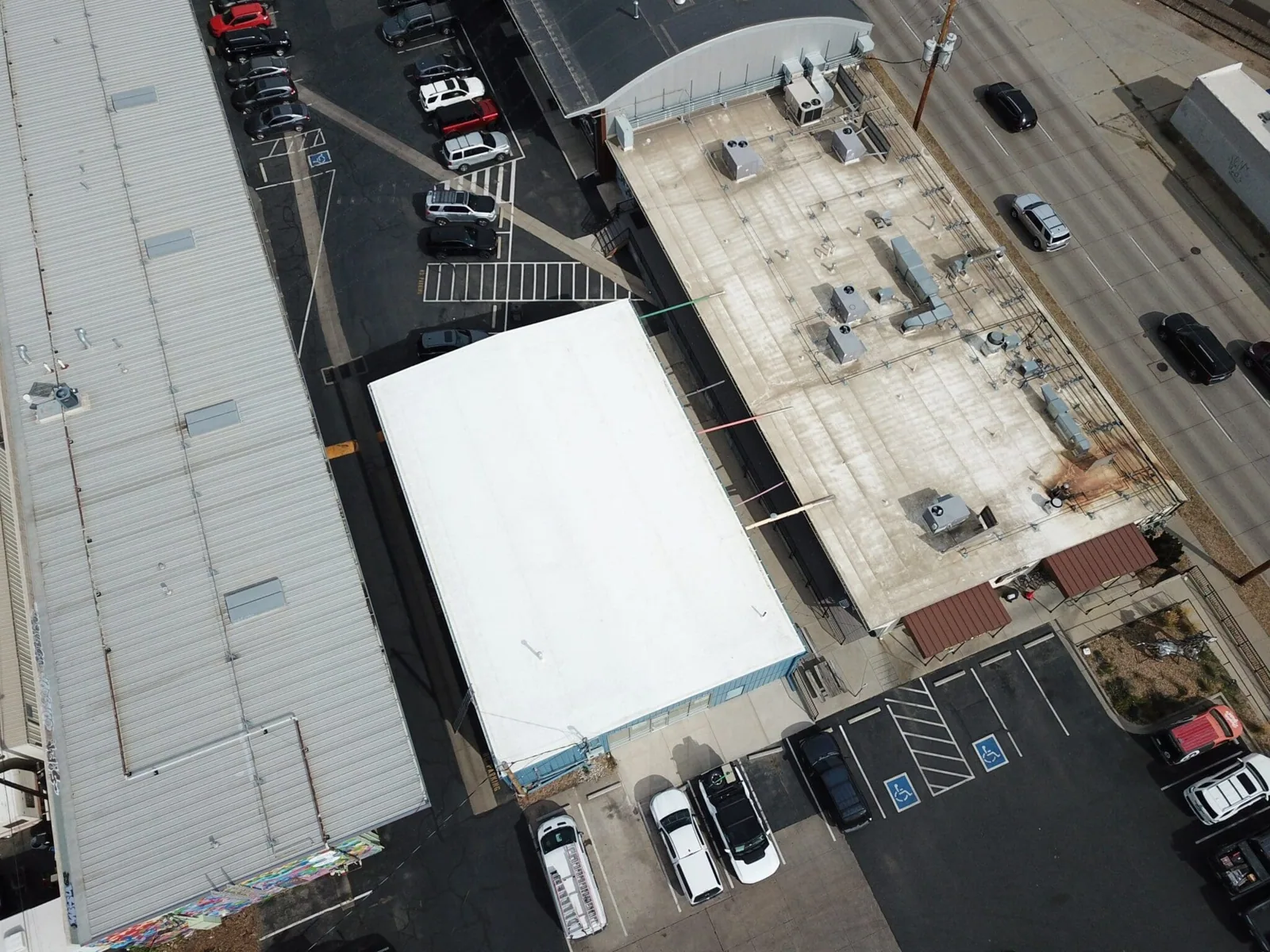
We start at the low points shown on the roof plan and compare them with the outlet locations in the field. The inspection checks for leaves, sediment, packaging, construction debris, loose strainers, and obstructions beyond the roof line where access permits. A scupper can be clear at its mouth while the conductor below is restricted. We record each outlet and the visible water line, then note whether the roof is holding water away from the intended path. At a property in the Southeast Industrial Focus Area, delivery and equipment activity may affect where a safe staging point can be placed. The property's contact confirms current access and loading rules. A full roof inspection can include adjacent seams and flashings before a drain repair is scoped. If the owner requests a flow test, we confirm the method, outlet endpoint, interior monitoring contact, and limits on added water first. A test is not appropriate when water could enter occupied space or burden a known weak area. The report records starting conditions, the test location, observed outlet response, and where the test stopped. That result remains separate from any drainage-design review.
What should the drain detail show?
The drain bowl, clamping ring, membrane termination, strainer, and surrounding insulation each affect the repair detail. We look for a loose or corroded assembly, separated flashing, cracked sealant, movement, and evidence that water is bypassing the intended opening. A roof drain is not repaired by covering the inlet with coating or sealant. The selected detail has to preserve the path into the drainage system and reconnect the membrane at the bowl. A condition map can show outlets, test locations, and related interior impacts. If a roof has several layers or soft areas, a moisture survey may help select confirmatory tests. The report separates visible conditions from concealed conditions that remain untested.
Is ponding a blockage or a roof-shape issue?
Water can collect because an outlet is restricted, a drain sits above the low point, insulation has changed shape, or the deck deflects. Clearing debris may restore flow when the outlet is the cause, but it will not correct a depression in the assembly. We compare the observed water line with the roof plan, drain position, and any available repair history. The scope states which condition is confirmed and whether the proposed correction changes slope or only restores an outlet. A ponding water assessment can help distinguish those paths. We do not treat a photo taken after one shower as a drainage test. The manager receives the recommended check, the area it affects, and the condition that would lead to a broader roof evaluation.
How are scuppers and overflow paths handled?
A scupper repair needs a continuous connection from the roof membrane through the opening and across the wall detail. We inspect the throat, metal edge, flashing, counterflashing, and visible discharge path for separation or trapped debris. The overflow route should remain available when primary drainage is restricted. We note whether the opening is clear and whether any visible obstruction is within the roof scope or another trade's responsibility. For a Commonwealth Corridor property, trace the roof slope and locate each drain and overflow before clearing debris or opening a flashing detail. If metal or membrane has pulled away, a repair scope names the materials and tie-in. The manager can keep the outlet record with roof assembly details for later maintenance. When a scupper opening needs repair, the field scope identifies the wall side, roof side, metal edge, and membrane connection. We check where dissimilar materials meet and whether movement has opened the flashing. A replacement metal piece is fitted to the existing assembly and detailed so water can reach the visible discharge path. If the wall or conductor needs work outside the roof scope, the manager receives that boundary before mobilization. Photographs before and after the repair show what was exposed, what was replaced, and the final opening.
What does a drainage repair work window require?
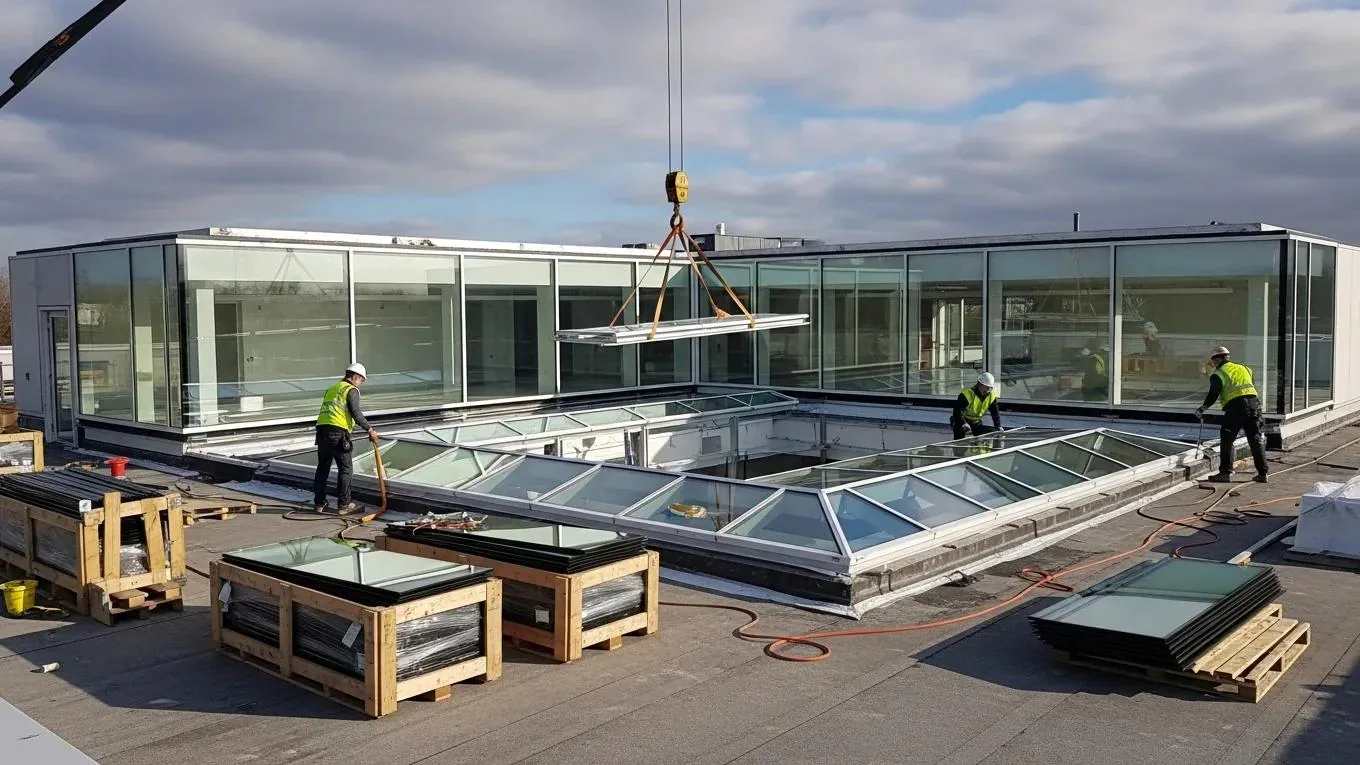
Before the crew begins, the manager confirms roof access, a safe route, staging, tenant hours, nearby equipment, and any area that cannot be closed. The scope identifies the drain or scupper, material removal, repair boundary, and the point where the roof will be closed each day. Product requirements and live weather conditions govern exposed work. Before applying sealant or coating, compare the current forecast with the product’s required substrate and cure conditions. We check the forecast and actual surface condition before opening the assembly. A recover review may be appropriate when broader roof conditions support it. If the repair is localized, the work record stays limited to that detail and adjacent surfaces needed to complete it.
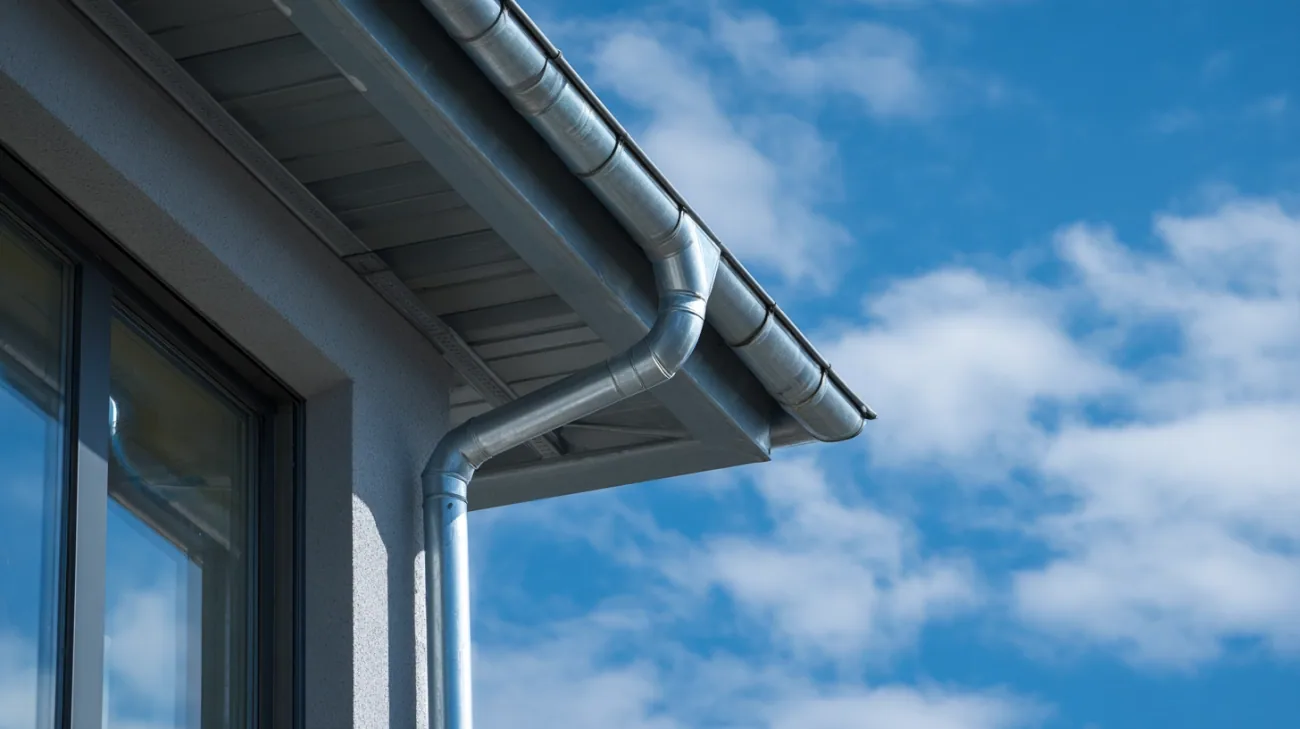
How should drains stay on the inspection map?
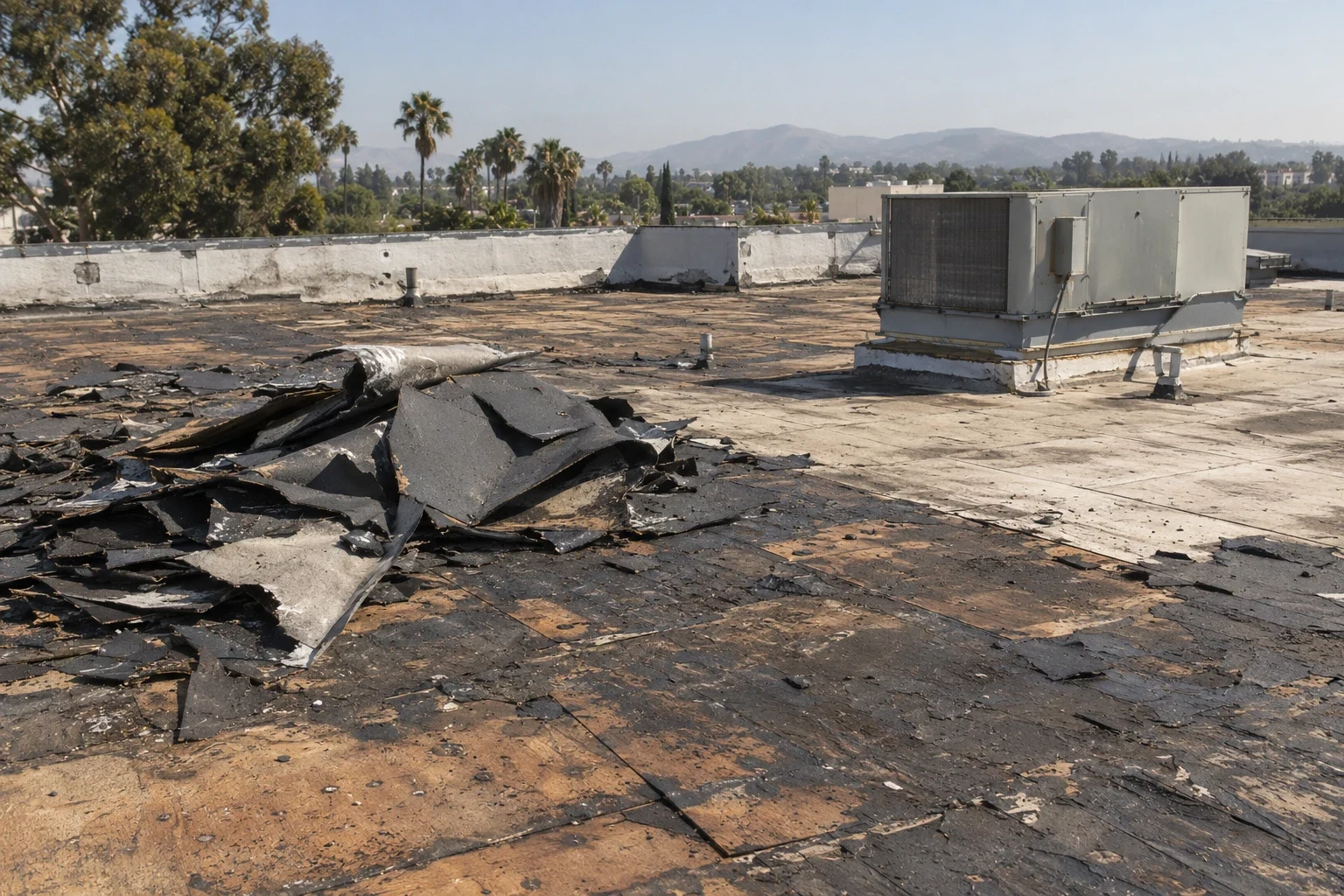
At closeout, we record the outlet location, repair materials, photographs, and any restriction that remains outside the roofing scope. A manager can assign a person to check strainers and roof debris after scheduled service work or a significant weather event. The inspection record should distinguish a clear inlet from a complete check of the conductor below. If an interior leak returns, report the room and time along with the roof outlet nearest the mapped area. A maintenance visit can compare drain conditions over time and identify debris or movement before a larger scope is prepared. The next review date belongs in the building's maintenance calendar, together with roof access instructions and the contact who can approve corrective work. The follow-up note should record whether the outlet remained clear after service trades left the roof, not simply repeat the original repair description.
Commercial Roofing Questions
Will clearing a drain stop recurring ponding?
Debris removal helps when an obstruction is restricting flow. A depression, deflection, or misplaced outlet requires a separate review of roof shape and drainage design.
Can roof coating be applied around a drain bowl?
The drain detail must remain open and compatible with the membrane system. Preparation and reinforcement follow the selected product instructions and the condition of the existing assembly.
What if water remains after the outlet is clear?
Mark the standing-water boundary and note the time after rainfall. We can compare that observation with roof slope, drain elevation, and any available plan or repair record.
Does a scupper repair include the downspout?
The written scope names the portion included, such as the roof opening, wall flashing, or visible discharge path. A restricted conductor may require access and work by another trade.
What should the property manager provide?
Send the roof plan, known drain locations, access contact, interior leak reports, and any recent maintenance notes. We can identify a safe work window and the areas to inspect.