
Plan a Fullerton infrared roof survey with suitable conditions, documented limits, and selective verification before repair or replacement decisions.
Roof leak, storm damage or an inspection coming up?
After a warm Fullerton afternoon, roof surfaces may cool at different rates, but thermal contrast alone does not establish trapped moisture. The airport normal's August mean daily maximum of 86.7°F is seasonal context only; survey timing must account for recent weather, assembly, insulation, surface conditions, and the question being investigated. A manager should share the roof plan, access rules, known repairs, and any interior observations before the survey window is set. The technician can then identify candidate anomalies for verification through approved methods rather than label every temperature difference as a defect. North Industrial and the Orangethorpe Corridor Nodes are Fullerton planning geographies that can orient a service discussion, but neither establishes a condition at a particular building. The final record should distinguish thermal observations from confirmed conditions and state the next step for each area.
Define the survey boundary and purpose
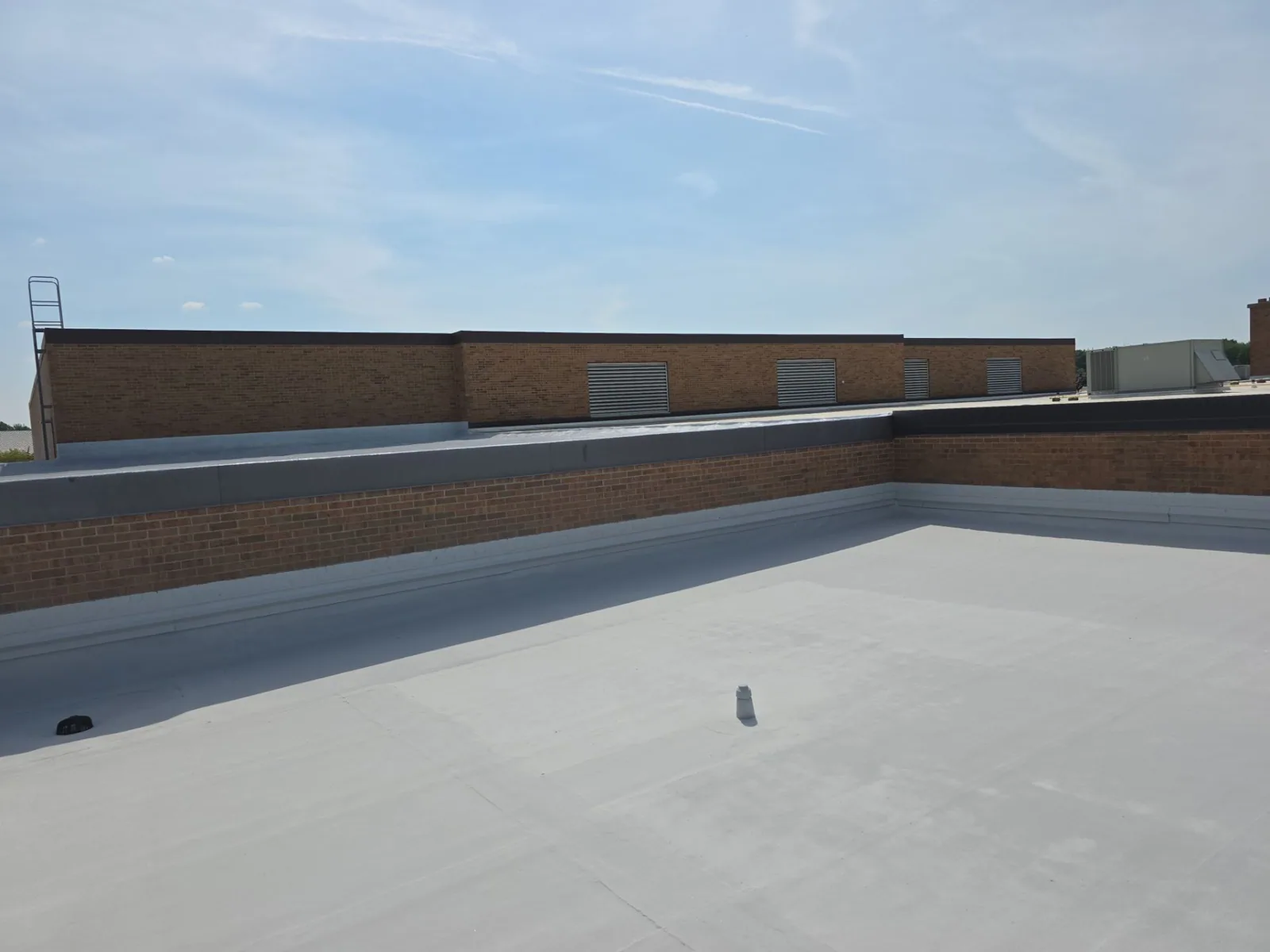
Mark the roof sections, survey time window, known additions, system type, and areas that cannot be scanned. A survey may support a replacement study, a leak investigation, or a limited question about insulation, but it should not be ordered as a generic certification. Ask whether the owner needs a map for follow-up testing, a repair boundary, or a baseline for future comparison. Gather past moisture reports and repair records to avoid repeating work without context. A condition inspection can place thermal observations alongside visible roof features. If the property is considering a recover, compare the findings with the separate recover evaluation rather than assuming one survey decides the assembly.
Confirm conditions before collecting data
The survey lead should document recent weather, solar exposure, wind, precipitation, interior operation, and the roof construction. Some methods require a specific heating or cooling pattern; the provider should explain whether conditions are suitable on the planned date. Fullerton Municipal Airport normals show an August mean daily high of 86.7°F. Use that long-term climate context for seasonal planning, then confirm the forecast and roof conditions before deciding whether the survey can produce useful contrast. Current conditions and the assembly govern whether a particular survey can produce useful contrast. If conditions are unsuitable, reschedule or use another diagnostic method instead of stretching the interpretation beyond its limits.
Capture and label patterns carefully
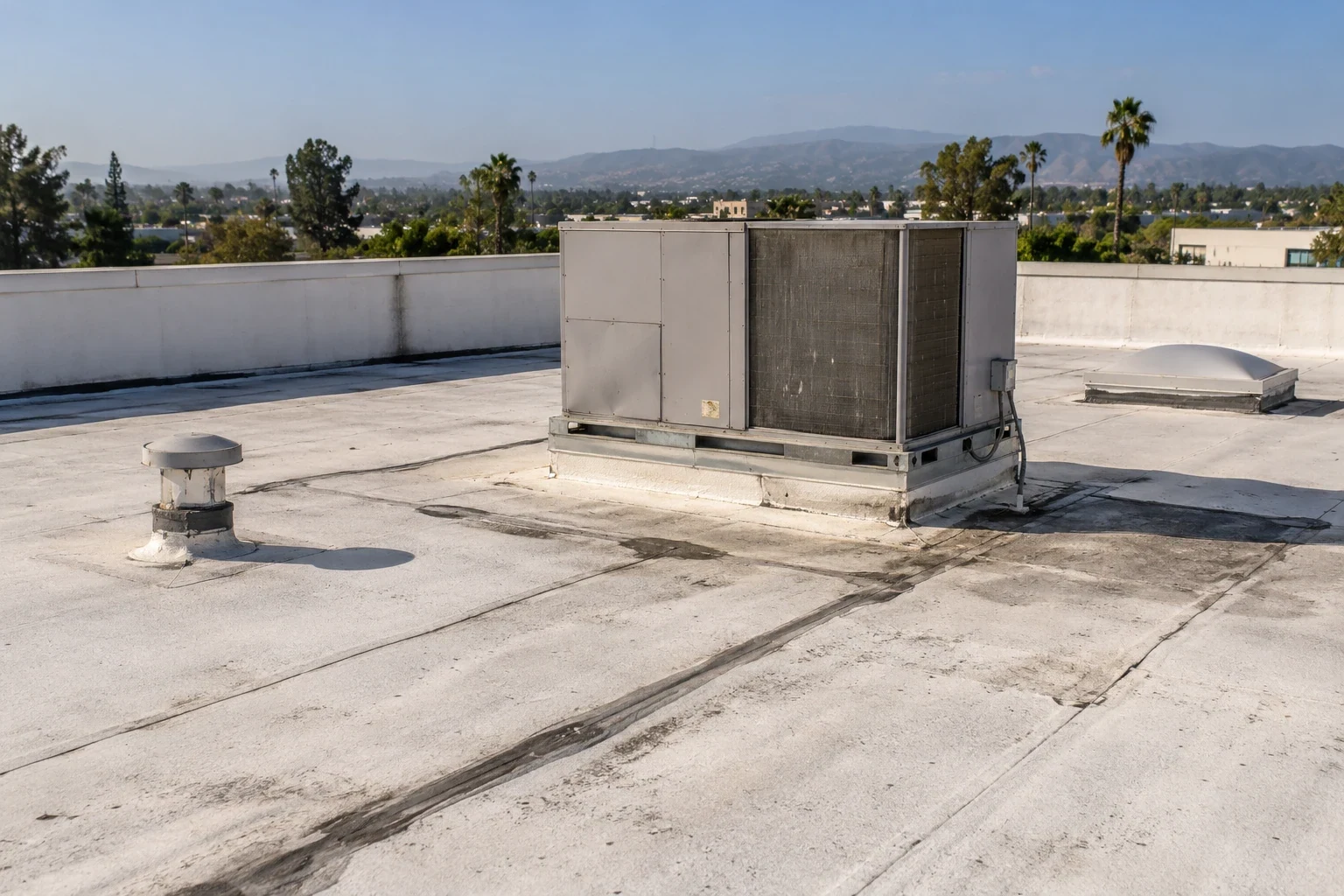
A defensible survey includes the instrument, calibration or operating checks, date and time, route, image scale, and environmental notes. Label images to match the roof plan and preserve the original files. Mark parapets, drains, curbs, equipment, shadows, repairs, and other features that could affect a thermal pattern. Do not merge separate assemblies into one assumed baseline. A qualified interpreter should explain the observed pattern and its possible alternatives, such as stored heat, surface conditions, or construction differences. A color image alone is not an explanation. Keep access limited to the authorized project team and identify any sections the operator could not reach or interpret with confidence.
Verify before making a material decision
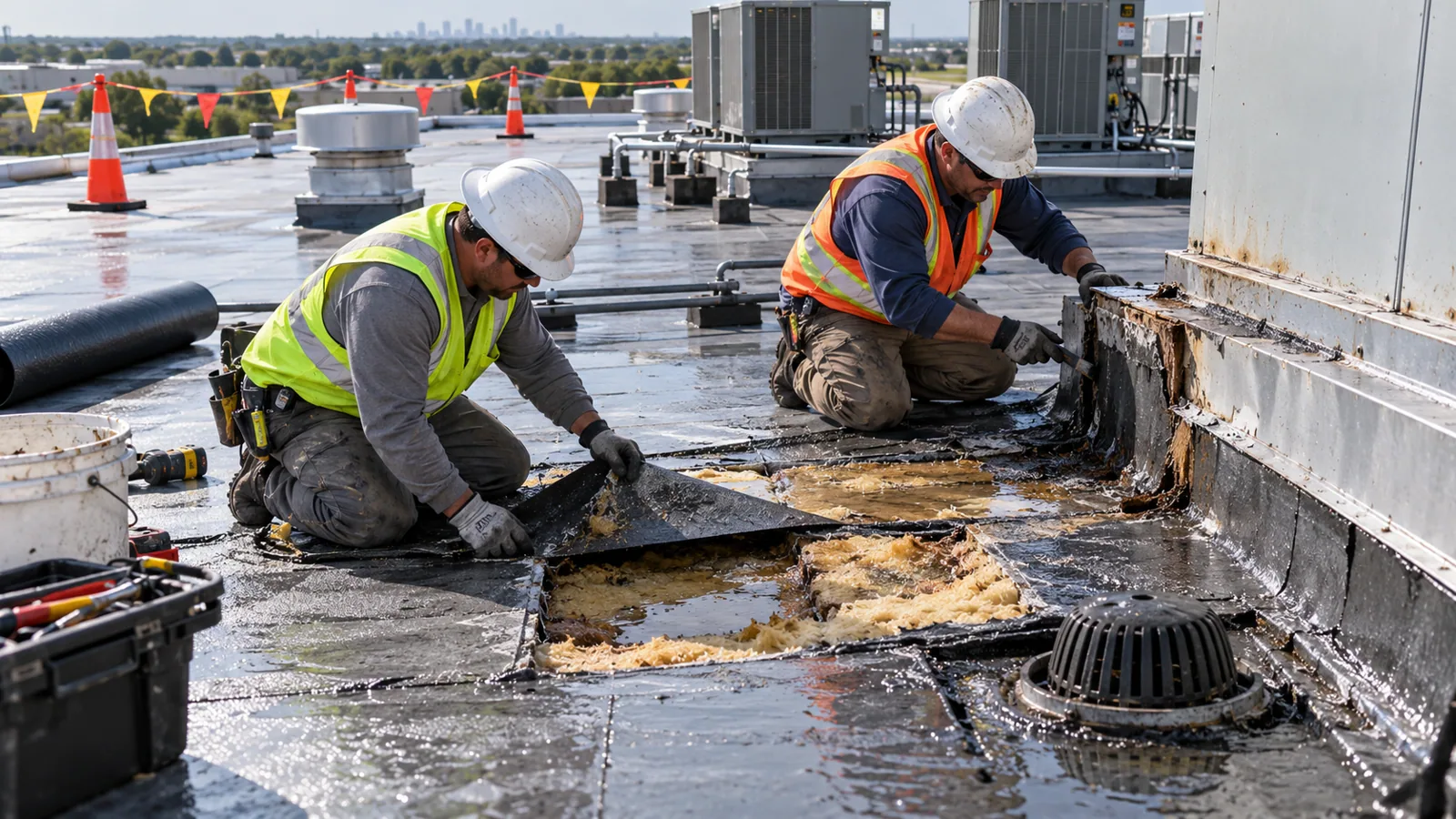
Use selective cores, approved test cuts, capacitance testing, or another suitable method when confirmation would change scope. The owner should authorize each test location and understand how the opening will be restored. A confirmed sample supports only its tested location unless a qualified professional explains why broader conclusions are justified. Map sample points against the thermal observations, roof layers, and repair history. The report should not treat an unverified pattern as a quantity of wet insulation. If a leak is active, a parallel leak investigation may be needed to trace water movement. For an EPDM assembly, verify material and attachment details from records before specifying a repair.
Translate findings into scope options
Organize confirmed and suspected conditions by section, area, and evidence strength. Explain how each finding changes a repair boundary, replacement quantity, or continued-maintenance decision. Identify areas where no thermal conclusion was possible and recommend a bounded next test if it would resolve a material question. A maintenance plan can track a known observation without prematurely labeling it a failure. A medical office roof profile may help frame access coordination, but the actual building team must supply its operational constraints. The North Industrial Focus Area is a broad Fullerton planning reference, never evidence that a specific roof has moisture.
Close out the survey with clear limits
Deliver the marked plan, thermal and visible images, conditions log, method, interpreter, test locations, verified results, and any open questions. State what the survey did not examine, including inaccessible areas and conditions the method cannot establish. Keep a record of who approved test openings and how they were restored. Explain the next decision and who is qualified to make it, whether that is a roofer, designer, engineer, or property owner. Avoid absolute statements about performance based on a single method. When stored with the roof inventory and prior work orders, a well-scoped survey becomes useful evidence for later capital planning rather than an isolated set of images.
The interpreter should review the roof assembly and relevant environmental conditions before labeling a pattern. A result that is plausible for one membrane, insulation type, or deck may not transfer to another. Compare the thermal image with a visible-light view and a marked plan so the owner can see the same feature in both records. Record the time between image capture and any verification test. If a test location was chosen after viewing a pattern, explain that selection so the sample is not mistaken for a random survey of the entire roof. A well-documented method makes limitations visible and helps a second reviewer judge whether the conclusion fits the evidence.
If the survey finds a pattern that is not verified, keep it in a “needs confirmation” category and set a next step. That may be an approved core, a targeted inspection, or a review of an interior symptom. Do not assign a removal quantity or replacement boundary solely from color contrast. When confirmed moisture is found, show the test points and the reasonable limits of extrapolation. For a specific EPDM assembly, record the layers and repair constraints before planning an opening. A property team can then compare the cost of further testing with the consequence of leaving uncertainty unresolved.
Good closeout records support both today’s decision and a future inspection. Preserve the original imagery, annotated version, instrument notes, roof plan, sample results, and repair or restoration details in one asset record. Identify the reviewer and date, then note which recommendations the owner accepted or deferred. If access conditions prevented coverage of a section, include that gap on the plan. A later survey can repeat the same boundary and show whether the earlier question was resolved. The North Industrial Focus Area remains a broad city reference only; the report must identify the customer-authorized site and scope in its private project record.
Before work starts, agree how the owner will receive findings that could affect a near-term repair decision. A short call with the facility contact can distinguish a confirmed leak report from a pattern that needs testing. Keep the written report as the controlling record and state its limits.
Assign a contact to preserve the original files and answer questions about access or test authorization. A clear handoff prevents a later reviewer from relying on an unlabelled image alone.
Commercial Roofing Questions
Does an infrared image confirm wet insulation?
No. It identifies a temperature pattern that may warrant verification using a suitable method.
When should a survey be performed?
Use conditions appropriate to the selected method; the provider should document weather, timing, and assembly limits.
Does one test sample describe the entire roof?
Not automatically. A sample directly supports the tested location unless a qualified professional justifies broader use.
Can the survey determine replacement quantities?
It can inform a scope after interpretation and verification, but suspected areas should not be treated as confirmed quantities.
What records help prepare for testing?
Provide roof plans, assembly records, prior repairs, warranty conditions, access rules, and the decision the survey must support.