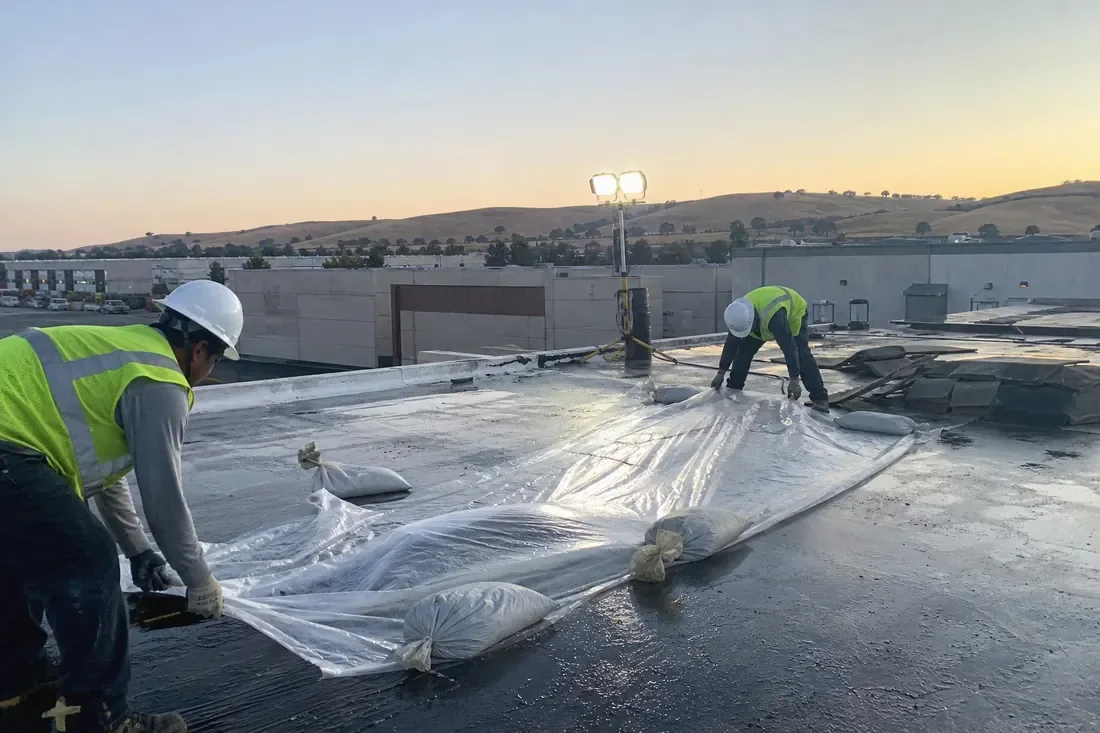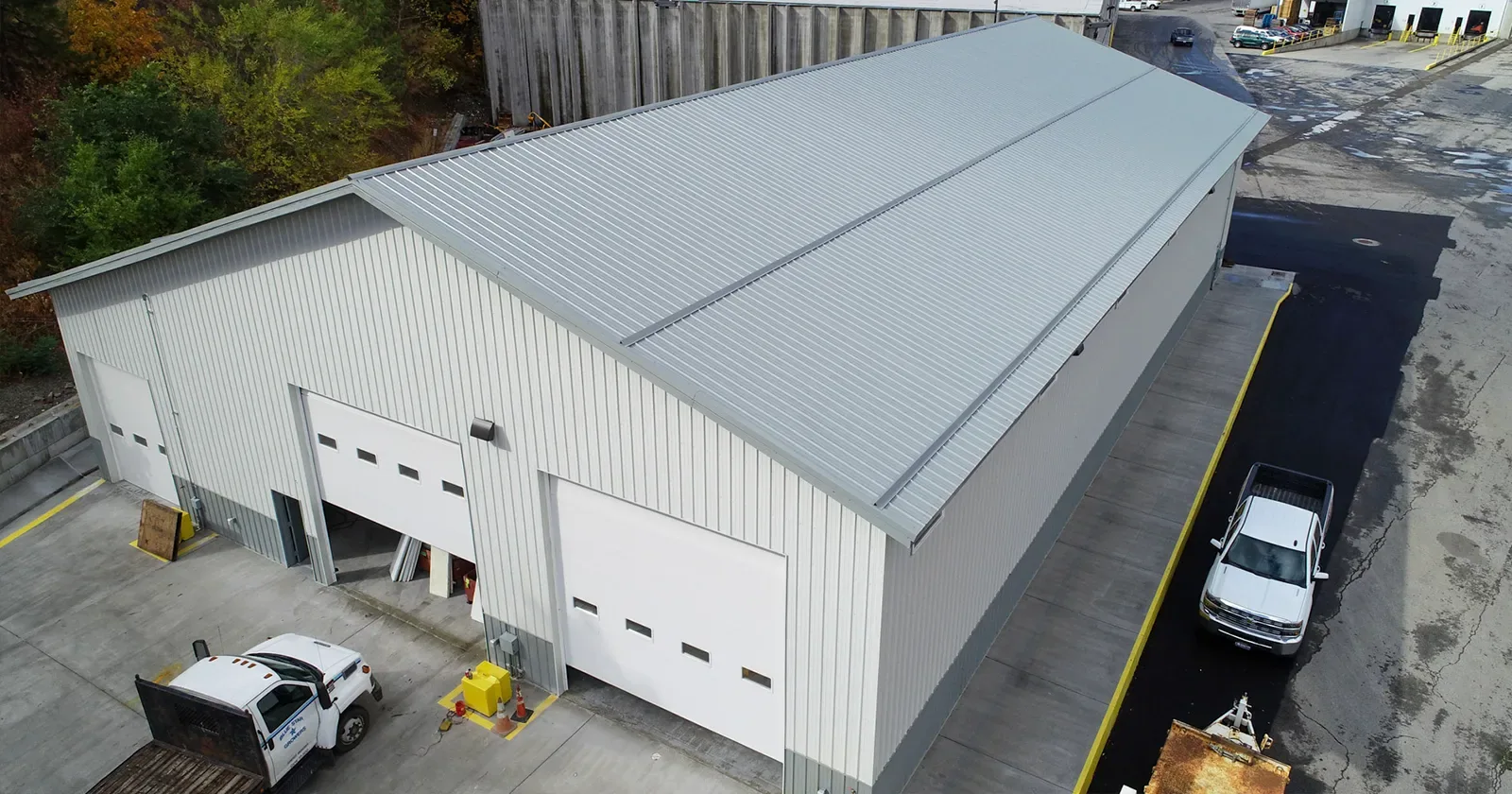

Investigate commercial roof leaks in Fullerton by matching interior timing to roof details, then document a bounded repair or test.
Roof leak, storm damage or an inspection coming up?
Fullerton's airport climate normal records only 0.02 inches of average precipitation in August, a long-term monthly value that cannot rule out a current leak or replace the property's weather history. When water appears inside, the manager should record its time, affected room, recent weather, and whether flow is active before arranging safe roof access. Keep the interior observation separate from the roof source until the assembly and drainage path are examined. The work sequence can then move from protecting the occupied area to tracing seams, penetrations, curbs, drains, and previous repairs. The Orangethorpe corridor is a city planning context, not evidence about a particular roof. A useful investigation record identifies the tested area, limits, immediate controls, and any follow-up needed to verify the source.
What should a manager do while water is active?
Protect people and contents using the building's response procedure, place a safe barrier if needed, and contact the person authorized to request roof access. Do not enter an unsafe area or operate electrical equipment near water without the responsible trade. Record the time, rainfall, and any temporary steps. If water is still entering, distinguish immediate protection from permanent repair. Emergency response may reduce exposure; a roof inspection should begin when access conditions allow. The owner should retain the original report to compare with the contractor's observations.
How can a leak investigation compare interior and roof evidence?
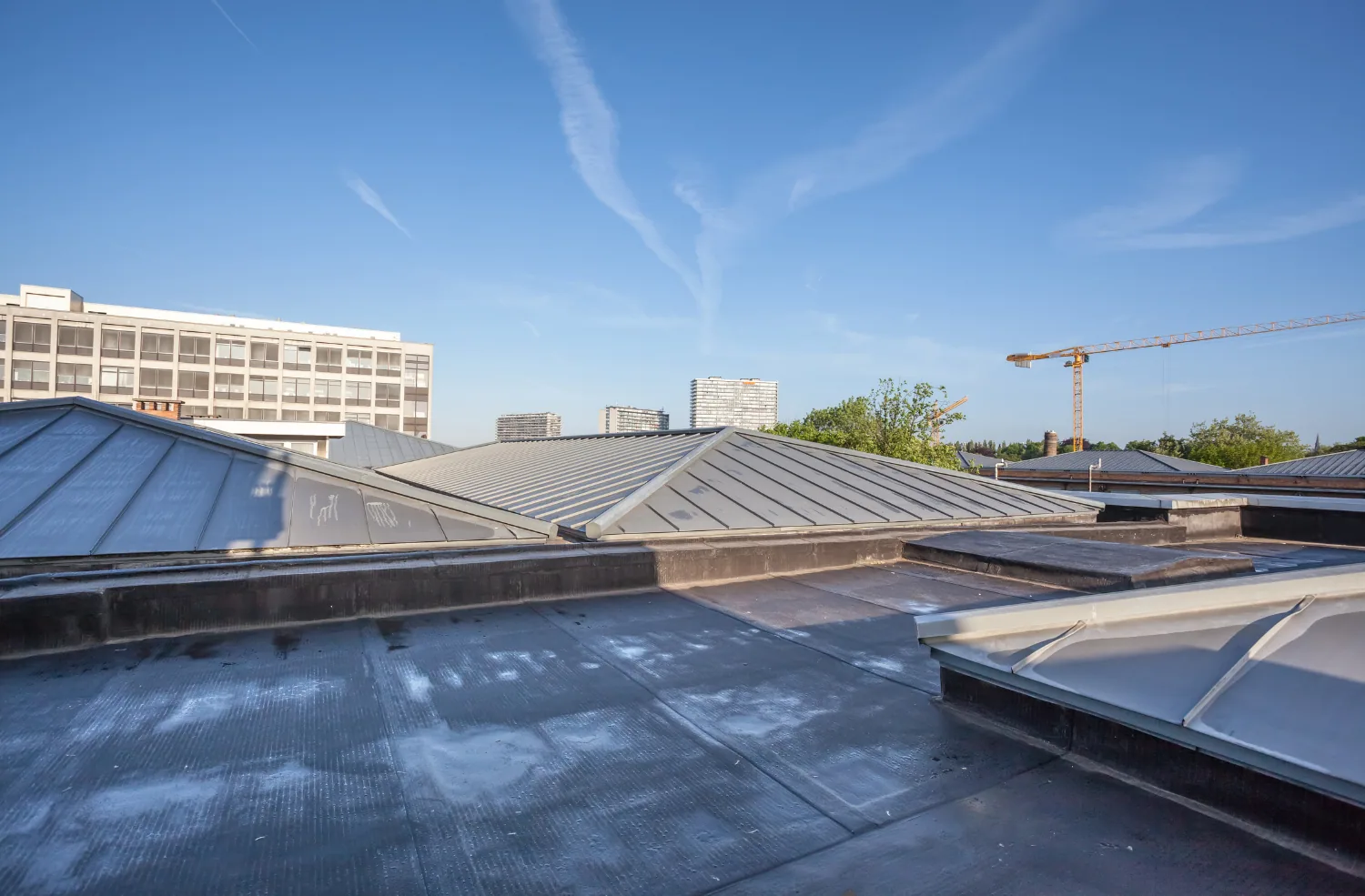
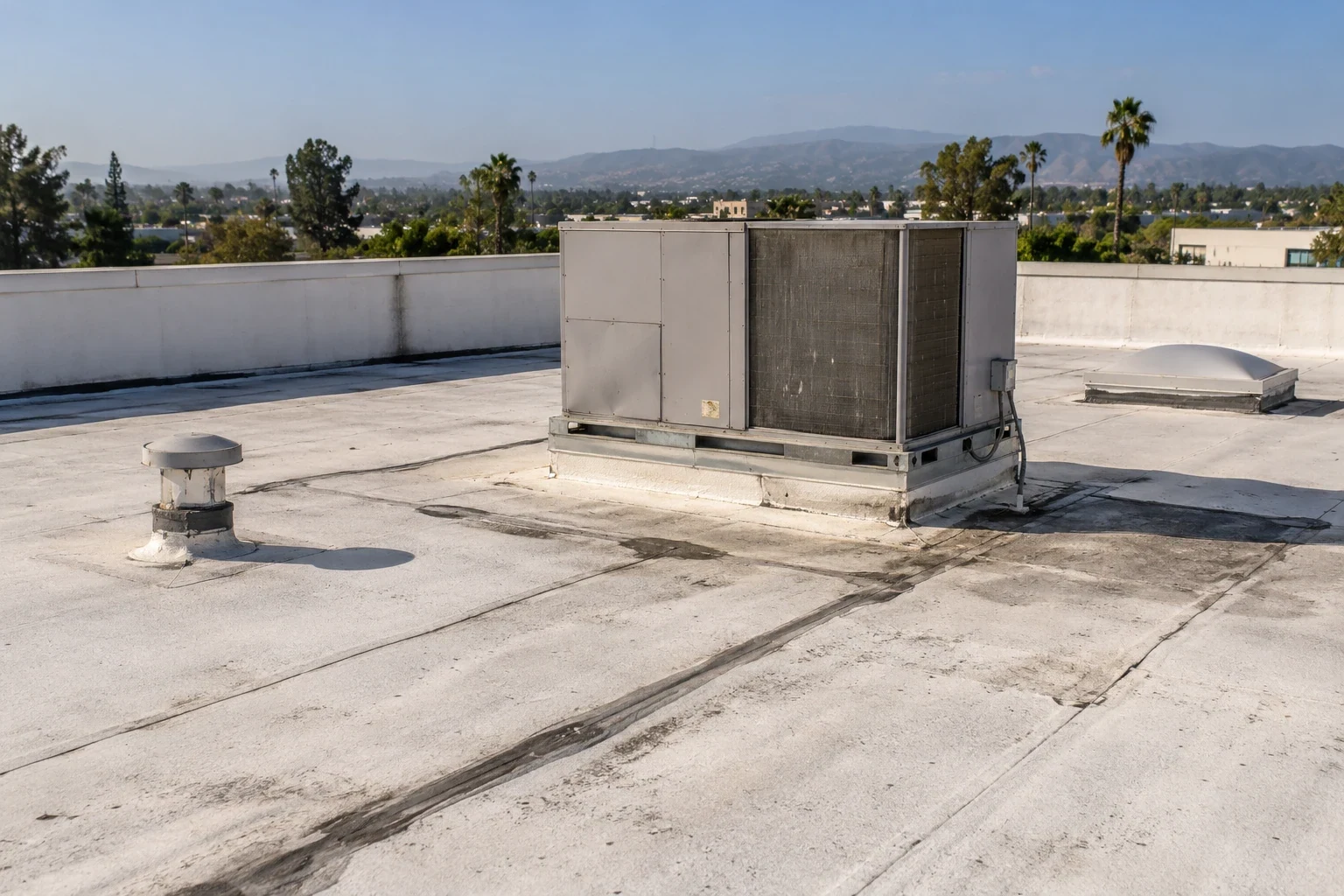
Mark the interior symptom by room or zone and compare it with the roof plan, deck direction, drains, curbs, and wall transitions. Ask whether plumbing, condensate, cleaning, or equipment work occurred near the same time. Inspect likely water paths rather than assuming a vertical line from ceiling stain to roof opening. A flashing review and drainage assessment may involve separate conditions. If a test is recommended, define the boundary, water controls, and observer. Document what result would support or rule out each hypothesis.
When can moisture mapping or testing help?
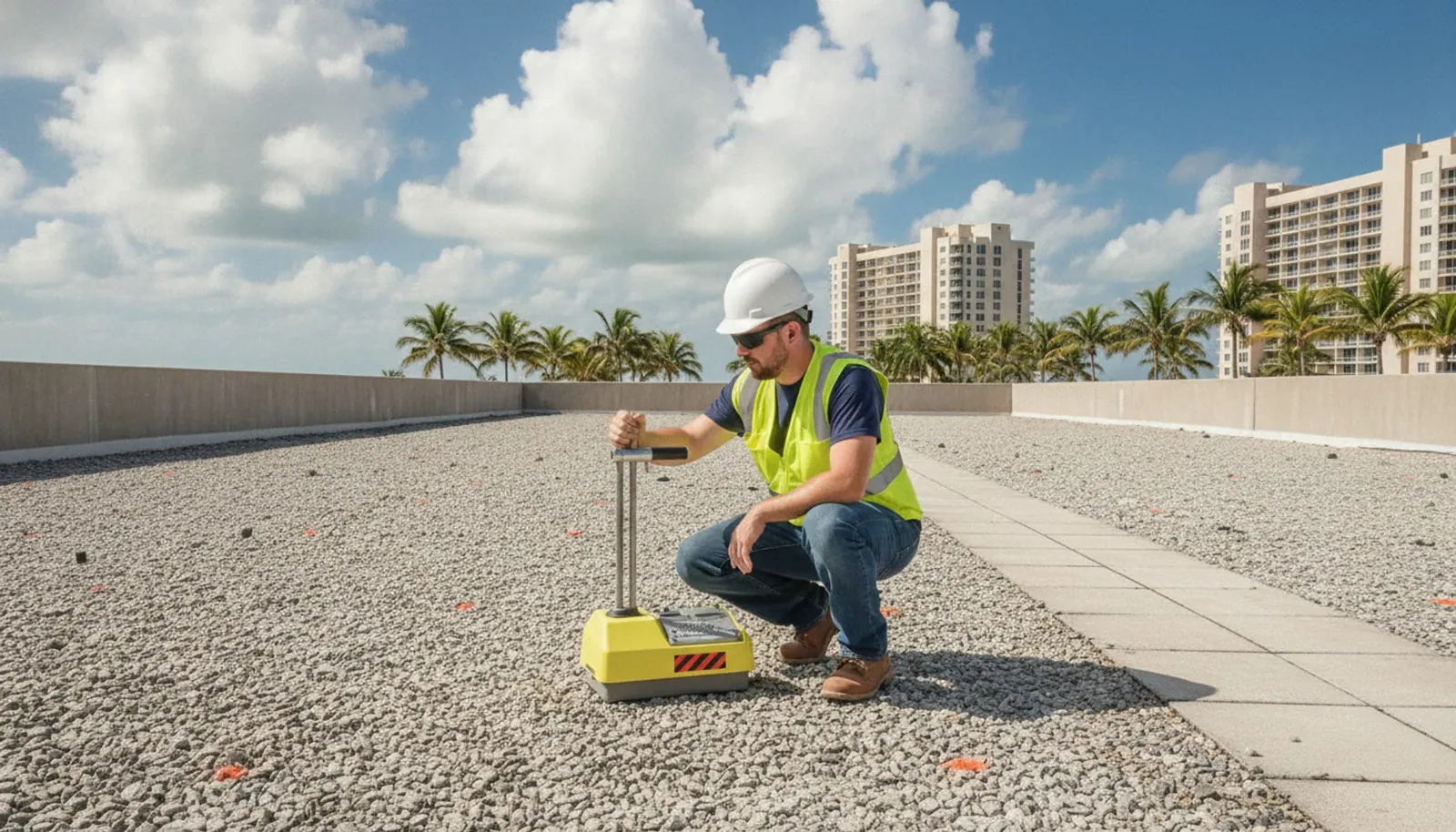
Use testing when the visible inspection leaves a question that could change repair boundaries or replacement decisions. A thermal survey may show a pattern under suitable conditions, but interpretation depends on weather, assembly, and surface effects. An approved core or test cut can confirm layers and moisture at a specific location, not every roof section. State test limitations and repair each opening using an approved detail. A moisture survey should not be presented as direct proof of a leak path. Preserve the marked locations and results in the asset file before contractors propose broad removal.
How should a permanent leak repair be scoped?
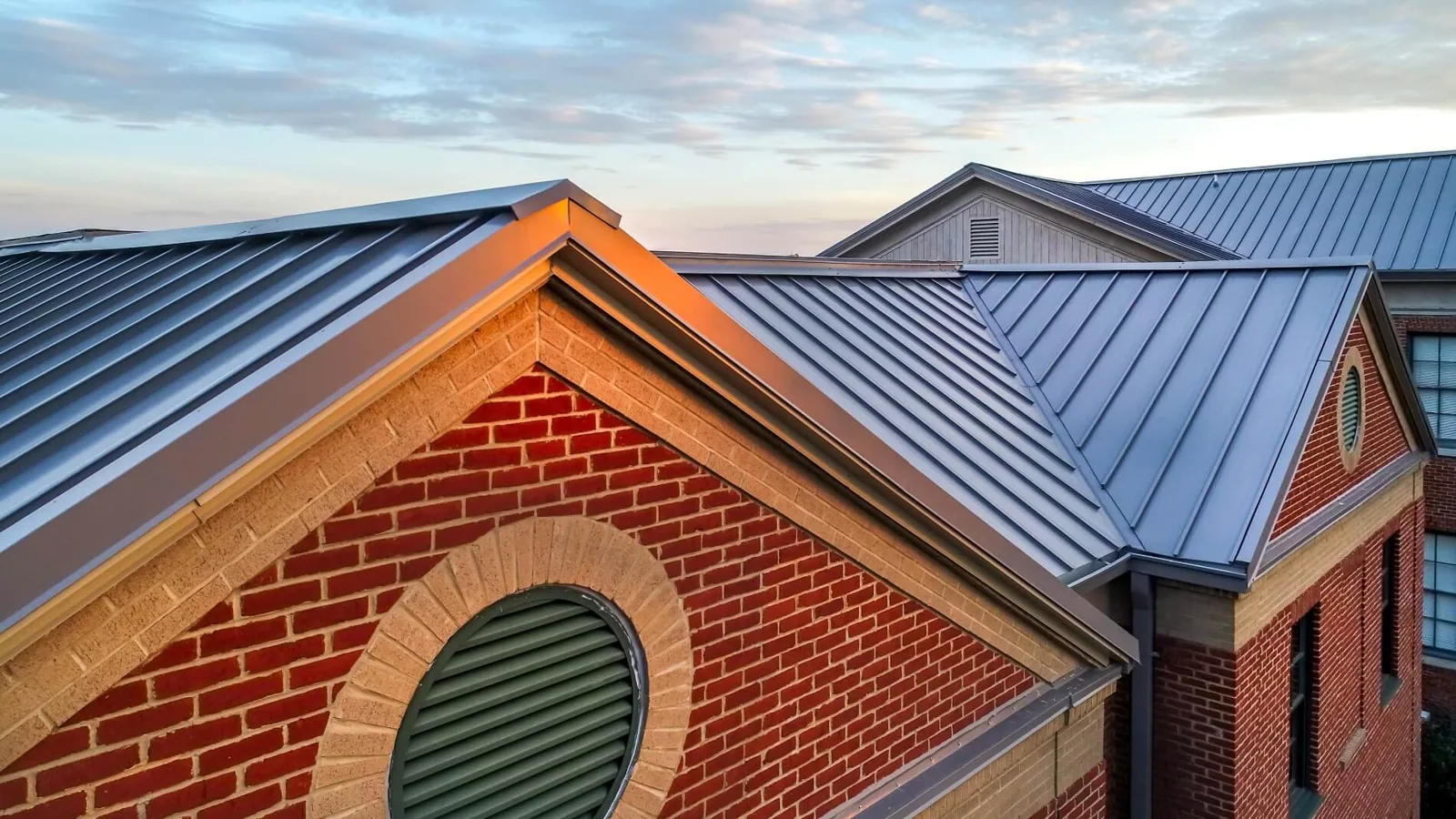
Once the likely source is supported by evidence, describe preparation, compatible materials, repair dimensions, termination, and verification. Include adjacent details only when inspection shows they are part of the condition. If the cause remains uncertain, state the bounded diagnostic step and avoid promising a permanent solution from an unverified patch. The owner should approve work that opens insulation or deck. A defined repair scope should identify labor, material, protection, disposal, and any excluded trade. A separate puncture repair may apply when a through-opening is confirmed.
What should happen when the same area leaks again?
Compare the new date and weather with the earlier work order, photographs, and stated repair boundary. Check whether water appeared at the same interior zone or followed a different route. Reinspect the completed detail and nearby transitions rather than applying another material by habit. If the source remains unclear, ask whether a controlled test or specialist review is warranted. The recurrence may reveal an assembly issue, drainage problem, or unrelated building system. Keep each conclusion tied to evidence and identify who authorized the next step. A drain check can be recorded separately from membrane work.
How should leak work be coordinated at an occupied building?
Confirm access, escorts, protection below, work hours, staging, and who communicates a changed condition. The property manager can coordinate tenant notices without sharing private information in a contractor report. If HVAC or electrical equipment may be affected, the qualified trade should define any shutdown or restart. Establish a temporary tie-in and daily closeout point. Fullerton's Orangethorpe Avenue corridor is a geographic reference, not a claim about a particular site's operations. For active occupancy, phased work planning can show zones and handoffs.
What should a leak closeout report include?
Include the reported symptom, date, weather, inspected roof areas, access limits, photos, repair details, products, and verification step. Distinguish confirmed source from suspected route and list any follow-up test. Store the record with warranty and maintenance documents. If the source was a building system rather than the roof, note who confirmed that finding and keep the roofing scope separate. Fullerton's 2025 building-code cycle includes the California Building Code and local amendments. The selected repair and permit review depend on the actual property and scope. A future maintenance visit can return to the same mapped detail and compare conditions after the next rainfall.
Investigation notes should preserve the difference between a symptom and a confirmed source. Record the interior location, time, weather, building activity, and any relevant mechanical or plumbing work. On the roof, note the inspected areas and the path used to reach them, including places that could not be accessed. A photograph should identify its direction and nearby roof feature, while a sketch can show how the interior zone relates to drains, walls, curbs, and seams. If testing is performed, include the method, exact test area, conditions, and interpretation limits. This evidence lets another qualified professional continue the investigation without treating a previous hypothesis as established fact.
When the first visit cannot isolate the source, define a diagnostic sequence with clear decision points. For example, the next step may be a controlled test of one transition, review of equipment condensate, or an authorized material sample. State what result would support each explanation and who may approve opening the assembly. Avoid broad water testing that could affect occupants or property without a safe plan. Where moisture mapping is appropriate, an experienced professional should interpret the pattern in light of the roof construction and survey conditions. Each bounded test should answer a question that can change repair scope; otherwise it adds cost without improving the decision.
A closeout should also tell building staff what to watch for and how to report a recurrence. Identify the repaired detail on the roof plan, list the material and installation date, and state whether the work was a permanent repair or an interim measure. If observation is recommended, assign a person and a practical follow-up point. Keep tenant-facing communications separate from technical records, and include only the information needed by each audience. If the repair does not resolve the symptom, compare new observations with the original timeline before authorizing another patch. That approach supports a better second investigation and avoids making an unsupported promise that any single repair will prevent future water entry.
For an occupied facility, assign a single point of contact for access and status updates. That person can coordinate escorts, protect sensitive rooms, and make sure the roof team knows which areas must remain open. If ceiling materials, stored goods, or electrical systems may be affected, the owner's building response plan should guide the immediate precautions. The roofer should describe roof observations and work boundaries, while qualified building trades handle systems outside the roofing scope. A concise handoff at the end of each visit should state what was inspected, what was repaired, and what remains uncertain. This keeps operational decisions grounded in the work actually completed.
Commercial Roofing Questions
Does a ceiling stain identify the roof opening above it?
No. Water can travel along framing or roof layers before it appears indoors.
Should a contractor promise the source before testing?
No. The report should separate observations, hypotheses, and any recommended test.
Can infrared imaging find every leak?
No. It can support moisture screening under suitable conditions but has interpretation limits.
What if the leak stops before inspection?
Record timing and weather, inspect likely details when safe, and preserve uncertainty in the report.
What makes a leak repair complete?
A defined source or test result, compatible repair, documented boundary, and stated follow-up check.