
Evaluate KEE roof membrane identity, welds, flashing, chemical exposure, and restoration choices for Fullerton commercial buildings.
Roof leak, storm damage or an inspection coming up?
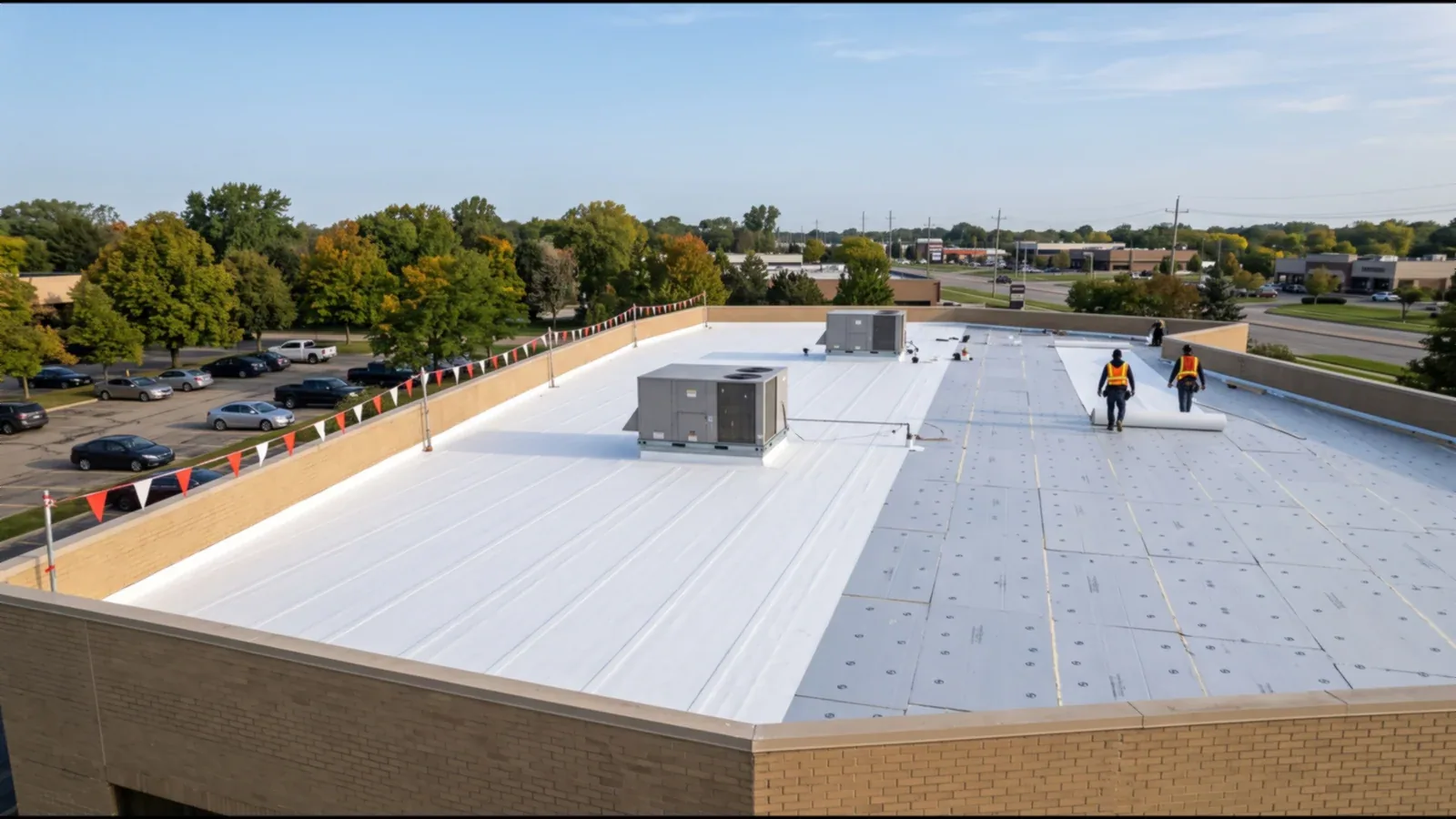
A KEE roof is a PVC-based membrane formulated with a ketone ethylene ester modifier. That description helps narrow the system, but it does not confirm the installed sheet, thickness, attachment, or condition. We review records and walk the roof to identify transitions, prior repairs, equipment zones, and reported leak locations. NOAA's 1991 to 2020 normals for Fullerton Municipal Airport show an August mean daily maximum of 86.7°F, useful context when planning exposed work in warmer months. The station normal is not a roof-surface reading or a work-day forecast. A commercial roof inspection documents the actual assembly before a repair or restoration scope is selected.
How do we verify a KEE membrane?
We look for installation records, product labels, approved details, and repair history, then compare them with accessible field conditions. A membrane's color or flexibility does not establish that it is KEE, and an older repair may use a different sheet. The report lists what was confirmed, what was inferred from records, and what remains unknown. If the product cannot be identified, a test area or manufacturer review may be appropriate before specifying a weld or coating. We do not promise a particular chemical resistance or service life from the product category alone. The site-specific exposure, maintenance, substrate, and system requirements matter, so the assessment begins with the actual roof file and a representative area. If the records conflict with field observations, the discrepancy stays visible in the report. We can list the documents reviewed and the detail that remains unconfirmed, then ask the owner whether a sample opening is worth the added information before pricing a larger repair.
What should KEE weld checks cover?
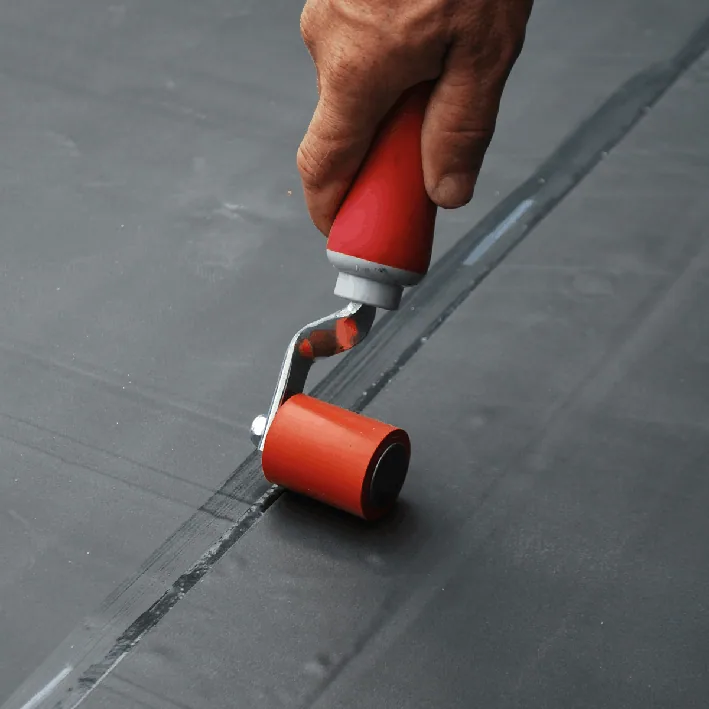
Heat-welded seams are examined at accessible laps, corners, T-joints, patches, and terminations. A probe may reveal an open edge where it is used, but each result is tied to a tested location rather than extended across an entire roof section. We note surface contamination, repair layers, fishmouths, and details that cannot be reached without moving equipment or disturbing another trade's work. A sample weld can help confirm preparation and settings when the sheet is suitable for testing. We document the test location, conditions, and result before recommending a repair quantity. For a larger field, the map can note seam orientation, section boundaries, and rooftop obstructions so the inspector can revisit the same weld run. A test sample should be selected from a representative area that can be safely reached without moving equipment or disrupting another trade. If cleaning or surface preparation changes the result, that difference is recorded before the repair method is approved. The manager can then distinguish a limited test from a confirmed condition across the rest of the roof. The PVC roofing assessment addresses related thermoplastic seam work; a TPO inspection still follows the identified product's own instructions.
How are chemical or service exposures evaluated?
Restaurants, manufacturing areas, maintenance shops, and rooftop exhausts can create different exposure questions. We ask what materials or cleaning products are used, where they discharge, and whether the owner has incident or maintenance records. A visible stain or odor does not identify a chemical or prove membrane damage. When exposure is relevant, the scope marks the affected area, avoids unsupported assumptions, and can include a material-compatibility test or laboratory review if the owner approves. Fullerton's General Plan includes industrial and commercial planning contexts such as the Commonwealth Corridor, but those classifications do not tell us what process is operating inside a specific building. The technician records the roof evidence and the information supplied by the site contact separately.
Where can leaks develop around a KEE roof?
Openings and transitions can be more vulnerable than an undisturbed field sheet. We inspect drains, scuppers, parapets, expansion joints, skylights, curbs, pipe supports, and the connection to edge metal. A split sealant bead or loose flashing deserves documentation, but the repair detail must also account for the adjoining material and movement. At drains we check the clamping or termination detail and note whether debris or a raised outlet affects flow. A drainage assessment can separate maintenance from a membrane defect, while curb coordination identifies equipment work that may require a protected route and a flashing handoff.
Can KEE be restored or coated?
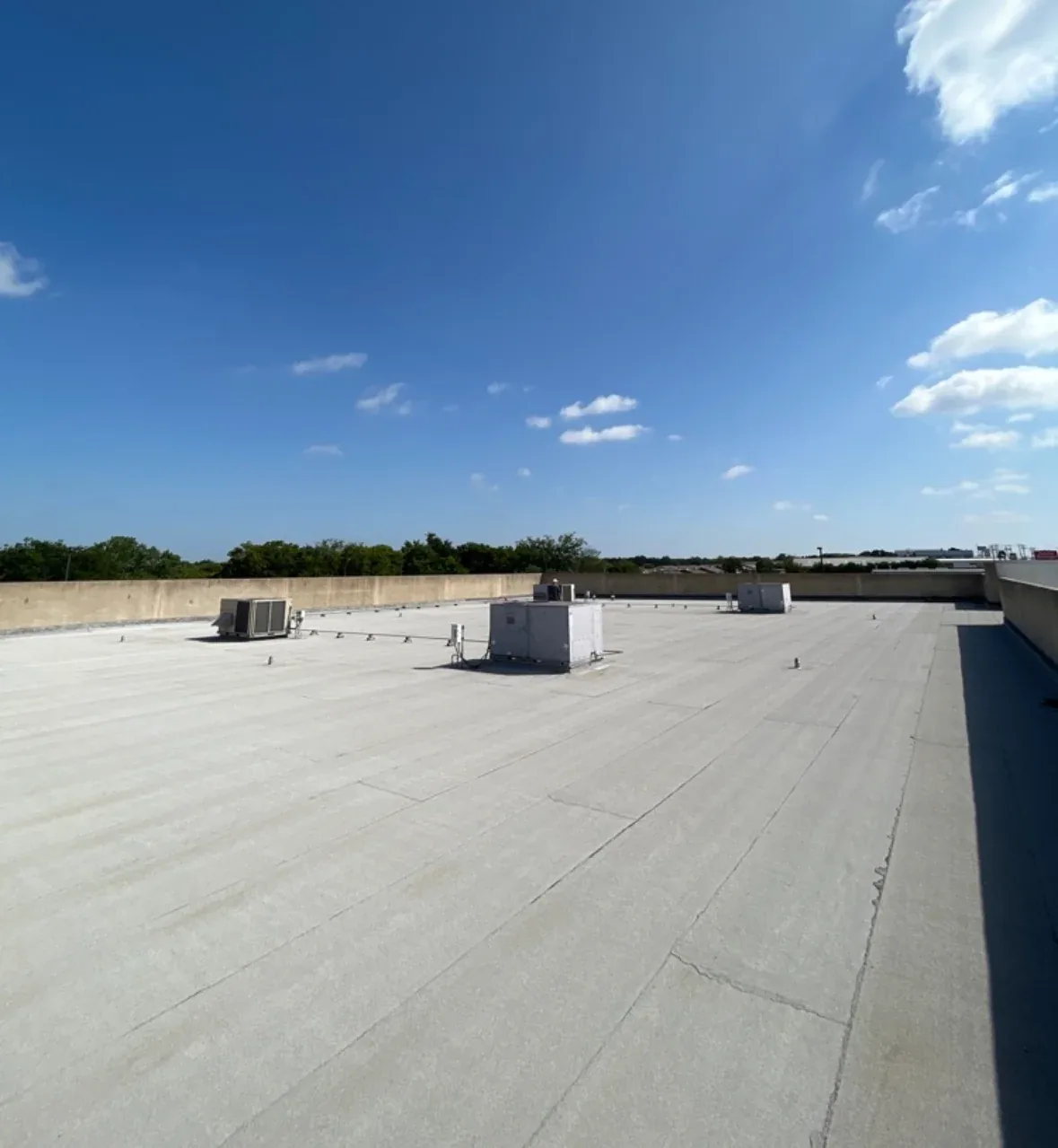
A restoration decision depends on sheet condition, attachment, moisture, adhesion, drainage, and compatibility with the proposed materials. We inspect representative areas and document the test method before comparing coating, recover, and replacement options. A coating may require cleaning, repair, primer, or reinforcement at details; it cannot correct wet insulation or a loose perimeter by itself. If the roof includes multiple membrane types or earlier coatings, the limits should be mapped before pricing. The restoration review states what was tested and which sections remain unverified. A separate recover assessment considers added load, edge height, and the condition beneath the existing membrane.
How should KEE repairs be sequenced?
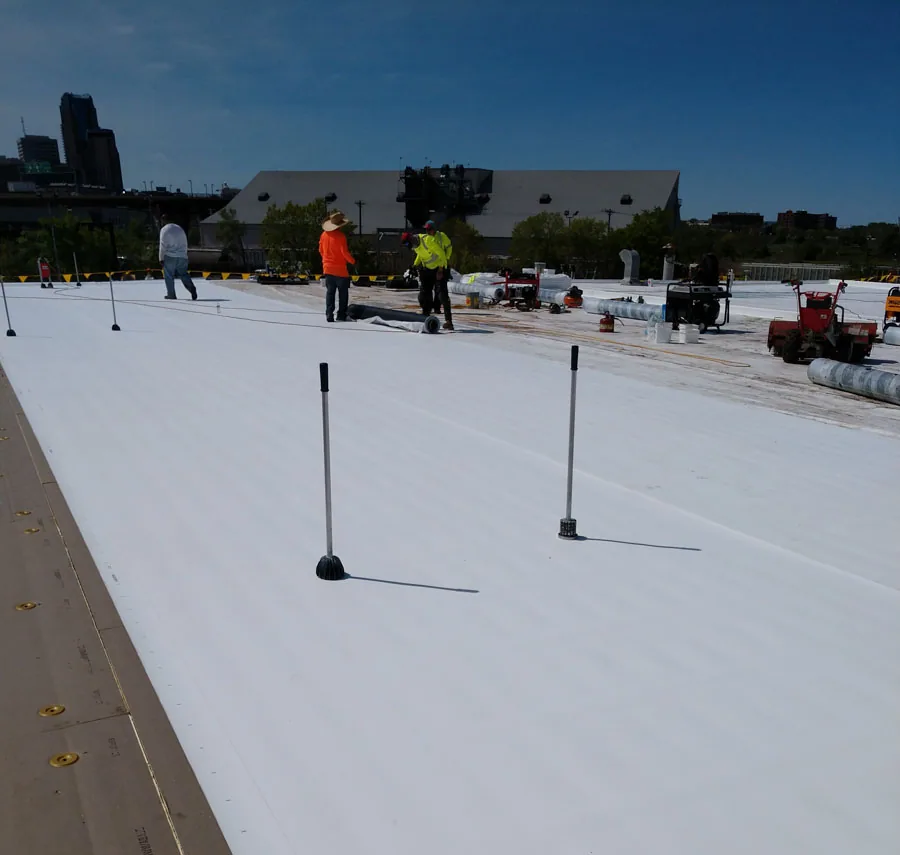
Before work begins, the team confirms access, material staging, power, fall protection, tenant notices, and the daily close-in boundary. Weld preparation requires a suitable surface, and completed details need cooling and inspection before the area is treated as finished. The foreman notes weather, access changes, and any discovered layer that alters the approved repair. On an occupied property, the route around equipment or active operations can matter as much as the repair location. Buildings near Downtown Fullerton may have different loading and street access than those near the North Industrial Focus Area, but the facility manager determines the current site procedure. An occupied-roof sequence sets notices and handoffs before a larger membrane scope is opened.
What belongs in the KEE roof file?
Keep the product identification, attachment evidence, weld checks, repair map, photographs, exposure notes, and closeout record with the property documents. Each open item should identify an owner and the next decision, such as obtaining a submittal, approving a test, or coordinating another trade. The report distinguishes tested locations from inaccessible sections and avoids interpreting a product name as a warranty determination. Keep dated photographs in the same folder as the marked plan, and label each image with the section and detail it shows. That makes a later comparison useful when a repair has been covered or rooftop equipment has moved. The record also notes who received the closeout and which unresolved question needs a separate authorization. If a new technician visits later, a marked roof plan can show where a prior patch ends and what should be rechecked. A condition report gives facilities staff a dated baseline for maintenance and budgeting while preserving the limits of the inspection.
Commercial Roofing Questions
Is every PVC-based membrane a KEE roof?
No. Product identity requires records or other reliable evidence. We do not label a membrane KEE based only on color, age, or a visual impression.
Can a KEE seam be tested with a probe?
An accessible seam edge can be probed at a specific point. The report records that location and does not treat a limited check as a test of every seam.
Does KEE automatically make a roof suitable for a restaurant exhaust area?
No. The actual exposure, product documentation, condition, and maintenance history should be reviewed. A compatibility question may need a representative test.
Can a coating fix loose KEE membrane?
A coating does not correct loose attachment or wet layers. Those conditions must be assessed separately before a restoration system is considered.
What should I send before a KEE inspection?
Provide the Fullerton address, available product submittals, roof plan, leak history, chemical or cleaning exposure notes, and site access procedure.