
Coordinate roof inspections, repairs, and capital scopes for managed properties in Fullerton, with clear access plans, tenant notices, and closeout records.
Roof leak, storm damage or an inspection coming up?
A property manager opening a roof section during Fullerton's dry summer still has to plan for heat, access, and the next tenant handoff. NOAA's station normal records an 86.7-degree mean daily maximum in August; that is regional scheduling context, not a reading from a particular roof. We begin with the building list, reported leaks, available plans, access contacts, and operating hours. The goal is a roof-by-roof record that separates confirmed conditions from questions still needing access or testing. A manager overseeing sites near Orangethorpe Avenue or in the Southeast Industrial Focus Area may have loading, production, and office traffic to coordinate. We mark each roof section and identify its staging point before work is priced. That lets the owner compare the same repair, replacement, or maintenance question across properties without treating different assemblies as one scope.
Which records make a portfolio roof walk useful?
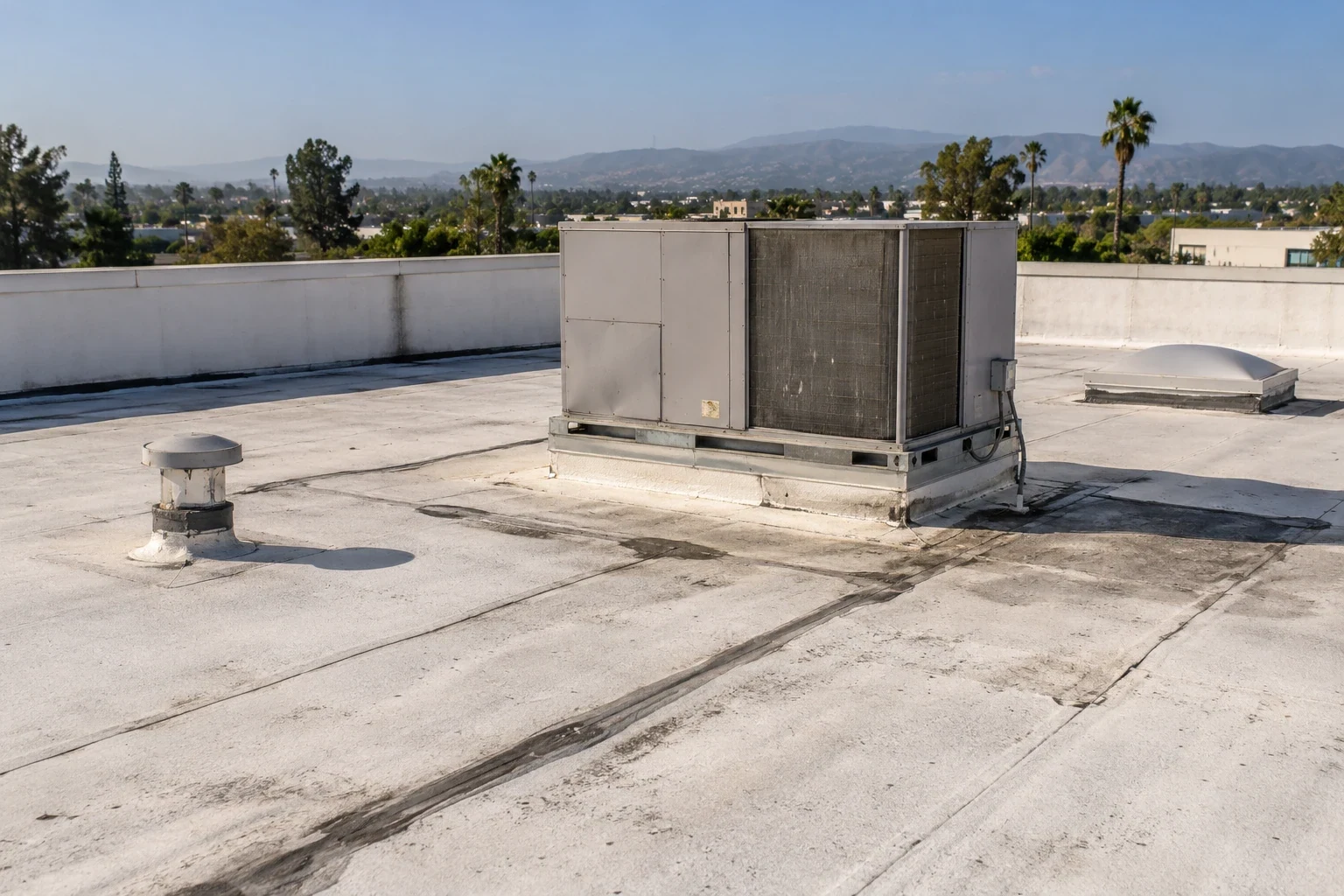
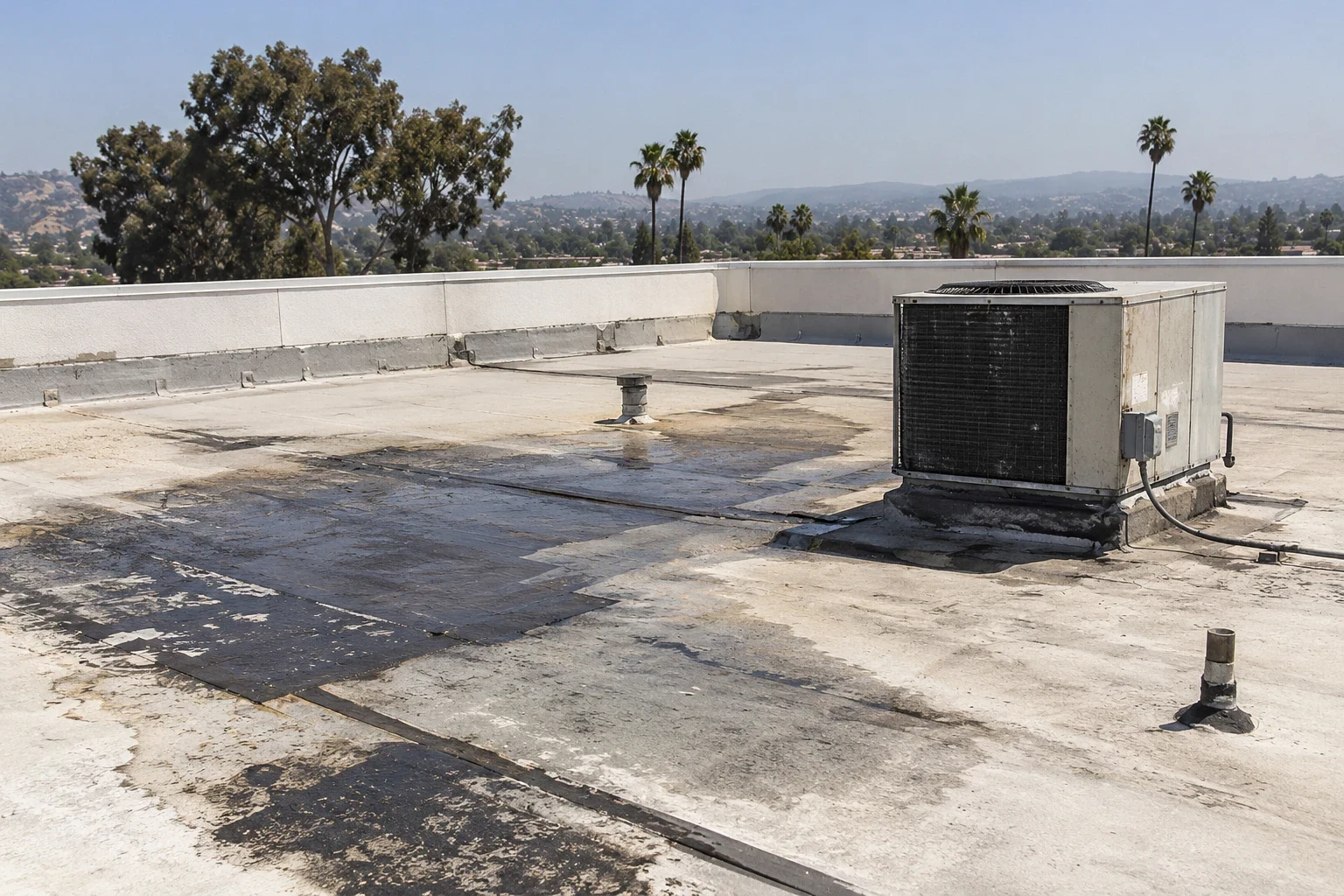
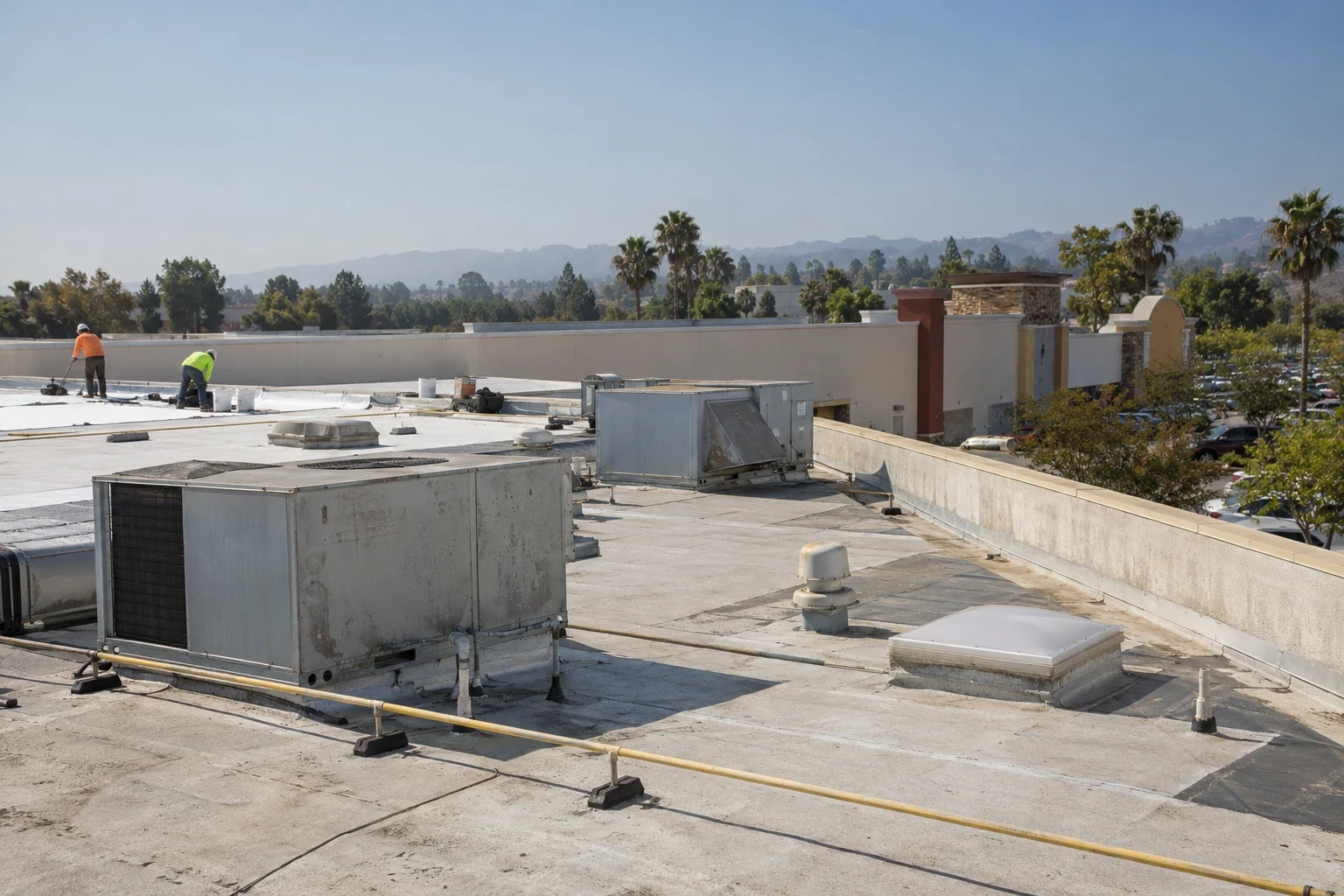
A portfolio walk needs a common record, but each building keeps its own condition map. We use the property name, roof level, access point, leak location, and equipment references supplied by the manager, then confirm those labels on site. The report can pair dated photos with drain, curb, seam, edge, and wall-transition observations. If a tenant reports a ceiling stain, we compare its room and timing with the roof above rather than assign the cause from the interior mark alone. A site in the North Harbor Corridor may involve a different use mix than a warehouse on the Orangethorpe frontage, so the route and escort plan should remain specific to that address. We record areas that could not be reached and name the next access decision. A roof condition report gives the asset lead a usable basis for comparing findings without blending separate roofs.
How do access plans change between occupied properties?
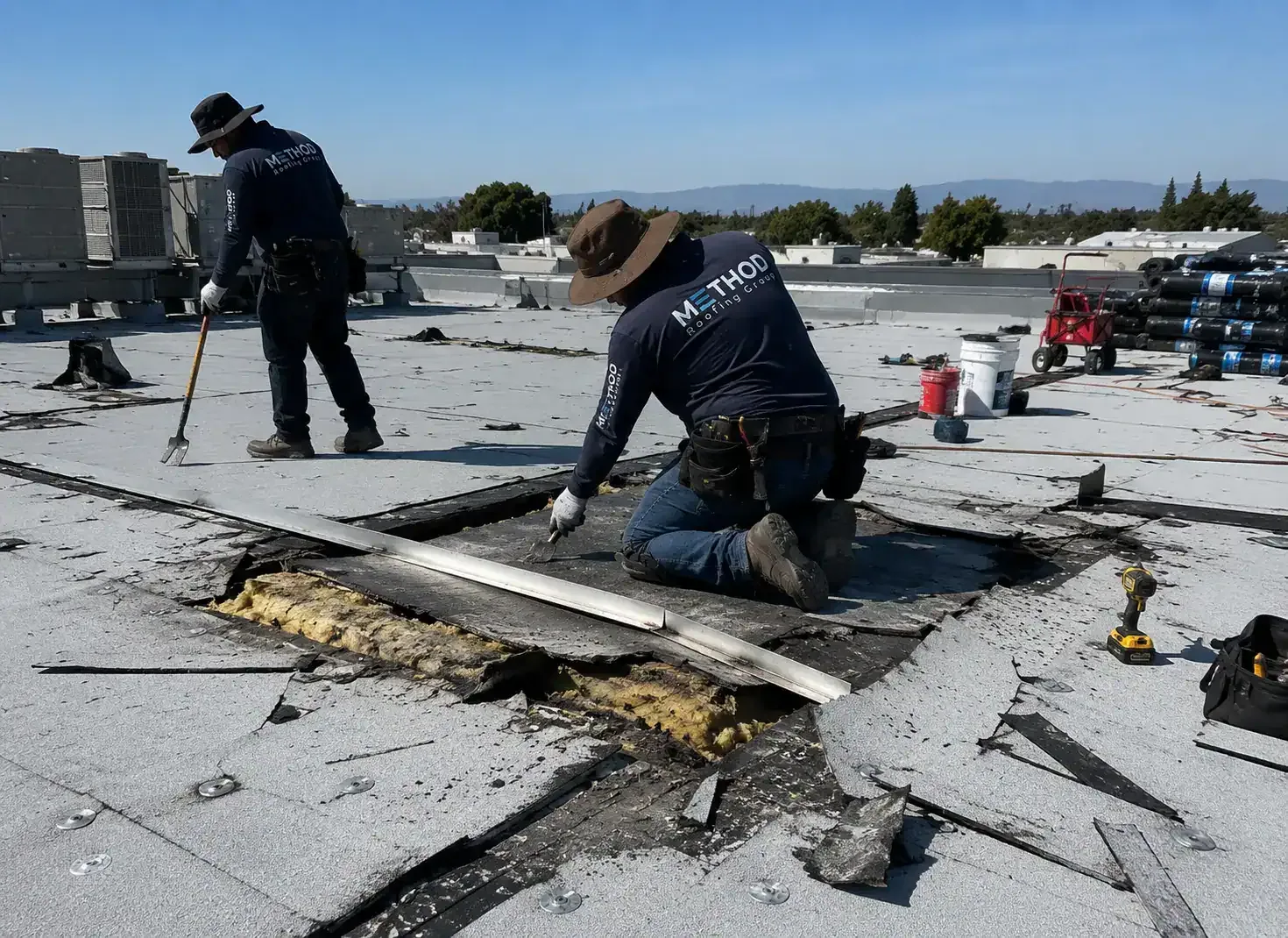
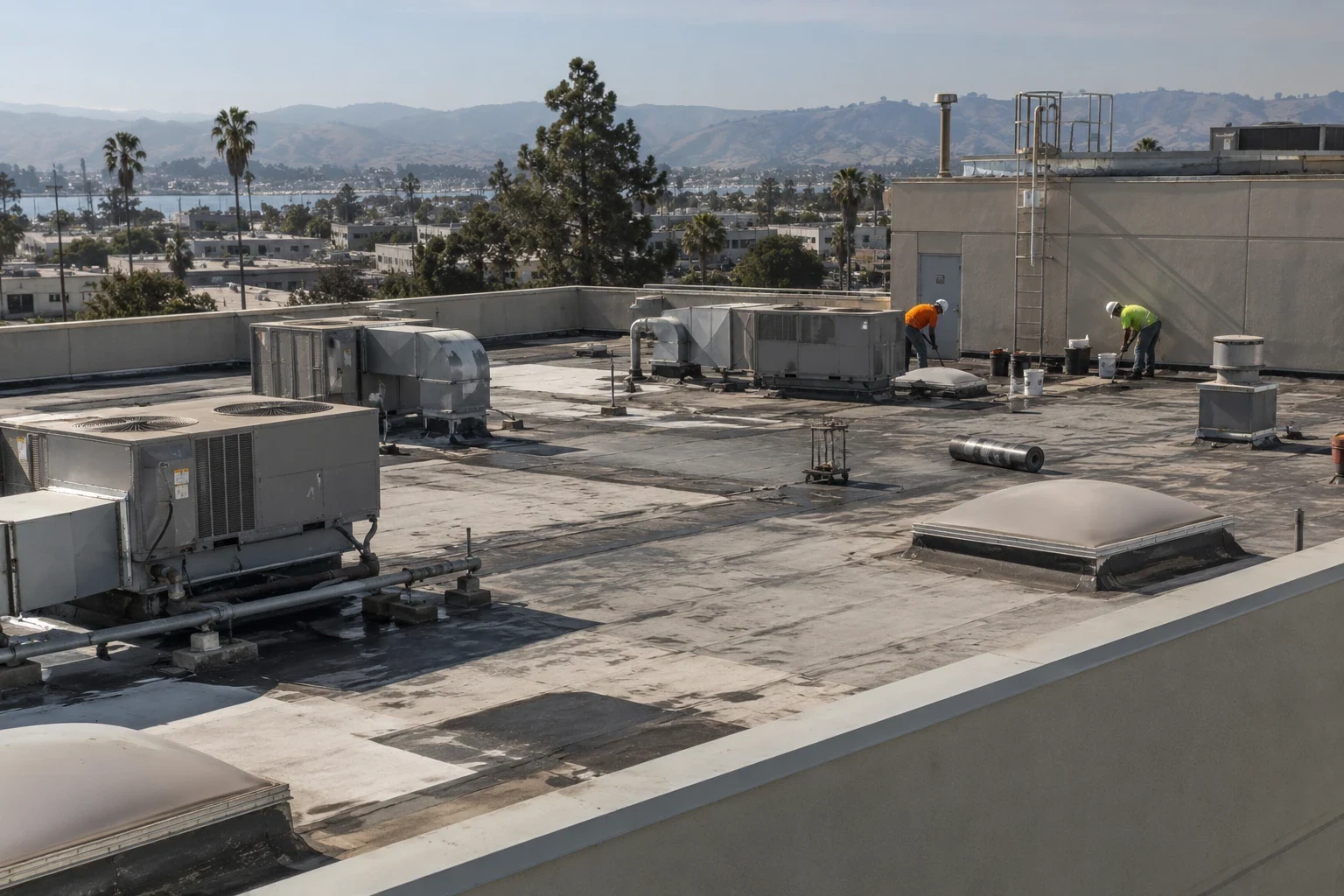
Tenant hours, loading periods, roof hatches, alarms, and equipment routes determine where a crew can enter and stage. We ask the manager to identify restricted rooms, delivery lanes, lift locations, and the contact who can release each roof area. A marked plan helps, but the crew confirms its route during the walk because doors, screens, or equipment can differ from older drawings. In Downtown Fullerton, city design guidance applies to development and rehabilitation within the Central Business District, while a multi-tenant building still needs its own access and protection plan. The work sequence can divide a roof into sections, with a defined opening limit and daily close-in point. If another trade must move a unit or cable, that handoff belongs in the schedule before membrane work starts. An occupied-building reroof sequence can set those phase boundaries while keeping tenant notices tied to actual work areas.
When should a repair become a capital-planning question?
A leak call and a capital decision are different records. We first identify the failed detail, adjacent membrane condition, moisture evidence, and limits of the inspection. A bounded seam or flashing repair may suit one section; repeated openings, widespread wet insulation, or failing transitions may support a larger evaluation. The manager receives the observed condition, the area tested, and any uncertainty that could change quantity. If an infrared survey or test cut is proposed, we define what that method can establish and agree on the sample location and closure before proceeding. The moisture-survey process can help prioritize further investigation, while a roof recover review compares added assembly height, drainage, perimeter details, and code considerations. We keep repair, recover, and replacement alternatives on the same roof map so ownership can weigh access, disruption, and timing.
What belongs in a multi-property work calendar?
The calendar should follow roof conditions and operating constraints, not a single date applied across every address. We sequence inspections, material deliveries, tenant notices, trade coordination, weather holds, and closeout by property and roof section. Fullerton's low summer rainfall normal may support planning for coating or open-roof tasks, but a forecast and the selected system's installation requirements control the actual work window. A building in the Commonwealth Corridor may have different delivery access from one in the Harbor Gateway Focus Area; the manager supplies site-specific hours and the crew verifies them before mobilization. The plan identifies who approves a changed quantity and who receives the daily handoff note. For phased work, we record the boundary between completed and active sections and protect transitions at each stop. A maintenance schedule can then connect inspections and small repairs to the same asset record instead of creating a separate, untracked list. Managers with lodging assets can compare a hospitality roof program when guest access and service routes drive the work calendar.
How should owners compare roof findings across addresses?
Comparison works when the report keeps shared fields consistent and building details distinct. We can identify assembly where confirmed, roof area reviewed, accessible drains, open seams, curb conditions, observed moisture, and work recommended. We do not convert a visual condition into a remaining-life number unless the evidence supports that conclusion. A property manager can sort the resulting records by repair urgency, tenant impact, access needs, or budget cycle, then review each scope with the asset owner. The Transportation Center planning area includes office, retail, industrial, public-service, restaurant, and residential uses, so property records should distinguish a building's role from its roof scope. That mix explains why a portfolio may contain different operating needs, not what any individual roof contains. A roof asset record should preserve the plans, photos, approvals, and repairs that let the next inspection compare like with like. Properties delivered through a construction partner may also need a roofing handoff with a general contractor, with scope limits and warranty documents kept beside the owner's records. Downtown Fullerton's Central Business District guidelines apply to rehabilitation and development, so an owner planning visible exterior work can identify the applicable review before setting dates. The Downtown Fullerton district is a broad planning geography, not a substitute for confirming an individual building's roof access or approvals.
Which handoffs prevent a repair from going stale?
A completed repair needs a closeout note that the next manager can understand without reopening the whole project file. We list the roof section, repair boundary, materials installed, photos, date, and any condition left open for another trade or later testing. If a drain contractor, HVAC provider, or tenant contact must finish an action, we identify the owner and the point at which roofing can return. This matters when properties change managers or an asset moves through a capital review. A drain and scupper scope can distinguish a plumbing restriction from a membrane tie-in, while an inspection record can establish the next comparison point. We can assess a managed property in Fullerton or a neighboring city only after confirming its address and access. Share the building list, plans, leak log, roof contacts, and operating windows so the first visit can be sequenced cleanly.
Commercial Roofing Questions
Which details make inspections comparable across portfolio buildings?
Yes, the visit can be coordinated across addresses, but findings remain separated by building and roof section. We confirm each access route and document any area not reached.
How do you handle a leak reported by a tenant?
We compare the room, date, and conditions reported with roof-side drains, penetrations, seams, and transitions. The repair location follows evidence from the inspection.
What information helps compare repair and replacement?
A roof plan, repair history, observed assembly, moisture findings, and access limits give ownership a shared basis. We note where further testing could change scope.
Can roofing work proceed while tenants are present?
Often, after the access route, protection, staging point, tenant hours, and daily close-in are agreed. The work plan identifies areas that need a separate window.
What should the closeout file include?
Keep the marked roof plan, dated photos, repair limits, material notes, approvals, and open handoffs together. Those records give the next inspection a clear starting point.