
Coordinate commercial roofing scopes in Fullerton with general contractors through clear roof details, trade handoffs, access plans, and closeout records.
Roof leak, storm damage or an inspection coming up?
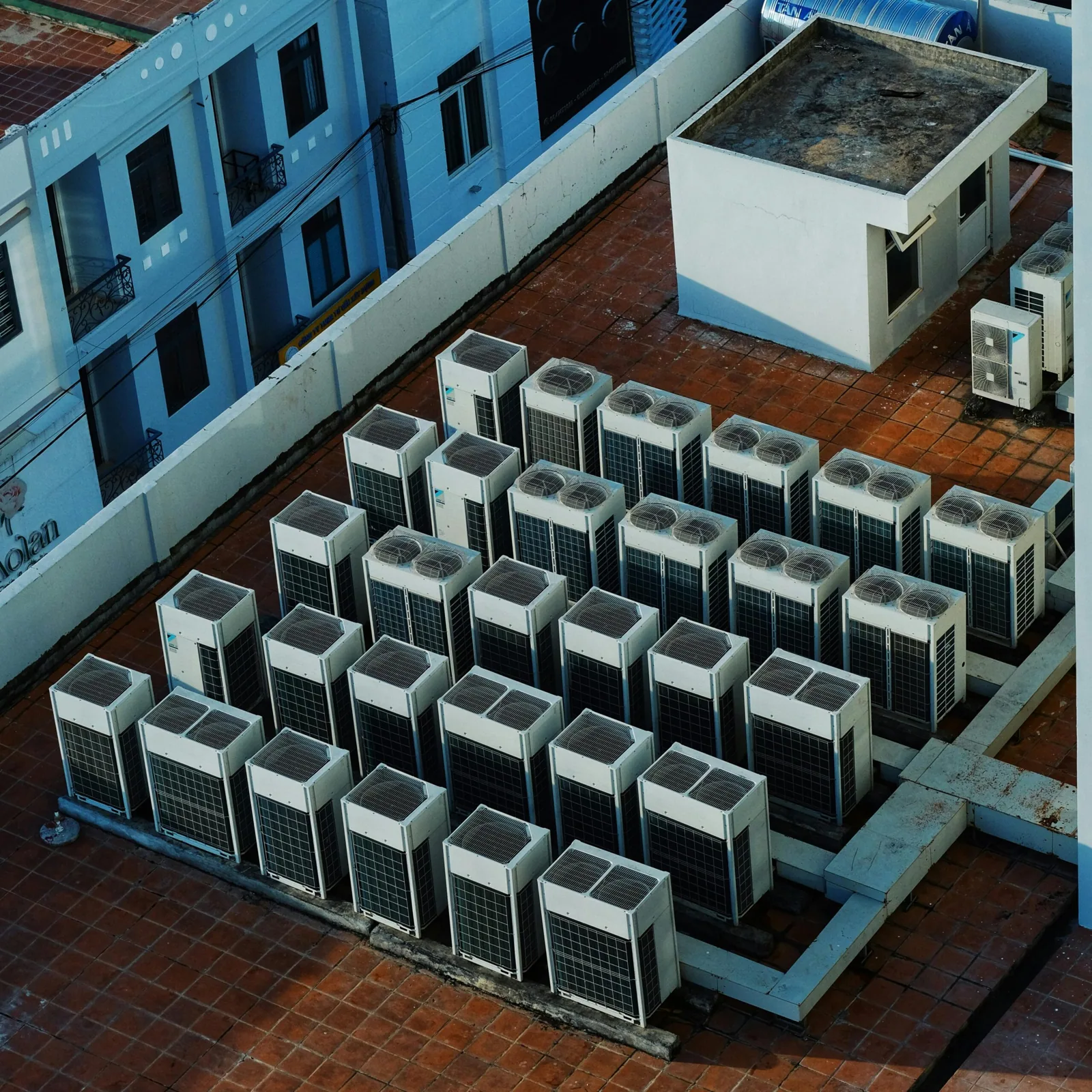
A hot Fullerton roof can narrow the installation window while other trades still need access to the same deck and staging area. We review the roof plan, sequence, site rules, and points where roofing meets mechanical, electrical, plumbing, and exterior work. NOAA's August normal mean daily maximum is 86.7 degrees F, useful seasonal context but not a roof-surface reading. City planning materials distinguish Downtown's Central Business District from industrial areas. Those map labels can orient logistics, while approved site drawings determine actual trade access and staging. Those settings can affect routing and delivery, but the project address and drawings control the field plan. We identify roof sections, perimeter transitions, curbs, and drainage details, then make the roofing scope visible to the superintendent before work reaches the close-in point.
Which roof details should be settled before mobilization?
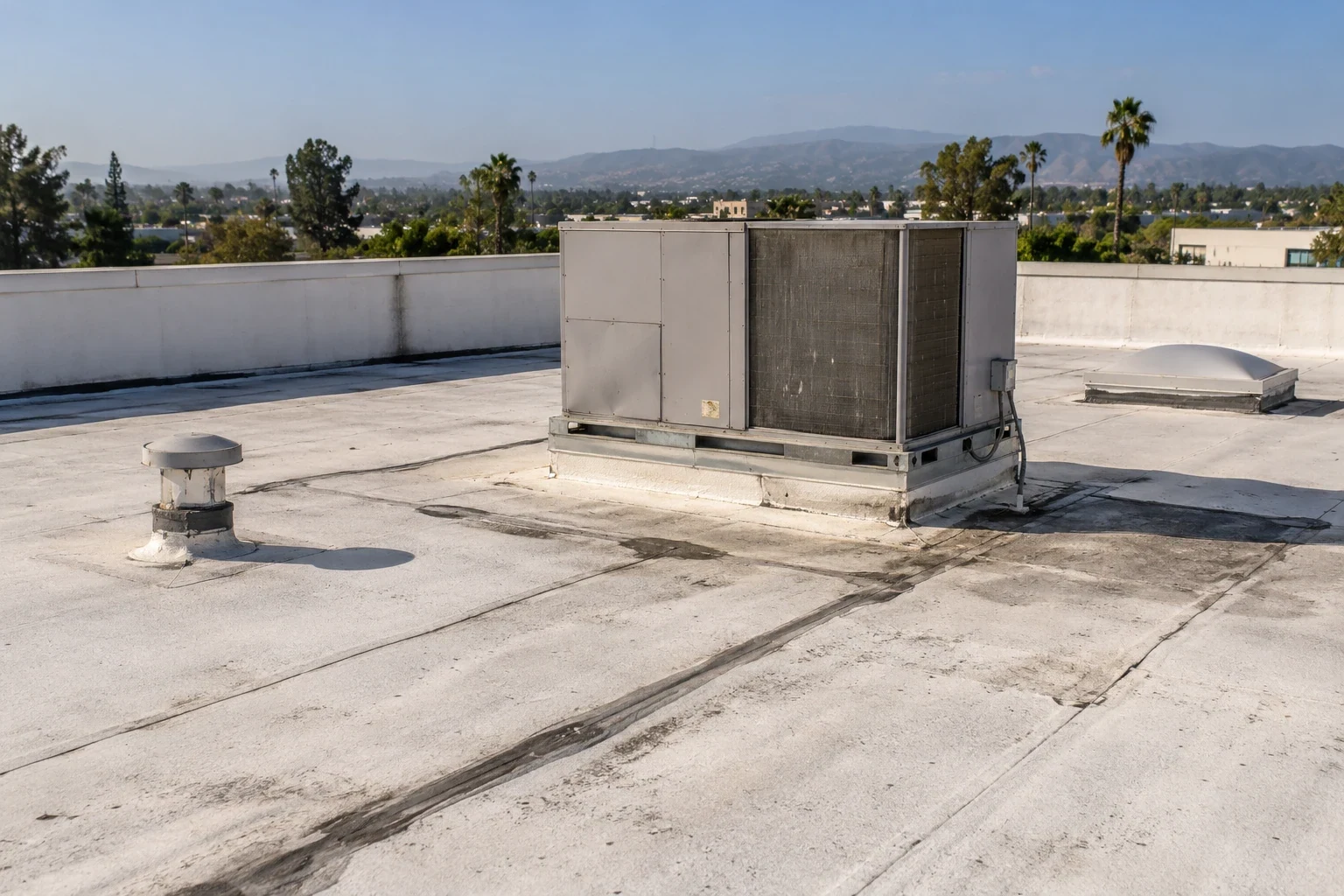
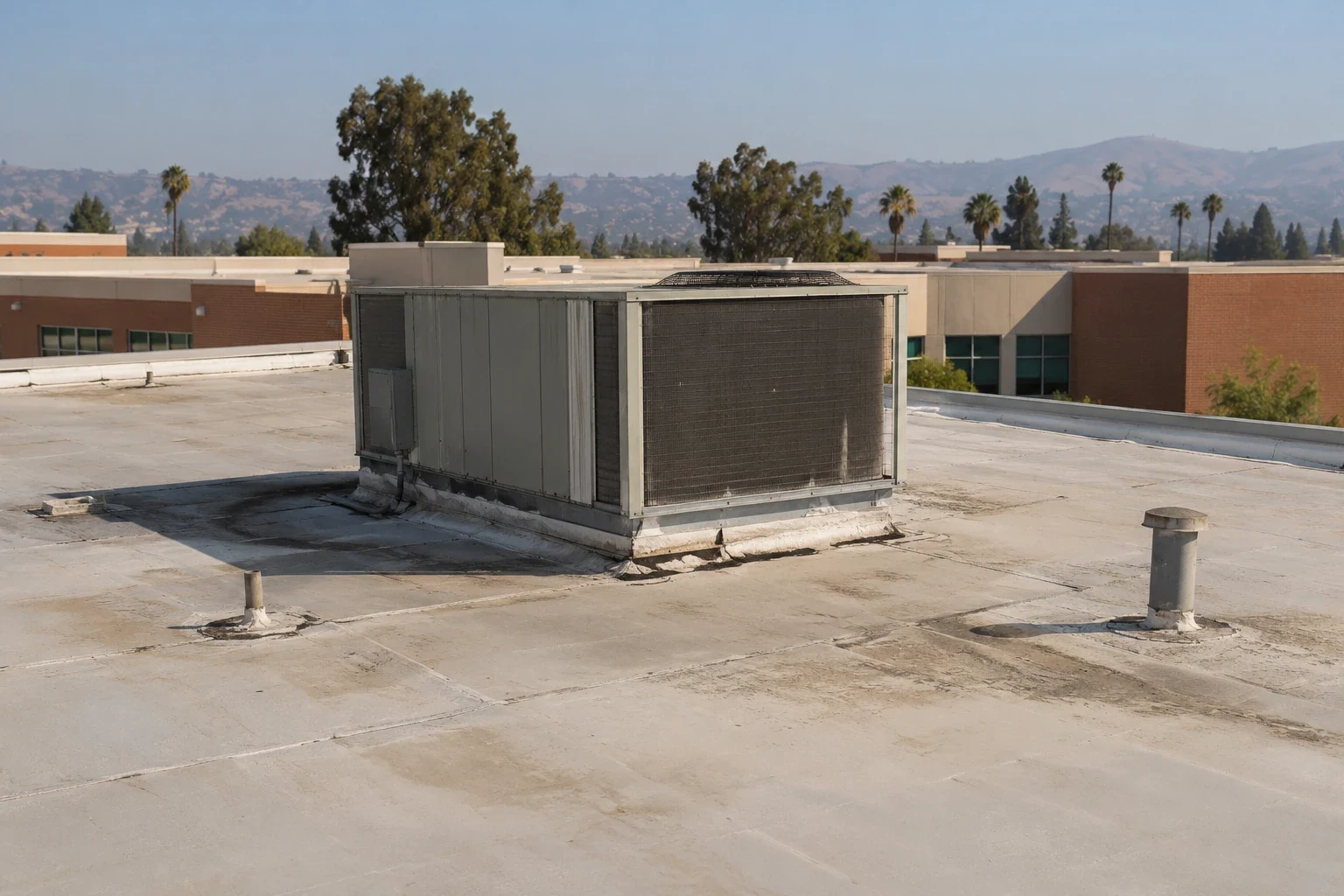
Before material arrives, the superintendent and roofer should agree on the roof assembly, substrate assumptions, edge conditions, drain locations, equipment curbs, penetrations, and the boundary between completed and active areas. We compare the available plans with field conditions and record differences that could affect quantities or sequence. If an equipment curb is incomplete or a trade still needs to pass a line through the roof, that dependency stays open until the responsible party confirms its work. A marked detail schedule helps each crew see the access route and close-in expectation. The curb and equipment review can document those interfaces. A roof condition report can also record pre-existing conditions so new work is not confused with an earlier repair. We check whether the specification identifies insulation thickness, cover board, attachment, membrane type, perimeter fastening, and tie-in requirements. Where drawings leave a transition unresolved, we flag it for design direction before ordering material. The superintendent can then align submittal review, delivery, and the work window with an agreed detail rather than rely on a field improvisation.

How can multiple trades share the roof safely?
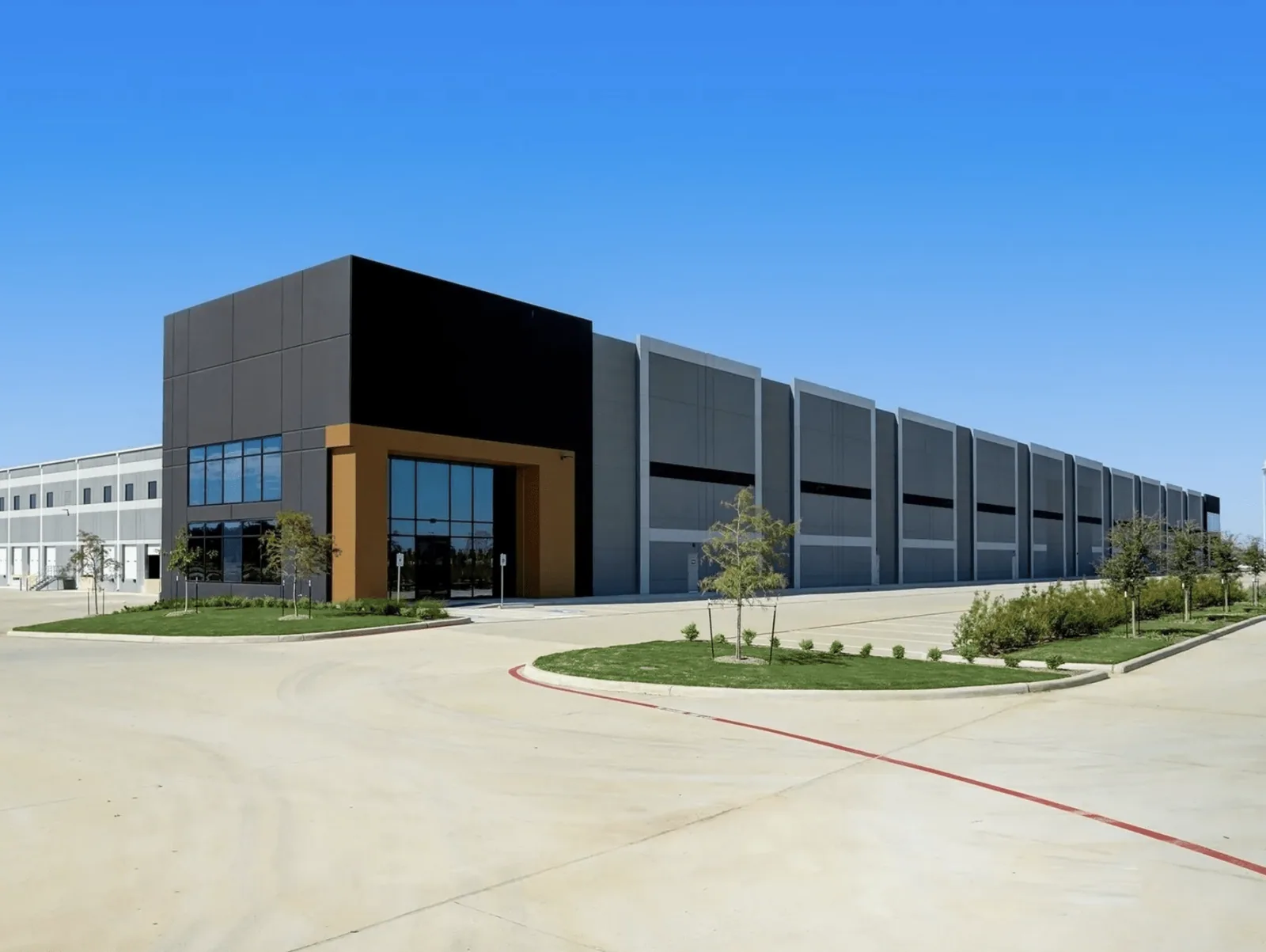
We plan the equipment path, staging point, roof section, and the time each trade needs at a penetration or curb. The superintendent identifies hoisting windows, crane picks, hot work, temporary power, and access restrictions that may change the order. Roofing work should not close a detail before the mechanical or electrical handoff is complete, and another trade should not cut through a finished membrane without a documented repair plan. We set a phase boundary and daily close-in point, then give the site lead a handoff note showing completed work and remaining dependencies. An occupied-building work sequence can help when the project proceeds above active tenants or users. For public facilities, the agency roofing coordination record can preserve owner approvals and building access requirements alongside the construction schedule.
What changes when heat or a forecast shifts the sequence?
Heat can affect material handling, adhesive or coating conditions, worker pace, and the length of time a roof section can stay open. We confirm current conditions and product instructions before setting the work window. NOAA's Fullerton station normal shows roughly forty annual days reaching at least 90 degrees F. That long-term climate marker helps frame summer sequencing, while the job-day forecast and roof readings set the actual limits. The daily plan identifies what can continue under a weather hold, what needs protection, and who can authorize restart. If a lift or crane window shifts, the roofer updates the staging and close-in sequence rather than leave an opening for another trade to resolve. The handoff records the last completed detail, roof area protected, and next inspection point. A preinstallation huddle can assign who releases roof access, who accepts protection at close-in, and how an urgent trade conflict reaches the superintendent before a crew changes the sequence. The site lead can post the last completed detail, protected area, and next inspection point at the morning coordination meeting so the superintendent can coordinate the following shift.
How should the team handle changes found at the deck?
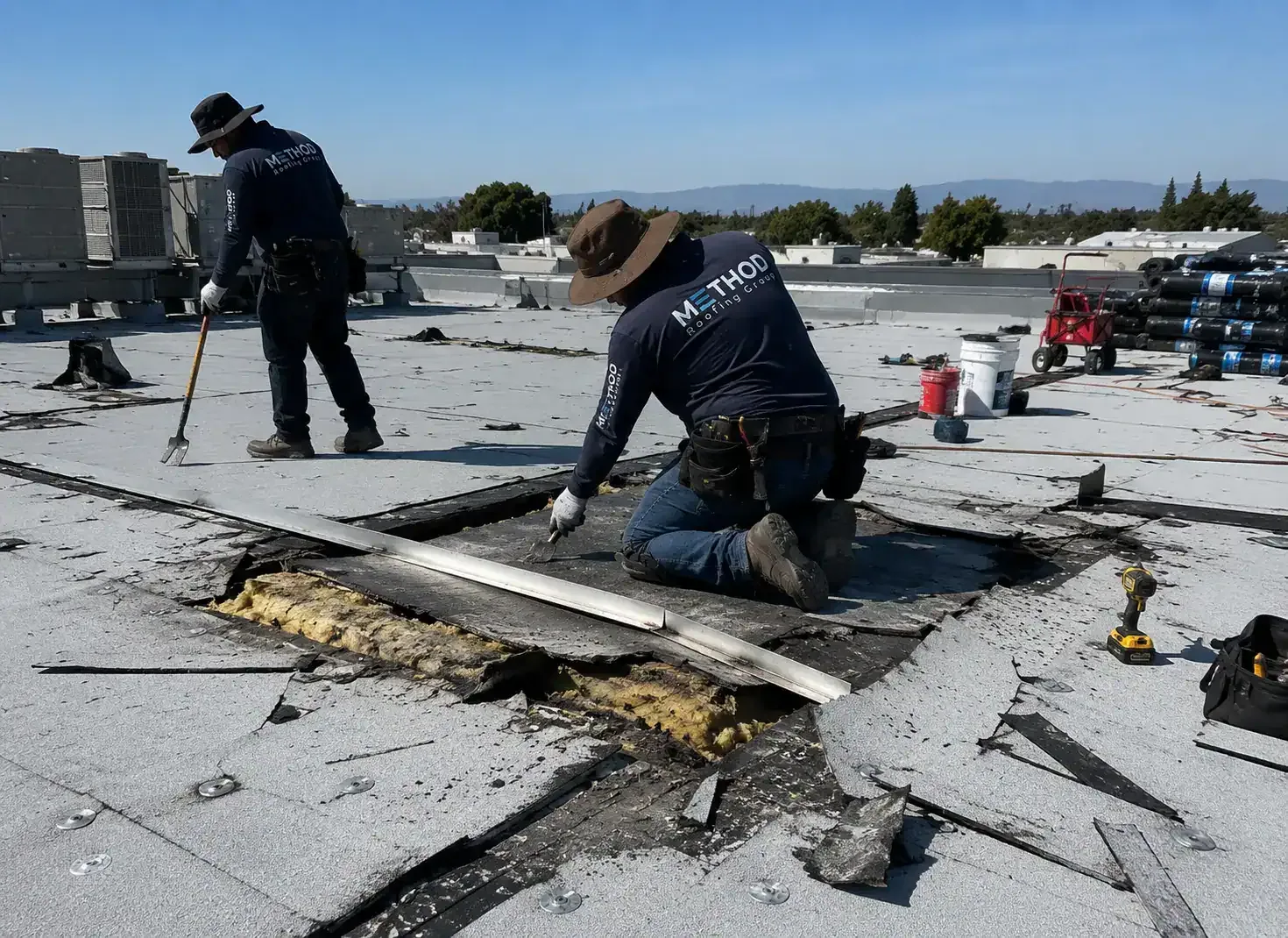
A plan can show a roof assembly, but a test opening may reveal different layers, wet insulation, a damaged deck, or an earlier patch. We stop at the agreed boundary, protect the area, photograph the condition, and provide the superintendent with the finding and available next steps. Any change in quantity or trade responsibility needs owner direction before the scope expands. A repair at one curb should remain distinct from a broader replacement unless the additional area is inspected and documented. The repair scope can isolate a confirmed detail, while a replacement phase addresses a wider area under a separate sequence. If a recover is being considered, we review height at drains and parapets before other trades finalize transitions. The roof plan then shows what changed and which adjacent work must be coordinated again.
What records help at substantial completion?
Keep the approved roofing scope, marked plan, dated photographs, product and assembly notes, test results, daily closures, and open trade items in one project file. We identify the roof section installed, details completed, areas not reached, and who accepted the handoff. If another trade still owes a curb extension or equipment reset, the note names the responsible contact and return condition. That allows the superintendent to track completion without relying on an informal roof walk. For manufacturing projects near the Southeast Industrial Focus Area, large parcels and rail access are geographic context; each site still needs its own laydown and equipment route. The manufacturing roof scope can describe production access, and a property-manager closeout file can preserve the completed roof record for ongoing maintenance.

When should code review be part of the roof detail?
Fullerton adopted the 2025 California Building Code subject to local amendments, and the City states that the 2025 codes became effective January 1, 2026. The design professional and authority having jurisdiction determine which requirements apply to a particular permit and project. We can provide assembly and field-condition information, identify roof details affected by added height or equipment changes, and coordinate questions through the project team. A recover can affect parapet, drain, and curb elevations, while replacement may expose conditions that were not visible before tear-off. The project schedule should include the review point and any drawing or submittal needed before installation. Share current plans, specifications, access rules, crane or lift windows, and known penetrations. We can then set a roof scope that fits the actual sequence and gives the superintendent a clear path to review any changed condition. If a change affects flashing height or drainage, we attach the field photo and marked location to the question so design and owner staff can respond against the same detail. We record the direction received and update the work boundary before the crew covers it. The superintendent can tie that response to the daily log, delivery adjustment, and next roof access window.
Commercial Roofing Questions
Can roofing proceed while other trades are working overhead?
We coordinate the section and timing with the superintendent. The plan identifies active penetrations, staging conflicts, protection, and the point where each crew can proceed.
Who closes a roof opening after a mechanical trade passes equipment?
The scope names the roofing handoff and the trade responsible for the equipment. We inspect the interface and close it after the required work is complete.
How do you document an unexpected deck condition?
We protect the agreed boundary, photograph and map what is visible, and send the finding for owner direction before changing the quantity or sequence.
Can the roofing sequence change after a weather hold?
Yes. The superintendent and roofing lead reassess the protected section, material conditions, and access window, then record the revised handoff.
Which documents should the site lead collect at closeout?
Keep the marked plan, photos, installed system notes, inspections, approved changes, daily closeouts, and any open trade action together.