Plan roof inspections, repairs, and public-building projects in Fullerton with scope boundaries, site access, code coordination, and closeout records.
Roof leak, storm damage or an inspection coming up?
Heat on a Fullerton roof can change the work window while a public facility still needs its doors, service lanes, and emergency routes open. We confirm the building contact, access procedure, staging point, and section that can be isolated before setting a repair sequence. NOAA's Fullerton Municipal Airport normal shows an August mean daily maximum of 86.7 degrees F; that helps with seasonal planning but does not establish the temperature or condition of a specific roof. Fullerton's 2025 code package took effect January 1, 2026 and includes local amendments; the project design team and permitting authority should verify the rules tied to the site. We can document roof conditions and map proposed work so the owner has a defined scope to review through its own procurement and approval process.
What belongs in a public roof scope?
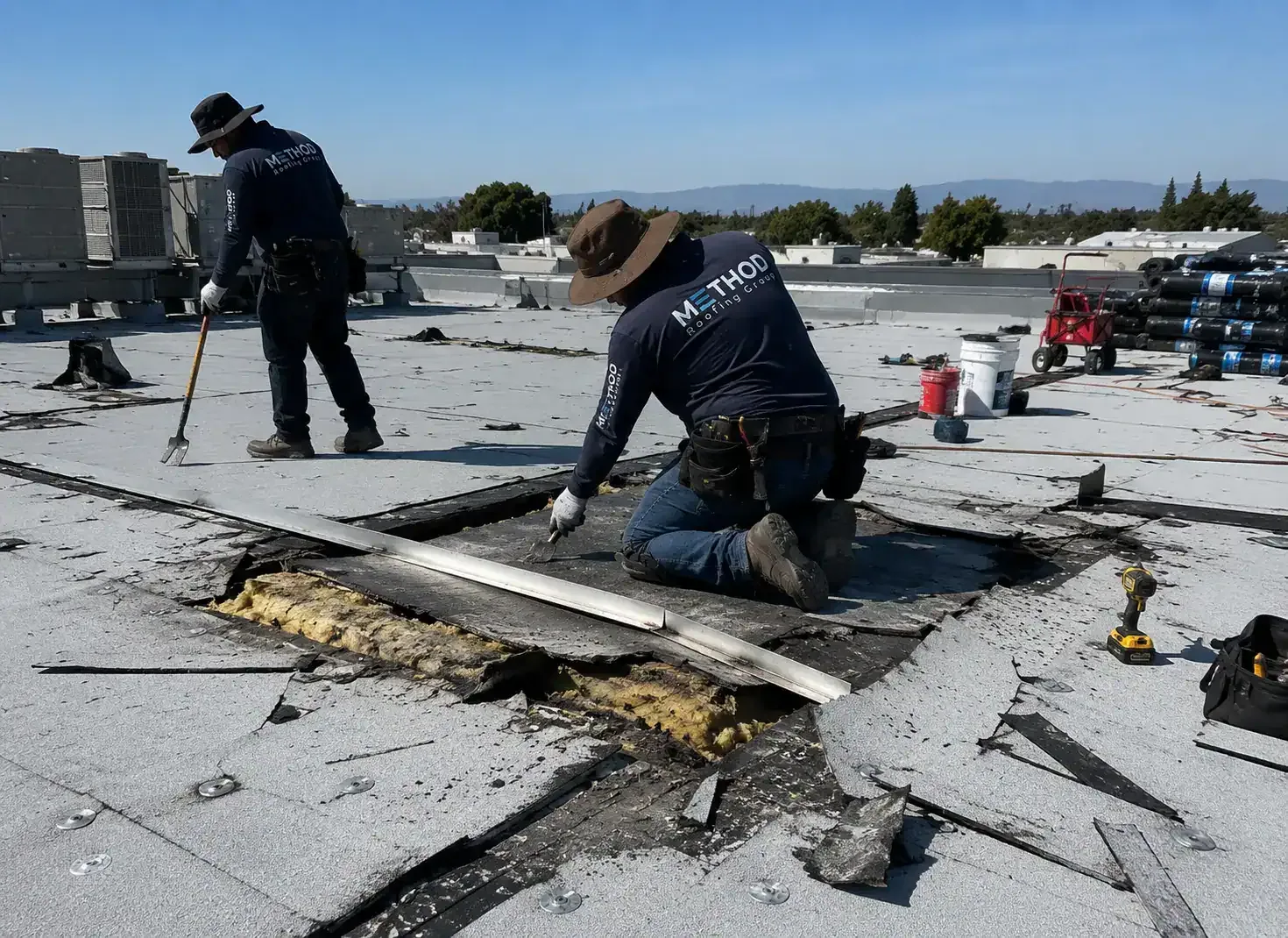
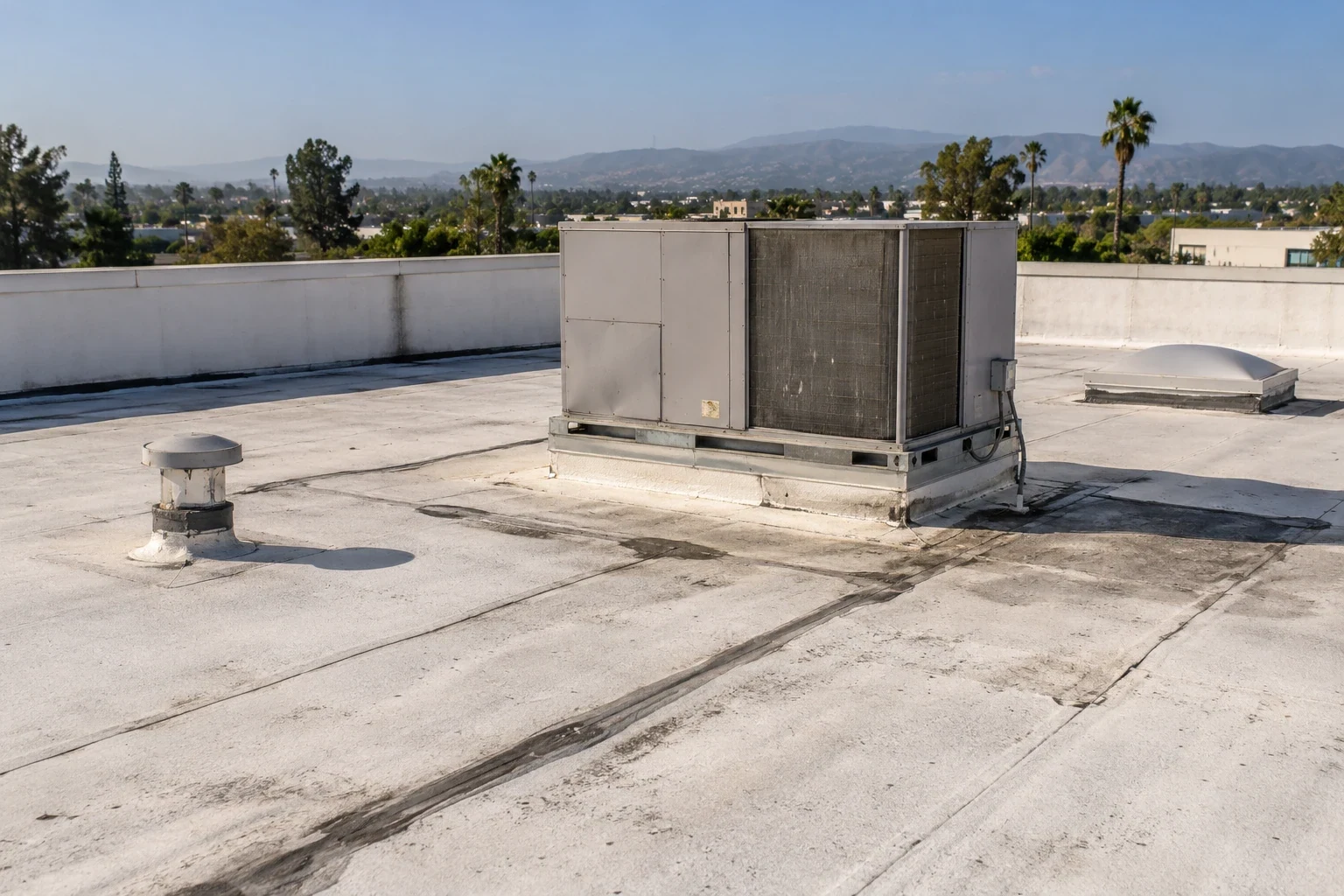
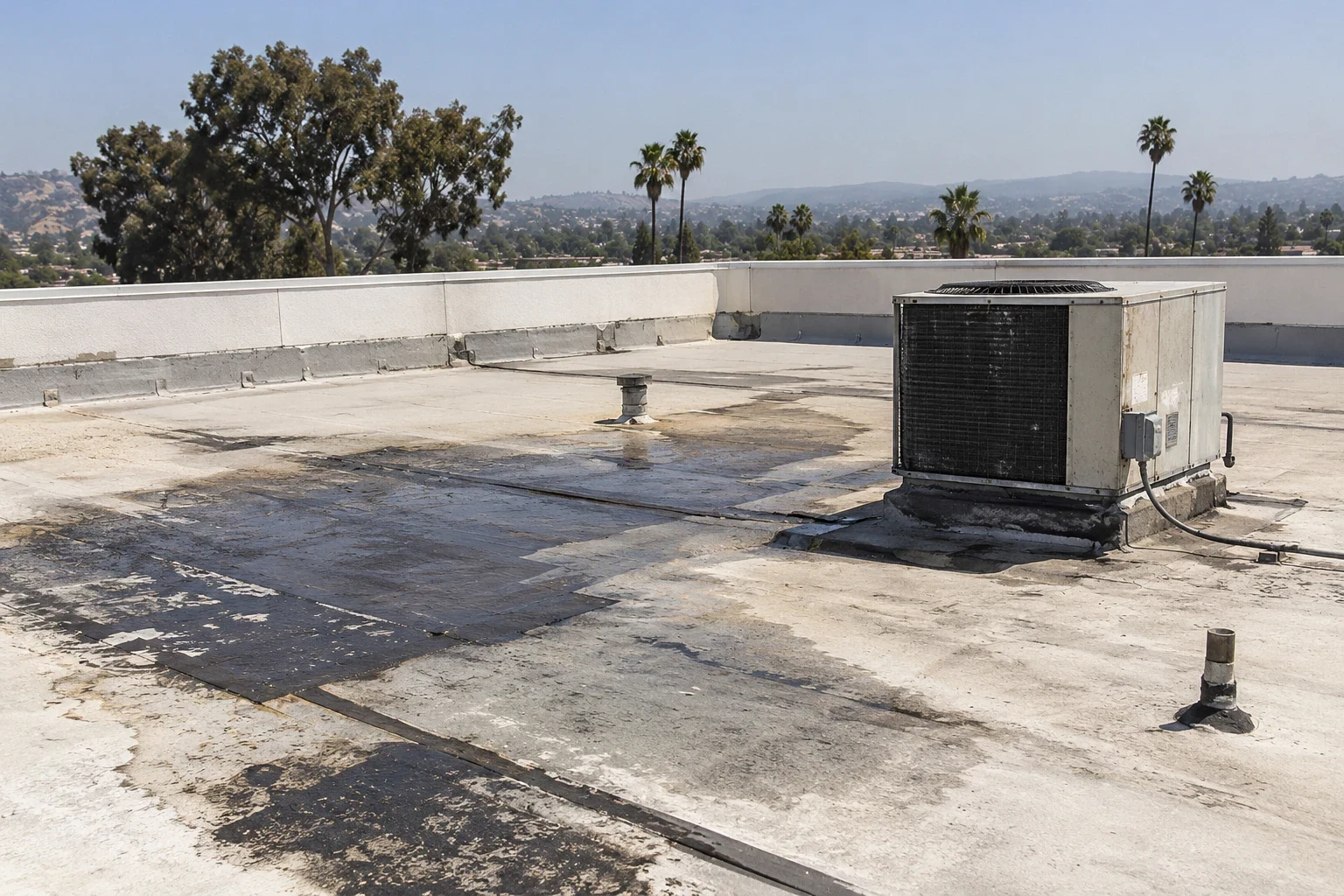
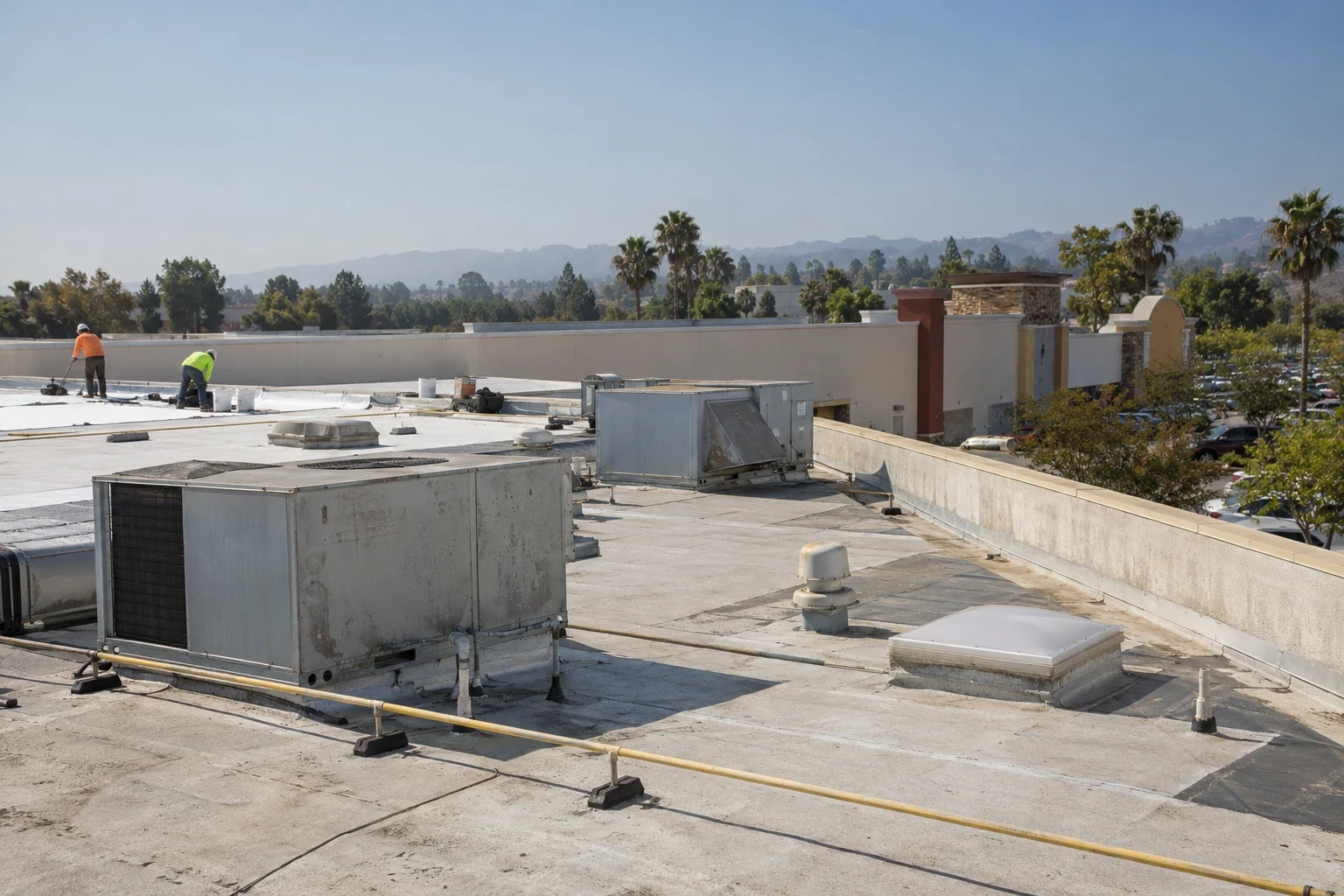
A clear scope names the building, roof section, observed condition, repair boundary, materials proposed, access assumptions, and work that remains assigned to another trade. We mark drains, curbs, wall transitions, perimeter metal, and test locations on a plan and connect each note to a dated photo. If an area could not be reached, the report states why and identifies the permission or equipment needed for a follow-up. That gives facilities and purchasing staff a defined basis for review without turning a visual observation into an unsupported remaining-life estimate. A roof condition report can separate verified findings from recommended investigation. For properties across several departments, a property-management record can preserve the building contact, leak history, and handoff details beside each roof file. Before pricing, we confirm which documents the agency expects with the submission, how site visits are arranged, who may approve a change, and whether the work area has a required escort. These items affect mobilization and schedule, so we list them as project assumptions for the owner to review. If the scope includes a test opening, its location, repair method, and closeout record should appear in the approval package rather than be decided after a crew arrives.
How can site access stay open during the work?
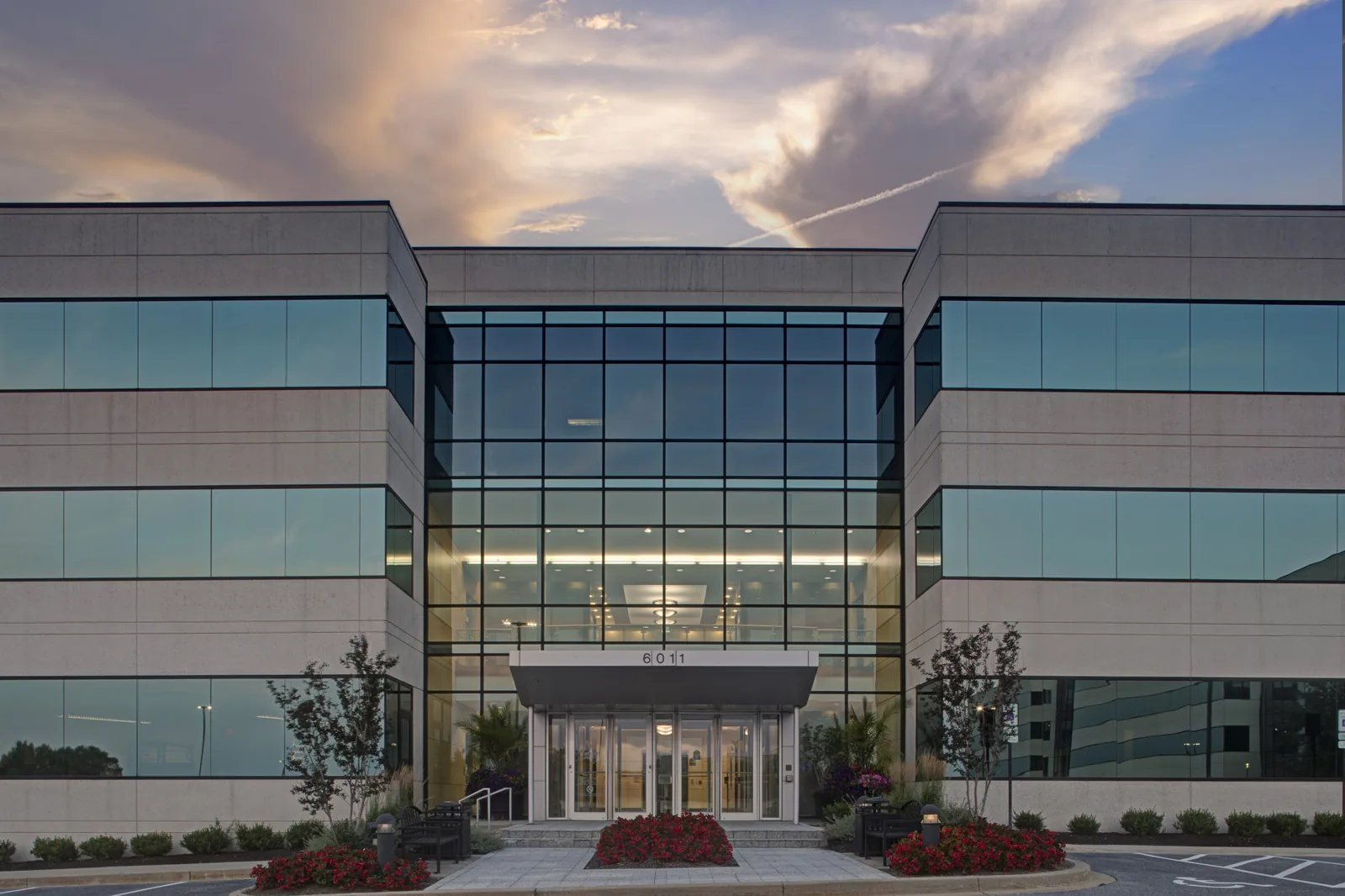
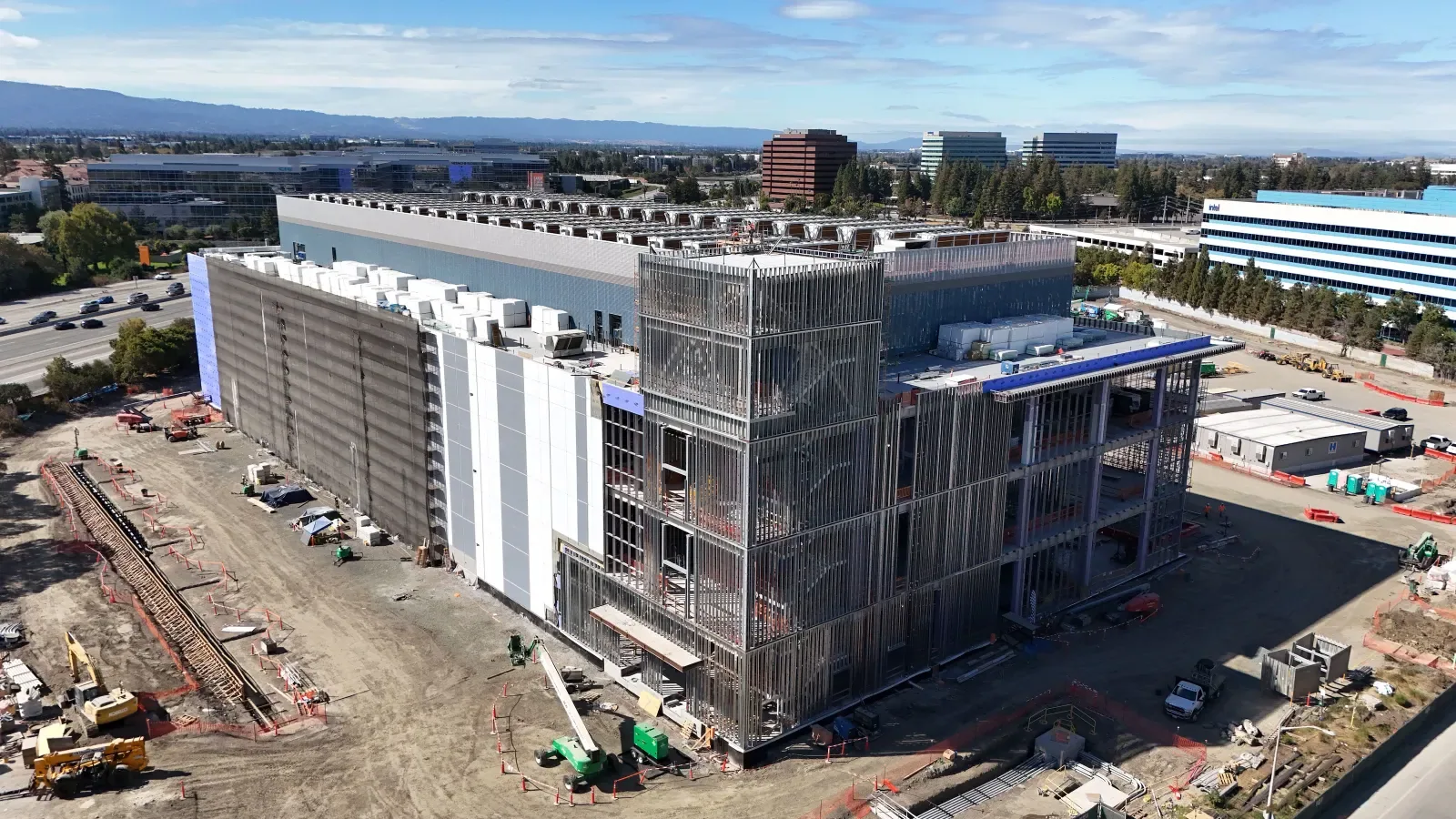
Public buildings may have counter hours, public meetings, deliveries, controlled rooms, emergency paths, and service vehicles using the same approach. The facility contact identifies gates, alarms, escorts, parking restrictions, and the person who can authorize rooftop entry. We verify where a lift or material delivery can stand and how the crew will reach the roof without narrowing a required route. The plan lists the work window, staging point, protection below, daily close-in, and the contact who receives an update. If the roof section sits above a public entrance, the scope identifies the exclusion zone and the hours when overhead work can proceed. A phased occupied-building sequence can divide work so the agency can coordinate notices and access by area. The Downtown Fullerton district has design guidance for rehabilitation, but each property still needs its own review path confirmed.
When should code coordination enter the roof review?
Before a patch or recover is priced, the agency's design team should confirm how the current city-adopted code and amendments apply to the permit; the governing reviewer determines which provisions control. We can document the existing roof, proposed assembly, edge and drainage conditions, and details that need review, then keep that information with the scope. A recover can change roof height at parapets, drains, curbs, and equipment transitions, which may require design coordination. Replacement can expose conditions not visible during an initial walk. A replacement scope or recover review should list those decision points instead of assume that a surface layer alone resolves them.
How are repair options documented for approval?
We start with the evidence: open seam, failed flashing, damaged membrane, drain interface, or another observable condition. The report identifies what was checked around it and whether moisture testing or an opening is needed to define the boundary. If an intrusive test is proposed, the agency approves its location, protection, and closure before work begins. A repair may suit one confirmed detail, while repeated failures or broader moisture evidence can support a separate section evaluation. We present those as distinct alternatives with their own quantities, access, and schedule assumptions. A commercial repair estimate can identify the bounded work and any exclusion; infrared readings may help select test areas when conditions suit that method. Neither should be treated as a substitute for the agency's own approval or design review.
Which Fullerton locations affect a facilities route?
Fullerton's Southeast Industrial Focus Area can help group regional facility visits. The Transportation Center plan area includes office, public-service, industrial, retail, restaurant, and residential uses; Downtown Fullerton is a City-designated Central Business District with adopted design guidance. These planning labels provide route context only. The facility contact still confirms the agency parcel, entrance, and approved roof drawings before a crew is scheduled. Those areas may help a facilities team group visits or understand surrounding uses, but neither label identifies a specific agency building or its roof. The Fullerton Transportation Center Specific Plan area includes office, public-service, industrial, retail, restaurant, and residential uses, so a public facility may sit within a varied access environment. We confirm the exact address, loading restrictions, tenant or public hours, and roof contacts before work. If an agency owns buildings near Orangethorpe Avenue or Harbor Gateway, the city-defined corridor can orient the route; the property plan determines where a crew stages and what area it can inspect. A site supervisor can also identify meeting hours, permit-required entrances, and the staff member who can verify that the protected area is clear when a roof section closes.
What should the agency retain at closeout?
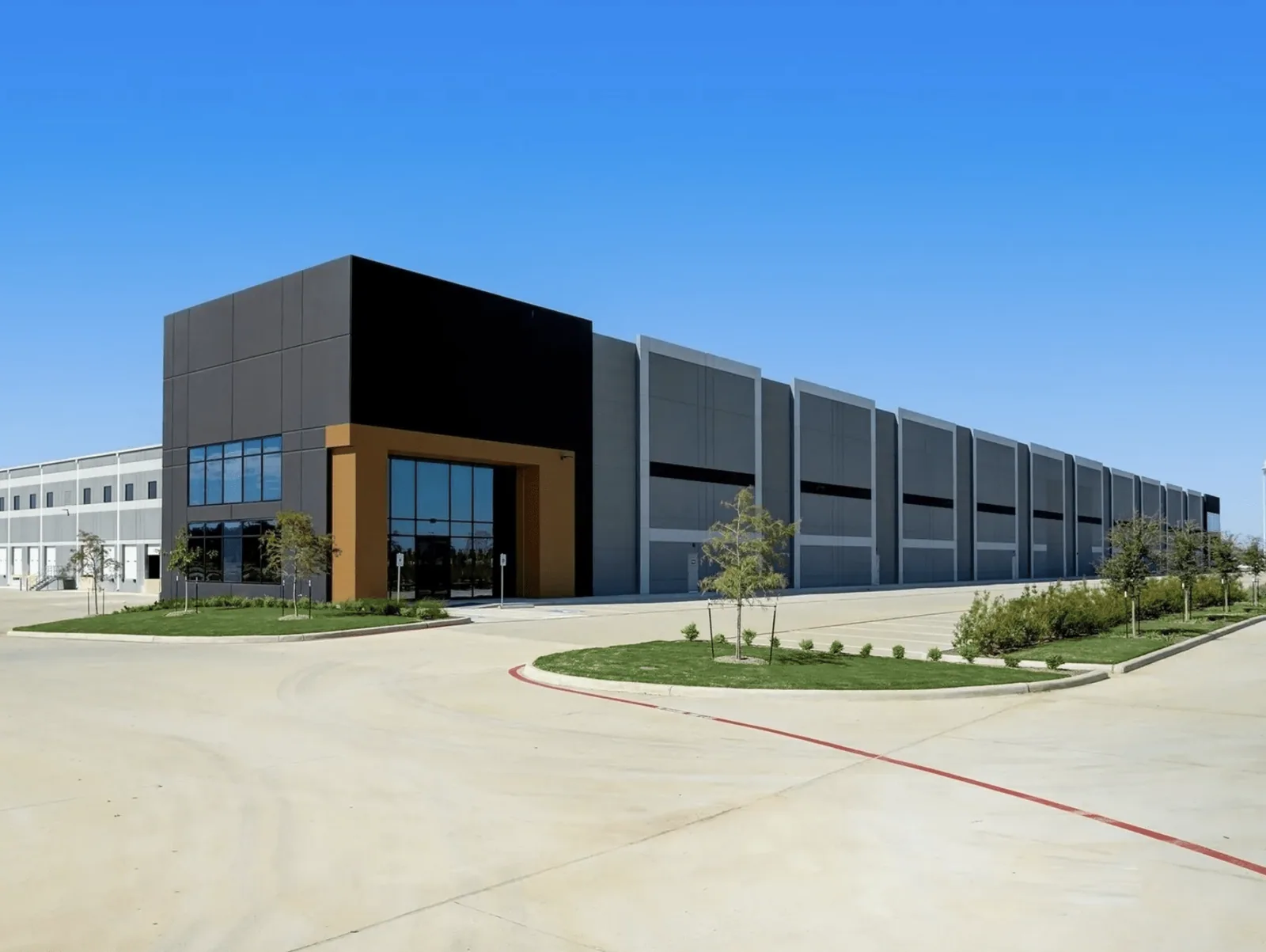
The closeout package can include the approved scope, change records, marked roof plan, dated photos, material notes, repair boundaries, test results, and any item left for an electrician, HVAC provider, or drain contractor. Record approval dates and the responsible reviewer for every change. We record who accepted the daily close-in and which section was ready for the next phase. A future inspector can compare that file with new leak reports instead of assuming that a previous repair covered adjacent details. The City describes the Commonwealth Corridor and Harbor Gateway Focus Area as planning geographies; local context belongs in route planning, while the public asset file remains specific to each address. A roof asset record can preserve that history, and a general-contractor coordination plan can clarify scope ownership where a larger capital project includes multiple trades. Provide the building list, roof plans, prior reports, access rules, and procurement calendar to prepare a focused assessment.
Commercial Roofing Questions
Can a roofer provide a scope for a public bid?
We can document observed conditions and prepare a defined roofing scope for agency review. The public owner controls procurement terms, approvals, and any required design process.
Does a roof recover automatically satisfy current code?
No. The applicable requirements depend on the project and authority review. We identify assembly and detail conditions that the agency's design team should evaluate.
How do you keep a public entrance usable?
We plan the staging point, work zone, notices, and material route with the facility contact. The scope identifies any hours or path that must remain clear.
What if the inspection cannot reach part of the roof?
We mark the excluded area, state the access constraint, and identify the permission or equipment needed to complete that portion later.
Which documents help an agency start a roof review?
Send the building address, roof plan, leak and repair history, access procedure, and decision calendar. We can set the route and list unresolved questions.