
Plan a commercial roof inspection in Fullerton with mapped conditions, accessible details, safe access, and clear next steps for property teams.
Roof leak, storm damage or an inspection coming up?
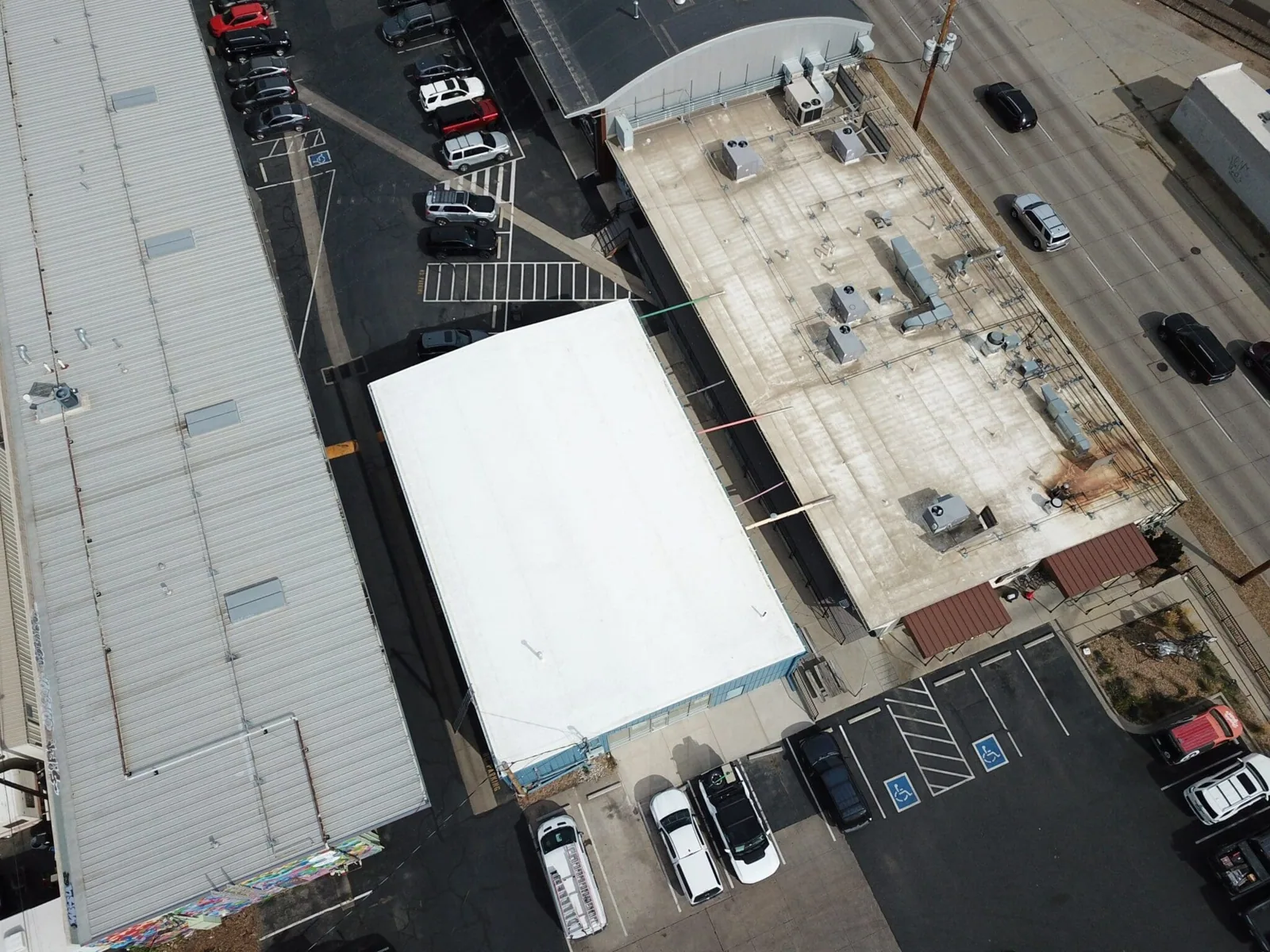
A receiving route shared with roof access can constrain an inspection window at a Fullerton property. The inspection sequence should begin with the manager's access window and a safe path to the roof. Fullerton's August airport normal has a mean daily maximum of 86.7°F, a seasonal baseline that does not predict the inspection-day temperature. Confirm who can open the access point, which operating areas must stay clear, and whether escort or fall-protection rules apply. Then set the inspection question: condition overview, leak follow-up, repair planning, or a renewal decision. The Commonwealth Corridor is a city planning geography, not a building-specific condition report. A useful inspection record explains the areas observed, limits, photographs or tests used, and the next decision the owner can make from the findings.
Define the inspection question
Before scheduling, identify the roof areas and the decision the inspection should support. A leak investigation needs a different route and evidence set from a long-range replacement study. Mark additions, separate buildings, and known reroof sections on the available plan. Include the date and limits of prior inspections, repairs, and moisture testing. If the plan is incomplete, ask the property team to identify access points and any roof zones that are not part of the request. A clear boundary avoids the mistaken impression that a short visit covered every surface. The written scope should say whether the work includes photographs, measurements, a roof plan markup, moisture screening, or only a visual review.
Prepare safe access and records
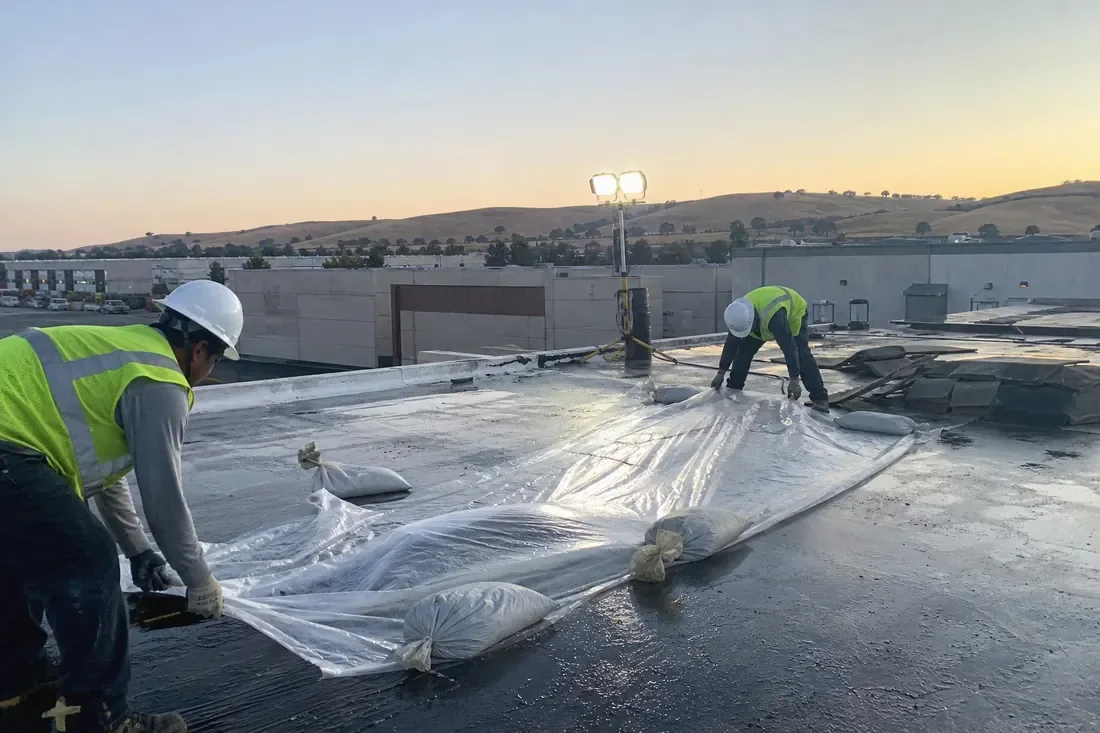
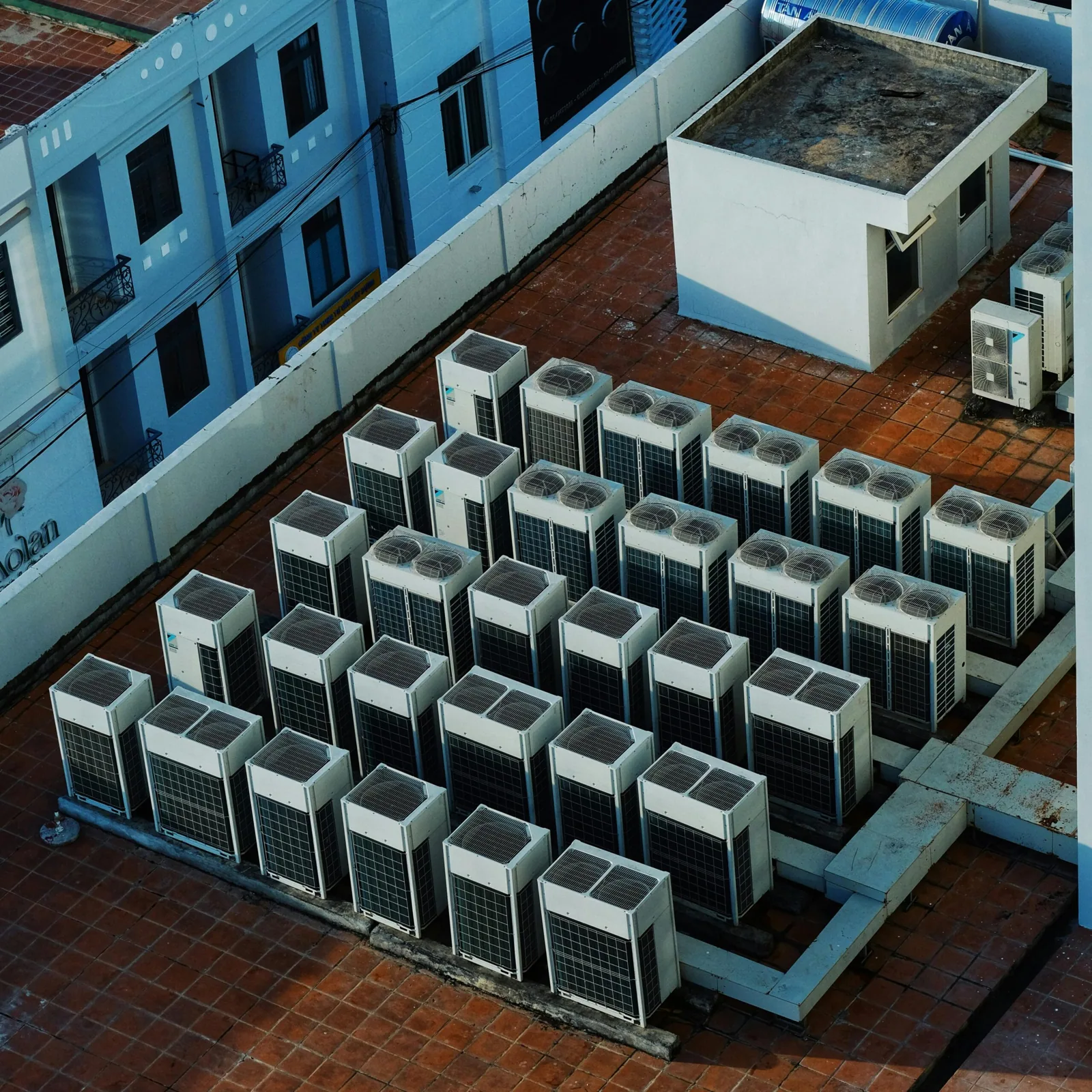
Coordinate keys, escorts, ladders, roof hatches, fall protection, and any required safety orientation before the visit. Do not ask facility staff to enter a restricted or unsafe roof area. Identify rooftop equipment, fragile surfaces, skylights, and places where another trade may be working. Gather warranty documents and manufacturer details because some work or testing may require approval. NOAA climate normals for the Fullerton Municipal Airport station show warm summer conditions, including an August mean daily maximum of 86.7°F; normals describe long-term averages, not the temperature or safe work window on a particular day. The inspection lead should use current site and weather conditions to plan access and breaks.
Document assemblies and transitions
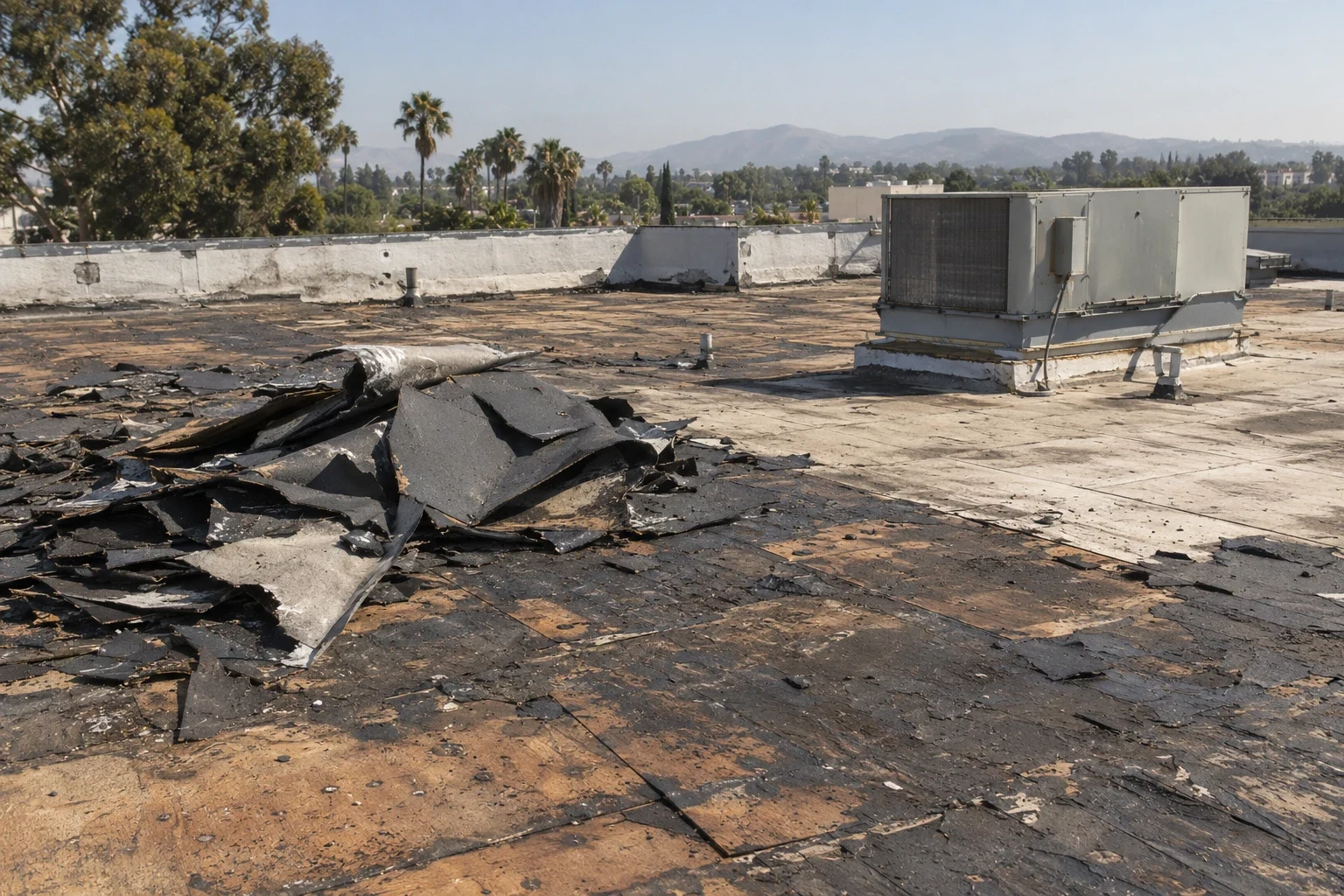
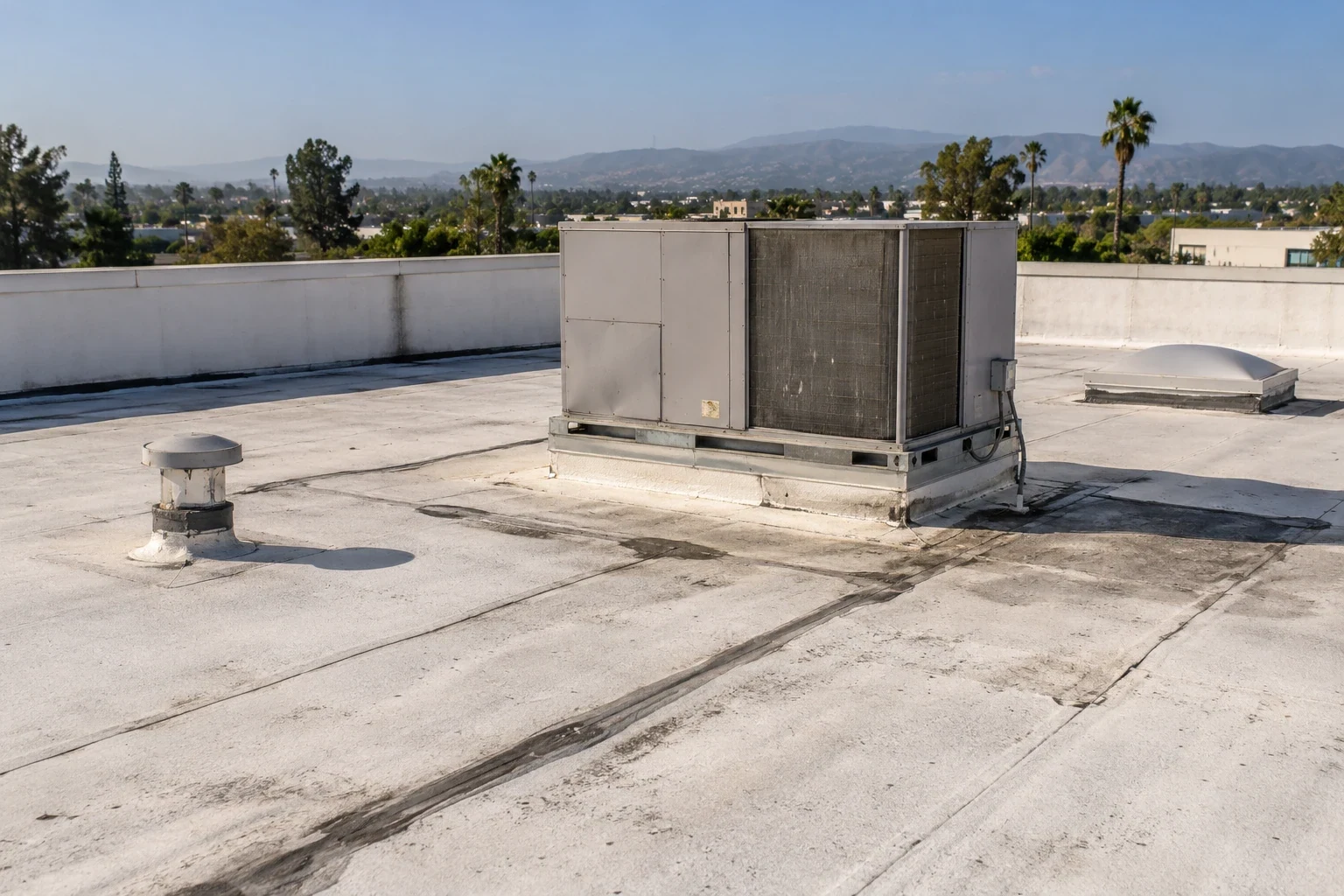
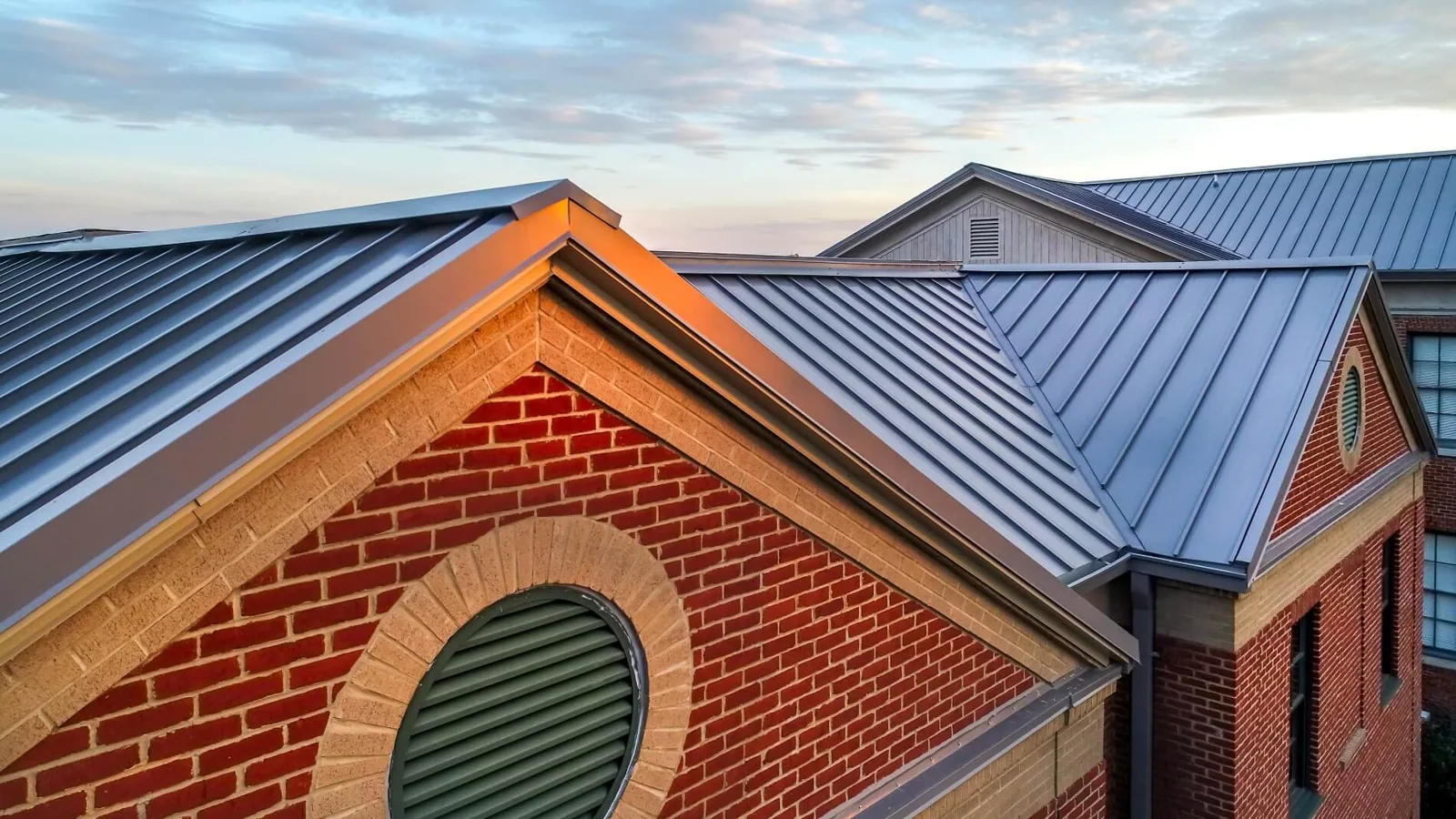
Record the visible roof type, approximate section boundaries, drainage features, edges, curbs, penetrations, expansion joints, and prior patches. Photograph context first, then close details with enough orientation to place them later. Note whether a condition is observed directly, reported by staff, or inferred from a pattern. Do not lift, cut, or probe the assembly without written authorization and a defined restoration method. Where the system is unknown, identify the records or approved test that could resolve the question. A focused repair assessment may be appropriate for a bounded defect, while a maintenance program can track recurring observations across scheduled visits.
Use testing only to answer a decision
Moisture mapping, infrared scanning, cores, or test cuts can help when their result may change repair or replacement boundaries. Each method has limits. A thermal pattern may be affected by sun, wind, surface materials, and building conditions; it does not independently confirm wet insulation. A core gives direct information at one location, not automatically across a whole roof section. The report should name the test area, method, conditions, and interpretation limits, and obtain owner approval before disturbing the roof. An infrared moisture survey can be paired with selective verification where appropriate. For membrane-specific observations, compare details with the applicable TPO system requirements rather than assuming every assembly shares one repair method.
Turn observations into practical priorities
Organize findings by roof section and consequence, not by dramatic wording. Separate active water or exposed openings from aging materials that remain serviceable. State what should be monitored, what merits a bounded repair proposal, and what requires professional design or structural review. The report can assign a suggested time frame, but should not promise that a roof will perform for a specified period without supporting analysis. The property manager should be able to connect each recommendation to a location, photograph, and reason. For a warehouse or commercial property in the Commonwealth Corridor, the inspection should identify access routes, roof condition, and operating constraints at the building.
Deliver a report that supports follow-up
A useful deliverable includes the inspection date, participating parties, roof areas reached, access limitations, observed system, photos, marked plan, and any tests performed. List unresolved questions and identify the professional or record that could answer each one. Distinguish an estimate from a design specification and explain when a permit or code question needs confirmation by the authority having jurisdiction. Attach repair records only when they relate to the inspection boundary. The owner can then use the report to compare proposals on the same roof areas and to establish a maintenance baseline. Keep the file in the property asset record with a revision date, so the next contractor can see what changed and what remains unverified.
A planning-area name can help orient the discussion, but inspection findings should never be generalized from one district to another. Record the roof area actually reached, the route taken, and any access limits. If the owner wants a comparison across multiple buildings, use a consistent checklist while preserving a separate report for each assembly. Keep observations tied to photos and plan references instead of broad labels such as “aging roof.” This makes later review more precise when staff, contractors, or asset managers change. For a project that may include a new assembly, a recover evaluation should follow its own load, moisture, and code review rather than being inferred from inspection notes.
A report should also identify the records that could not be reviewed. Missing warranty documents, incomplete roof plans, or unknown past penetrations can change the usefulness of a recommendation. State whether the owner supplied the information, whether it was visible during the visit, and whether a follow-up request remains open. If testing was declined, note that the conclusion is limited to accessible observations. Do not fill gaps with assumed construction dates or typical details. A short uncertainty list gives the property team a practical way to improve the next survey and helps a bidder price the same known work instead of guessing at hidden conditions.
After delivery, schedule a brief review with the decision-maker so priorities are understood before proposals are requested. Confirm which issues require immediate protection, which can be monitored, and which need design or testing. When the inspection supports repair, use a bounded repair scope with a location and verification step. Store the findings with the roof inventory and share them with the maintenance contact. A repeat visit can then compare the same areas and explain meaningful changes without presenting a long-term average or a single image as a forecast of future performance.
Commercial Roofing Questions
What inspection interval fits a commercial roof?
Set an interval based on the system, warranty, owner policy, and observed conditions, with additional review after relevant damage or work.
Does a visual inspection find every leak source?
No. Water can travel through an assembly, and access or concealed conditions may limit what a visual visit can confirm.
Can an inspection include infrared testing?
It can when a defined question warrants it; the method, conditions, limitations, and any verification step should be documented.
Will the report specify a replacement system?
A condition report may inform design, but system selection and code or structural questions require the responsible qualified professionals.
Which access, equipment, and history details set the inspection scope?
Share roof plans, prior records, access rules, warranty information, the affected area, and the decision the inspection should support.