
Investigate open or separating commercial roof seams in Fullerton with assembly identification, testing limits, and documented repair details.
Roof leak, storm damage or an inspection coming up?
An open roof seam can result from poor preparation, weather during installation, movement, incompatible repair material, or normal aging. The appearance alone does not establish which factor applies. Mark the seam location, direction, length, adjacent details, and interior report before selecting a test. The assembly may be thermoplastic, EPDM, modified bitumen, or another system, and each has different joining methods. Fullerton planning materials identify the Southeast Industrial Focus Area and Orangethorpe Avenue corridor as broad geography; those references do not describe a particular roof or its age. Fullerton Municipal Airport's July and August normal mean highs are 84.4°F and 86.7°F; seam testing follows current conditions and the selected membrane's technical instructions. A useful inspection separates visible separation from suspected moisture and states how access, weather, and substrate affect the next step.
How can a contractor identify the seam system?
Review maintenance records, warranty papers, invoices, and any labeled material remaining on site. Then compare membrane appearance, reinforcement, surface texture, lap geometry, and compatible accessory details. A field observation can narrow possibilities but may not conclusively identify an aged or coated assembly. Avoid using a solvent or probe that could damage the membrane. Where uncertainty affects the repair, request a small approved test or manufacturer guidance before pricing a larger scope. A TPO seam review differs from an EPDM lap assessment; the scope should name the actual system rather than generic plastic or rubber language. Preserve a sample only with owner authorization.
What conditions should be documented along a separating seam?
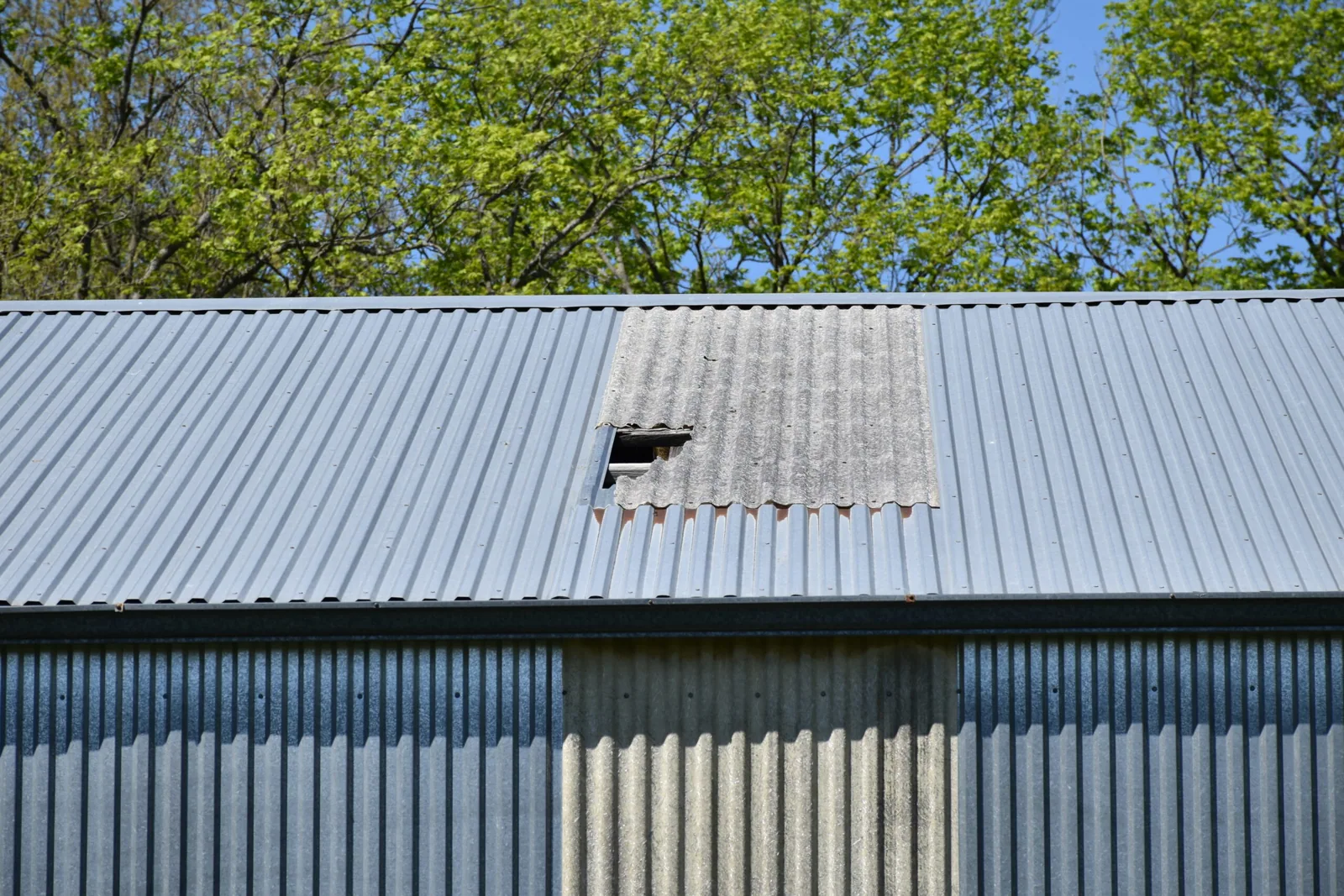
Map the start and stop points and note any wrinkles, contamination, fishmouths, bridging, patch edges, ponding, or nearby penetrations. Record whether separation is continuous or intermittent and whether the seam sits in a field area or at a change in plane. Photograph the detail under suitable light, with a reference scale where safe. Check nearby insulation or deck symptoms from authorized access below, but do not infer wet material from a seam gap alone. A roof condition survey can note inaccessible areas and prior repairs. If water entry is reported, link the interior timeline to the roof map through a bounded leak investigation rather than assigning cause prematurely.
When is a seam test useful?
A test can help establish whether a weld or lap is continuous, but its method must fit the membrane, access, temperature, and manufacturer instructions. Agree on representative locations, test limits, and acceptance criteria before work starts. A probe can reveal an open edge but cannot establish the condition of every hidden segment. Record results by location and state whether the sample was destructive or required a patch afterward. If a thermal or moisture survey is proposed, explain what it can and cannot infer; infrared screening does not directly prove seam adhesion. Preserve the test record with the warranty file and use it to define a repair boundary, not to claim that every untested area is sound.
What details belong in a seam repair method?
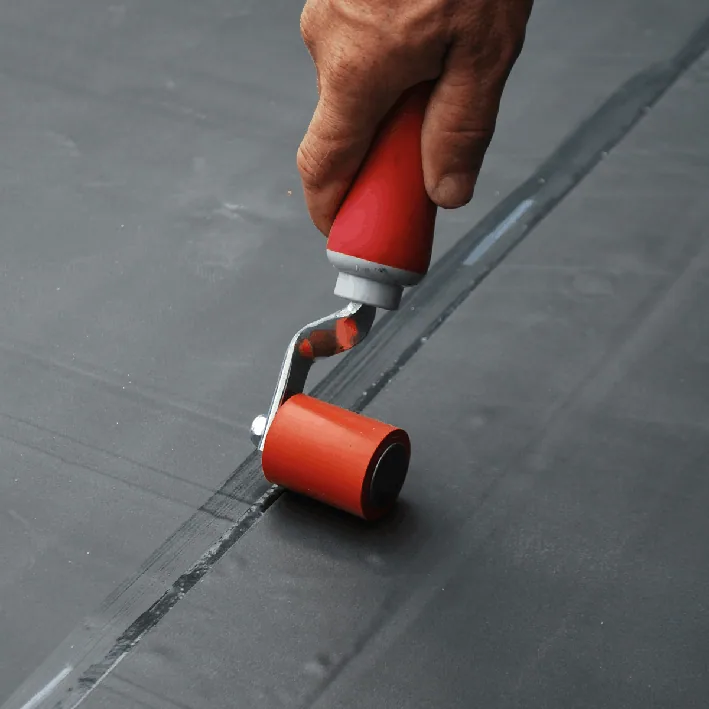
Specify surface cleaning, drying, preparation, compatible membrane or tape, weld or adhesive settings where applicable, overlap dimensions, roller pressure, termination, and cure period. Follow the selected system's current technical instructions and document installer checks. A repair should extend to sound material and avoid creating a water path at its ends. If the substrate moves or the assembly is brittle, identify whether replacement of a larger strip is appropriate. The owner should approve any removal that exposes insulation or deck. A localized repair plan can state those limits; broad coating over an untested open seam does not resolve the underlying join.
How should a seam repair compare with reroofing?
Count and map defects, compare the repair history, estimate the remaining area of affected membrane, and review warranty obligations before deciding. A few isolated failures may support a defined repair, while widespread seam distress or brittle material may justify a renewal study. Do not make a life-expectancy claim from appearance alone. Request separate alternatives with assumptions for removal, recover eligibility, substrate testing, drainage changes, and business interruption. A recover feasibility review should confirm assembly layers and attachment; replacement planning can show a broader option without merging it into the immediate repair price.
What should the owner receive after seam work?
Provide a seam map, before-and-after photographs, product and batch information where available, weather conditions, test results, and any untested areas. Note repair endpoints and whether water testing or a follow-up inspection was performed. State any maintenance instruction and who should respond if separation reappears. Keep a recurring issue linked to its earlier work order so the owner can evaluate the pattern. For a roof near the Southeast Industrial Focus Area or along Orangethorpe Avenue, we confirm the gate, loading route, and tenant hours before testing a seam. The roof plan, observed materials, and documented work remain the basis for any property-specific conclusion. A seam next to a curb or wall transition may require flashing failure repair; a separate surface opening follows a membrane puncture scope.
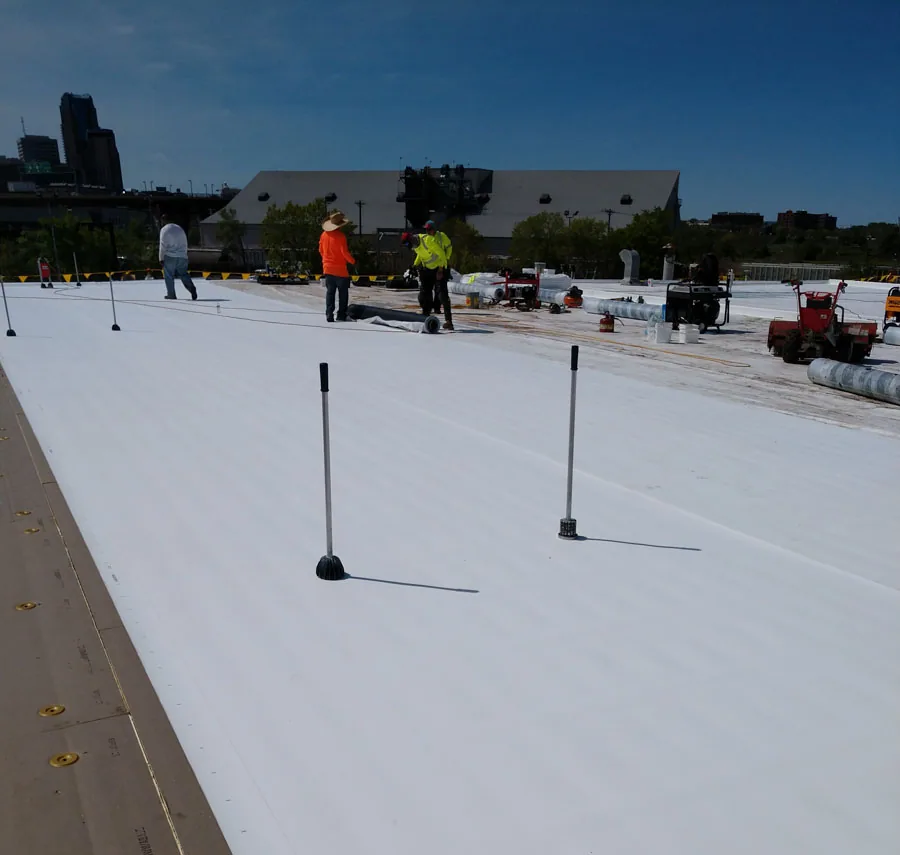
Thermoplastic field seams are commonly joined with controlled heat and pressure, but the correct settings depend on membrane, equipment, ambient conditions, and manufacturer instructions. An installer may need to make test welds before production and adjust the process when the surface or wind changes. Record the tested sample, settings when required, seam location, and acceptance method. For adhesive or tape-based assemblies, follow the specified cure and rolling steps instead of borrowing a thermoplastic procedure. Keep foot traffic and stored material away from an open lap. If a seam runs beneath a walkway or equipment support, define safe access before test or repair. A report should explain why the chosen test represented the repair area and identify any segment that remained untested.
When a seam repair is part of a larger project, plan the day's work so the crew can close each exposed section before leaving. The owner and supervisor should agree on a weather hold point, temporary tie-in, and inspection responsibility for any remaining open edge. Note the time of repair, surface condition, product batch where available, and whether the specified quality check passed. At completion, map the repaired run and photograph the endpoints and intersections with other details. If separation returns, compare the new location with the original record and review whether movement, contamination, or adjacent failure changed. The repair file should make that comparison possible without suggesting the first repair addressed areas outside its stated boundary.
Existing coatings can make a lap harder to evaluate because the visible surface may not be the original membrane. Ask when and where the coating was applied, whether the seam was tested beforehand, and what product documentation remains. A test location should be selected with the owner so that any small opening can be repaired under an approved method. Record the surrounding coating thickness only if it was measured, and do not infer membrane adhesion from a dry appearance. If the assembly cannot be identified, stop before applying a new material and seek compatible-system guidance. A clear limitation is more useful than a broad promise. The report should show the next inspection decision and who will authorize it.
Commercial Roofing Questions
Does a visible seam gap prove water entered the building?
No. It identifies a condition to evaluate; interior timing and assembly evidence are needed to trace a water path.
What field checks separate TPO seam work from EPDM repairs?
No. Identify the membrane and use its compatible joining method, preparation steps, and technical instructions.
Can infrared imaging test seam adhesion?
Not directly. Thermal patterns may guide investigation under suitable conditions but do not prove a weld is sound.
Should every seam be tested before a repair?
Define representative tests with the owner and manufacturer guidance; document what was tested and what remains unknown.
When is a broader renewal study useful?
Consider one when failures are widespread, repeated, or accompanied by deterioration beyond a few isolated laps.