
Plan commercial roof inspection, repair, or replacement in Buena Park with building-specific scope, documented access, and clear maintenance records.
Roof leak, storm damage or an inspection coming up?
A Buena Park roof review starts with the building records and operating needs. Gather the current roof plan, repair history, water reports, equipment layout, warranty documents, and access instructions before requesting an inspection. For a property with several tenants or structures, name each building and report separately. A clear list of locations and questions helps an inspector trace conditions and lets an owner compare proposals against defined roof areas instead of one broad allowance.
Before comparing proposals, ask whether each price assumes a targeted repair, partial replacement, or a full assembly. Request measured quantities, access assumptions, tear-off and disposal, interior protection, and a defined process for concealed damage. Separate temporary protection from permanent work so the owner can authorize the urgent step without treating unknown conditions as confirmed. Keep approved changes and photographs with the roof plan for the next review.
Buena Park business context and approval roles
If a roof project overlaps a remodel or tenant improvement, coordinate with the design professional and appropriate City contacts about reviews that apply to the proposed scope. Keep approved drawings and permit records with the roofing file. Identify who owns the roof, who can authorize a new penetration, and how another trade’s work will be documented. A contractor can describe the roofing work and observed conditions, but the owner and design team confirm approvals for the specific property. Projects in Anaheim need their own parcel and scope review.


Tracing a water report to the Buena Park roof zone
When a leak is reported, record the room, date, whether water was active, and recent conditions such as rain or equipment operation. Then map the likely roof zone and examine seams, drains, curbs, penetrations, and transitions. A ceiling mark could involve roof entry, plumbing, condensate, or indoor moisture; keep the source open until the evidence supports a conclusion. Photos should include both close detail and the surrounding roof area. If an occupied room or unsafe roof zone cannot be accessed, write down the limit and ask the owner whether a return visit or defined test is worthwhile. This makes the next step proportionate to what is actually known. The roof inspection scope can help the facilities contact organize that request.
Comparing defined repair and replacement options
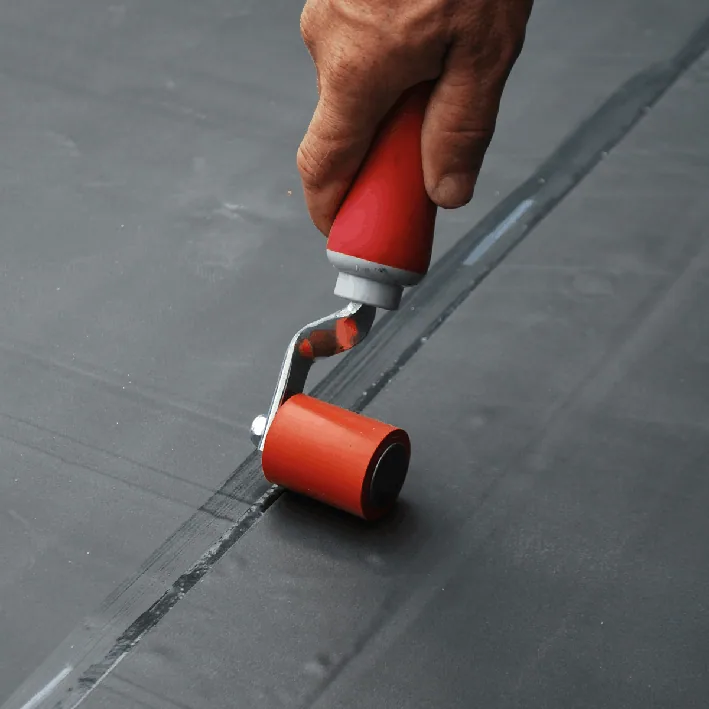
Repair, recover, and replacement options should be compared only after the roof assembly, substrate, moisture, drainage, and repair history are understood. Ask the contractor to distinguish observations from information inferred from old records. If roof areas differ, separate them on a plan and in the estimate. A coating proposal should describe preparation, adhesion checks, reinforcement, edge and drain treatment, and excluded sections. A recover option should address added layers and transitions, while replacement should define removal, dry-in, disposal, and hidden-condition assumptions. Owners can then compare equivalent boundaries and decide whether additional testing is needed before committing to broad work. For a single-ply assembly, EPDM system details can inform questions about compatibility without deciding the right product for this roof.
Coordinating access at an occupied Buena Park site
For occupied commercial properties, agree on staging, delivery timing, hours, access, and any temporary closure before mobilization. The owner or manager selects occupant notices and names the person who can approve changes. Mark entrances, loading routes, fire lanes, and equipment that cannot be interrupted. The daily plan should say what roof area will be opened, how it will be protected at shift end, and when a route can reopen. If a new condition appears, stop at the agreed boundary and send photos before expanding the work. Give occupants one channel for reporting water, rather than asking them to approach a crew or authorize a change themselves. Keep a weather-related stop and restart contact in the work plan.
Building a measurable Buena Park repair scope
A repair proposal is easier to review when it ties each observed defect to a location, material, preparation method, and boundary that can be checked at closeout. State whether deck, insulation, edge metal, and interior finishes are included. If those conditions are uncertain, list a unit rate or owner approval trigger. After work, compare the repair with the plan mark and retain photographs. If the condition returns, inspect the boundary and nearby drainage details before applying the same treatment again. A record should separate verified results from assumptions and show any open question. A commercial leak repair scope should define what will be opened and what stays excluded.
When a property has separate retail, office, and service areas, map the boundary for each requested repair instead of naming only a building. The manager can compare the repair location with the tenant report, nearby drains, rooftop equipment, and prior work. If access or a test is declined, record that choice and its effect on the conclusion. A contractor can then quote a defined next step, such as a follow-up inspection or selective opening, rather than presenting an open-ended allowance. The owner decides whether the added information is worth the cost and disruption. This keeps a limited service call distinct from a capital recommendation and preserves a clear approval point before work expands.

Maintaining records across tenant changes
The roof file should remain useful when tenants or property staff change. Save inspection photos, system and product information, repair locations, warranty steps, access limits, and approved trade penetrations. Record later rooftop work even when another contractor performs it. A recurring review can revisit the same drains, seams, curbs, and repaired areas so changes are easier to compare. If a roof section was not accessible, preserve that limitation in the file instead of treating it as inspected. Consistent records support capital planning and help the next facilities contact understand which decisions were made and what still needs attention. Managers coordinating properties in La Habra can keep each roof file separate while using the same intake fields.
For multi-building owners, assign a record owner for each roof map and label the date of each revision. Staff should be able to distinguish a completed repair from a deferred item without interpreting a contractor’s notes. A short open-items list can identify monitoring, testing, or access follow-up that still needs an owner decision.
Closing out work for Buena Park facilities
At project closeout, request an updated roof map, materials used, photographs, approved changes, warranties, and the contact for future access. The property manager can route new reports through a consistent process that records the location and timing without promising a cause before inspection. If the site has several buildings, keep the records separate enough to identify the applicable system. This handoff helps compare later repairs and reduces dependence on personal email or an old invoice. Property-level maintenance depends on the documented roof, approved scope, and observations made during each inspection. A marked warehouse roof plan may be useful when that building type is actually present, but the owner's own records remain controlling.
Commercial Roofing Questions
How should leak reports be documented?
Record the room, date, active conditions, and corresponding roof zone, then keep the cause open until inspection supports a conclusion.
Can one price cover several buildings?
Separate areas with different systems or histories so the owner can compare quantities, assumptions, and work boundaries accurately.
Who approves a work-area change?
The owner or authorized manager should approve changes through the contract process after reviewing the documented cost and schedule effect.
Does a coating eliminate inspection needs?
No. Follow system and warranty requirements and continue checking drainage, transitions, penetrations, and repaired areas.
What belongs in the roof file?
Keep plans, inspection limits, photographs, approved changes, product data, warranty instructions, and access contacts together.