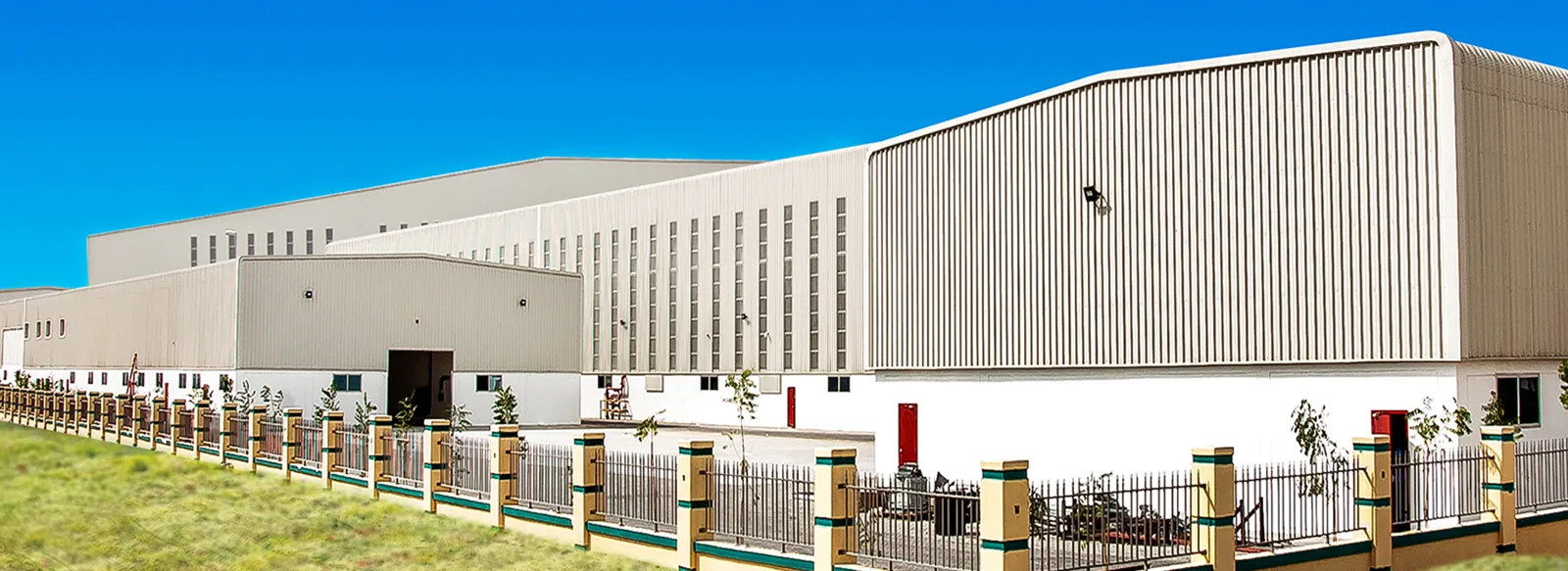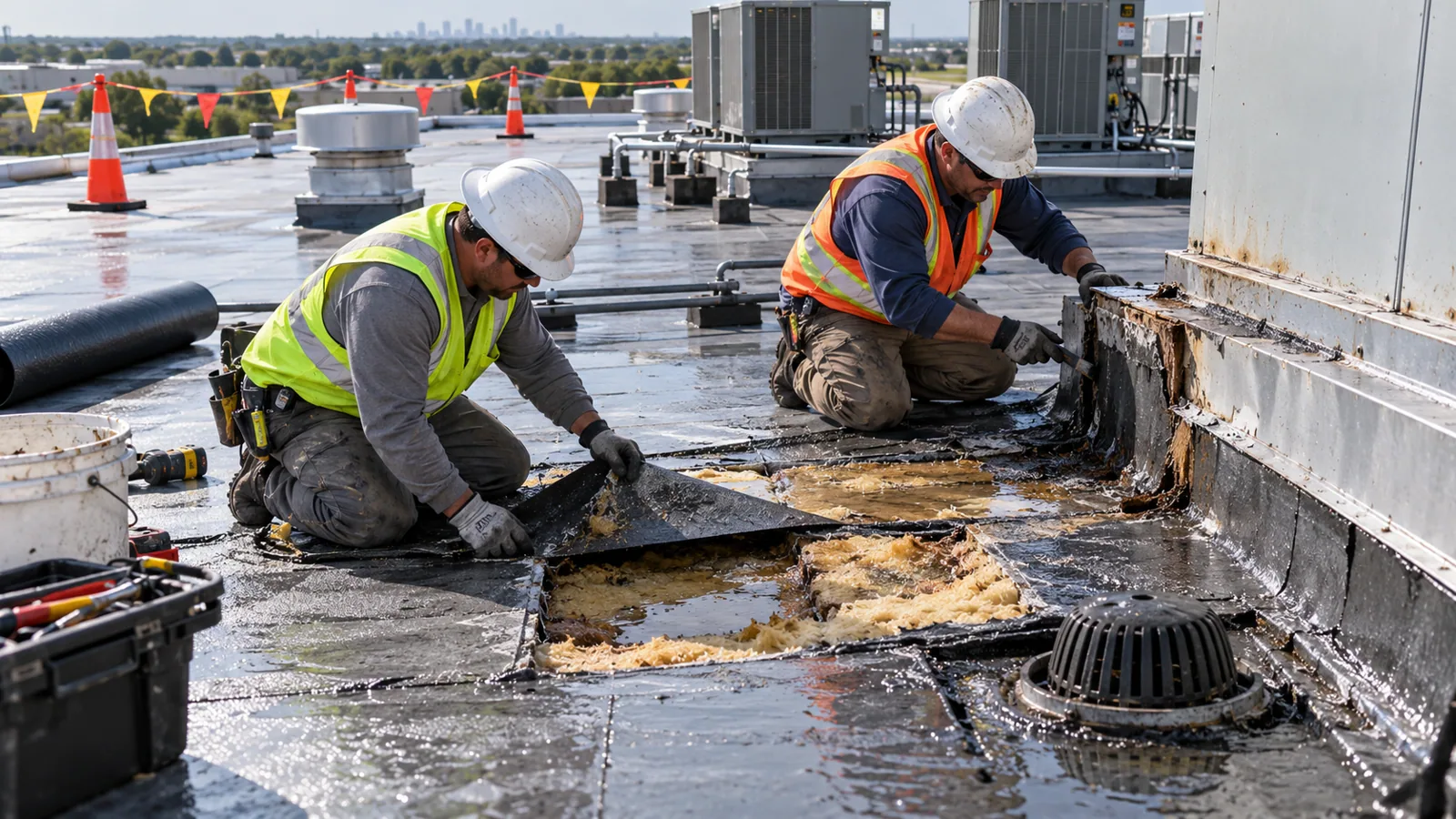

Inspect commercial roof edges, flashings, seams, and displaced materials after wind in Fullerton, then document a bounded repair plan.
Roof leak, storm damage or an inspection coming up?
After a wind event, a facilities manager may find a lifted edge, loose sheet metal, or an interior stain without knowing whether the observations share one cause. Start with life safety and access controls, then record the date, weather report, affected roof zone, and any visible change. Do not climb onto a wet or unstable roof to take photographs. A qualified inspection can compare perimeter details, corner zones, membrane seams, rooftop equipment screens, and drainage paths. Fullerton maps identify the Southeast Industrial Focus Area and Orangethorpe Avenue corridor; for a property there, document the roof's edges, seams, equipment screens, and drainage paths during inspection. NOAA's Fullerton Municipal Airport normals inform seasonal planning, not the wind speed or surface condition at a particular site. A useful report separates observed damage from suspected movement and identifies what must be tested before permanent work is priced.
What should happen before a wind-damage roof inspection?
Secure the building perimeter, protect active electrical or mechanical hazards through the responsible trade, and ask the owner who can authorize roof access. Note whether interior water is active, whether materials have entered a walkway, and whether a temporary barrier is needed. Preserve date-stamped photos from the ground and keep the original weather notice with the incident file. A roof walk should wait for safe conditions and an approved route. The inspection record can map membrane edges, parapets, coping, gutters, penetrations, and loose debris against the roof plan. If a section cannot be reached, name the access limit rather than treating it as cleared. Fullerton's hot summer normals can affect scheduling and material handling, while the actual work window depends on the current forecast and substrate conditions.
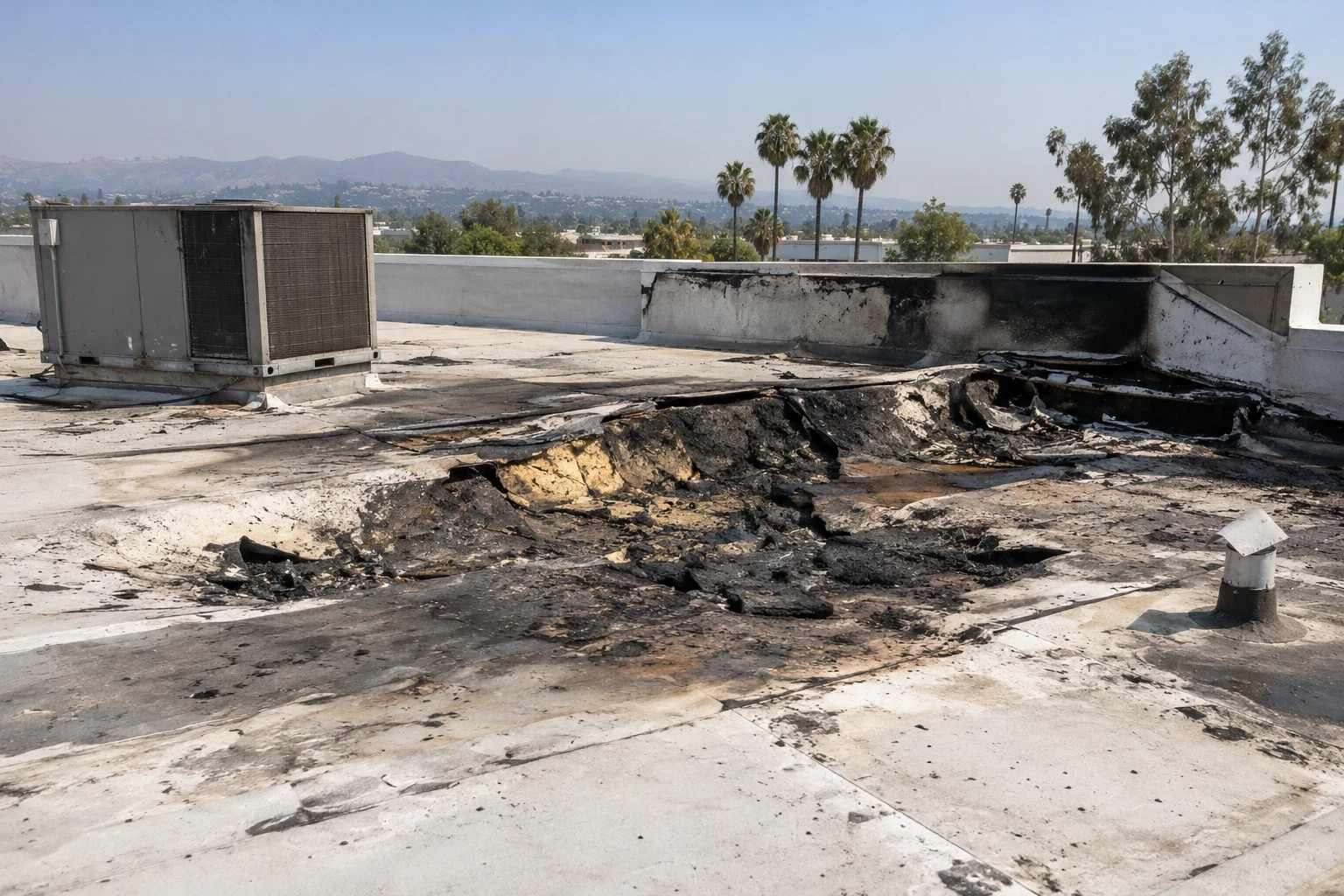
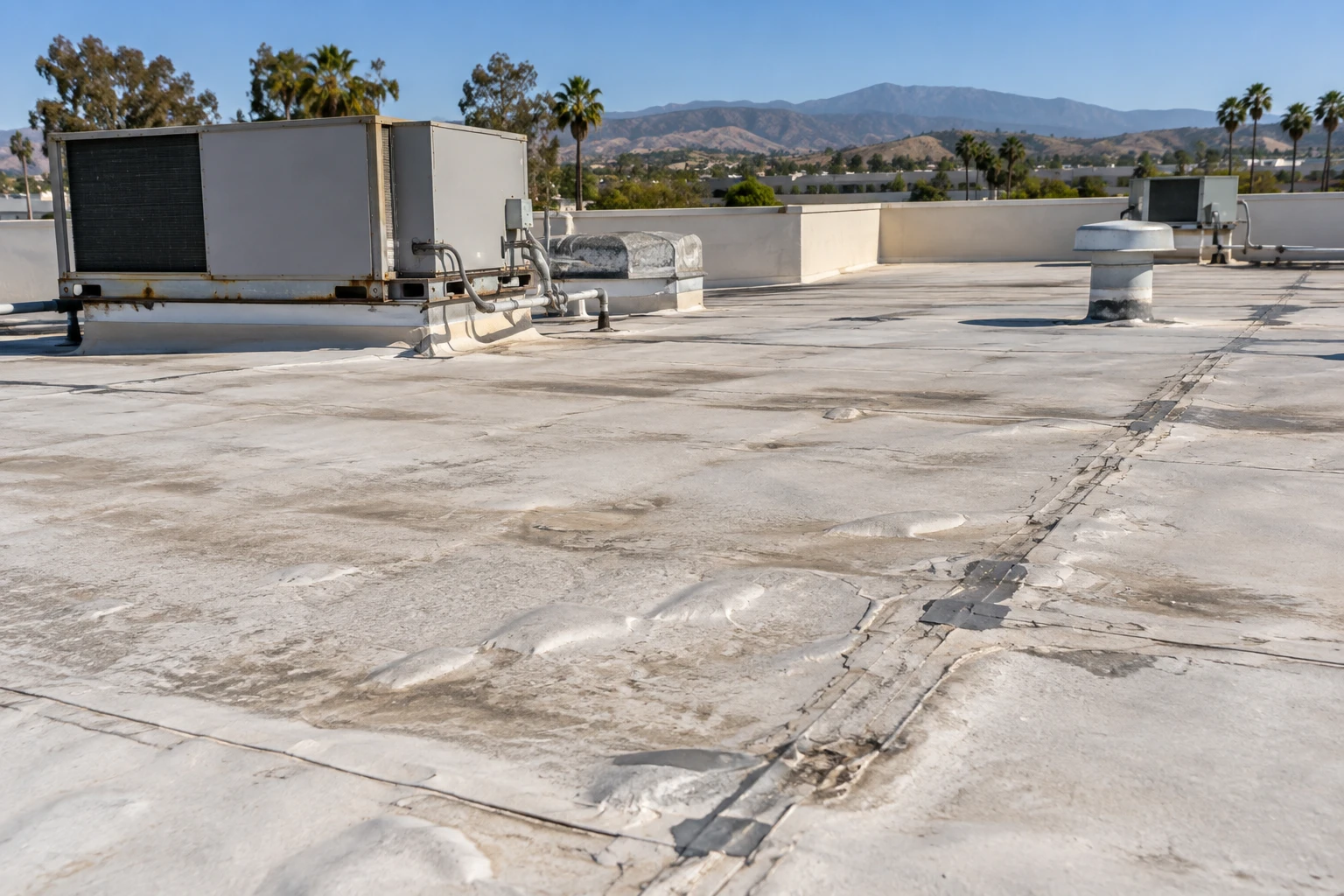
Which roof details are most useful to check after wind?
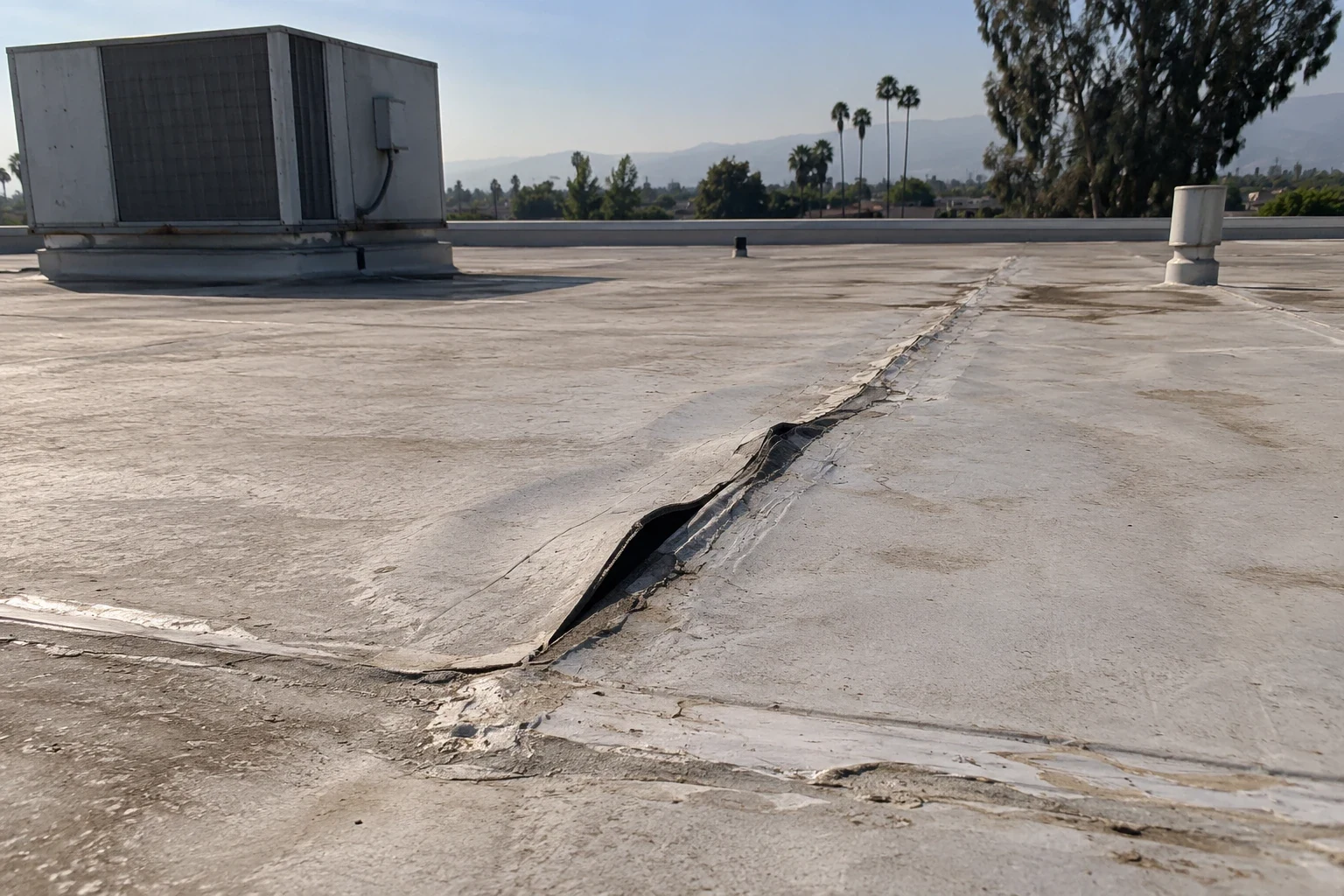
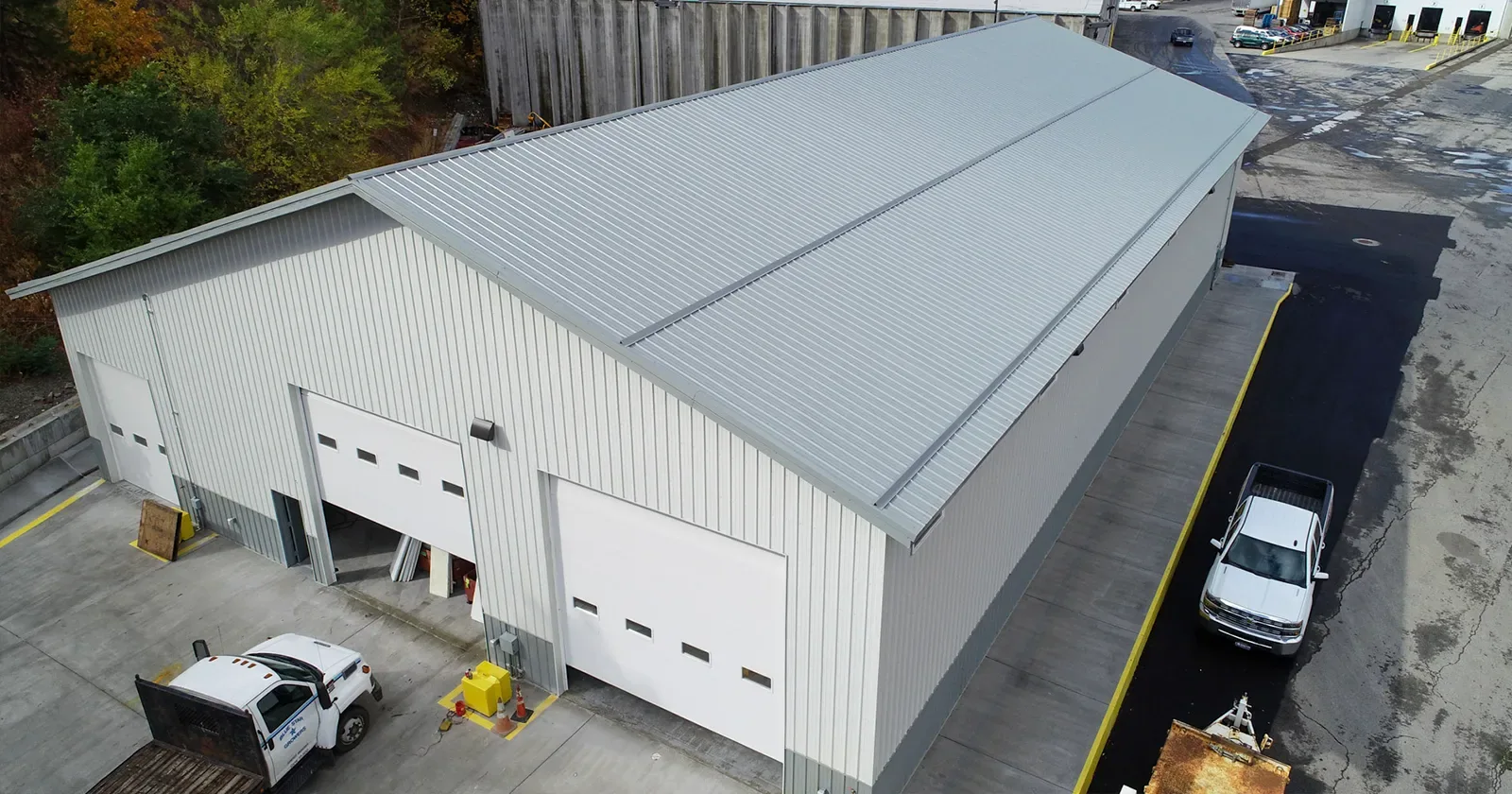
At the perimeter, review edge metal attachment, cleats, fascia, coping joints, corners, and transitions to walls. In the field, look for displaced ballast, lifted laps, punctures from debris, opened seams, and damage around equipment supports. Compare these observations with prior service records so a pre-existing defect is not labeled as storm damage without evidence. Fastener pullout or deck movement may require a qualified evaluation beyond a surface repair. A perimeter metal review can define the details to inspect; a standing-seam system assessment should account for its panel and attachment design. Do not assume the visible opening is the full extent of water entry.
How can a manager trace water entry after a wind event?
Log the room or zone, time first noticed, whether rain was wind-driven, and any recent plumbing or HVAC work. Keep building occupant information out of the contractor's public service record. On the roof, compare likely water paths with wall terminations, curb corners, drains, skylights, and transitions where wind pressure may have exposed a weakness. Water can travel laterally, so the nearest roof mark is not proof of the source. An interior-to-roof leak investigation should state what was inspected and which hypothesis remains open. If a test is proposed, define the area and method with the owner before it begins. A marked condition report helps separate confirmed defects from follow-up questions.
When is temporary protection appropriate?
A temporary cover or seal may limit further water entry while the owner arranges a permanent repair, but its limits and inspection interval should be written down. The selected material must suit the exposed assembly and should not conceal a condition that still needs assessment. Assign a person to verify the protection after weather changes and to coordinate safe removal. Keep drains and emergency paths clear; avoid unapproved attachments that could create a new failure point. The response should identify who authorized the measure, when it was installed, and which permanent detail remains unresolved. For an active leak, emergency roof response can document immediate steps, while flashing repair planning addresses a specific transition once inspected.
How should a permanent wind-related repair be scoped?
Describe the roof assembly, exact work zone, preparation, compatible materials, fastening or adhesion detail, edge termination, and closeout evidence. If metal, insulation, or deck is damaged, state the measurement and approval process before removal begins. A repair should not be represented as restoration of an entire roof when only a defined area was addressed. Compare the scope with the warranty documents and maintenance requirements. If multiple roof areas show age-related wear, ask for a separate renewal option rather than blending unrelated work into an incident line item. Fullerton's municipal code adopts the 2025 California Building Code with local amendments; confirm the permit path for the specific repair scope. A commercial roof inspection can establish a baseline for that decision.
What records help verify the work after crews leave?
The closeout should include the marked plan, photographs before and after, materials used, areas not accessed, and any temporary condition still under observation. Note the weather during installation and the contractor's stated limits without implying performance beyond what was inspected. Provide a contact for reporting a recurrence and define how the owner will check the repaired area. If the event affected multiple sites, keep one building record per property so conditions do not get combined. The storm-damage response scope can be compared with planned roof renewal when the repair map shows broader deterioration. For a property in the Southeast Industrial Focus Area, document the roof's actual edge, fastening, and drainage conditions during inspection. For a separate material opening, compare membrane puncture repair with the edge work.
When the owner is evaluating an insurance or capital decision, keep the observation record factual and time-stamped. The file can include the reported event date, available weather notice, roof plan, pre-event maintenance records, post-event photographs, and a table separating new damage from older wear. The contractor should identify who supplied each observation and whether the inspector saw the condition directly. Avoid assigning a cause where access was limited or where a prior patch prevents a clear reading. If the roof has several membrane types or additions, map each one separately and note transitions at expansion joints and parapets. A structural professional may need to review deck movement or attachment concerns. That referral should be distinct from a roofer's repair recommendation, with the specific visible evidence and requested question stated clearly.
After permanent work, verify the repaired limits against the approved sketch and capture each termination, edge, seam, and replaced component before it is concealed. Note fastener patterns or weld checks only when those procedures were part of the scope, and retain product information for later maintenance. The owner can schedule a follow-up after the next weather event, but the record should say which area will be observed and who will perform the check. A recurrence should open a new investigation rather than trigger an unreviewed second patch. If broader wear is present, compare the repair history with a capital plan and warranty requirements. A wind claim still depends on dated roof observations and a building-level inspection; an area name cannot identify where damage occurred.
Commercial Roofing Questions
Can wind lift a roof edge without tearing the membrane?
Yes. Edge metal, fasteners, or terminations can move independently; inspect the assembly before selecting a repair.
Does an interior leak prove storm damage?
No. Compare timing, wind-driven rain exposure, roof details, and prior records before assigning a cause.
Should a contractor inspect a wet roof immediately?
Only when the owner authorizes a safe access plan and conditions allow. Ground observations can be recorded first.
What belongs in temporary protection documentation?
Record its location, material, installation time, inspection owner, and permanent work still required.
Which storm observations support a roof repair or renewal decision?
When multiple areas show wear or concealed conditions may change the scope, request separate options with stated assumptions.