
Plan commercial roof inspection, repair, maintenance, or replacement in Tustin with a documented property-specific scope, access plan, and closeout record.
Roof leak, storm damage or an inspection coming up?
A warm afternoon can narrow the time available for exposed roof work, so a Tustin manager should confirm the day’s forecast and close-in plan before a section is opened. NOAA’s Fullerton August normal reports an 86.7°F mean daily high for outdoor air; it is regional context, not a Tustin roof-temperature measurement. The property still needs a field check of its membrane, substrate, shade, and access. Tustin’s Economic Development Division describes a Business Visitation Program and a Business Concierge that connects businesses with City resources. Those are business-support programs, not a building-condition survey. Start with the roof plan, recent repairs, operating hours, and the person who can grant access. A focused maintenance inspection can establish the condition and next action without assuming that one visit resolves every concern.
How can city business resources fit a property decision?
Tustin’s Economic Development Division supports existing businesses, investment, and entrepreneurship. Its Business Visitation Program connects owners with City resources, while the Business Concierge offers one-on-one guidance on permits, licensing, and municipal processes. A property manager can use these programs for business questions while keeping roof-condition decisions grounded in inspection, plans, and warranty records. They do not approve a roofing scope or replace the owner’s review. Keep municipal questions separate from the building’s technical file.
Before a maintenance or repair visit, list the issue that needs a decision: active leak, recurring water, aging coating, or a capital-planning review. Include the site contact, roof zones, and relevant drawings. If conditions vary across several addresses, use a Santa Ana property record as a separate file rather than treating the portfolio as one roof. This keeps budgets, photos, and approvals tied to the correct building.
Confirm who can authorize roof access, whether an escort is required, and which ladder, hatch, or access route is approved. Provide the latest roof plan, warranty documents, leak log, repair invoices, and any known equipment changes. Tell the inspector which interior locations have been affected and when the reports occurred. If a tenant cannot provide access to a room or roof area, record that limit.
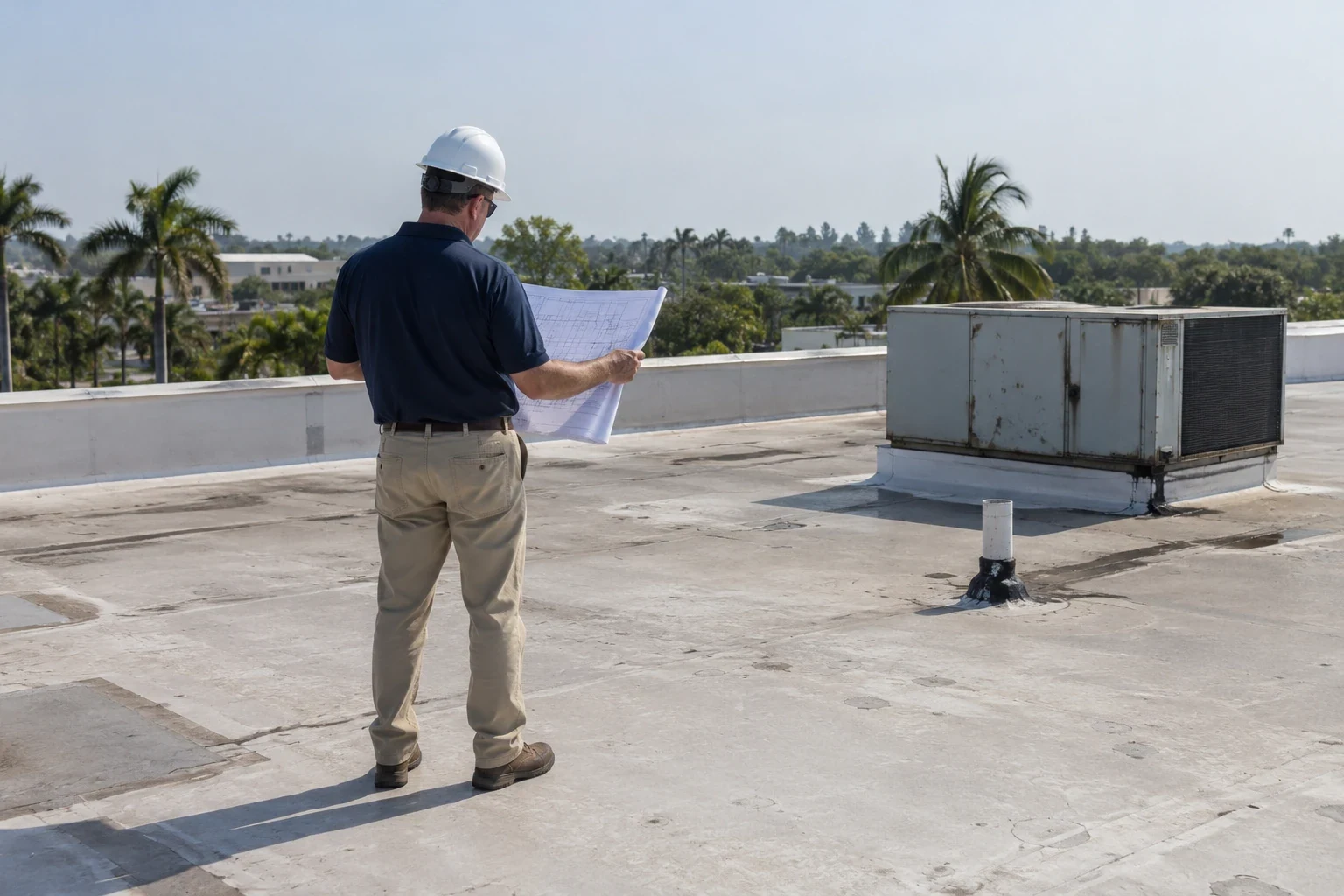
A thorough visit should distinguish what was observed from what could not be accessed. Photograph the roof zones and nearby transitions, and mark the photo positions on the plan. Identify drains, overflows, edges, penetrations, and equipment supports without presuming a defect. A documented capital-planning review can then connect condition, scope, and timing to the owner’s decision.


How should a reported leak be documented?
Ask the occupant to report the exact room, time, water amount, affected contents, and whether the leak followed rain or equipment operation. Capture the condition before cleanup if it is safe to do so, then note protection or drying already underway. A ceiling mark indicates an interior impact but does not confirm the roof entry point. Track each report with a date and a consistent property identifier.
On the roof, compare the report with visible seams, penetrations, perimeter details, drains, and older patches. Mark the area inspected and note moisture indicators, standing water, or conditions requiring a follow-up test. Keep a distinction between a confirmed source and a possible pathway. Where low areas or drainage concerns are involved, a ponding-water review can document the roof’s drainage behavior and questions that require further evaluation.
Which roof conditions matter for routine maintenance?
Maintenance should follow the assembly and site conditions confirmed in the records. A visit can document seams, flashing, exposed fasteners where relevant, coating wear, debris, drain baskets, and penetrations. The record should not label normal aging as failure without supporting evidence. Identify what needs cleaning, monitoring, repair, or further testing, then assign a responsible person and a review date.
A useful service log includes the weather, roof zones visited, photographs, accessible and inaccessible areas, and changes since the prior visit. Track repeat items instead of copying an old checklist unchanged. Verify that any proposed cleaning or treatment is compatible with the installed system and warranty. A local Orange-area building should have its own log and roof plan even when the same owner manages both locations.
How does the manager compare repair and coating options?
First establish what the existing assembly is and whether the affected area is dry, sound, and compatible with the proposed work. Ask the contractor to define surface preparation, repair boundaries, material compatibility, drainage details, and the expected limits of a coating. A coating is not a substitute for correcting wet insulation, failed flashing, or structural concerns. Any exception should be documented before pricing is compared.
Request a written comparison using the same measured area and assumptions. It should include preparation, repairs, details, weather restrictions, warranty, exclusions, and maintenance obligations. If a silicone product is being considered, review the system-specific requirements through a silicone coating assessment and verify substrate condition in the field. The decision should reflect actual roof evidence rather than the product label alone.
When should a capital review move beyond maintenance?
Repeated leaks, broad deterioration, end-of-warranty questions, or a planned change in building use can justify a more comprehensive assessment. The manager should compare condition across roof sections and note which areas have documented repairs, moisture concerns, or access limits. One repaired area does not establish the condition of the rest of the building. Prioritize a test or survey where it will resolve a specific unanswered question.
A capital review can describe alternatives, cost assumptions, anticipated sequencing, and the evidence needed before final scope. Ask which repairs remain suitable for service and which conditions could trigger replacement. If multiple buildings share a funding cycle, rank them by verified condition, operational consequence, and owner priorities. Keep contingency allowances clear and avoid translating a preliminary roof walk into a specific service life.

How can work be phased around business hours?
Use the building’s hours and operating pattern to decide when crews can move materials, access roof areas, or perform disruptive work. The manager should identify active tenant spaces, deliveries, equipment, and safety constraints before the contractor proposes a sequence. Set a daily close-in point and a contact for weather changes or concealed conditions. Share only the work information each tenant needs to prepare.
A phase plan should name the areas, access path, staging location, expected duration range, and owner hold points. It should also state which operations may be affected and who will provide updates. Confirm service access for HVAC or other trades. For a larger project, a roof-zone map and daily log help explain progress without implying that all tenant activity can continue unchanged.
What does a complete maintenance handoff look like?
The property file should include dated photos, the zones reviewed, observed conditions, repairs completed, and any recommendations not yet authorized. Note who performed the work, which materials were used, and whether a test or manufacturer review remains. State access restrictions and describe roof areas that were not inspected. Clear records make the next service visit easier to compare.
Before closing the work order, verify that drains and overflows are clear, temporary covers are removed, equipment access is restored, and the manager received keys or access devices. Record the next action with an owner and due date. Preserve the approved scope separately from later recommendations. If ownership wants a broader commercial roof inspection, specify whether it will include moisture testing, core sampling, or a visual-only review.
Commercial Roofing Questions
Does Tustin’s Business Concierge inspect commercial roofs?
No. The City program supports business questions about municipal processes. Roof condition and repair scope still require a property-specific inspection and owner approval.
What inspection interval should an owner use?
The interval depends on assembly, age, weather exposure, warranty, and past findings. Follow the owner’s maintenance program and any manufacturer requirements, then adjust based on documented conditions.
What should a leak log include?
Record the property, date and weather, interior room, affected contents, photographs, protection, and any equipment or plumbing activity. Mark the corresponding roof area only after inspection.
Can coating be applied over an existing roof?
Only after confirming substrate condition, moisture, compatibility, preparation, drainage, and warranty requirements. A product name alone does not establish suitability.
What makes a maintenance report useful?
A marked roof plan, dated photos, accessible-area list, observations, completed actions, unresolved questions, and assigned next steps make future visits easier to compare.