
Plan hotel roof repairs in Fullerton around guest access, kitchen exhaust, drainage, and phased close-in. Get a roof assessment tied to your operating hours.
Roof leak, storm damage or an inspection coming up?
After a hot Fullerton afternoon, a hotel roof can still hold heat while guest arrivals, deliveries, and kitchen shifts continue below. The property manager needs a work window that protects occupied rooms and gives the crew a clear route to each roof section. We begin with the reported condition, available roof plans, access rules, and operating hours. Over the 1991-2020 period, the Fullerton airport station's August mean maximum was 86.7°F. For a hotel, keep noisy or heat-sensitive steps within the approved work window and confirm the day's roof conditions before opening a section. Downtown Fullerton and Chapman Corridor are distinct city planning areas with different operating patterns. A roof walk records actual membrane, edge, drain, and curb conditions before repair quantities are set. Then we identify the staging point, daily close-in, and the person receiving the handoff.
Which guest routes need to stay clear?
A repair above a lobby, conference room, or guest wing can involve several access paths that do not appear on a roof plan. We ask the manager to mark occupied entrances, loading hours, service lifts, roof hatches, and areas where noise or odor needs advance coordination. The crew verifies the route on site and separates it from guest circulation before materials arrive. If a roof has several elevations, we label each section and record which access point serves it. A lift location or temporary material drop may affect parking and deliveries, so that decision belongs in the work window, not in a last-minute field call. The written scope identifies the area to open, the protection below, and the end-of-day close-in. For a mixed-use property, the multifamily access plan can help distinguish resident circulation from hotel service routes. A shared kitchen or banquet roof may need a separate restaurant exhaust review before its curb enters the repair scope.
What belongs in a roof walk near kitchens?
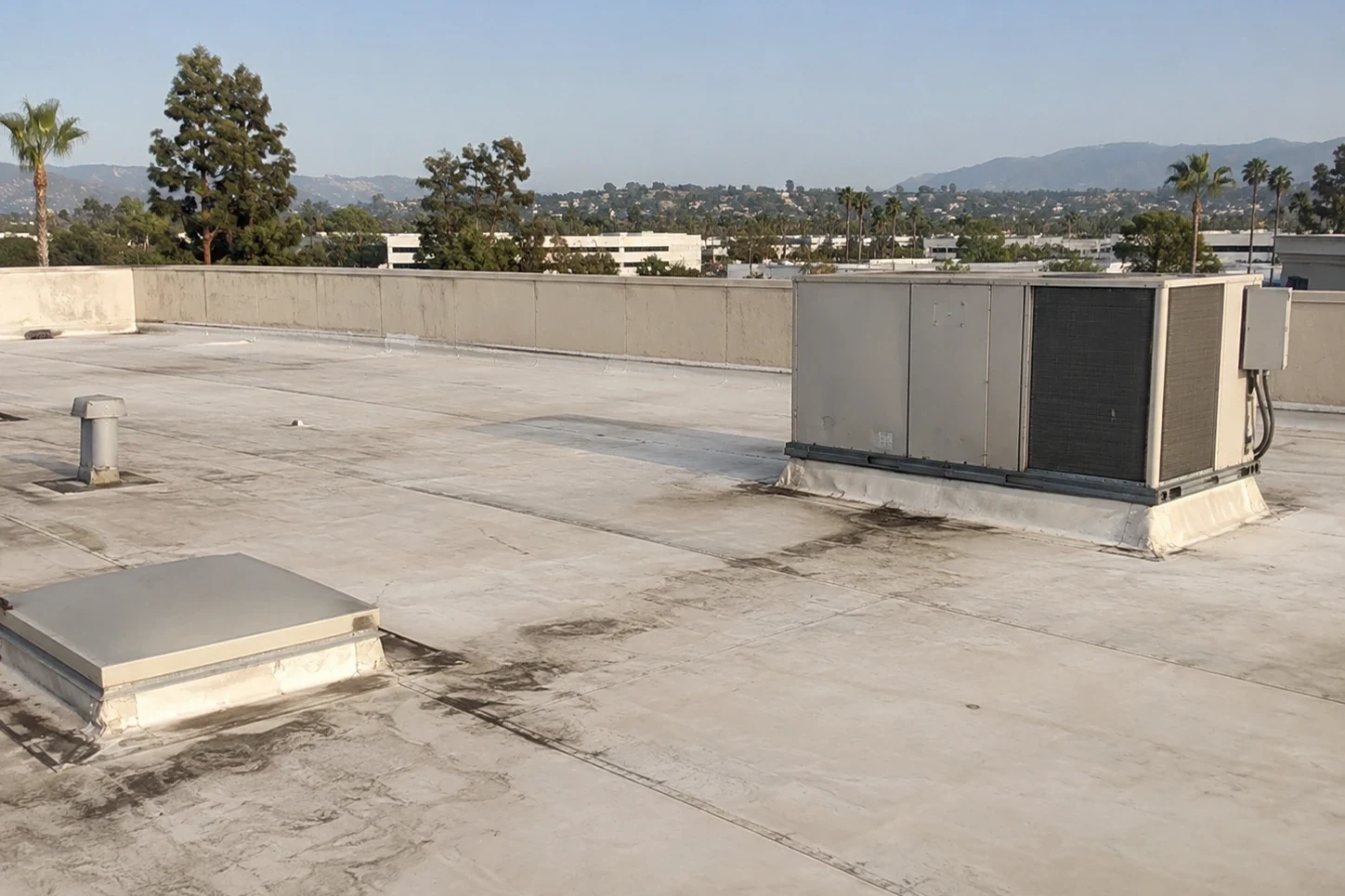
Hotel kitchens and laundry areas can place exhaust, make-up air, plumbing vents, and refrigeration lines on the same roof section. We inspect curb corners, membrane terminations, counterflashing, nearby seams, and the route water takes toward a drain. A ceiling mark below an exhaust curb does not identify the entry point by itself, so we compare interior observations with roof-side conditions and note any area that needs a second visit. If another trade must disconnect or protect equipment, the scope names that handoff before roofing begins. A curb and equipment-support inspection can document fasteners, movement, and flashing conditions without treating the unit as a roofing repair. That separation helps the manager set a safe access window and keeps the close-in boundary clear.
How can drainage observations guide a repair?
Standing water, blocked strainers, displaced debris, and low points can complicate a leak investigation, but each observation needs a location and a roof-section reference. We photograph drains, scuppers, seams, and transitions, then compare them with the interior report and available plans. A drain and scupper review can identify a maintenance issue, a detail needing repair, or a condition that warrants a broader assessment. We avoid calling a drain the cause until the membrane path and nearby penetrations have been checked. Downtown Fullerton's Central Business District has adopted design guidance for construction and rehabilitation, while the Chapman Corridor is a separate mapped focus area. Those planning boundaries help place a property discussion, but they do not establish the roof assembly or drainage condition of a particular hotel.
Can repair work be divided by wing?
When a roof covers guest rooms, meeting areas, and service spaces, a single open work zone may not fit the building schedule. We can map repairs by roof section, identify which area can be reached during each approved window, and close one boundary before moving to the next. A localized membrane issue may call for a documented commercial roof repair; widespread age, wet insulation, or repeated failures may justify comparing repair with roof replacement. The inspection report separates confirmed conditions from areas not reached. If odor, sound, or equipment shutdown affects an occupied space, the manager coordinates the relevant contact and timing. The sequence also notes the weather hold, material staging, and the person who approves a change if concealed conditions appear after an assembly is opened.
What should the handoff record include?
A useful closeout ties each photographed condition to its roof section, work completed, remaining observation, and next decision. We can provide a written condition report with photos and note the repair boundary, materials used, drainage items observed, and any area that still needs access. That record supports a hotel operator comparing a short repair with a larger capital project. It also gives maintenance staff a clear item to revisit after the next rain rather than a vague instruction to watch the roof. In Fullerton, the airport normal lists 0.08 inches for June and 0.02 inches for each of July and August. Use the current forecast, not the seasonal pattern, to choose the day's close-in point. The station figure does not predict a storm date. It does make a dated inspection and timely close-in useful when the forecast changes. Related condition reports and TPO system details can inform that review.
Commercial Roofing Questions
Can a roof repair be scheduled between guest check-in periods?
The access route, work noise, material delivery, and repair area decide whether a short window is workable. We inspect first, then mark the roof section and the route from staging to the work area. The manager can identify quieter periods and any rooms or entrances that need protection. If the repair needs more time than that window allows, the plan can divide the roof into closeable sections and name each handoff. A weather hold remains separate from the guest schedule, so the crew does not leave an exposed area open because a calendar block ended.
What if a ceiling stain returns after a patch?
A repeat mark calls for a fresh comparison of the interior location, roof section, and earlier repair record. We check the prior patch, adjacent seams, curbs, drains, and any route water could travel before it reaches the ceiling. If the room sits below more than one roof transition, the report should show which areas were inspected and which were not accessible. We can then recommend another localized repair or a broader test, with the limits of each finding stated plainly. That gives the manager a decision tied to evidence rather than a repeated patch in the nearest spot.
How are exhaust units handled during roofing work?
The roofing scope records the curb and flashing conditions, while equipment shutdown or disconnection belongs to the trade responsible for that unit. We coordinate the timing with the hotel contact and identify any protection needed before opening nearby membrane. Grease residue and cleaning products can affect surface preparation, so the crew notes what is present and confirms the approved cleaning method. The daily close-in identifies whether the curb remains protected and who receives the handoff.
Which roof records help compare repair and replacement?
A roof plan, prior repair invoices, leak locations, warranty documents, and photographs can make the comparison more specific. We inspect the current assembly and record accessible conditions, moisture findings, drainage, and details that may affect tie-ins. The report separates a confirmed repair need from a recommendation to investigate further. If several sections show different conditions, each receives its own finding instead of one conclusion for the whole property. That helps the asset manager compare scope, access, disruption, and timing on the same basis.
What changes if concealed damage appears after opening a section?
The crew pauses at the agreed boundary, protects the opening, and records what is visible before changing quantities. The property contact receives the condition and the available next step, such as extending a repair, testing adjacent insulation, or closing the section while a broader scope is priced. We identify any added access or trade coordination before work proceeds. A written change keeps the roof area, cost driver, and timing decision connected, which matters when guest rooms or service operations sit directly below the work zone.