
Coordinate retail and restaurant roof repairs across Fullerton around store hours, deliveries, kitchen equipment, drainage, and clear site-by-site records.
Roof leak, storm damage or an inspection coming up?
A hot Fullerton afternoon can narrow the work window just as a store prepares for deliveries and the dinner shift. We start with the address, roof access, operating hours, and equipment that must remain in service, then mark a section that can be inspected or repaired without crossing customer routes. Fullerton's weather normals show summer highs in the mid-80s, a cue to plan early access while confirming the actual forecast and roof conditions before staging. The Fullerton Transportation Center Specific Plan area includes retail, restaurant, office, industrial, public-service, and residential uses, while the Commonwealth Corridor is a separate city planning geography. Those places help orient a local route, but every store needs its own access and roof record. We document drains, curbs, seams, and edge details by property so a chain can compare the work without assuming every location has the same assembly.
How can a repair fit between open hours and deliveries?
The store manager identifies receiving windows, trash pickup, customer entrances, loading lanes, kitchen operation, and the person who can release roof access. We confirm the roof hatch and equipment route, then select a staging point that avoids public circulation and keeps emergency access open. If the repair needs a lift, material delivery, or a temporary exclusion zone, those steps go on the site plan before a work date is set. The scope also names what can be completed before the crew closes the roof that day. A short inspection may fit a different window than adhesive work or a larger replacement section. The occupied-store work sequence can divide a project by roof area and record who receives the daily handoff, which helps a district manager compare interruptions location by location.
Which kitchen and refrigeration details need a roofing review?
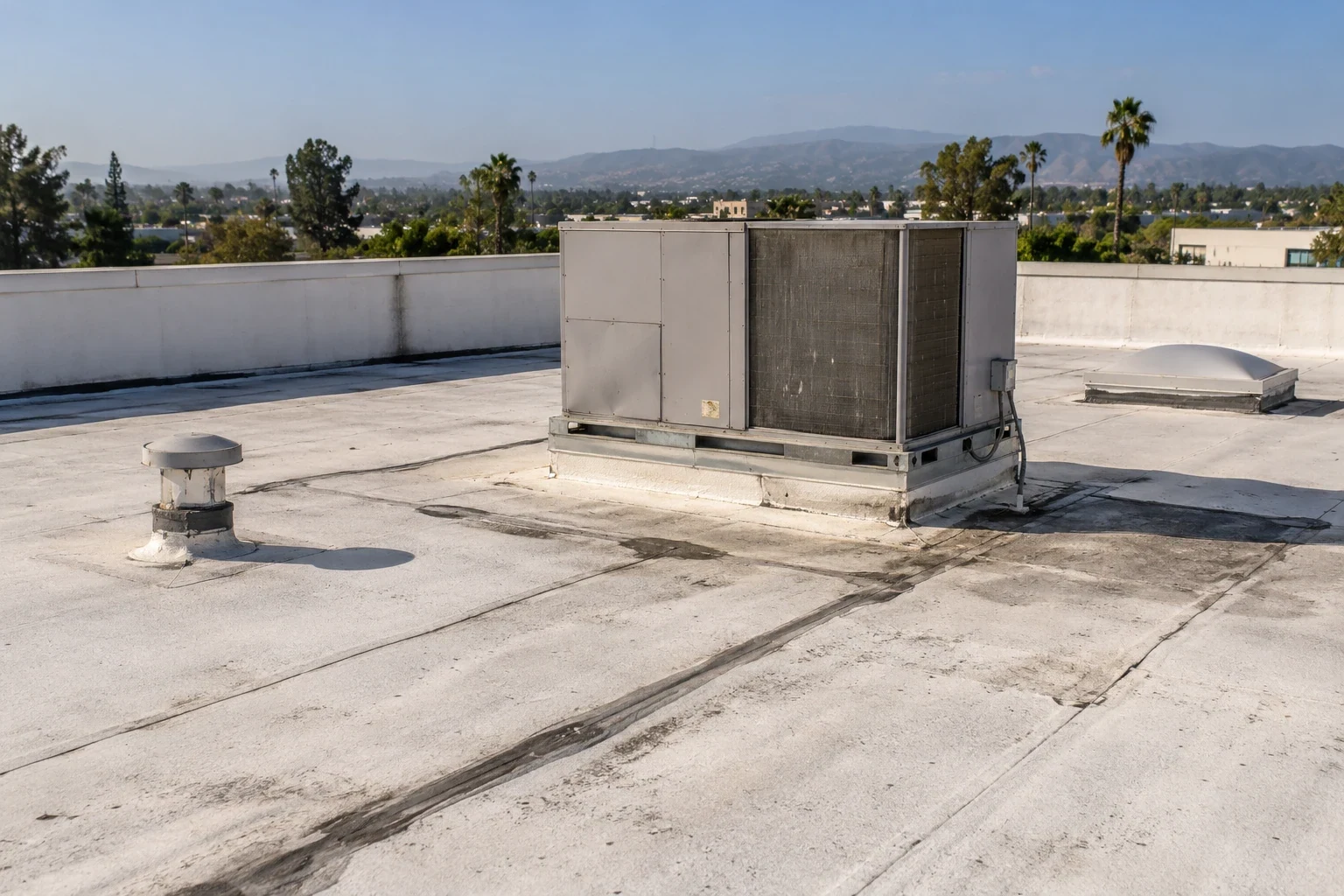
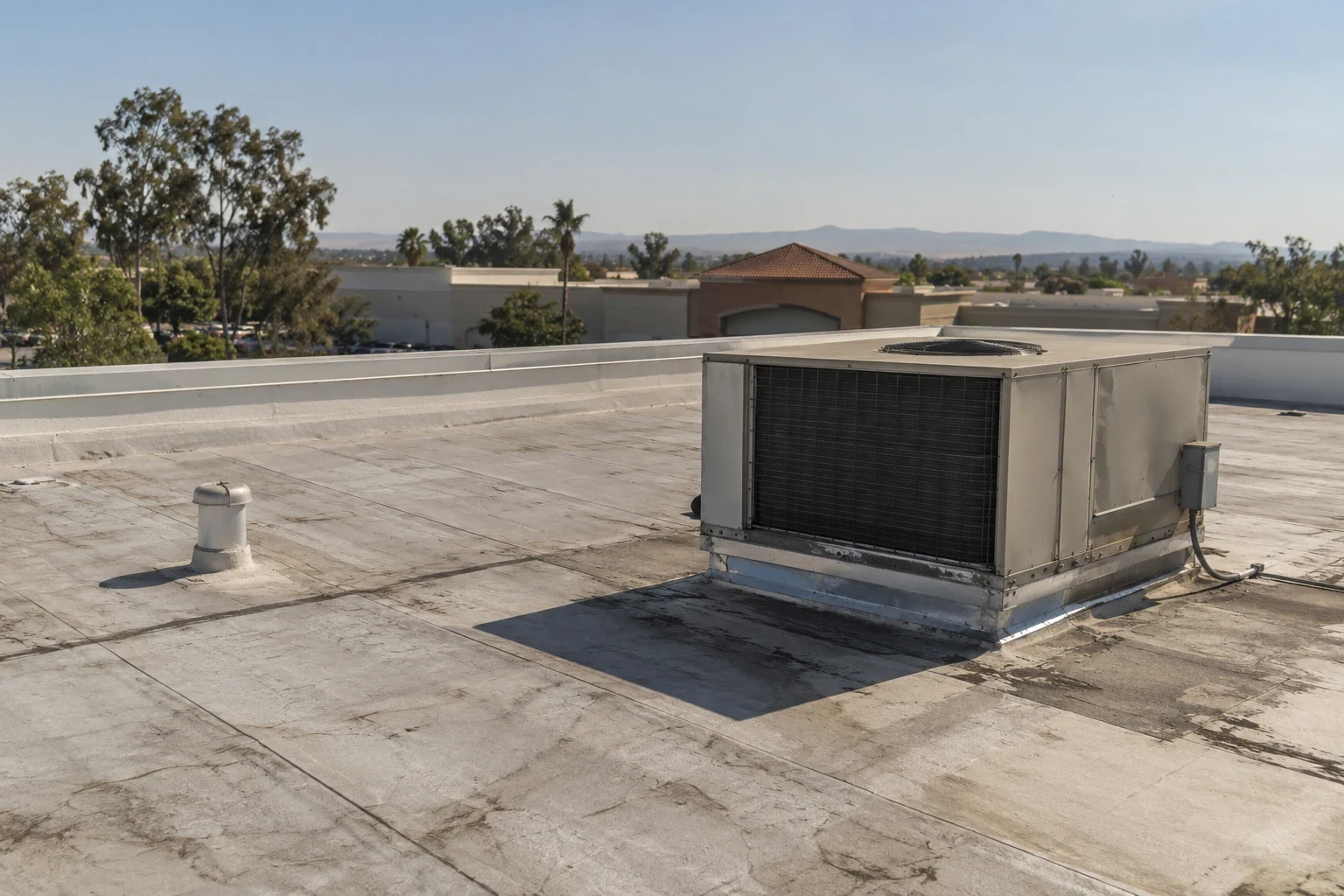
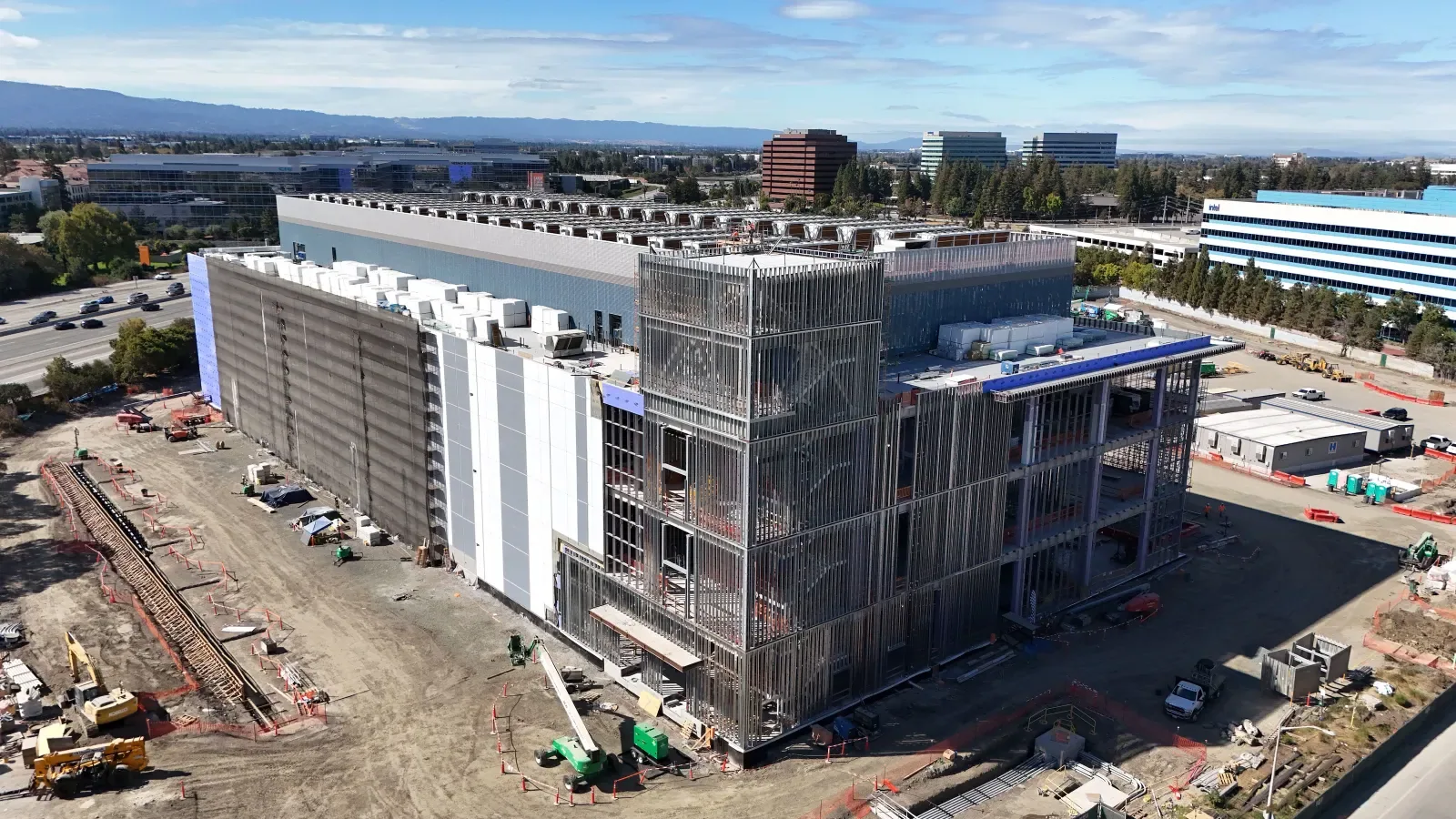
Restaurant roofs can carry exhaust hoods, make-up air, refrigeration lines, electrical conduit, and equipment stands within a small work area. We label each curb and penetration, inspect accessible flashing and nearby seams, and compare those details with the leak history. If a unit needs shutdown or movement, the kitchen or refrigeration trade handles that work and confirms when the tie-in can be closed. A roof repair should not block a grease-service route or place material where a store cannot reach a required unit. The drain and scupper review can record where roof water travels, while a shopping-center roof plan can address shared loading and access areas. A store's equipment list helps distinguish roofing work from the separate mechanical adjustment. Before work, the manager can note cooking periods when exhaust cannot be interrupted, refrigeration alarms that need monitoring, and the contact who can verify equipment status after a trade handoff. We also confirm whether a screen or catwalk blocks the membrane detail so the repair plan does not assume a route that is unavailable. The roof record identifies each interface and the area left out of the scope if equipment cannot be moved.
What should a chain do with a recurring ceiling leak?
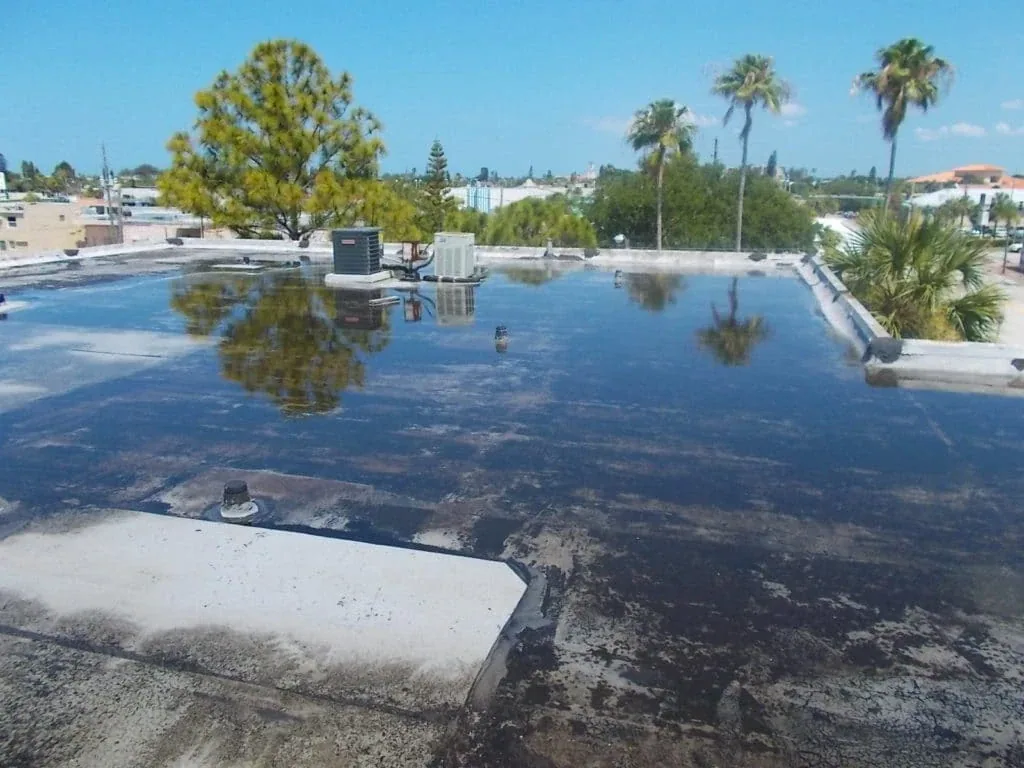
The incident log should name the room or sales area, date, weather, and any nearby plumbing or equipment event. We compare that information with drains, wall transitions, seams, penetrations, and curb corners above. Water can move along the deck before appearing at the ceiling, so we do not price from the wet spot alone. Photos identify the tested roof area, the condition observed, and any obstruction that limited the inspection. If moisture testing is needed, the owner approves the method, location, and closure before an opening. The repair scope should state the confirmed boundary and any adjacent area not included. A property-level record keeps each store's issue separate from another location's history, while giving regional operations a consistent way to review status.
How can a brand compare a patch with a larger project?
A single failed penetration may suit a localized repair when surrounding material is stable and a compatible tie-in reaches sound membrane. Repeated failures, wet insulation, or deteriorated perimeter details may call for testing or a wider section review. We map the evidence and present the options with their own access, duration, protection, and trade assumptions. A recover can change curb exposure, drain height, and edge clearances; replacement can require additional material staging and work below. The regional facilities team can compare a replacement proposal with a maintenance program using the same roof plan. A hospitality roof schedule may offer useful coordination questions for sites where dining, guest, and delivery circulation overlap, but each brand location receives its own scope.
Which Fullerton planning areas help orient a service route?
Commonwealth Corridor has neighborhood-serving retail and commercial uses in distinct nodes; identify the individual property and roof zone before comparing work. The Transportation Center Specific Plan area includes retail and restaurant uses along with office, industrial, public-service, and residential uses. Those facts help the facilities team understand the local mix when grouping a visit, but they do not identify a specific store, tenant, or roof. A property on the Orangethorpe Avenue corridor may have different delivery access from a storefront in Downtown Fullerton, so the site contact confirms gate hours, parking restrictions, and roof entry. The Commonwealth Corridor is a broad Fullerton planning geography, not a single property. We use the address and site plan to select the staging point and keep the work boundary clear for the manager on duty.

What should the regional file capture after each visit?
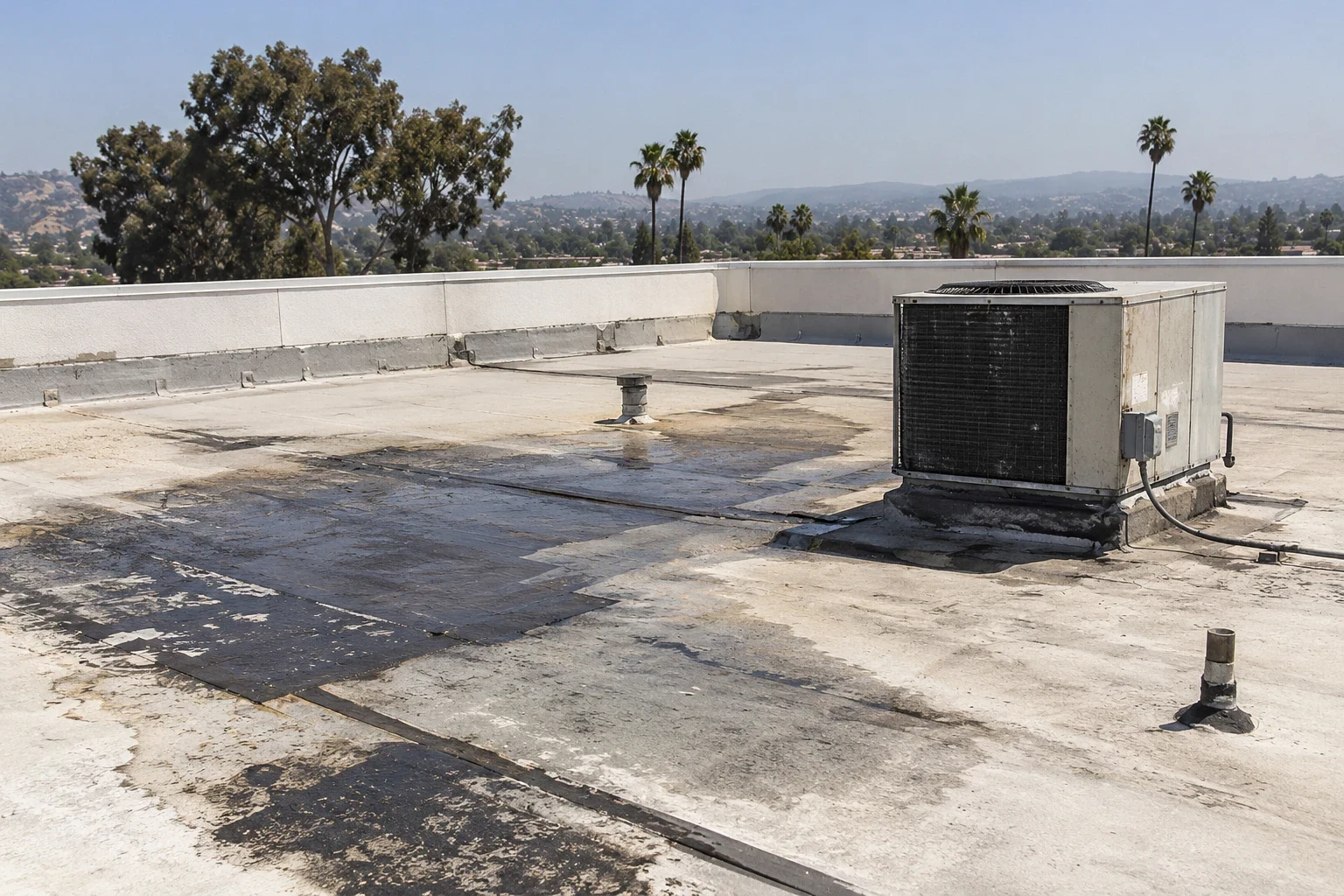
Use one record format for the chain, while keeping every building's plan, assembly notes, repair photos, and open items separate. The closeout can list the section reached, repair limits, material installed, test result, area not inspected, equipment contact, and person who accepted the daily closure. If a drain contractor or refrigeration provider still has an action, the record names the next step and who will confirm completion. The regional manager can then compare approved work with what was completed without treating another store's roof as a proxy. Fullerton's summer normal is useful for seasonal planning, but the forecast and installation requirements still decide whether work proceeds on a given day. A recurring leak should retain the prior photo, repair boundary, and date so the next inspection can compare the same curb or seam. If a store changes its receiving schedule, update the access note before the next visit rather than carry an old work window forward. That gives the operations team a current route, an accountable contact, and a clear point for reopening the roof record. Share the property list, store hours, delivery windows, leak logs, roof plans, and equipment contacts to set a sequence that gives operations a clear handoff at each address.
Commercial Roofing Questions
Can roof repairs take place before a store opens?
That can work when access, delivery, equipment, and close-in timing are confirmed. We identify the section and the person who can release the roof before scheduling.
Who moves a kitchen exhaust fan for flashing work?
The store assigns the mechanical trade responsible for the fan. We coordinate the roof tie-in after that contact confirms movement and operating status.
Should a regional team use one roof scope for every store?
Use consistent reporting fields, but keep findings and quantities specific to each address. Assemblies, access routes, drainage, and repair histories can differ.
What if a leak appears in a new area after a repair?
We compare the new date and location with the prior map and closeout. A separate section may need its own inspection and repair boundary.
Which records help coordinate multiple locations?
Keep the address list, roof plans, leak log, store hours, equipment contacts, repair photos, approvals, and open trade items together by property.