Plan auto dealership roof repair in Fullerton around showroom hours, service bays, vehicle movement, equipment protection, and documented leak response.
Roof leak, storm damage or an inspection coming up?
An auto dealership brings several operating zones under one roof plan: customer showroom, offices, parts storage, service bays, wash areas, and covered vehicle display. Roof work can affect sales hours, deliveries, lifts, ventilation, and vehicles that cannot simply be moved without notice. Begin by listing each roof section and the business contact responsible for access. Record water reports, maintenance history, and previous repairs before choosing a repair or replacement. A roof survey should connect observed conditions with the actual assembly and clearly identify areas that were not accessed. Generic assumptions about a dealership's roof type or operating hours do not replace a visit and discussion with the property team.
Map business zones and work limits
Ask the general manager or facilities contact to identify showroom entrances, service-bay doors, parts receiving, vehicle lanes, wash equipment, and any covered inventory. Place each zone on the roof plan and note when deliveries or customer traffic peak. Confirm whether a service lane needs to stay open and how technicians will protect lifts, diagnostic equipment, and stored parts from overhead debris or interior water. A large-format retail roof review may share delivery planning concerns, while an auto dealership has distinctive vehicle movement and service operations. The contractor should show the affected areas, temporary closures, and authorized contact before staging equipment. The City identifies the Commonwealth Corridor and Southeast Industrial Focus Area as planning geographies; neither identifies conditions at a dealership parcel.
For dealership roofs with several additions, show which dimensions came from drawings and which were measured in the field. Keep canopy areas separate from enclosed buildings because framing, drainage, and exposure can differ. Identify penetrations for signs or rooftop equipment and note whether records were available. If the roof plan is incomplete, state the measurement limits before setting final quantities. This prevents a service bay, showroom, and vehicle canopy from being treated as the same assembly and gives the facilities team a useful list for future inspections and repairs.
Trace leaks and review roof history
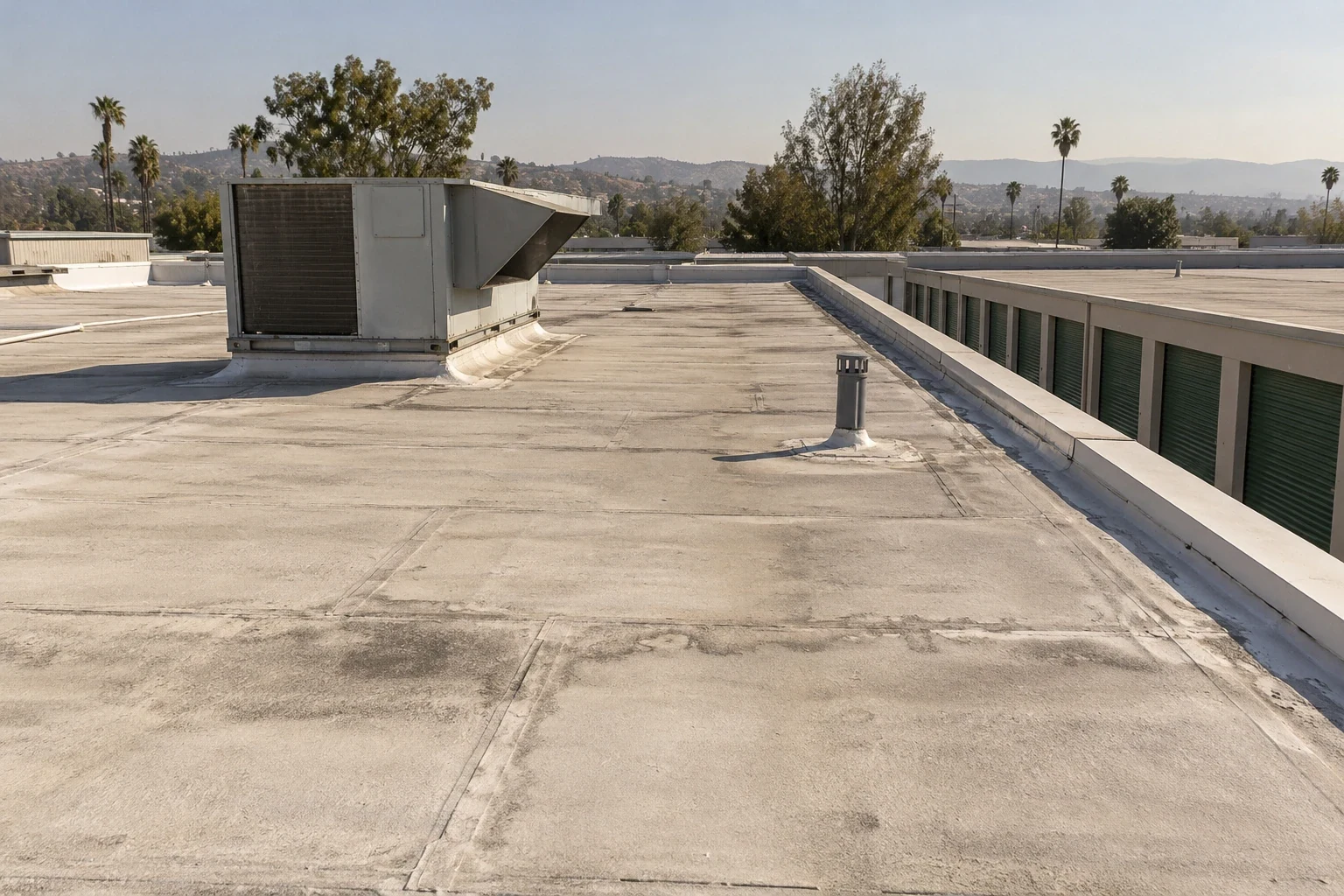
Collect work orders, invoices, warranties, and photographs for each building or addition. A newer showroom may connect to an older service wing, and a repair on one section may not describe the entire assembly. Log each reported leak by area, date, and observable impact; keep customer or employee details out of general records. Inspect the roof around drains, curbs, penetrations, equipment supports, edges, and prior patches. If a wet ceiling appears below a service bay, investigate the roof path and nearby mechanical lines before attributing the cause. A commercial roof condition inspection can separate confirmed defects from open questions. When additions connect a showroom to a broad storage area, a warehouse roof plan can help keep distinct assemblies and repair histories separate.
The maintenance team can help identify the timing and purpose of past repairs. Ask whether each patch was temporary, whether a warranty review followed, and whether another trade worked nearby. Compare those records with seams, flashings, drains, and equipment supports. If a localized repair is proposed, define the boundary and the evidence supporting it. The report should state when records are missing rather than assign a cause from an invoice description. That distinction helps owners compare the proposed response with the actual history and decide whether more investigation is needed before approving wider work.
Coordinate overhead equipment and service activity
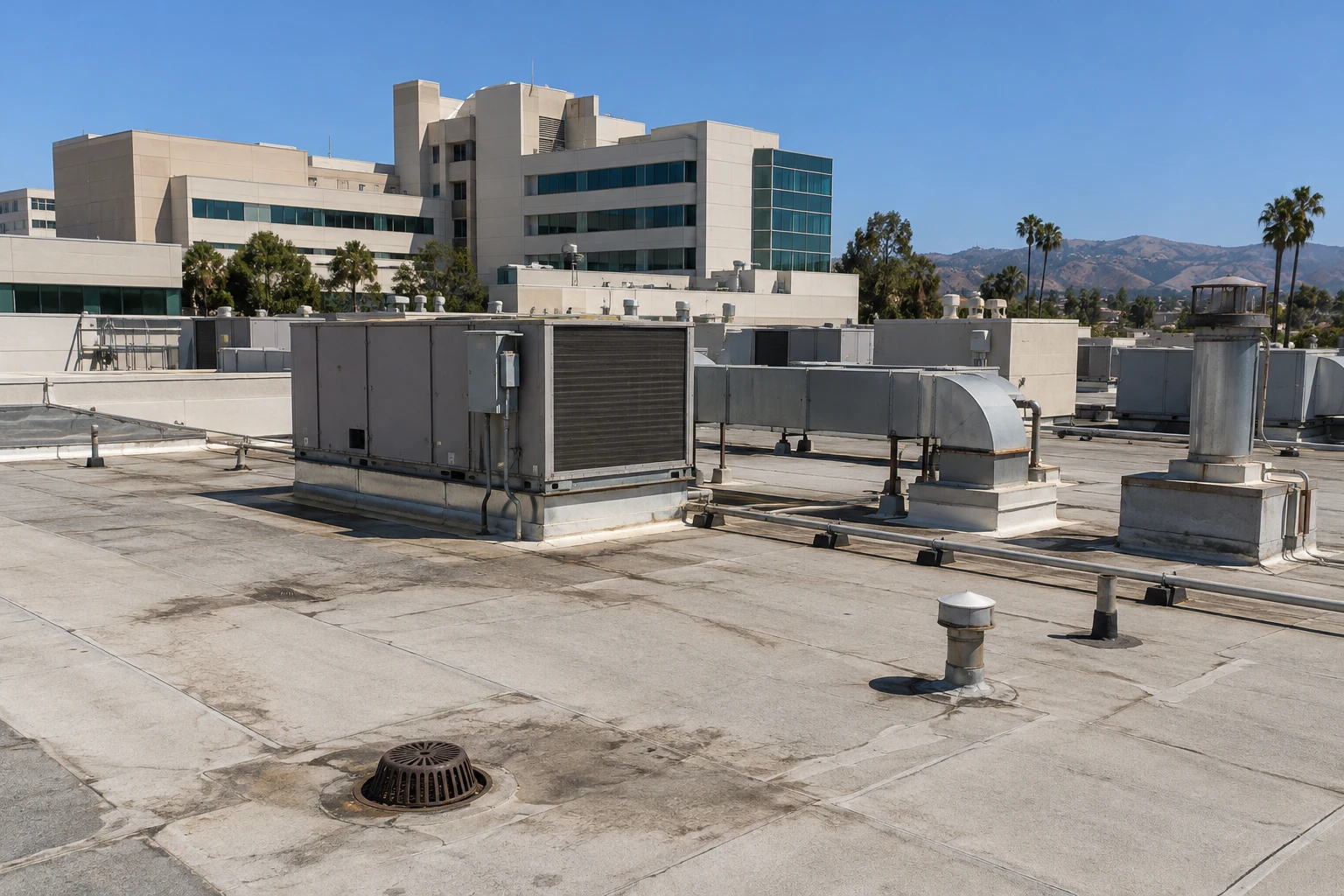
Dealership roofs may carry HVAC equipment, exhaust fans, ductwork, photovoltaic equipment, or service-bay ventilation. Make an equipment inventory and ask which systems require a facilities technician before isolation, relocation, or restart. Avoid instructing a roofing crew to alter dealership machinery or safety controls. Mark intakes and exhaust points that need protection from dust, odor, or debris during the selected work. The project plan should identify who approves an interruption and how staff know when the area can resume operation. If roof work intersects a curb or equipment-support detail, show the transition and any required trade coordination before pricing a broad surface allowance.
A project calendar can use different work windows for the showroom, service bays, and parts receiving. Tell the general manager what activity will happen, which route is affected, when vehicles need to move, and who can release the space. Give staff a daily contact for new leak or equipment reports. If an unforeseen condition changes the work area, pause at the agreed hold point and request owner approval. Short notices help sales, service, and parts teams understand changes without asking them to interpret technical scope or share customer information with the crew.
Compare repair, coating, and replacement options
Use the condition map to compare localized repair, restoration, and replacement by roof area. Each option should state what is included, what condition remains, and how unexpected wet materials or failed attachment will be handled. A coating approach requires compatible materials and preparation; it should not conceal an unresolved leak or an unsuitable substrate. If the assembly is metal, review a standing-seam metal system based on actual panel and attachment details. Separate showroom and service-bay schedule needs when the sequence differs. Present quantities, exclusions, owner tasks, and alternates so ownership can weigh operating disruption with capital work rather than comparing only a total price.
When comparing proposals, make mobilization, temporary protection, repairs, equipment coordination, and cleanup visible scope elements. A lower surface price may leave costs for the dealership to arrange separately. State assumptions for access, hours, vehicle movement, and dry-in so the owner can compare equivalent work. If roof condition differs between buildings, present separate quantities instead of averaging the issue. Ownership can then decide whether to address one area, stage multiple structures, or obtain additional testing before selecting the capital approach.
Protect vehicles, customers, and deliveries
Agree on staging, lift locations, vehicle relocation, customer entry, parts receiving, and fire-lane access before the first workday. Identify who moves vehicles from areas below roof work and when notices must go out to staff or customers. Use barriers and overhead protection only as specified for the work and site. Keep dust, material storage, and equipment outside approved vehicle paths. A dealership may operate extended service hours, so the general manager should set the work windows and communication channel. Document what happens if a hidden condition changes a closure area. For service bays, coordinate any exhaust or ventilation interruption with the qualified staff who control those systems.

Close out by roof area and assign follow-up
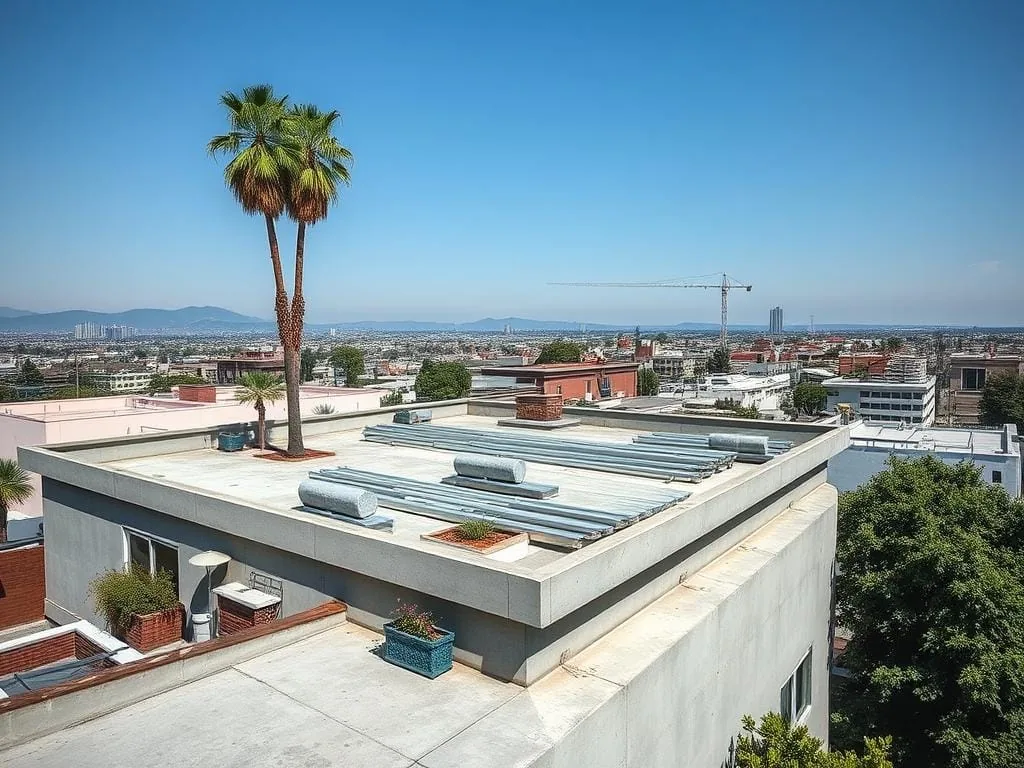
Provide an updated roof plan with repaired zones, replacement areas, exclusions, and deferred work. Include product records, photographs, approved changes, inspection notes, warranty terms, and maintenance instructions. The service manager and facilities contact should know how to report a new leak and who can authorize access to the roof. Record whether the repair or new material affects equipment service routes, future signage, or a planned canopy project. If the dealership has several buildings, use consistent labels but keep each assembly's history distinct. Schedule future review around actual product instructions and observed drainage conditions, not a generic promise about service life. An organized file makes later ownership or facilities handoffs easier. Related maintenance guidance is in roof condition report. Properties in the Orangethorpe Avenue corridor still need building-specific roof plans and access notes.
Commercial Roofing Questions
Can sales or service operations continue during a roof project?
Often, with a site-specific plan for work zones, customer entry, vehicle movement, noise, deliveries, and authorized equipment shutdowns.
Does a leak over a service bay prove the roof has failed?
No. Investigate the roof assembly and other possible water paths, then document what inspection confirms.
Should all dealership roofs share one proposal?
Only if the roof records and assemblies support it. List buildings and zones separately when conditions differ.
Who coordinates moving vehicles?
The dealership contact should assign responsibility and timing before the contractor stages work above vehicle areas.
What belongs in the closeout file?
Keep the roof plan, repair records, product data, approved changes, warranty terms, inspection notes, and maintenance responsibilities.