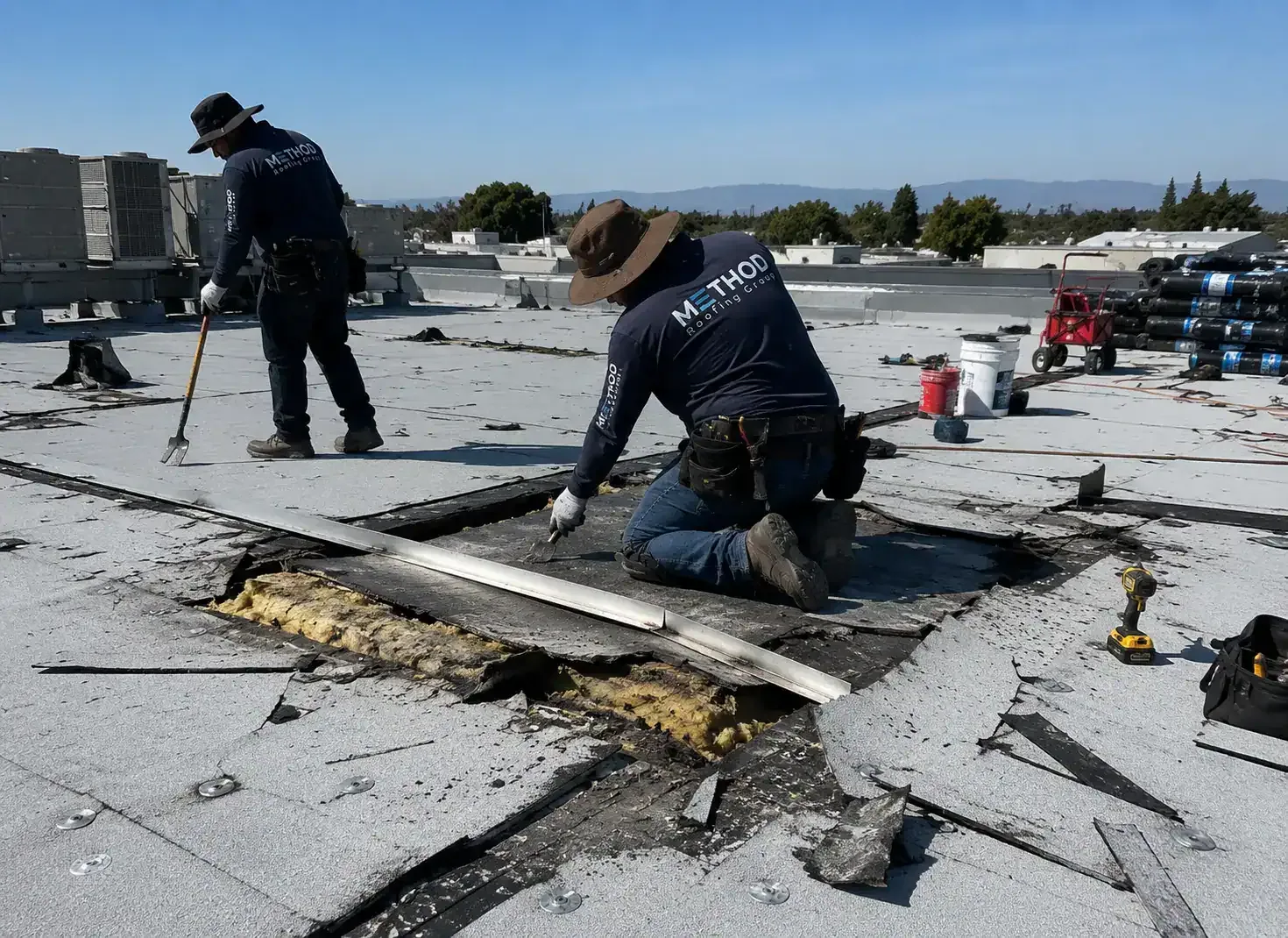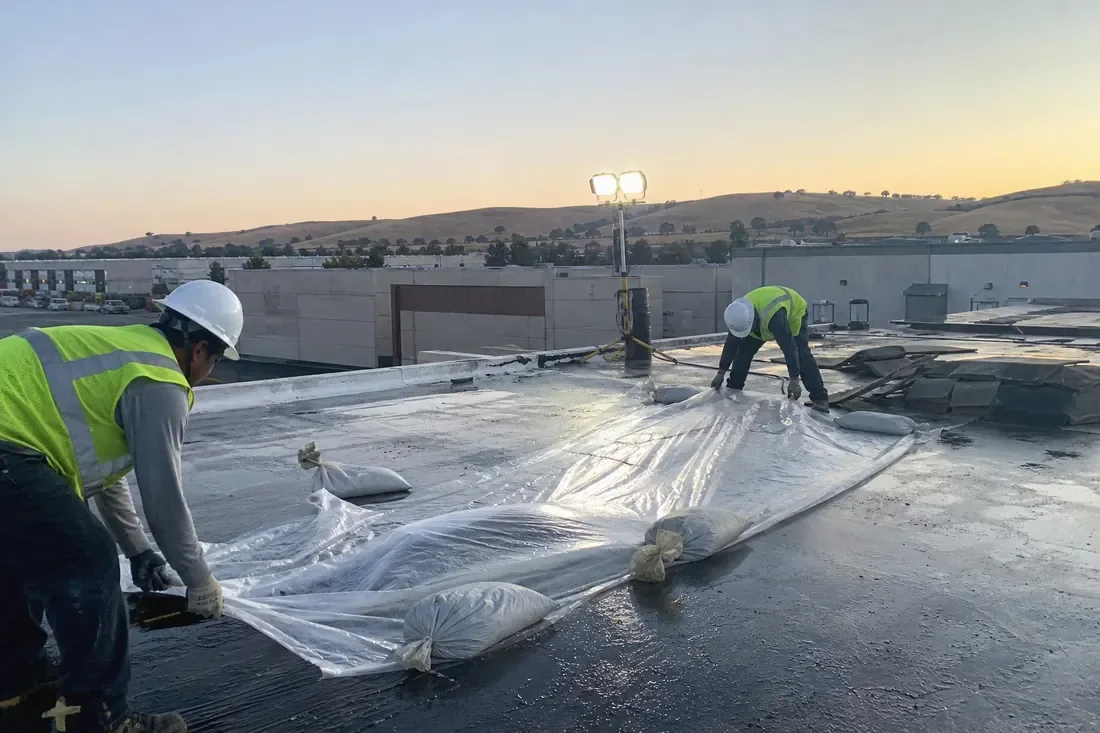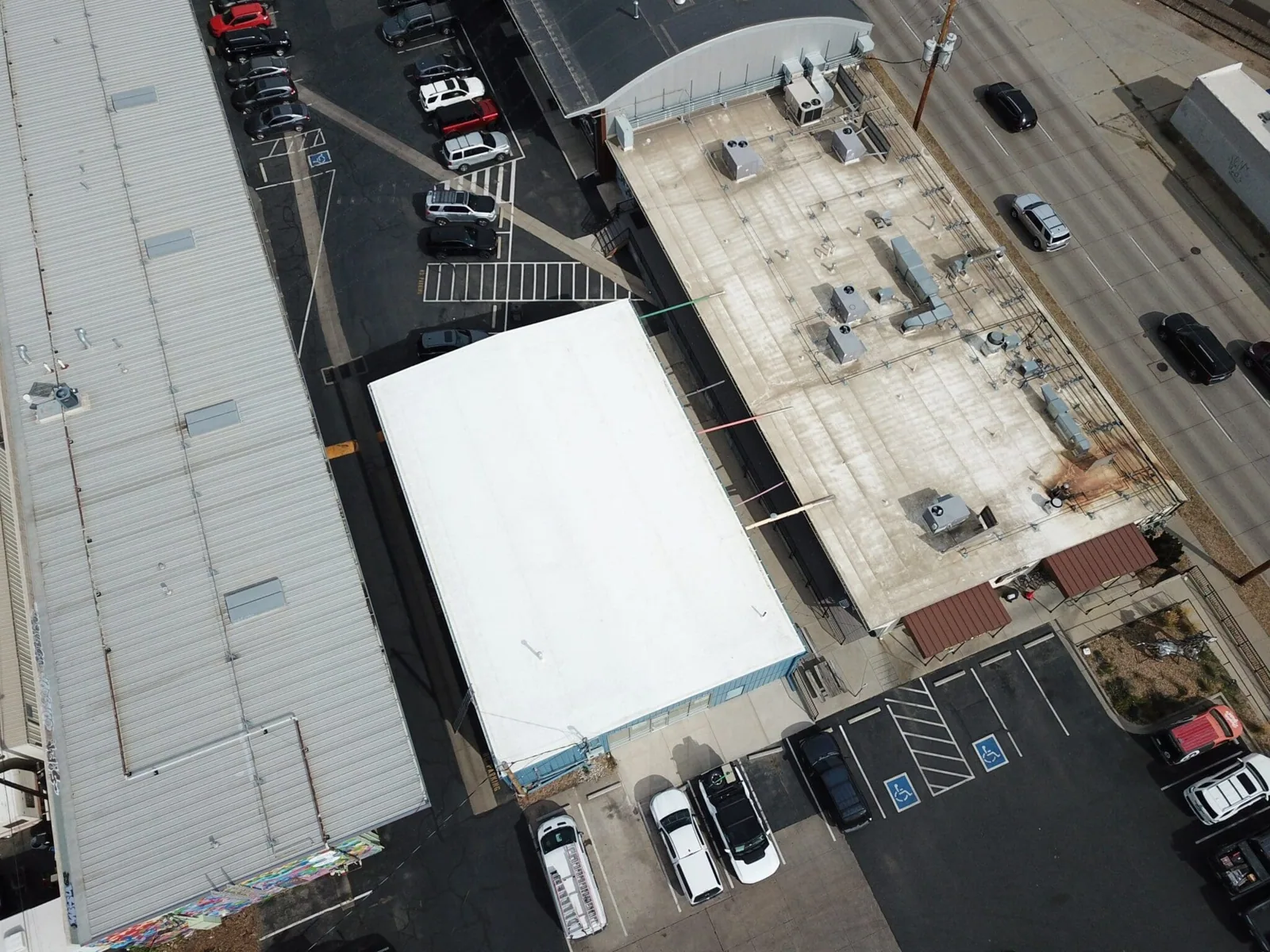

Document commercial roof damage and restoration work in Fullerton with dated photos, mapped conditions, emergency protection, and separate repair scopes.
Roof leak, storm damage or an inspection coming up?
A restricted roof access window can delay the first damage survey while tenants and restoration crews work below. We confirm the property contact, safe route, reported loss date, and area that can be reached, then map visible roof conditions by section. NOAA's station record places a typical August daily high near 87 degrees F; use it only as a seasonal cue, never as proof of heat damage or a roof condition. Fullerton's planning map gives the Southeast Industrial Focus Area and Downtown separate boundaries; neither boundary substitutes for matching an inspection to the reported address. Those locations can help orient a visit, while the address, roof assembly, and event record determine the actual assessment. We photograph observed conditions, note limitations, and distinguish emergency protection from permanent repair so the owner and restoration team can review the next step clearly.
What should the first roof damage record capture?
Start with the reported date, affected interior area, access limits, and any immediate protection already installed. We inspect accessible membrane, seams, flashings, curbs, edges, drains, and penetrations, then connect each photograph to a marked roof plan. The report records visible damage and separates it from a suspected cause that still needs testing. A ceiling stain alone does not show where water entered, and a temporary covering does not establish the condition below it. If a roof section is unsafe, obstructed, or not released, we identify that limit and the person who can authorize another visit. A condition report keeps observations, photos, and test locations together. The restoration lead can then compare the roof-side record with interior drying notes without treating them as the same scope. For each observed opening, we note whether the detail is a seam, puncture, flashing transition, or perimeter condition, and whether the surrounding membrane appears intact at the inspected edge. We record the tool or test used, the exact roof section, and any obstruction that limits the photo. If the report includes more than one affected area, the plan assigns a separate reference to each so a reviewer can trace the quantity back to the same evidence.

How should emergency protection be separated from repair?
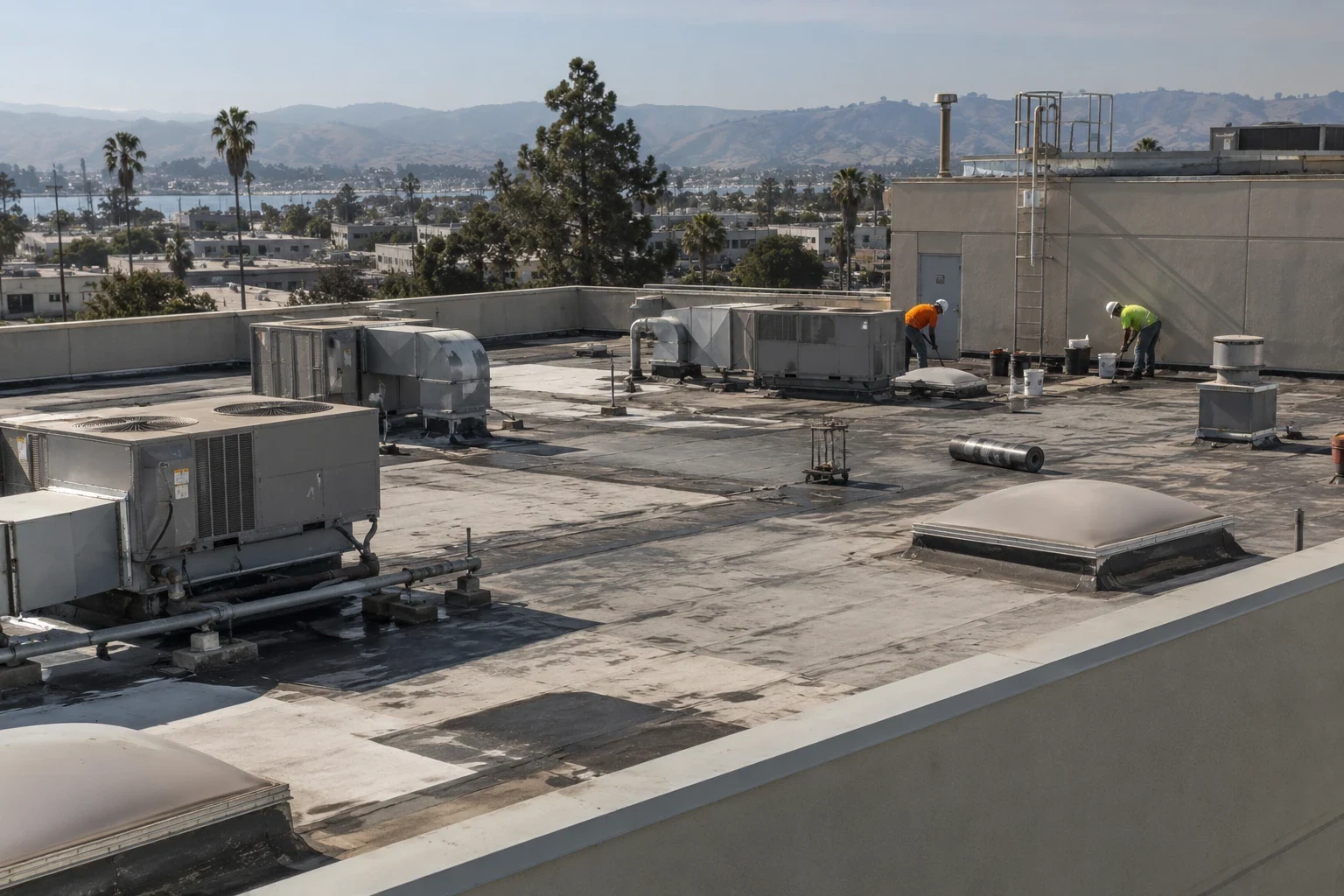
Immediate work may involve temporary covering, water diversion, or a limited tie-in to protect an occupied area. We record the material used, location, installation time, access route, and what still needs inspection after conditions stabilize. That work is not automatically the permanent repair. A temporary measure may conceal the original detail, so the next survey notes what must be lifted or reopened with owner approval. The emergency response can set a safe close-in while a permanent scope is prepared. For a reported seam or penetration failure, a separate repair proposal identifies the confirmed boundary and any adjacent area not included. Restoration staff can use those separate records to coordinate drying and interior access without implying that the roof work determined a policy decision.
Which observations support a permanent repair scope?
We look for a defined roof defect, adjacent material condition, and a repair boundary that can tie into sound assembly. At a puncture, the membrane type and condition around the opening matter. At a flashing failure, the wall or curb transition and termination must be checked. A drain issue may involve a blocked conductor, failed membrane tie-in, or both. We photograph each item and note any test needed to confirm concealed moisture. If a scan or test opening is proposed, the owner approves its location and closure first. The roof documentation process can organize the assessment record, while a moisture survey may help select locations for further evaluation when conditions suit that method. Neither observation nor test alone decides claim coverage or repair responsibility.
How can restoration trades share the roof record?
The property manager, adjuster, restoration contractor, roofer, and mechanical trade may each keep a different record. We identify a roof section, date, photo number, and open handoff so those notes can be compared without merging responsibilities. If a drying team needs ceiling access or a mechanical provider must disconnect equipment, the scope names the person who confirms that step and when the roofer can return. The schedule lists the staging point, route, work window, daily close-in, and any weather hold. A general-contractor coordination plan may be useful when a larger repair involves multiple trades. For managed properties, a property-level roof file can keep owner approvals and leak history with the address. For a loss site in the Southeast Industrial Focus Area, we tie each inspected roof section to its address, photo record, and claim file before setting a repair boundary.
When does a repair need a wider assembly review?
A localized detail can often be addressed without replacing a full roof, but recurring failures or moisture beyond the visible area can change that comparison. We inspect the nearest seams, drains, curbs, and transitions and note what remains concealed. If testing shows wet insulation or the deck needs review, the owner receives the finding before the repair quantity expands. A recover changes heights and interfaces at drains, edges, and equipment. Replacement can require broader access and interior protection. We compare those choices with the same plan and list cost drivers as scope, staging, materials, and trade work rather than present an unsupported estimate from the damage photograph alone. The replacement scope can be kept separate from a temporary response. A warehouse roof review may help where a broad interior area and active inventory affect protection and access.

What should the final restoration file retain?
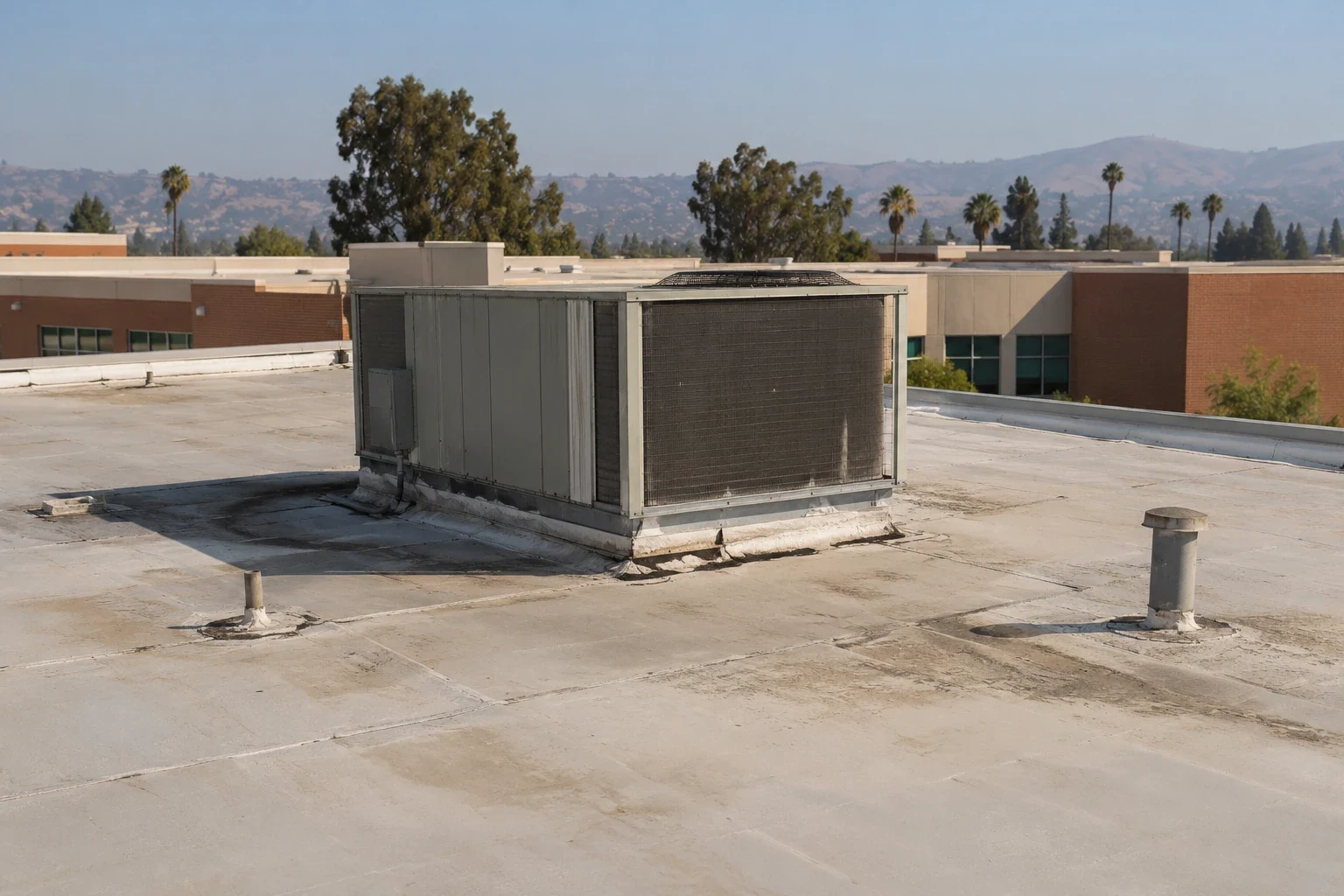
Keep the initial condition record, dated photographs, temporary protection note, approved scope, test results, repair boundaries, material details, and closeout images together. We identify areas not reached and any follow-up observation that remains open. If interior drying or equipment work continues, the handoff names the contact and roof access needed for the next visit. Fullerton's dry summer normals can help with seasonal planning, but current conditions govern any exposed installation. Downtown Fullerton's rehabilitation guidance may be relevant to visible exterior work in that district; the owner confirms whether it applies to the property. We keep that project question separate from the observed roof condition. The file should also retain who approved a test opening, how it was closed, and which photos show the completed tie-in. If a trade returns after the roof repair, the property manager can compare its date and access area with the roofing handoff. That timeline helps separate a new event from work already documented without deciding an insurance question. Share the address, loss timeline, roof plans, prior maintenance, temporary measures, and access rules so we can map the first survey and give the restoration team a record tied to actual roof sections.
Commercial Roofing Questions
Does a roof inspection decide whether an insurance claim is covered?
No. We document roof conditions and repair scope. The insurer and policy terms govern coverage decisions, which are outside the roofing assessment.
Should temporary roof protection stay in place during the survey?
We assess access and safety first. If protection must be moved to inspect a detail, the owner approves the method and we document what was exposed.
Can a ceiling stain establish the roof damage boundary?
Not by itself. We compare interior reports with roof details and note where testing or another trade's information is needed.
What should an adjuster receive from a roofer?
A marked plan, dated photos, observed conditions, repair limits, and test results provide a roof-specific record. We identify assumptions and areas not reached.
Can emergency dry-in be included with permanent repairs?
The records should separate temporary protection from permanent work. We list each location, material, date, and follow-up needed before final repair.