
Plan commercial roof inspection, repair, maintenance, or replacement in Stanton with a documented property-specific scope, access plan, and closeout record.
Roof leak, storm damage or an inspection coming up?
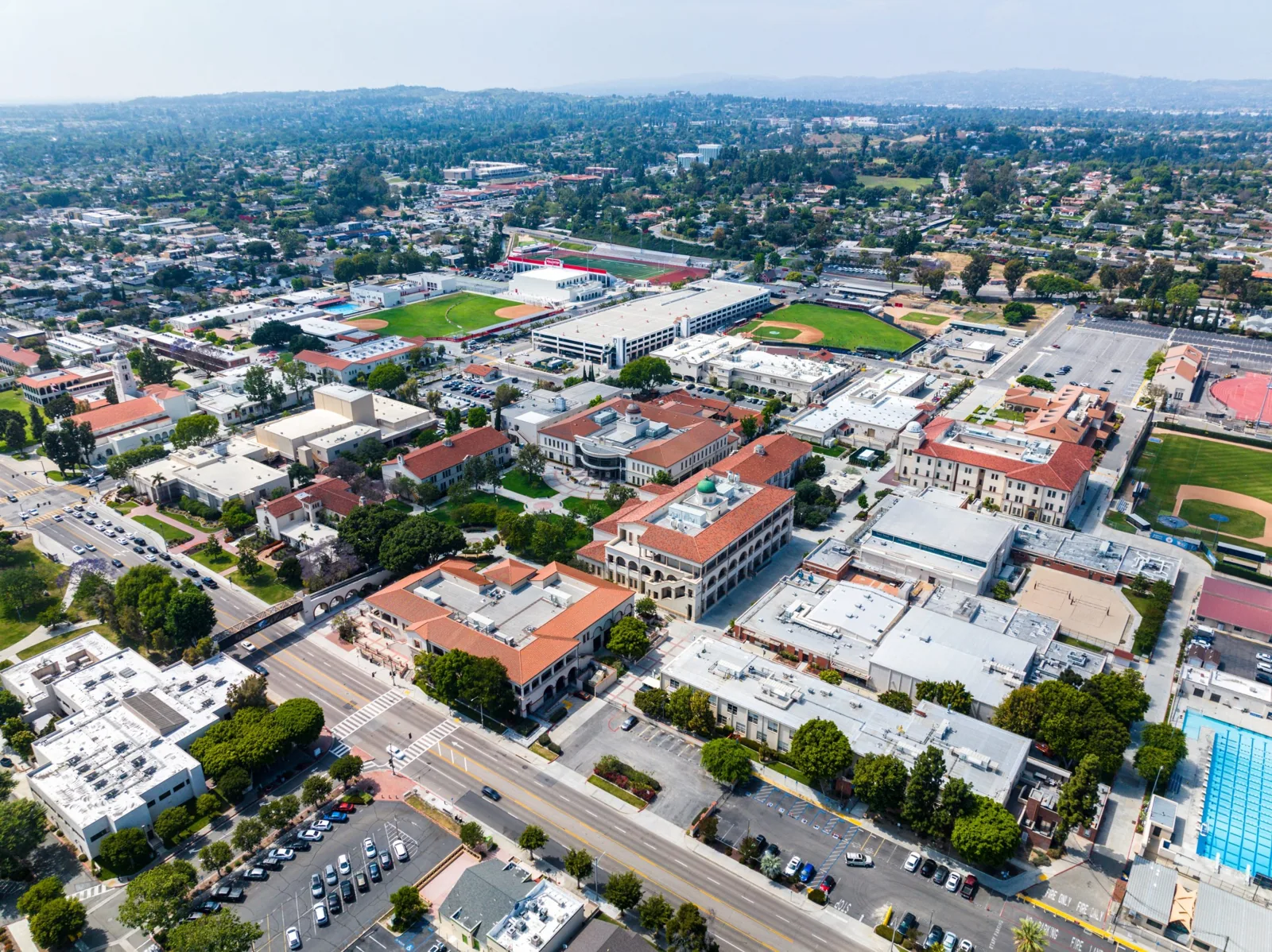
A short weather window or a restricted delivery path can change the order of work at a Stanton property. NOAA’s 1991-2020 Fullerton climate normal gives August mean daily outdoor highs of 86.7°F. That figure describes air, not roof-surface conditions in Stanton; verify the actual forecast and close-in plan before opening a section. The city describes a compact 3.1-square-mile territory served by 44 miles of streets and 19 signalized intersections. Those municipal figures do not predict travel time or access at a specific address, but they reinforce why the manager should verify the approved approach, loading point, and site contact. Start with the roof map and recent repair record. A measured repair inspection should identify the affected zone and define what evidence is still needed.
What does the local street network mean for planning?
Stanton’s published city information describes 44 miles of streets and 19 signalized intersections within 3.1 square miles. A property manager should use the actual building address and current site directions when coordinating a crew, not infer arrival time or truck access from citywide figures. Confirm gate controls, height limits, delivery restrictions, and any shared loading areas with the property contact.
Plan the material route and staging point with the owner before a work date is confirmed. Check that fire access, tenant entrances, and service lanes remain available as required by the site. For a property near neighboring cities, separate the job address and work log from a Cypress property record. Geographic proximity does not establish common ownership, building conditions, or a shared schedule.
Stanton requires a City business license for each business location, and its Planning Division reviews proposed land-use decisions against the General Plan and adopted land-use regulations. Those processes answer municipal questions; they do not decide a roof assembly, warranty, or repair method. Keep permits and project approvals separate from technical observations. When a roof scope includes a change to equipment or site use, verify whether a separate review is needed for that address.
If a proposed roof scope affects equipment placement or a building change, ask the owner and appropriate professionals which permits or reviews may apply. Verify current requirements directly for the address before mobilization. The roofing estimate should still define the observed condition, materials, quantities, and exclusions. Do not treat a business license as evidence of construction approval or a completed inspection.

What should the first roof visit establish?
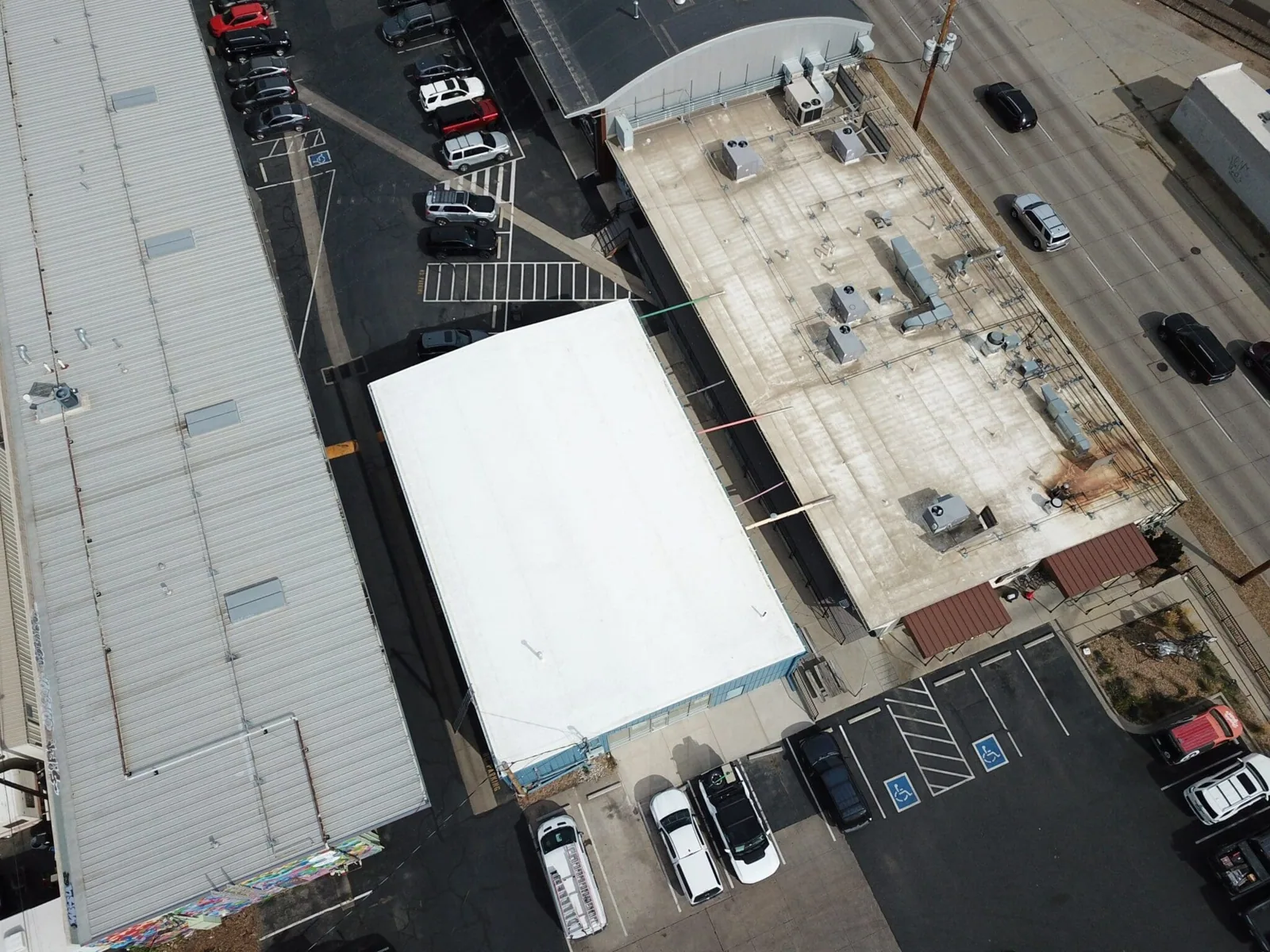
The first visit should identify the assembly if it can be verified, roof access, drainage, edges, penetrations, equipment, and visible defects. Compare these observations with the building plan and repair history. Record areas that were blocked by equipment or unsafe to reach. A visual survey can describe visible conditions but should not imply that concealed moisture or deck damage has been ruled out.
For each leak report, capture the interior room and date, then check plausible roof paths without assuming the stain marks the opening. Photograph the roof zone with orientation and a marked plan reference. Distinguish the contractor’s observation from the owner’s report and from a confirmed source. A nearby Buena Park building under the same ownership still needs its own inspection and evidence file.
How should access and occupied hours shape a repair?
Agree on the authorized roof-access contact, escort needs, ladder or hatch use, tenant hours, equipment shutdown rules, and emergency communications before work begins. Map the crew’s travel path from staging to each roof section and note areas that cannot be crossed. If tenants share a building, coordinate notices and protections with the person responsible for each affected space.
Set the approved repair boundary on a sketch and keep materials within that area. A daily work record should identify completed sections, temporary protection, weather delays, and any change requiring owner approval. Avoid leaving an open area without the required close-in method. If the defect is at a transition or penetration, a focused flashing review can document its connection to the surrounding assembly.
What makes a roof repair proposal specific enough?
The proposal should say what was observed, where the repair stops, how the surface will be prepared, which materials will be installed, and how the finished area will be recorded. It should describe access, staging, disposal, and weather limitations where those affect the sequence. Ask how concealed deterioration, wet insulation, or damaged deck will be handled before work proceeds.
Review compatibility with the installed assembly, existing warranty terms, and adjacent details. The price should identify allowances and exclusions rather than burying uncertain work in a lump sum. A clear change process gives the owner a chance to inspect a concealed condition and approve the resulting scope. If the condition appears across several zones, request a broader inspection before treating one patch as a complete solution.
When is a longer-range roof plan useful?
A planned roof program is useful when the owner must coordinate maintenance, repair, and replacement across multiple buildings or budget periods. Start with verified roof areas, known systems, last service dates, recurring issues, and warranty documents. Do not assign an expected service life without evidence from the installed system and its condition. Keep unknowns visible so the capital decision reflects what the team has and has not confirmed.
A report can rank roof sections by observed condition, business consequence, and next investigation. It may recommend moisture testing or a core sample only where that work addresses a defined question and the owner approves it. Compare alternatives using consistent boundaries, preparation, drainage work, and allowances. A condition report can create a baseline for future maintenance without promising a specific outcome.


How should the crew sequence work around nearby businesses?
Before mobilization, confirm delivery dates, truck approach, loading area, noise restrictions, and access to neighboring tenant entrances. The project manager should coordinate when materials arrive and how long they may occupy a shared space. Citywide street mileage cannot confirm that a driveway or loading zone is suitable for a particular vehicle, so inspect and approve the route at the property.
Set phases to limit how much roof area is open at one time and to maintain the approved weather protection. The owner should define a daily close-in requirement, a weather hold contact, and a method for reporting a discovered condition. If the work affects access or noise, provide timely notices that identify the affected area and expected window. These steps support coordination; they do not promise uninterrupted operations.
What should the owner receive at closeout?
The closeout package should include the approved scope, completed quantities, material information, dated photos, warranty documents when applicable, and a note of areas not inspected. Record weather interruptions, substitutions, or concealed conditions and show how each was resolved or left pending. A signed handoff should identify who received access devices and where records are stored.
Walk the roof zones to confirm temporary protection has been removed, drains and overflows are clear, and the completed work matches the authorized boundary. List the next maintenance date or additional investigation if one is required. Keep any recommendation for later capital work separate from the completed repair. An owner may then decide whether to request a broader inspection based on the documented findings.
Commercial Roofing Questions
Does Stanton’s business license approve roof work?
No. Business licensing and building or land-use approvals are separate processes. Confirm the requirements for the address with the City and project professionals before work starts.
What should be checked before a roof repair?
Verify the leak history, roof assembly, repair boundary, access, warranty requirements, material compatibility, and how concealed conditions will be handled.
How do you plan deliveries at a compact site?
Inspect the actual access route, gates, loading area, vehicle limits, and tenant paths. Citywide street figures do not replace a property-level logistics check.
Can a roof report confirm hidden deck damage?
A visual report cannot rule out concealed conditions. Testing or opening may be needed if the owner authorizes it to resolve a specific question.
What records should follow the repair?
Keep approved scope, completed quantities, dated photos, materials, warranty documents, unresolved items, and the next maintenance or inspection action with the property file.