
Plan commercial roof inspection, repair, replacement, and maintenance in Whittier around building access, business transitions, and documented roof conditions.
Roof leak, storm damage or an inspection coming up?
A reserved roof-access window can define the work sequence at a commercial property in Whittier, CA. Before choosing a test area or carrying materials to the roof, we confirm who opens the hatch, the hours the building is active, which roof sections are accessible, and what plans or repair notes are available. Whittier's Economic Development Division supports business outreach, retention, and expansion, and assists property owners and expanding businesses with commercial vacancies and local brokers. That city context makes a current roof record useful when a space is evaluated or improvements are planned, while a field review establishes the assembly and condition at the specific address.
At Fullerton Municipal Airport, the 1991 to 2020 normal gives an August mean daily maximum of 86.7°F. We use that seasonal reference when planning a work window, then confirm actual exposure, surface conditions, product handling requirements, and the close-in sequence on the roof. A forecast or station normal cannot set the day's task order by itself. We match roof access and the building schedule with the work that can be safely completed before materials are staged.
What should the first roof visit establish
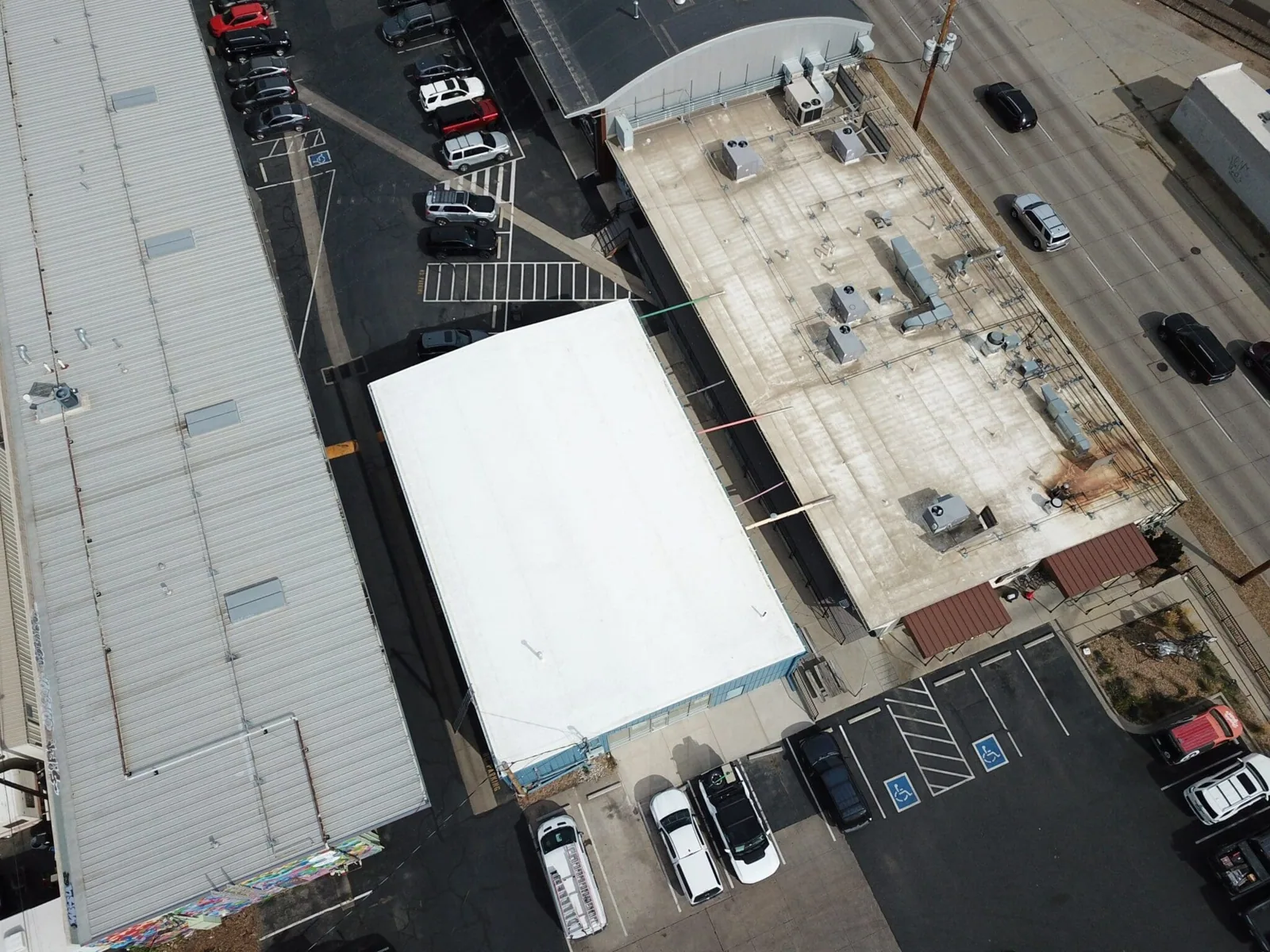
A commercial inspection begins with the roof that is present, not an assumption based on the building's use or lease status. We identify accessible roof sections, visible membrane or metal surfaces, drainage paths, edges, penetrations, equipment curbs, and earlier repairs. A site-specific roof inspection records those observations and distinguishes an active entry point from a stain or repair mark that needs more review. We note what was visible, which areas could not be reached, and the next test that would resolve an open question.
Photographs should be tied to a roof location so an owner can compare later visits without guessing which curb, seam, or drain appears in an image. A mapped condition record can carry the observation, supporting photo, recommended action, and decision timing together. If a tenant transition or sale brings new reviewers into the process, those records help the property contact explain what has been inspected and what remains to be checked. The report informs a decision; it does not replace a roof walk when conditions have changed.

How do business changes affect roof planning
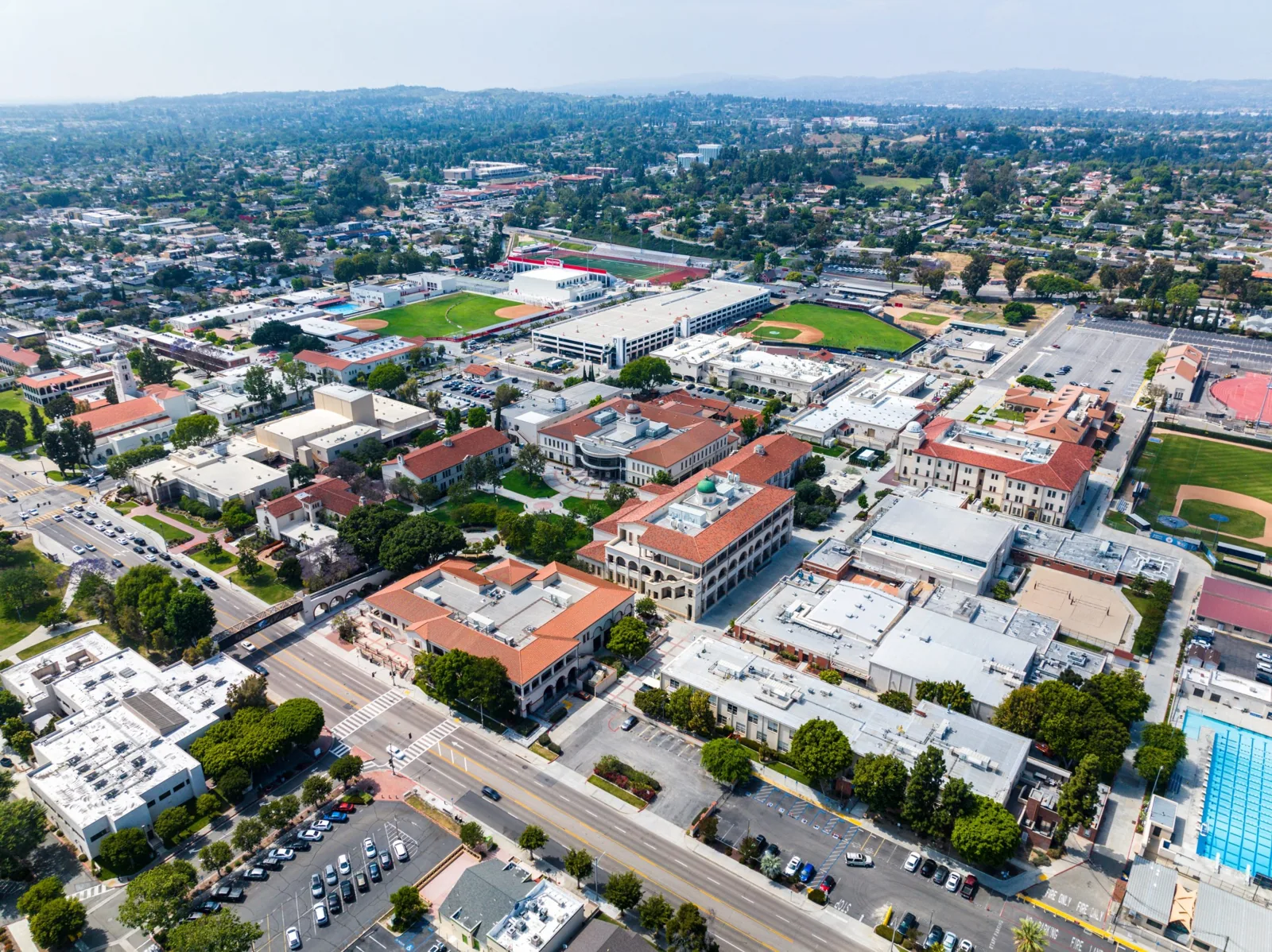
Whittier's Economic Development Strategy identifies goals to retain and enhance existing businesses and encourage development and improvement of retail areas. For a property owner evaluating a commercial vacancy or planning a retail improvement, roof condition belongs in the same early review as access, mechanical equipment, and the intended work schedule. A buyer or manager can request the available roof plan, repair history, warranty documents, and any active leak log before interior work is sequenced. Those records do not establish a roof's current condition, but they tell the inspector what to verify.
We keep the roofing scope separate from assumptions about the next occupant. A proposed use may change hours, equipment needs, or access patterns, but the owner must confirm those details for the address. The inspection identifies the existing assembly, drainage, penetrations, and visible damage; the operator supplies tenant hours and restricted zones. This separation helps a facilities lead decide whether to make a targeted repair before turnover, schedule a broader assessment, or hold a replacement discussion for the capital plan.
When does repair remain a sound option
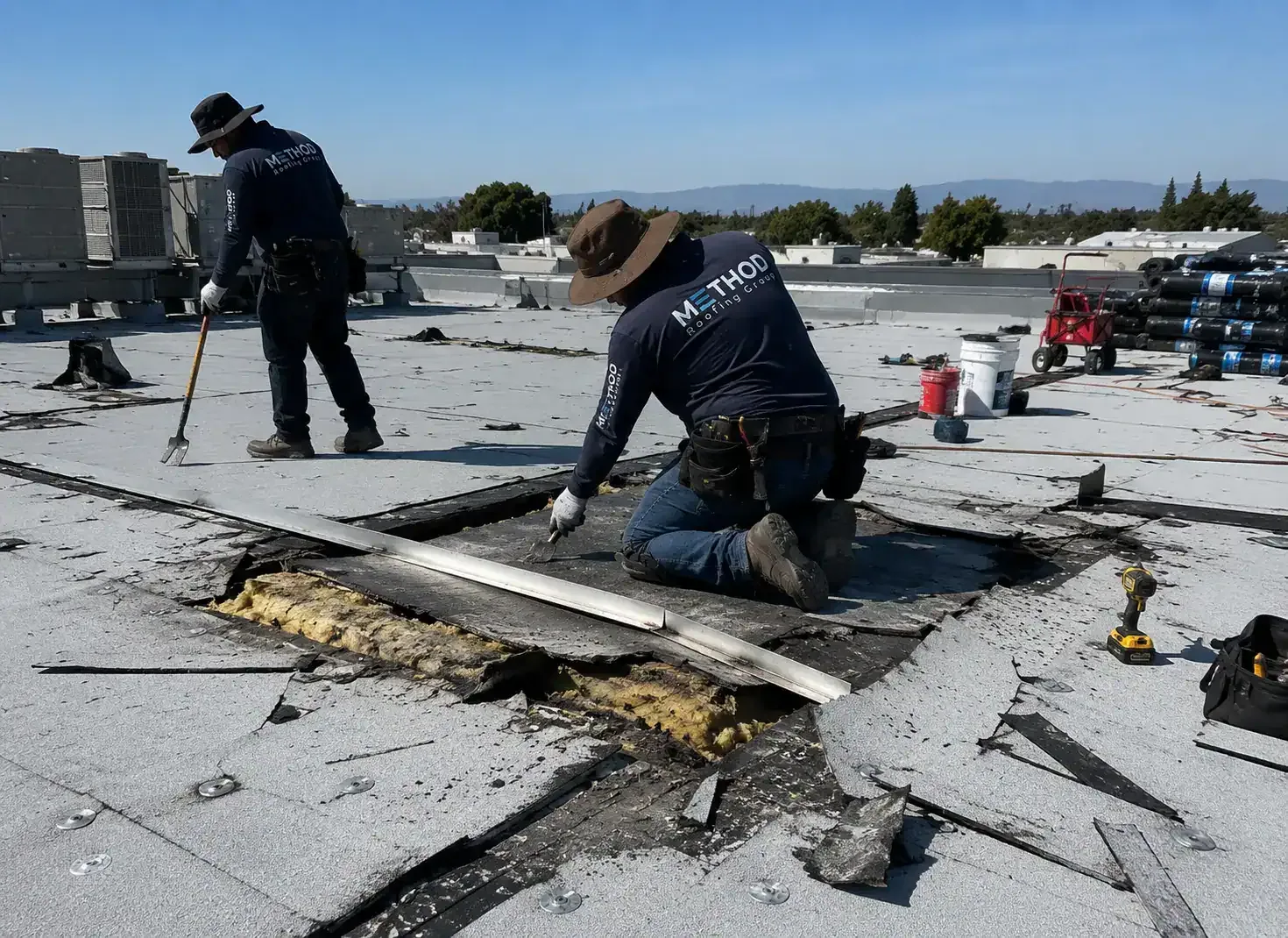
A localized opening can support repair when the surrounding membrane, flashing, and attachment remain serviceable and the source can be isolated. During targeted roof repair, we document the affected section, check adjoining details, and select materials compatible with the existing assembly. A leak that appears below a roof drain may involve the drain flange, nearby seam, or another penetration, so the interior drip alone does not set the repair boundary. The field record should show the repaired area and the detail that was checked.
Replacement enters the comparison when deterioration is broad, repairs recur across connected areas, insulation or drainage concerns change the scope, or the owner needs a new assembly for a defined project requirement. A replacement assessment checks deck conditions, attachment, insulation, edge details, equipment, and safe access before comparing assembly options. We do not start with a product preference. For an assembly already identified as TPO, the TPO system choice still depends on the existing substrate, detailing, and project specification.
How should work fit an occupied building
Before mobilization, the property contact and roofing lead should agree on the access route, staging point, delivery window, protected entrances, equipment path, and who receives a daily closeout. Roof sections can be sequenced so an open repair is closed before the crew leaves, with weather holds and tenant restrictions entered into the work plan. If an active leak requires attention outside the planned visit, we can send an after-hours crew any time of day, including weekends and holidays. The initial visit records the protective measure and the follow-up inspection needed for the affected area.
Summer timing deserves its own check. The Fullerton station's August normal informs the seasonal calendar, but the actual roof can absorb heat differently based on color, insulation, exposure, and airflow. We review product application limits, safe access, and the time needed to complete each section before assigning heat-sensitive tasks. The owner can help by identifying operating hours and restricted areas early, while the crew reports changing conditions that affect staging or close-in. That gives the manager a clear basis for approving the day's sequence.
What makes two roofing proposals comparable
Compare proposals by the roof sections included, observed condition, repair limits, materials, preparation, access needs, protection, testing, and closeout records. A short scope may omit an edge detail or a drain transition that another proposal includes. Ask us to mark the area of work and explain which finding supports each repair or replacement item. If both proposals use different assumptions about tear-off, insulation, or equipment movement, those items should be resolved before comparing schedule or price. The work window and daily close-in also belong in the scope.
Budget timing depends on the chosen assembly, roof access, occupied use, deck findings, and any coordination with other trades. Routine visits through preventive maintenance can help keep drain, seam, and flashing observations current between major projects. For an owner with buildings in Whittier, Brea, and La Habra, the same review format can support portfolio comparison while each site's photographs, assembly details, and approvals stay in its own record. Link each decision to the roof area it affects.

What should be ready before the assessment
Send the property address, roof access contact, operating hours, available plans, recent photographs, repair history, and the question the owner needs answered. Identify whether a leak is active, which rooms are affected, and whether any rooftop equipment or tenant area must remain accessible. We can use that information to prepare a field sequence and confirm who can approve temporary protection or a permanent repair. If documents are incomplete, the site visit can still establish visible conditions and list the records needed for a stronger comparison.
We can also set a separate review for related holdings in the planned Fullerton-area service network. A property manager comparing a Brea building or a La Habra property with a Whittier asset should keep each address and access contact distinct. We record one building at a time, then bring the findings together for budget review. Share the roof plan and decision date, and we can arrange an assessment around the access window.
Commercial Roofing Questions
Can you tell the roof system from the address alone?
No. We identify the visible assembly and details during a roof review, then compare them with plans or product records when available.
Should roof condition be checked during a commercial vacancy review?
Yes. A current inspection can inform the work sequence before interior improvements or tenant scheduling are finalized.
Can an active leak be handled outside normal hours?
The first visit records the immediate protective measure and needed follow-up; response is available every hour of the week, holidays included.
What records are most useful for an inspection?
Bring roof plans, prior reports, repair notes, warranty documents, leak locations, access instructions, and operating-hour limits.
Can several Whittier-area buildings be evaluated together?
We can coordinate the review calendar across a portfolio, but each building receives its own roof observations, access plan, and scope.