
Plan church roof repair in Fullerton around service schedules, sanctuary equipment, leak records, roof access, and documented repair priorities.
Roof leak, storm damage or an inspection coming up?
A scheduled congregation event can close the roof-access window before a crew arrives. We confirm gathering hours, protected entrances, roof sections, and the facility contact who can set a work boundary. A useful review starts with the roof history and the congregation's operating calendar, then records visible conditions before recommending repair, restoration, or replacement. The work plan should identify who approves access, which rooms need protection, and how the property team will communicate schedule changes. This is a building-specific process: a congregation should not infer roof condition from another church or from the neighborhood where it meets. Begin with a clear contact, current roof plan, and list of reported leaks.
Map the building uses and roof areas
Walk the interior with a facility contact and mark locations where water has appeared, including the date, weather context if known, and any change to ceiling tiles or finishes. Relate each report to the roof plan, while keeping open the possibility that a leak travels before it becomes visible. Separate the sanctuary, classrooms, offices, kitchens, fellowship areas, and storage when those spaces have different sensitivities or schedules. Note overhead sound, lighting, projection, ventilation, and security systems that require protection or authorized shutdown. A school roof plan may also involve occupied learning rooms, but a church's gathering calendar and volunteer access require their own review. Record who can authorize entry and who receives a same-day update. Commonwealth Corridor and Harbor Gateway are broad local areas, not descriptions of a particular roof or congregation building.
Review assemblies, additions, and past repairs
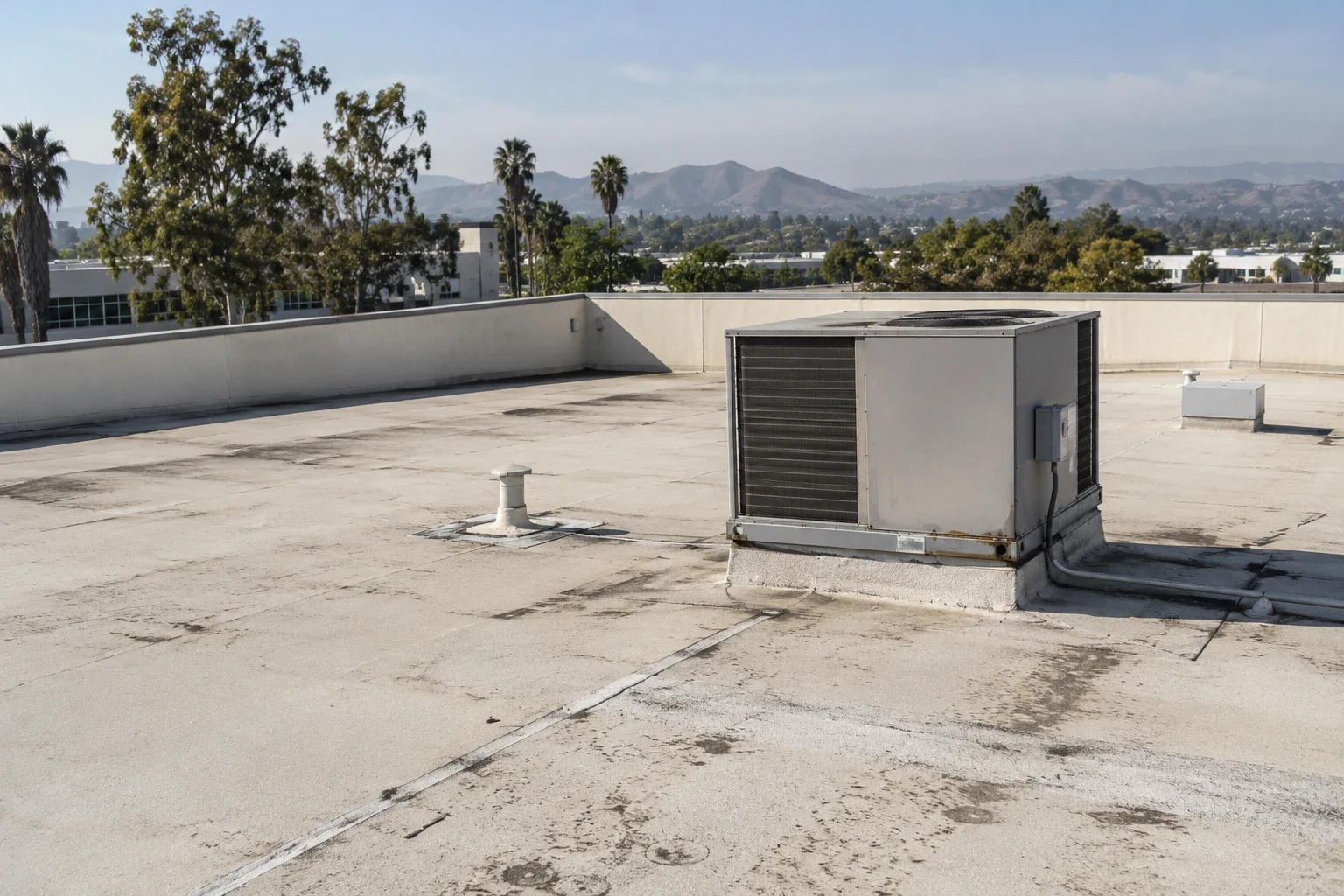
Collect drawings, warranty papers, invoices, prior inspection notes, and any records for additions or reroofing. A campus may contain several roof ages and assemblies, so label sections instead of assigning one system to the entire property. During a survey, document seams, flashing, drains, penetrations, parapets, and visible patch edges. Ask whether a congregation or a prior vendor has applied coatings or sealants, and record the product if known. Do not treat a prior invoice as proof that the repair solved the cause of a recurring leak. If records conflict with field observations, identify the uncertainty before preparing a price. A roof condition inspection can assemble these observations into a prioritized report.\n\nWhen a congregation has several structures, keep their records distinct. The sanctuary, fellowship hall, education wing, and administration building can have different roof assemblies and repair dates even when they share one address. Ask the treasurer or facility lead where invoices, warranty papers, and past leak notes are kept. If no roof plan exists, a measured sketch with consistent building labels is a practical starting point. It should identify access points and drain locations without including alarm codes or other sensitive details. Commonwealth Corridor and Harbor Gateway Focus Area are broad Fullerton planning geographies, not inspection findings about a particular congregation. A companion topic is office roof needs.
Protect services and interior contents
Before roof work, identify rooms where ceiling leaks would affect people, instruments, archives, food, electrical systems, or scheduled programs. The congregation's facility lead can set quiet periods, room closure boundaries, alarm procedures, and the chain for urgent decisions. Agree on protection for furniture and equipment and a method to report a new interior condition. If a roof opening is needed, specify who will authorize it and how the area is secured before crews leave. Explain noise, odor, vibration, and access limits based on the selected work rather than promising that occupants will not notice. For phased work, show the affected roof zone and interior spaces on a shared plan so the office can notify staff and ministry leaders.\n\nA clear decision memo helps volunteers and board members compare the work. Summarize which leaks were investigated, which conditions were confirmed, what remains concealed, and which options were priced. Separate immediate water entry from maintenance items that can be scheduled later. If a repair depends on dry weather, access to a room, or a product lead time, write that dependency beside the action. Avoid technical shorthand that a new trustee cannot interpret. Attach photographs only when they identify the relevant roof area and do not expose people or private interior activities. This record makes later budget discussions more consistent when leadership changes.
Compare repair, restoration, and replacement
Compare alternatives using the same observed conditions and the same roof-area boundaries. A repair proposal should identify the leak investigation, detail correction, and any limitation on concealed conditions. A restoration scope should list preparation, tests, included surfaces, exclusions, and future maintenance. Replacement planning should describe removal, protection, access, staging, debris movement, and temporary weather protection. A modified bitumen system review or single-ply system review can help frame material questions without assuming that either fits every building. The board or finance committee should receive a concise comparison with quantities, schedule assumptions, and responsibilities. Keep open items visible rather than hiding them in a broad allowance.\n\nBefore any roof opening or noisy task, the facility contact should check the calendar with ministry and custodial staff. Identify how the contractor will protect rooms below the work and how an unexpected rain event will be handled. If a room is temporarily unavailable, provide a schedule window and an alternate access route approved by the church. A designated person should answer urgent calls during the shift.
Schedule access, approvals, and communication
Name the person who can approve a proposal, grant roof access, close rooms, and coordinate with other trades. Establish dates around worship, funerals, weddings, school activities, meals, and events that affect parking or building entry. Identify keys, escorts, ladder locations, security procedures, and locations where materials cannot be staged. Route daily notices through a single contact and include how the contractor will report a change in weather, a concealed condition, or an added repair. Fullerton's General Plan recognizes distinct planning geographies, but a general service page cannot establish access or schedule at a particular congregation. The site contact supplies those rules. For larger properties, a phased replacement plan can separate work zones and decision dates.\n\nA maintenance routine can be modest and still useful: keep drains clear, report new interior water promptly, record rooftop visits by outside trades, and review prior repair locations at the next inspection. A roof plan with date, building label, and observation notes helps the next volunteer avoid repeating the same investigation. If the roof system changes, update the record and mark old documents as superseded. These practices support informed stewardship while leaving diagnosis and material selection to qualified professionals who can inspect the actual assembly.
Close out repairs and maintain the record
At completion, request photographs of repaired details, product and material records, approved changes, and a roof plan that marks the work. Record open recommendations with an owner and target date. The facility team should know how to report a new leak, who can authorize emergency access, and how another contractor requests a roof penetration. Keep warranty terms and maintenance instructions with property records, not only in an individual email. A recurring inspection can compare the same drains, edges, seams, and interior reports over time. The purpose is an informed maintenance decision, not a promise that any system will prevent every future leak. A church with several buildings can maintain one index of roof areas, access contacts, and completed work for its trustees and facilities volunteers. The owner may also review capital-phased project plan. For broader area context, see Commonwealth Corridor planning geography.
Commercial Roofing Questions
Can roofing work be scheduled around services?
Often, but the actual dates and work hours depend on the roof scope, access, weather, and congregation calendar. Put limits and notice steps in the project plan.
Should a church replace a roof after one leak?
Not based on one report alone. Trace the water, review the roof and repair history, and compare the affected area with the larger assembly.
What should trustees receive?
Keep the roof plan, condition findings, scope comparison, approvals, photos, warranty papers, and open maintenance items together.
Can volunteers perform roof repairs?
Assign roof access and work to qualified, authorized personnel under the property safety plan; do not treat general volunteer access as roof authorization.
Does a new roof remove maintenance needs?
No. Maintain drainage, control later penetrations, and keep inspection and repair records.