
Compare GAF commercial membrane options in Fullerton, CA, with roof condition, attachment, flashing, and access decisions documented before work begins.
Roof leak, storm damage or an inspection coming up?
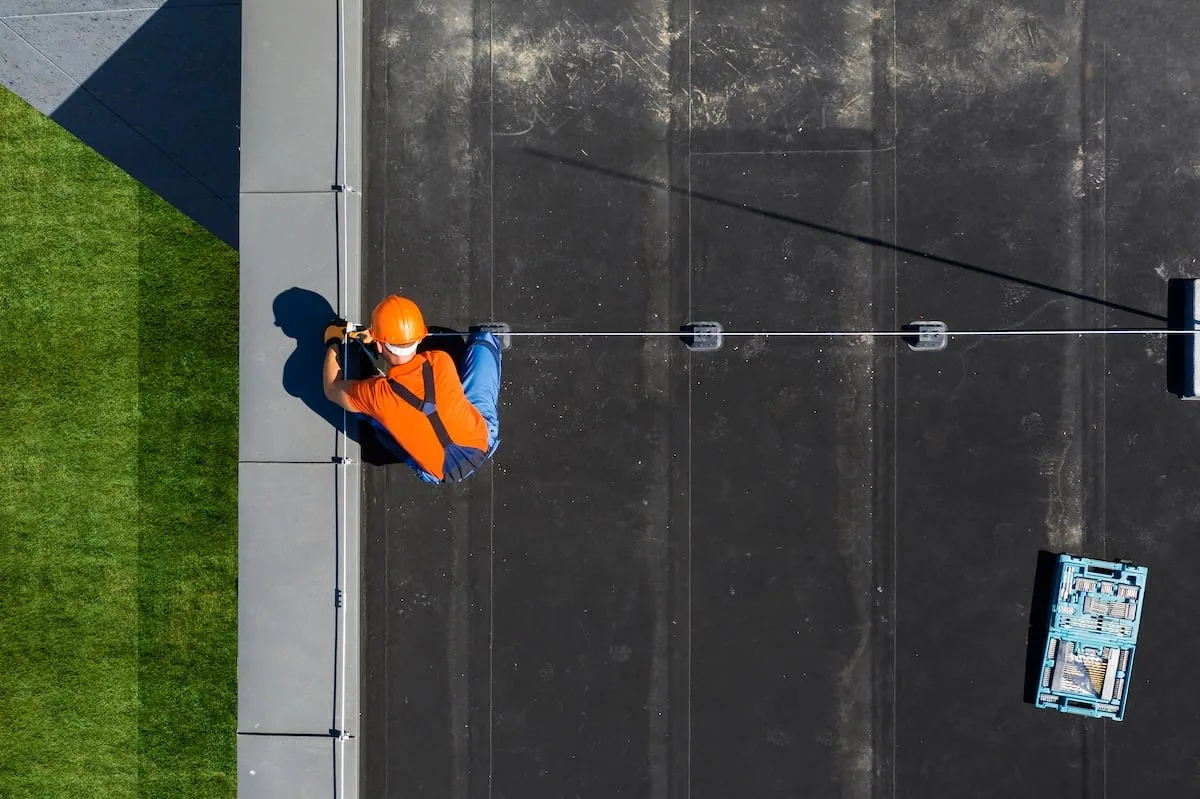
Fullerton's summer heat can leave a roof section warm after the crew has moved to another work area. On a commercial building, the first GAF decision is not a color or product name. It is the existing assembly, the deck condition, how the perimeter is secured, and the access window the property can release. We inspect seams, drains, curbs, and prior repairs, then compare the roof record with current field conditions. Southeast Industrial Focus Area has an employment and industrial character with connections to SR-91, SR-57, and rail; plan each roof visit around the actual building and access point. Those settings make staging a practical part of the scope. We can review an inspection of the existing roof before selecting a repair, recover, or replacement path.
What the existing roof needs to show
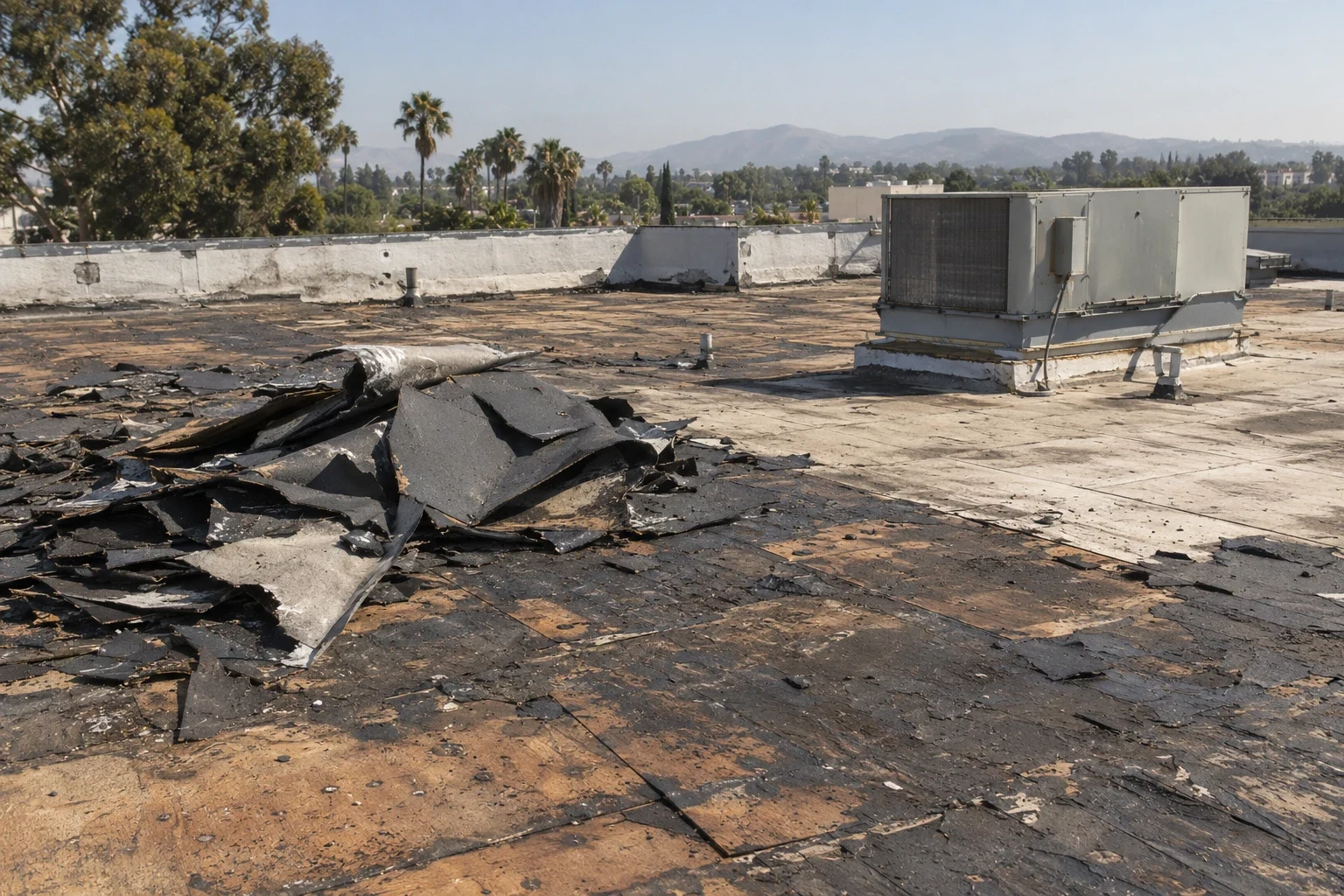
GAF lists commercial systems for TPO, PVC, asphaltic roofing, and coatings, with published specifications for multiple assembly methods. The system choice still starts below the membrane. We check whether moisture, saturated insulation, weak attachment, corrosion, or movement at a transition changes what can stay in place. A dry-looking field does not settle the condition around a drain or rooftop unit, so we map representative details and note what remains inaccessible. If the deck cannot carry the proposed attachment, the fastening plan has to change. If insulation is wet, the repair boundary must identify removal rather than hide it under a new sheet. A written condition record lets the owner compare a localized correction with a broader replacement scope using the same roof sections and assumptions.
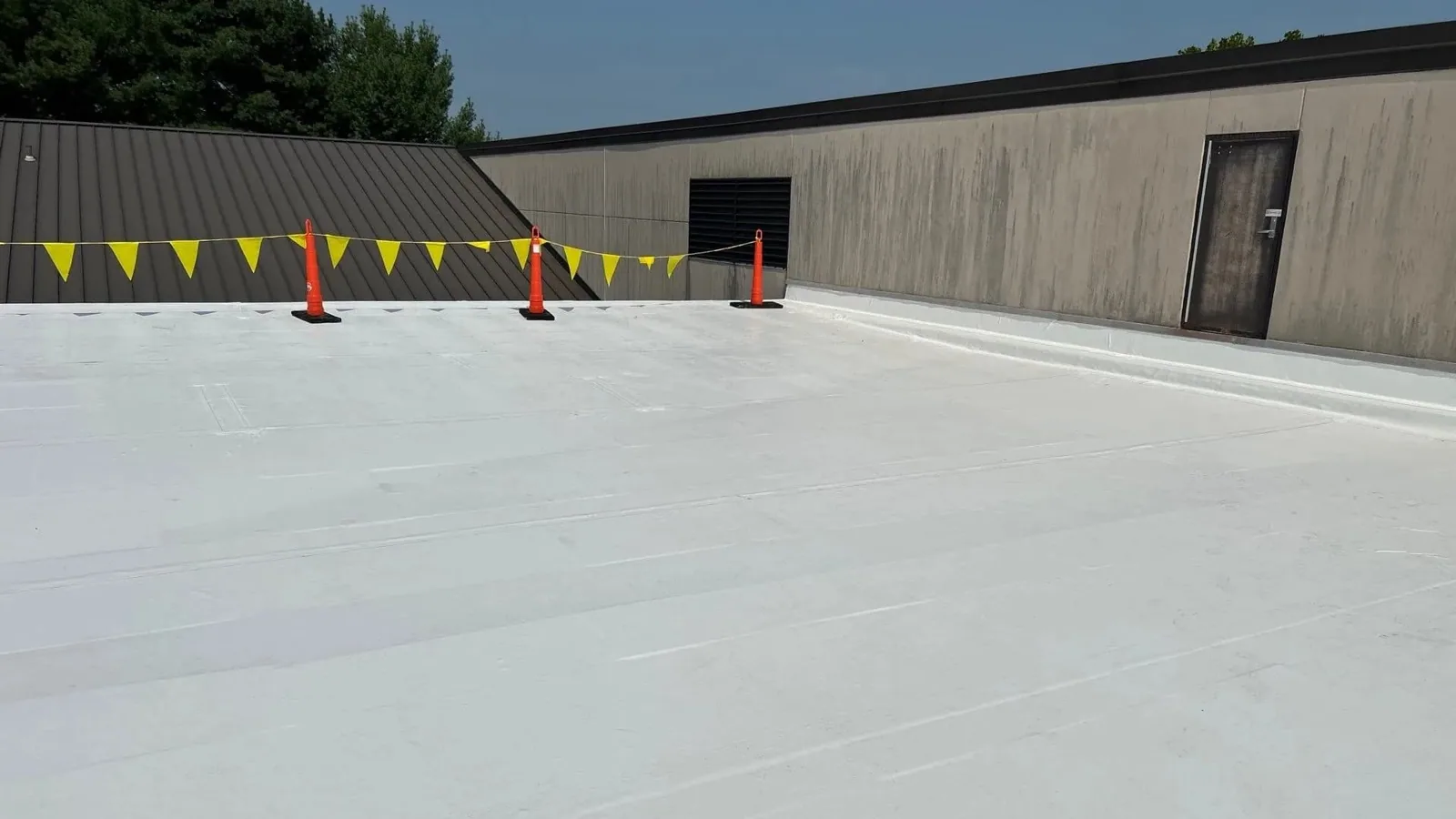
How GAF system choices change the work
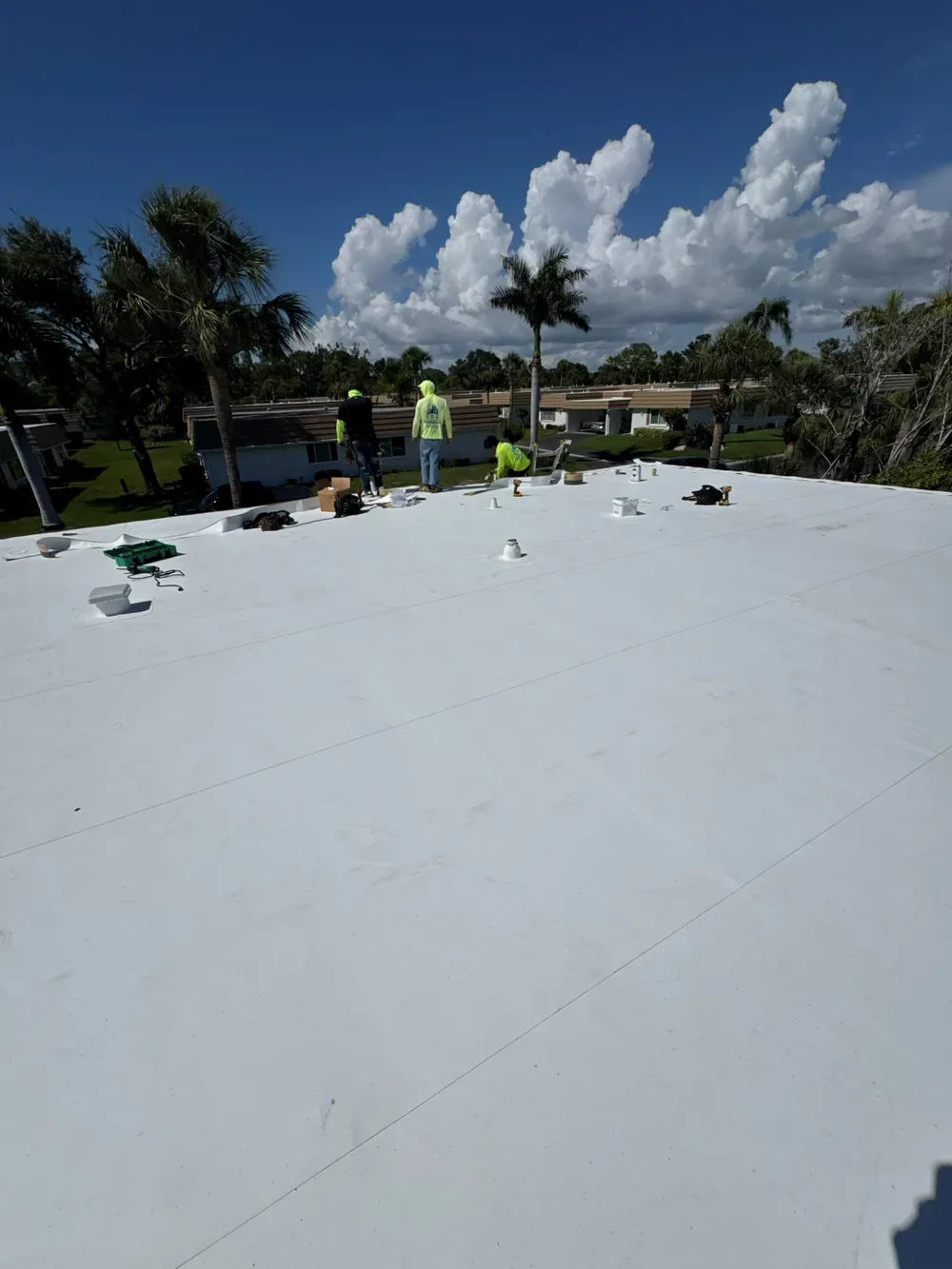
GAF's EverGuard portfolio includes adhered, mechanically attached, induction-welded, ballasted, and self-adhered configurations in its TPO materials. Each method creates a different sequence at the field, perimeter, and penetrations. Mechanical attachment places fasteners through a defined assembly and secures the membrane at its seams. Induction welding uses compatible coated plates and a dedicated welding process. Adhered work depends on substrate preparation, adhesive conditions, and controlled placement. These are design and installation options, not interchangeable labels. We compare the project specification with deck type, insulation, existing layers, edge details, and wind design before confirming a method. A Carlisle TPO comparison helps separate membrane-family differences from the assembly method. A manufacturer-specific TPO assembly still depends on an approved specification, the tested configuration, and a field detail that matches the roof plan. We verify the submittal against insulation type, deck attachment, perimeter securement, and the curb and drain details before material is released. If a roof has mixed slopes or several past repairs, we identify the transition where one assembly stops and another begins. That boundary belongs on the drawing and in the daily work plan, not only in a product schedule.
Where heat, drainage, and access meet
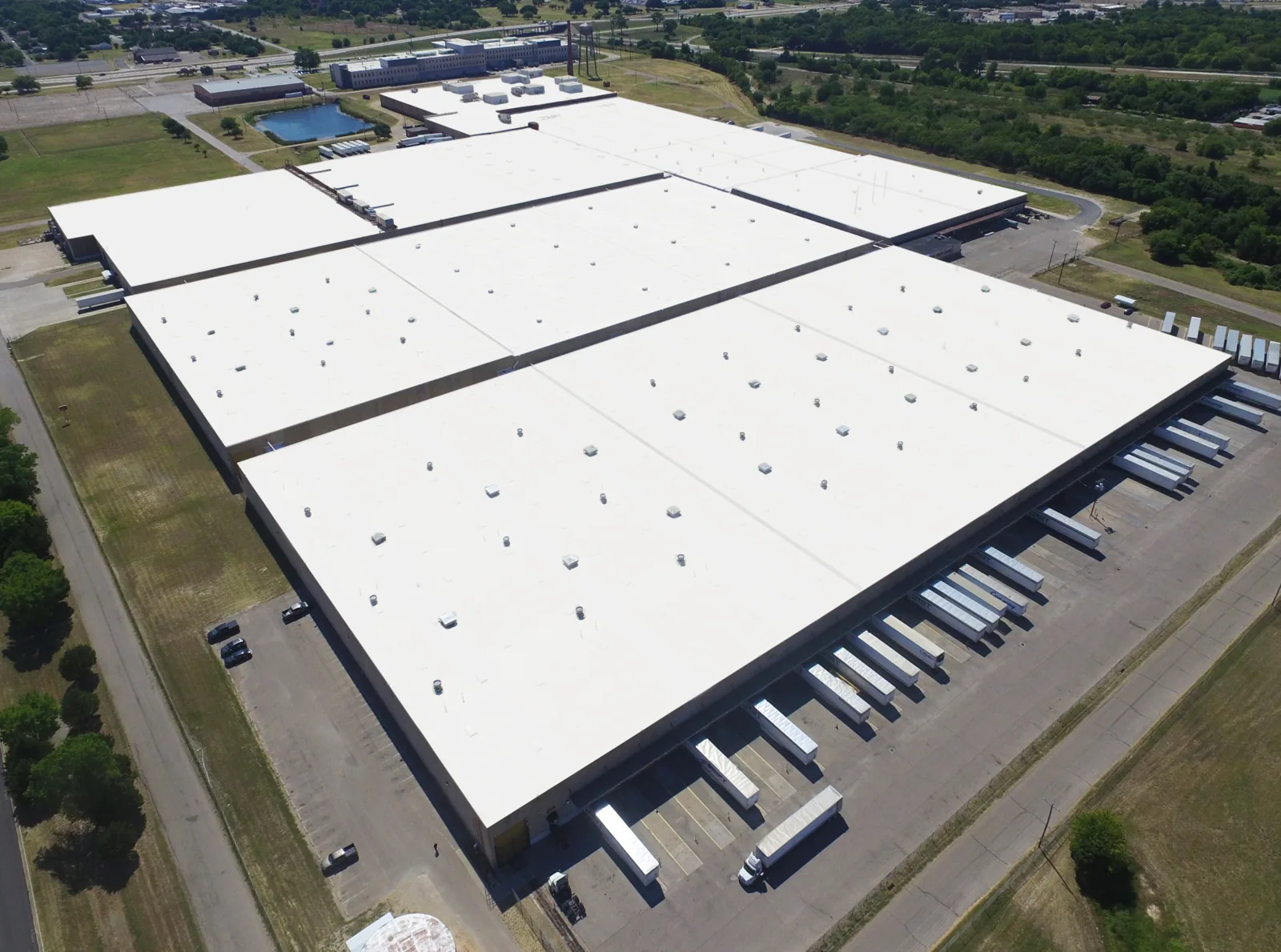
NOAA's 1991 to 2020 normals put Fullerton Municipal Airport's average daily high at 86.7 degrees F in August and 84.4 in July. That station history gives a seasonal cue, not a reading from a roof membrane. We use the current forecast and product instructions to set the work window, particularly where a section must remain open for adhesive, welding, or tie-in work. Low summer rainfall does not remove the need for a watertight close-in before a shift ends. At the Southeast Industrial Focus Area, a loading route or rail-side operation can make a lift or material drop the controlling schedule item. For a building in Downtown Fullerton, street access and tenant hours may set the sequence instead. The staging point and industrial district work plan are verified against the property address.
Details that keep the assembly continuous
The field membrane is only one part of a low-slope roof. At curbs, parapets, expansion joints, drains, and edge metal, the system needs compatible flashing and a detail that can be inspected before it disappears. We review the GAF specification and its accessory requirements against the actual geometry, then mark each transition for installation and closeout photographs. A curb that sits too low, a drain with movement, or a loose termination can interrupt the water path even when a broad field seam appears sound. The crew protects completed work from following trades and records any change before covering it. If a change in height or deck condition appears, the owner receives the field location and a clear question for the design team. A coordinated roof assessment can document those details before the installation sequence is priced. When comparing a thermoplastic sheet with a multi-ply or liquid-applied option, evaluate the proposed roof assembly and transition details against existing layers, drain height, and required close-in. The product name does not determine whether a roof can be recovered. We record the field conditions and the design assumptions separately so the decision remains tied to the actual building.
Repair, recover, or replace
A local repair can be appropriate when the surrounding assembly is sound and the leak path is limited to a detail or seam. A recover may preserve dry, securely attached layers if the deck, moisture condition, and edge height allow the specified assembly. Replacement becomes the clearer comparison when wet insulation, weak attachment, repeated failures, or incompatible layers extend beyond a small repair boundary. We mark what has been opened, what remains, and what is assumed in each option. The written scope identifies tear-off limits, substrate preparation, insulation changes, perimeter work, drains, penetrations, daily protection, and the condition that would trigger a change request. For a property with occupied suites or active production, we divide the roof into sections and agree on a close-in point before the first sheet is moved. That gives facilities staff a usable sequence rather than a product name alone.
What belongs in the closeout file
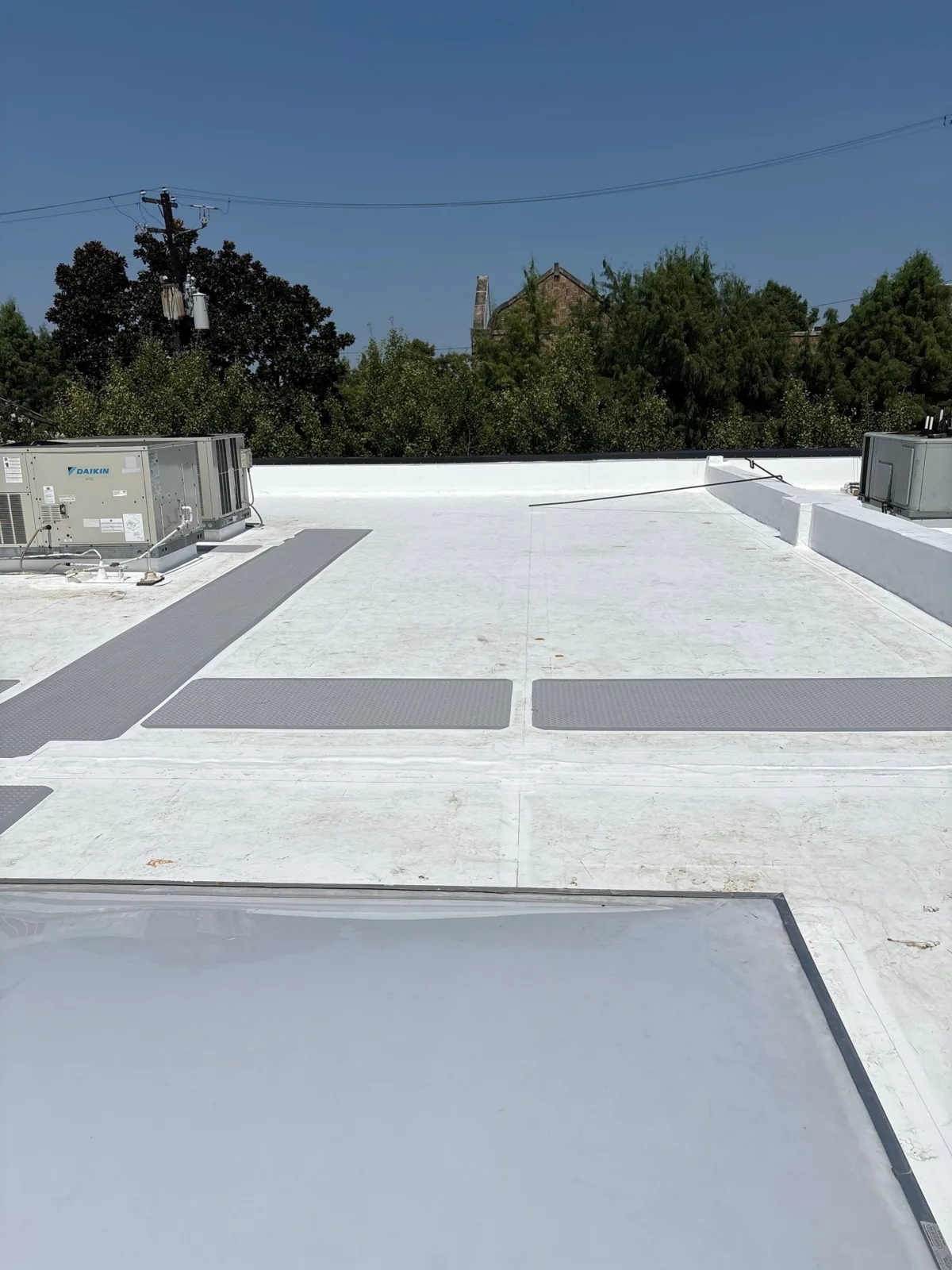
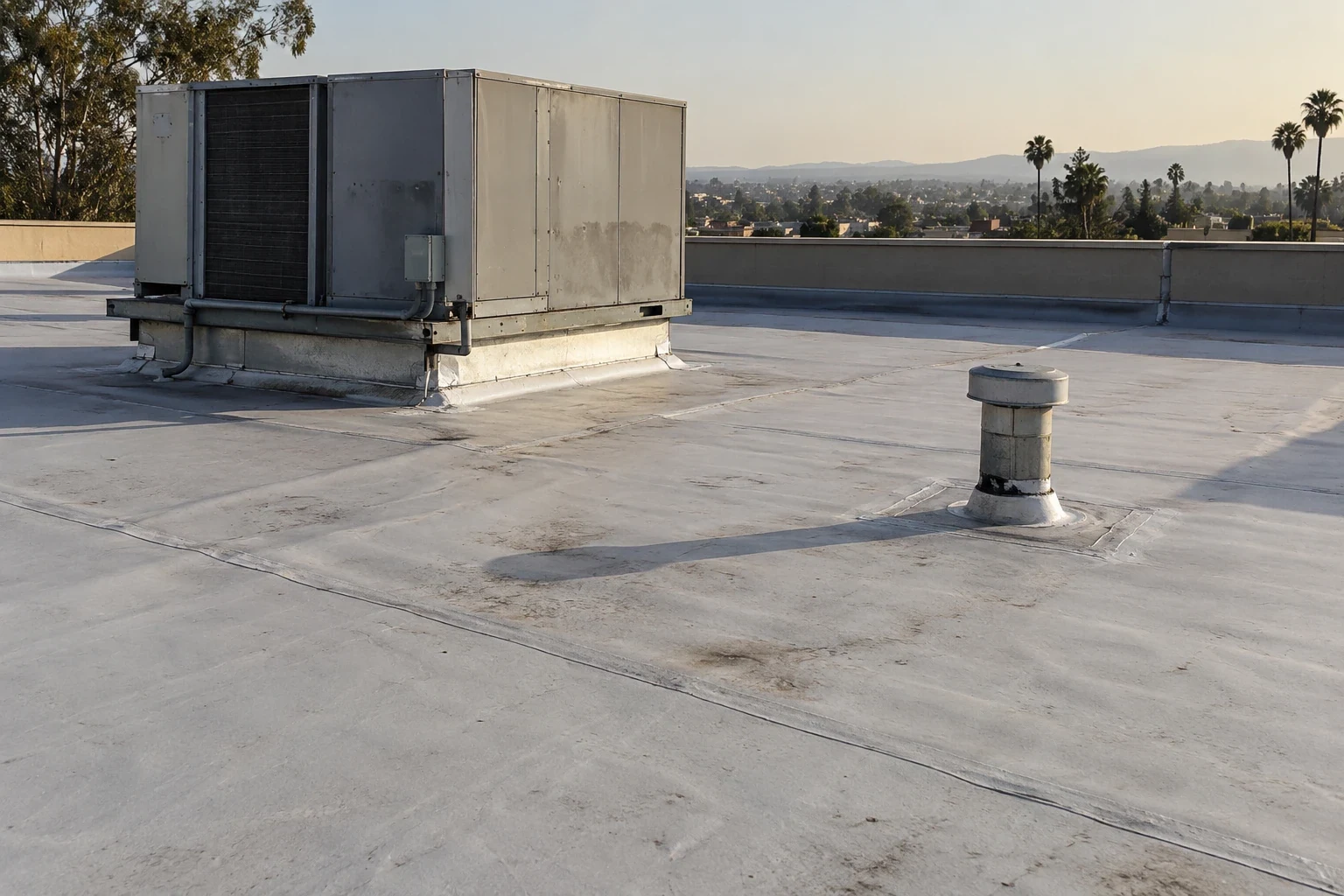
Keep the approved system specification, roof plan, attachment layout, insulation schedule, flashing details, submittals, and dated installation photographs in one file. Add the exact membrane and accessory identifiers used, the sections completed, field changes, test results, weather holds, and any work deferred because of access or substrate conditions. The file should distinguish manufacturer literature from the approved project documents, because one does not replace the other. On a multi-building account, label each roof area by address or building designation rather than assume the same assembly applies everywhere. We can provide a condition record and photo set through a Fullerton roof assessment so the property manager has a traceable handoff for future repairs, maintenance, or capital review. If another trade changed equipment after roofing, record that work separately before evaluating a later leak.
Commercial Roofing Questions
Can an existing roof receive a GAF membrane without tear-off?
The deck, moisture survey, attachment, existing layers, and edge height decide whether a recover is appropriate. We document those conditions and compare the proposed assembly with the project requirements before keeping material in place.
How does induction welding differ from ordinary mechanical attachment?
Induction welding bonds a compatible membrane to coated plates with a dedicated tool, while conventional mechanical systems secure the membrane at seam fasteners. The approved assembly and its tested details determine which method can be used.
What should be checked before GAF coating work is considered?
Start with the existing roof type, adhesion, moisture, repairs, and the coating system's approved substrate. We test or document representative areas and define preparation, reinforcement, and termination details before describing a restoration scope.
Will a new membrane solve recurring water at a Fullerton drain?
A membrane change does not correct a drain body, slope, or connection problem by itself. We trace the water path, inspect the drain and surrounding insulation, and set the scope around the failed detail and any confirmed wet material.
What information helps plan a GAF project in Downtown Fullerton?
Send the roof plan, assembly records, building address, access contact, operating hours, and known leak locations. We can then mark the work area, staging point, tenant route, and daily close-in before scheduling the installation.